Let's Talk Bees #77 | Your Beekeeping Questions Answered
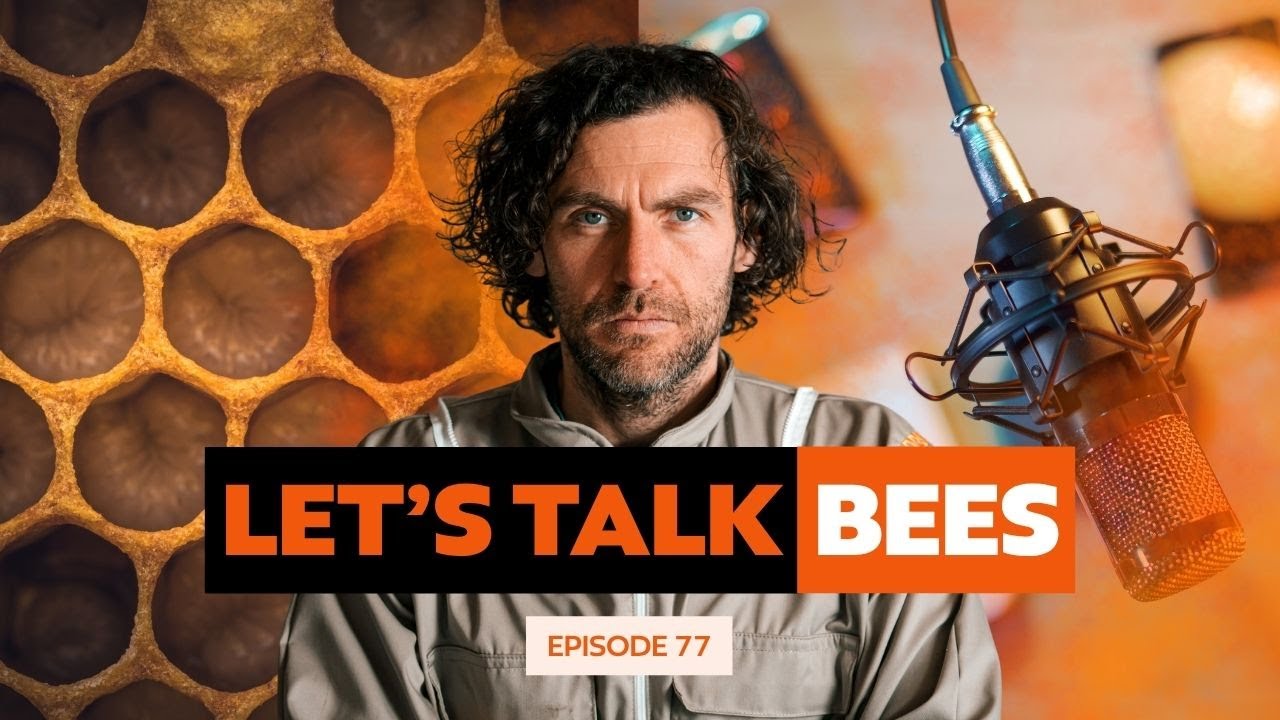
Lawrence Edwards answers viewer questions on varroa treatment schedules, hive ventilation differences between UK and US designs, selling honey legally in the UK, and practical topics like queen introductions and split preparation.
Chapters
Hello everyone and welcome to another episode of Let's Talk Bees. Now the first thing I wanted to talk about was my brand new channel, 14 Day Beekeeper. We did a test on Black Mountain Honey to try and do a new long-form video every single day in May. It was a lot of effort, it was a lot of work, it cost quite a lot of money, and they tanked like really bad on YouTube. And it's proven to me that I produce way too much content on one channel, so the, the really nice Positive benefit of that is there is officially going to be 2 channels now. So there is Black Mountain Honey and 14 Day Beekeeper. And if I just jump in here and share my screen, I'll be able to share with you the 14 Day Beekeeper page, which is here. 748 subscribers, but there are a few videos on there as well. So first up, you've got how to fix, uh, you have to fix these space issues. You've got why I clip my queen bees. There's a really cool one coming up on that channel all about how to raise as many queens as you can. My advice to you is to head over to that channel and see if you can hit the subscribe button. It is on Facebook, it is on YouTube, and it is on Instagram as well. And the nicest benefit about all of that, and I do promise you this, is that the Black Mountain Honey pages— I've taken the decision to kind of move myself not away from them, like I'm still there doing the posts and organizing everything, but it's not necessarily me talking in front of the camera so much. It's not me sitting down in front of the hive and saying about what's going on at the entrance and pollen coming in and just that real, you know, the rough me with my phone doing little video clips and uploading them. If you're interested in that kind of content, that is exactly what it's going to be over there. So the distinction between the two is going to be quite simple. Black Mountain Honey is going to be about our products, our queens, what we do with our nucs and getting them ready and kind of behind the scenes of Black Mountain Honey. And then 14 Day Beekeeper is going to be the place where you get advice to help you with your bees. So live streams, communities, transformations, all of the good stuff that we teach on 14 Day Beekeeper. We're going to release a number of the 14 Day Beekeeper videos and do them as live streams. There's loads to be getting involved with over at 14 Day Beekeepers. I wanted to do that plug first, and then the second thing that I do, I have to address because it is quite a big thing that's happening. And while I was waiting for this live stream, I went over to the BBC and was just browsing through, and I was watching a video about Arsenal. In the Champions League this morning, and it are the tears are already going. It feels very, very emotional. So for anyone who doesn't know, I'm a massive, like mega Arsenal fan. I went away to Villa this year was not a good game. I went away to Wolves this year was not a good game. Oh, I can feel the emotion coming back in now. But we are officially Premier League champions. So yes, very happy about that. I will stop talking about football now, but it is quite a big day. So fingers crossed we do something special later on tonight. Well, I'm going to jump onto the comments. And I'm trying it a different way, so I'm going to talk directly into the camera there and see if we can do it and get it to look half decent. I'm also not putting the comments up, I get caught out by that one again. So first question is from Chris, he says, good morning Lawrence, all 4 Black Mountain Honey Premium Queens accepted and laying well. One of them appears to be in turbo boost mode and he's already out of space. Would you double brood or demerit at this point? Oh, that's good. With the advice, I would say let the bees tell you when to demerit. Really, really nice system, which is The brood box should be full, queen excluder on top, and then you should have a minimum of 2 supers full of bees. Now a number of people come back to me and say, my bees never fill the 2 supers like that. I try and wait for it and try and get the 2 supers full and then they swarm before they reach 2 supers. And I say, that is not a problem with the Demaree, that is a problem with your bees. If your bees are swarming consistently before they get up to 2 supers, there is, there is a predisposition there from those bees to want to swarm. as opposed to want to store honey. And if you're a beekeeper and you want to get like even just a bit of honey from your bees, then you need to control the genetics of it. But as soon as they get to 2 supers, I would say it's a perfect time of the year to do a demarré. As soon as you hit June 21st— I'm just gonna have a sip of water— as soon as we hit June 21st and we hit the longest day, the solstice, and the days start shortening, double brood just becomes an option that I wouldn't really ever consider at this time of the year for me. Because I want to get like a decent amount of honey off my bees at the end of the year. For some people, double brood at that time of the year is a very, very good thing to do because it, it means that the bees have got unlimited space, it reduces the swarming impulse later on in the year, it means the bees go out and collect and forage the majority of their winter feed if you get good weather, and then it makes overwintering relatively easy. So it's about working out what you want. If you want maximum honey, I would suggest a Demerara. Double brood, you'll lose a lot of honey kind of going after the solstice. Let the bees tell you when you hit the two super trigger, and should be good. Oh, Chris just added on it. So you only got one supers worth of bees at the moment. So yeah, too early to demerit. Wait until you get through and double up in those supers, and you should be good. Chris, another Chris says, "I took an early split on a hive and introduced a Black Mountain honey queen three weeks ago, but it appears she was killed and being replaced by laying workers. Can I reintroduce the old queen?" So. The likelihood of them turning laying worker kind of whilst the queen is there is very, very low. I would say what's more likely there is that there was some transition towards laying worker and then the queen has failed before it's gone in. But again, you would have seen the signs of that. The other thing that it could potentially be is that the queen, the queen could be a drone layer. We do, we do have some drone laying queens and we back them up. So if there is ever an issue with kind of one of our queens and you can see the mated queen walking around, then that's could be like a problem with one of the queens and we'll replace them. Much more likely, I would say the highest chance scenario that you've got there is that you introduce the queen into a colony that had a virgin there, the virgin killed the mated queen, the introduced queen, and then has tried to go out and mate but there was a really terrible period of weather so she has become the drone-laying queen. So you can replace her, definitely find that queen, kill her, wait 8 days because there might be some open decent brood in there as well that they can try and turn into a queen cell. Probably not, but still just wait 8 days and then add the new queen as normal. It should be good. Good evening, Lawrence, hope you're well. I've enjoyed your recent videos. Thank you. Well, I hope you've been enjoying them, Jean, on both channels. I don't want anyone to miss them out. I'm going to plug it all the way through today, so on Facebook and YouTube, head over to 14 Day Beekeeper and subscribe because there is lots of stuff over there that people will miss unless they're on it. Oh, not supposed to do that, right? Sam says, morning Lawrence, third time lucky on a Black Mountain Honey Queen introduction last week. One got entombed in fondant, second killed by black colony. This is, uh, this is going to a lovely lot, so should be good. Excellent, I'm very pleased, very, very pleased to hear that. The entombing in the fondant, I would say it's, it's a really, really frustrating one when you open up a colony where you've introduced a queen and you see like a queen that's gone into fondant, or the bees are stuck, or something's happened. And, and I look at it, and we introduced loads and loads of queens, and you can kind of tell as soon as you open up the lid whether the queen's been accepted or not by the behavior of the colony. Nothing to do with what they're doing with the cage. The cage is generally empty, but you can tell when there's been an issue and the queen's not got out of the cage just from the way that the colony is there. And again, 9 times out of 10, it's not to do with the queen, it's to do with the colony. So I'll go in and say, oh, I reckon the queen's still in the cage and pull her out, and she is. And then you look around, you're like, okay, let's go hunting for her, and you find the virgin that's knocking around in there. So the entombing in the fondant is generally a sign of like something else that we've got wrong as beekeepers, and then it's resulted in entombing in fondant. Because on a hopelessly queenless split with enough bees in there and you put a queen in a cage in there, if the introduction is successful within like within a couple of days that cage is clean. So all the ones that you go in where the queens have been successfully introduced, you see perfectly clean cages, like there's nothing, there's no fondant, there's no bees, there's no nothing. They just go in, clear it all out. And then the ones where there's an error from the beekeeper, potentially a virgin or a cell left or some brood still open, you can see it and then they're not cleared out, there's dead bees in there, the queen might be stuck. So it's generally that, that Fixes it just by yeah. Hopefully with the third one you've got that all sorted, but it's not me saying that you've potentially got it up. I'm generalising just to help everyone there. I'm glad you got it sorted, Rebecca Taylor. You have some coffee first? I was thinking on this one as well because I'm getting old. I'm getting old now. Oh, that's terrible. I got hearing aids in so I can't hear, and then I was trying to do the font to look at the camera and saying, "I'm not struggling to read it, but it's it's a little bit like ooh do do do." And then I look at the videos back and I think, "I can't really." repost any clips from that because there's like little old Laurence trying to see. So I thought Let's Talk Bees could be quite cool as, I don't know, maybe get Zane to ask the questions for me. Zane is a bit younger, Zane has better eyesight, he could read the questions and then Zane can learn as well at the same time. Zane loves to learn. It's been nice having Zane and Chrissie back this week, I have to say. Right, Aaron, hello Aaron. He says, one of my hives has a bad case of Nosema, all the frames are heavily soiled, any ideas what I could do to get rid To get rid, the B numbers are declining. So if it if it was me, like double check first. Like is it actually nasema? Because a lot of people, the only way that you can confirm nasema is to take a sample and put it under a microscope and like say right that is nasema. It's the only way to confirm it. What a lot of people do is they'll see dysentery and they'll say oh no my colony's got nasema. It's struggling. And it generally it generally isn't nasema. But what what will happen. Again, it goes back to like the coordination of colonies, and you just see it all the time. You can see it at the entrance, you can see it when you open it up, and we go into great detail on this on 14-Day Beekeeper, and I'll do the plug for that one at the end. But being able to read your colonies and see what's going on and kind of sense it helps with things like this. It helps with the identification of what is going wrong. So I'll look at a colony and I'll see a really nice vibrant entrance, a lot of activity, bees coming in, bees going out, and I'll think, okay, looking good, happy with that one. And then maybe you open up a colony and you see a really nice coordinated effort, all of the bees are on the frames, they're not coming up on the top bars, they're just doing what they need to do and you think, yeah, the queen is in there, we've got a nice brood nest. And then you look over and you kind of think, oh, that colony does not look good over there, what's going on there? Because where there should be a really nice buzzy entrance, there's just a few like odd bee knocking around and oh, what's on the hive? There's loads of dysentery all over the hive, what's going on? So then you go in there and My favourite thing, nine times out of ten. But it is, it's kind of ninety percent of the time you go, you can say, well, it's going to be a drone layer. Like it's going to be a drone laying queen in there. You go in and you open it up and it's not nice and organised. The bees are all over the place, like flying up as you open up the hive. And then you start to see the dysentery on the top of the frames and you think, okay, it's not great. And then you pull it out, you find it's a drone laying queen, loads of drones, not that many worker bees, and What I do at that point, and my recommendation for you at that point, what I do is I just shake everything out, let them beg their way into any other beehives, and then I kind of reclaim and clean and scorch and sterilize anything that I can from the beehive and start again from scratch. That's my approach for doing that, and that is what I would recommend that you do as well. And the reason that you get the dysentery in that situation there is that the bees just don't— there's no coordination, there's no Oh, this is the brood nest, this is where we keep eggs and brood, this is the supers, this is where we put our honey. Toilets outside, like, don't poo in the hive please, kind of. It's a thriving organism here, and once you take away that thriving organism by— with the queen failing and the age of the bees going out of skew, they just don't care. They're just like, yes, yes, go up there and poo on the top bars, why not? we're all going to die anyway. It sounds a bit grim, but that's what happened. So I doubt it was Nosema, it's probably a case of the colony dwindling for some reason, and as a result you're seeing some sort of dysentery. Hopefully that clears things up for you. I doubt it, why would I say that? But you know what I mean. There we go. Laurence, is there any— is there a time when you might leave a full honey super on by mistake? So I would never— I wouldn't want to plan in my mistakes. There's enough unplanned mistakes to kind of plan in any as well, but there's no real reason where I would leave a full a full super of honey on indefinitely. I never leave it on to overwinter. There's lots and lots of scenarios where I leave the bees like sufficient honey upstairs in the supers for them to eat all the time. So the June gap is a perfect example of that, and I knew this was going to happen to me in the June gap. So my plan for the June gap was as follows: it's Saturday today, and kind of around this weekend I was supposed to be going in, clearing all the bees, taking off the honey supers, because the weather next week is pants. And even with the nice weather the past few days, if anyone had seen the post on— I think it might have been on Fort Inday Beekeeper, but that's the kind of post that will go on to Fort Inday Beekeeper accounts— the June gap is here in North Wales. And an interesting side note on that is that don't follow my advice for when the June gap is going to hit the UK. The June gap is different for every single different village in the UK and probably going to be kind of early May for people on the south coast and then back end of June for people up in Scotland, so it does vary. I'm just giving you that line in the sand. But the June gap, my strategy for the June gap was to go and take all the honey supers off and I was going to double brood a lot of the colonies and split them out, making sure that I gave them sufficient food along the way to ensure everyone was healthy and everyone had enough food to eat. But I can't go, I can't go and do it this weekend. I'm fully busy this weekend now, so we've got the family coming over for the Champions League final, which is I have to make an exception because it's probably the only time it's ever going to happen ever, and then I'm busy tomorrow so I can't do it. So I've changed my strategy, which is I'm going to leave the bees with their honey. So I'm leaving full supers on, some of them have got 3 or 4 supers on, and I know, like, in North Wales it's fine because we don't have, like, where my bees are at the moment, there's no oilseed rape at all, so you can leave a spring crop on and it won't crystallize and you can just harvest it at the end of the year, it's fine. But I know I'm going to take a massive reduction in honey crop by doing it that way. And not because, like, I'm going to be taking any more or taking any less from the bees, but it's just the nature of bees is that they don't tend to work as hard if they've got 100 kilograms of honey in the beehive. And that's not anecdotal. That is— well, I say that's not anecdotal, it's very much anecdotal, but it's kind of like over years and years and years and talking to other people and seeing it from my own experiences year upon year upon year, they definitely don't. And, and also the bigger risk, and especially in Wales, is that if you say you get to now and it's the June gap and you're thinking about harvesting and then life, life turns up and you can't do it, don't think, okay, well, I've got 4 supers in spring, I'm gonna get another 4 in summer, so I'll prepare for an 8-super harvest. It does not work like that. Spring is very easy. the rest of the year is very, very difficult, and you'll have to tackle wasps and robbing bees and swarming and lack of flow and the bees eating all of the supers. Like, there's tons and tons of fun to come. So I do, I do leave honey supers on a lot of the time. I don't plan them in though, as my mistakes. No, I'm not going to Budapest. Do you know what? I, I would 100% be in Budapest now had it not, had it not been for kind of like life going on in the background and and all of the things that are there. I wouldn't have got a ticket, but I would have just been there to, to soak it up. Um, the plan is very much to go to the parade tomorrow though, so, so anyone there, I'm gonna have to go and find Finn. It's going to be quite difficult finding people at the parade, isn't it? I don't think we're going to get anywhere close. We are leaving here at 4, 4 in the morning. We're leaving to go to the parade tomorrow. I'm very excited. And if anyone, if anyone is watching from anywhere else in the world, they're thinking, what is he talking about? What parade is this? So Arsenal have not won anything for 22 years and we've never won the Champions League. Um, but it doesn't matter, like, even if we lose the Champions League tonight, still gonna go to the parade. Uh, but we've, we've not— we've not won the league in 22 years and we've taken a torrent of abuse from fans. And, and can you imagine as well, I moved to Birmingham to live in Birmingham for 6 years on the day that Arsenal lost the Carling Cup final to Birmingham. Shocking. And then I've lived in North Wales, which is everyone is either a Liverpool fan, a Man City fan, or a Man United fan. Which to be fair isn't much like isn't much threat with the Man United fans. So I had to get that one in. I will stop talking about football, but it is it is Champions League and the parade the parade is tomorrow and they reckon there's going to be quite a lot of people turn up. So keep an eye out on the news for all of the people because I reckon it's gonna it's gonna top a million easily. Right, Nick says good morning or late night where I am U.S. Love your videos. Keep up the work. Thank you very much, Nick. I'm glad you're dialing in even though it's an unfortunate, uh, time for you. Norfolk Nigel says, morning Lawrence, Wolves fan here. Oh, can we just address the Wolves situation here? So you're a Wolves fan? So I went to the Wolves game. How good are Wolves? How big is that striker that came on? You've got this crazy big striker who was bigger than Saliba and just bullied him. And then you've got the big fireworks with the W. So Wolves is, Wolves is pretty good. Um, a little, little-known fact as well, when I lived in Birmingham, I was very friendly with the Wolves fans, so I used to spend quite lot of time over it. Uh, over it. It's Molineux, isn't it? I think it's called. If I got that shockingly wrong, then that's bad football knowledge. Uh, but anyway, what queen cages do you use, and do you use the same for introducing to your hives and for posting out to customers? Good luck tonight, my son is a Gooner. Come on, you Arsenal! Okay, so I, I really like to simplify things for people and not have to put them through any processes that add risk that don't add that much value. And I see people talking about different introduction methods and taking queens out of the postal cages, they call them, and putting them into an introduction cage or a quintets cage or a pushing cage and doing all of these things. And I've done them all because I kind of understood like the logic and thought them through and thought they were good things and then realized that the postal cages are perfect. Like they couldn't be any better. And the opening and the closing and the moving and any sort of changing around is just adding in risk to an already really, really good process. So it works very, very well. hopelessly queenless, so make the split, wait 8 days, knock down the cells, add the queens in, then pop the tabs after 24 hours and leave them. This is the biggest mistake that people make. They do all of that, they do all of the hard work, they pop the tabs, and then they're supposed to leave it for a week, and they come back in after a day, and I was doing a little check, and a lot of the time the queen will be running around on the frame, and they'll pull the frame out like that, and they ball her. It's a weird thing. You need to, yeah, sit on your hands at that point. Dave and Ella says, good morning from Mid Wales. Unplanned coffee sip there. So you say, start again. Good morning from Mid Wales. Hope family enjoying. I'm going to start. I'm going to start again for the third time. I can't talk. Good morning from Mid Wales. Hope family are enjoying the sunshine and Helen is doing well. We love Zane's first nuke series and follow closely. Putting tens configuration super on our double brood. It's a cool series, isn't it? That what? What I was saying to Zane this week on the series was, well, and I've set Zane a little bit of a challenge because we've— Zane's filmed 3 days this week, so all of the 3 days that he does for me is filmed, so we've not done any editing. But the Zane's First Nuke episode 7 is filmed, but Zane's not working again until Wednesday, so we're going to miss a week. But I said to Zane, we can't miss a week, like, we need to keep it up because people are going to be following along. I can't just miss weeks out. So that's That was why the 6.5 episode—that was a last-minute dash for me to get that one in, and I'm glad that I did. And I will get this one's out this week's episode out. So week episode seven will come out tonight. It's a cool series though, and I think it's really nice to—it's nice to do it with Zane, and it's nice to see how the colony goes. And it's the nicest thing about it—it's not a nice thing. The most awkward and horrible thing about it is that it does—it puts me out of my comfort zone a little bit because there's no hiding, is there? I've got to finish that series and I've got to give weekly updates on what's going on. What week do you predict that the bees are going to swarm? They're definitely going to swarm on me, aren't they? But I, I'm going to do a demerare on that, so as soon as we get— pardon me— as soon as you get to 2 supers and hopefully past the June solstice, then we're going to demerare it. And I think we can, if we can get a decent amount of distance between doing the demerare and the summer solstice— so I just, I don't want to do the demerare before the summer solstice is what I'm saying— if I can wait until the 21st of June, then do the demerare, which I think should Just, just about be okay. Might be doing the demo on 3 supers at that point, but then that takes you through until about the middle of June. Like, with us, I'm not going to swarm until the middle of June, and I think once you get to that point, it becomes much, much easier. So fingers crossed it goes well. We will keep it going, and Zane needs to send it over. Oh, sorry, the question was, so you're putting 10s configuration super on our double brood, or should we use 12 national frames? No, definitely go 10s configuration. On our double brood. But if you're on the 12-frame configuration, speak to Simon G and work out the exact spacing because it's not— I realise that I've massively confused people on this one. So where I'm talking about like 10 spacing or 9 spacing, I'm just going to go and give you the millimetres or the inches for people in America to say this is the spacing because the number is irrelevant because it's dictated by the size of the box. So if you've got a box that's this big, it could be 14s but still really big wide fat frames. So when I talk about 10s configuration, I'm talking about the spacing of hens in a wooden national, which I appreciate is very, very confusing. So I'm going to move over to the actual center-to-center distance between the 2 frames because that's what's more important there. But I wouldn't use, I wouldn't use 12 frames in your 12-frame supers, definitely not. Get it down to 10. Do you have any idea how poly boxes or Abelo boxes would do in tropical climates like the Philippines? I just started beekeeping and expecting my nucs next month. I'm going to finish my coffee first. So I have no experience of how they would do in those climates, but the, the thing with poly is that it's not just a benefit in winter. So it's a very useful benefit in winter if you can get, um, the condensation elements right. And that's what I'm thinking about in the Philippines. Maybe it's quite tropical, so you would— insulating a beehive with lots and lots of polystyrene, same as it works with a house, if you insulate it Uh, like with a poor design, so you're putting the insulation in the wrong place but loads of insulation, you can do way more damage to your colony than any, any benefit that you're going to get. If you insulate them well, so lots of insulation at the top and then the walls lesser insulation and then some sort of open mesh floor or way that the moisture or condensation can track out, then that's a very effective overwinter configuration. But then what a lot of people don't, don't see with poly, and they see it as a kind of disadvantage as opposed to a benefit of the material, real is that in the summer it's much, much— and this is the problem that you'll definitely have in the Philippines— is that in the summer it's very, very hot. So if you have a poor thermal efficiency in very warm weather, it takes you a lot more energy to get the colony down to the temperature that it needs to be. Whereas if you have a very high efficiency polyhive, and this is where people say, oh, insulation, it's just the bees are going to get too hot, but if you had a white-painted insulated polyhive in the summer, again with the correct ventilation so the bees can bring moisture in and run it, you've built yourself like it's an effective air conditioning unit. That is what you built there. So it works both ways. So I don't have any experience of it, but just thinking through kind of the logic of it, I think it would work. And good luck, beekeeping in the Philippines sounds very, very cool. Hi, I introduced a queen to— sorry, I introduced a queen to a queenless colony less than 2 weeks ago. How long should I wait before trying to requeen again? 2 inspections, no eggs, larvae, but they are leaving space in bottom brood box for her to lay. So I would say almost certainly, if you're saying waiting for requeening again, I'm assuming that the queen that you put in is dead, is that right? And if that is the case and they're leaving space for the queen to lay, then there will be a virgin in there, potentially a mated queen in there as well. If they're leaving space to lay as well, that's a good sign. So she might have gone out on a mating flight and might just be waiting to start laying, but I would, I'd give it another week. what happens, and then if she doesn't start to lay, then you need to go in and find her, kill her, and replace her. If she does start to lay, then you need to see what she lays, whether it's drone brood or good, nice solid worker brood, and then make a decision on that. Aaron says good morning. He was confused by that 8 AM start time. Have I got the times wrong? I think— have I just— no. Oh, okay, yeah, that was the mistake. Sorry, Aaron. I just can't count. I, I was— I've been doing this all week here, so it's, it's a bit crazy here at Black Mountain Alley at the moment, what, what with everything going on. And that's taken away, um, like family and personal situation and Champions League and all of that stuff. But it's— the business is growing, it's growing very, very fast, and there's a lot of people working for the business now and doing lots of things and growing different areas. And people haven't— people haven't seen the work yet. Like, it's all due to come out, and it's all going to come out very, very fast, and people are going to say Oh, you're moving too fast, slow down. But I can't because it's work. Like, for example, the website— been working on a re-complete brand new website for about 9 months, and it's due to go live 1st of September, and it's taken a massive, massive amount of my time. So I, I was thinking before this, so my plan at the moment is how, like, how I can not respond to emails, like bringing Chrissie in and Chrissie helping with emails to free me up to do something else. And then every time I get freed up to do something else, I find myself editing videos or configuring something or doing whatever I shouldn't be doing. So at the moment, I'm trying my best to find out the best way of organizing things at Black Mountain Honey. And one of those things is getting someone to organize the scheduling of videos because I was running around like trying to work out where the mics were. Went through one set of mics, they didn't work. Went through a second set of mics, they weren't connected, had to connect them up. Got the start time wrong, had to do the thumbnail, and it's not—I don't mind doing it. Like I like doing that stuff. It's quite—and I've been used to doing all of that stuff, but I'm just a bit rubbish at it and make lots of mistakes. So apologies for the incorrect start time, Aaron. That was completely on me. I was thinking, what are you talking about here? Aaron was right. Oh, not supposed to put that up, but thank you, Richard. Super sticker, very kind sir. A few people saying good morning. Ah, Simon G is here. Simon can give you the. Measurements, go on. If I've got a— Simon knows this off his head, he loves this. If I've got a wooden National box, yeah, standard wooden National box, and I've got 10s castellations in there, what's my center to center distance? Be about like 30-something, innit? I want to say 37 or 39. Simon, Simon will give us the correct answer and prove me wrong in a little bit. Okay, what's on next? Oh, Rebecca says you didn't read my question, so did I just talk? Oh, I got really confused, sorry Rebecca. Can I reuse set honey and give it back to the bees? Oh well, I'm glad, I'm glad I've come back to this one. So no, it's a really, really bad idea to give any sort of honey back to the bees. A couple of reasons: one, if it's set, that it's gonna be very, very difficult for them to process it and it's probably just going to granulate all of the other honey that you've got. 2, if you wanted to bring it back to liquid, you're going to be heating it which if you don't do correctly can increase the HMF to a point where it becomes like a bit toxic for the bees. So I wouldn't do it based upon both of those reasons. And then the third one is just the risk of disease. It's really, really bad feeding any sort of honey, even if it's the exact honey that's come back from that colony. I would steer away from it. But honey could contain EFB, it can contain AFB, and if you feed that to your colony, you're just seeding it with disease. So it's not worth it. Sugar's pretty cheap. I would eat the honey, give the honey away to someone, and feed them sugar syrup, definitely. Morning, found 6 swarm cells from a 2024 queen. How many splits would you make from this hive? I've got other hives I can take eggs from. That's a really good question and it's one that's difficult to answer without seeing it, but I will. I like to speculate, so I'll give you a couple of examples and I'll talk to you about my own experience from that as well because because no one fell fouler than this, than me. That doesn't make any sense. My mum would be like disgusted with my use of English there. Right, I did this, yeah, double brood colony, they're starting to swarm and you look at it and you think, nice, there's 22 frames of bees there, probably 16 frames of brood. Our frames of brood aren't massive. 16 frames of brood and 10 of this, 10 of the frames have got swarm cells on. So there's no way I'm just going to split it in 2. Like, let's go, let's split that into 7 nucs. That's a nice number. So we've got 20, let's call it 21 frames of bees, and let's go 7 3-frame splits. All of them have got a swarm cell. So, so I, I understand that, and I look at that and I think, that's a good idea, let's definitely do that. So I did that for a couple of years, and I'd split my colonies out like that, and then North Wales, remember, so our mating success isn't that great. I'd then come back to those bees later on in the year, and the ones where the queens had been mated, yep, 6-frame nuc, good for overwintering. And then the ones where the queen hadn't overmated— sorry, the ones where the queen hadn't gone out and successfully mated, or they'd become drone layers, they were literally down to like nothing. There was nothing salvageable left from the colony because any brood that I put in there had emerged, and the bees had just got old. There weren't enough bees in there to go and get any honey, and obviously no proper mated queen, so either no brood or like a mess with drone brood. And I used to sit there and think, well, that's really annoying because I've kind of like— the swarm cells were free, so I put them in, but like 50% of those splits— so what do we say, we're making 7 3-frame splits— so let's say 3 of the splits failed and took away 9 frames of resources that I could have used elsewhere. So it's not, it's not like, oh, you need to put mated queens in there, but I found the, like, the efficiency of using all of that resource in order to bank on a queen being mated is quite counterproductive. And you're putting a lot of, you're putting a lot of risk and a lot of resource on something that might not happen. Where if you think about it another way, like, what do you want from your colonies? They're Do you want to get as much honey as possible, or do you want the maximum amount of nucs going into the winter? Because I think once we started adding in the mated queens and we'd look at that swarm, we look at that colony there that was going to swarm and it's got 21 frames of bees, and then we would say, okay, we'll make up 3-frame splits, so 7 3-frame splits, take down all of the cells, pop the queens in, and then you go back in 6 weeks later and they're all full. So it's it's working out like what's more, what's more valuable to you, like getting the queens for free or securing all of the resources from the hive. And I think if you're doing it on a smaller scale, so I wouldn't recommend going that aggressive, that was just me making a point of how aggressive you could go. I would say if you've got a— okay, so I'm just going to assume you've got a single brood there. I would say from a single brood colony, don't split it into anything more than 3 nucs. There we go. And if you want to go for honey, I would suggest just splitting it into 2 and taking down all of the swarm cells except one. And then again, you're kind of banking on that queen going out and getting mated, but look, the weather's been nice, so you should— it's not— you're not going to get terrible mating success that we get in— I'm talking about a specific apiary in North Wales that is quite cold and like 1,000 feet. So it's not— if you go down and get better mating success, maybe you're getting 80% mating success, then you can, you can judge that for yourself. You can say, okay, well, do the queens maybe don't outweigh the cost now? because I'm going to get really high mating success, so I'm not gambling the resources. But if you think about it like that, something that we do teach religiously in 14-Day Beekeeper, then you should be good to go. Right, Rebecca says on that honey, it's set due to rapeseed. Yes, so don't, definitely don't put it back in. If you, even if you warm it up, get it back to liquid, feed it back to the bees, it will just granulate again and take everything else with it. It's like, it's like the dice method inside the hive. So yeah, just churn it up. All seed rape honey is really, really nice. I would, I would be eating that. Richard says, first of all, come on you Gunners tonight. Yes, come on you Gunners. Secondly, none of my spring honey was capped. Any way to try and convince them to cap the frames? So if it's all seed rape, the likelihood is they probably won't cap it until you hit the June gap. The June gap is— one good thing with the June gap is that although the honey coming in and the overall weight in the colony goes down, the mature, like, the moisture content of the honey will go down as well, which will lead them on to capping it. But if it is oilseed rape, they probably won't cap it. So if you're close to a lot of oilseed rape and you're seeing frames that you're thinking they should be capped by now, shake them. If it's not coming out, you can safely just go ahead and extract it. Good morning. Good morning to you too, Simon. Oh, same Simon. Hi, Simon. Hi, after doing the demo, when would you remove the top brood box now nearly full of honey? Does it just go below the bottom brood box and how to stop the queen laying in it. So good question. The Demaray is a method that gives you lots of flexibility to do different things at different times of the year. It is the reason that I moved away from my 14 by 12 boxes, because single brood box management is much simpler and much more challenging because it doesn't give you the flexibility to move things around. So it's all about working out like what you want from your bees. And if it's maximum honey and minimal— sorry, maximum honey and you're willing to go maximum effort for it as well, then the top brood box, you can just harvest honey straight out of it. So just turn it into a super and harvest the honey out if it hasn't been treated with any chemicals. If it has been treated with any chemicals, then my recommendation for most people at that point is take all of your honey supers off, extract them, take the brood box and go and put back underneath with a queen excluder in between the two and don't do anything. Don't bruise it, don't do anything. If you need to— sorry, if you need to manage space at that point as well, put some extra supers on. You don't need to run that with no supers, but it's just you're kind of saying, right, I'm taking all the honey off for the June gap, I'm leaving the bees with a 40-pound brood box full of honey with a queen excluder in between so the queen can't go and lay in it. That's like your holding position for the June gap. And then, like I say, if you've got massive bearding at that point, stick another super on, the bees will just go up into it. So manage the space in the supers accordingly. And then as you go into spring, then as you go into spring, as you go into summer, then what you want to do is keep on adding the supers as and when you need them. And then if you want to try and get the bees again, so it comes down to a decision. If you want to try and get the honey from that bottom brood box up into the supers, you've kind of, you've got the queen excluder in place there, so you've reserved the right to go back in and uncap or bruise all of those frames and do that on a big strong colony during a good flow. And trust me, they will move it eventually. You might have to kind of rejig things around, but they will move it eventually. And then that will leave you with an empty box at the bottom, queen excluder, brood box, and all the supers at the top. You just take the brood box away, manage your bees at single brood for the rest of the year, and then do whatever you need to do. The Demaray relies on you having single brood box around kind of 1st of April each year. You don't want to have a double brood box at that point, so you always want to get that bottom brood box out. However, if you're If you want an easier life and you don't want to extract from that bottom brood box and you're not fussed, you're looking at the supers and thinking, I do not care about the honey in that brood box, there's 8 supers full, which is what a lot of people see when they get the Demeray. Understandable. And then what I love, easiest thing in the world yet, all you do is you take all of your supers off August 15th, whenever it is, middle of August, take all of the supers off. You've got a brood box, queen excluder, and a box full of honey. And all you've got there is just the reverse configuration. You need to take the brood box of honey and just put it on the top with the queen excluder completely removed and then run them like that as a double brood over winter. And what the bees have got then is they've got the brood box, they've got the brood nest at the bottom, no queen excluder, all of the honey at the top. Perfect winter configuration. The bees will cluster at the bottom, move their way up, consume all of the stores, and you go in in spring and you'll find the bottom box is empty, you remove it, and then you start the demerite again. I love the demerite process, it's very, very good. Hopefully a few options for you there. Bramble is out here, rain next week will help lots. I, I love the variation that we get in the UK because it's like we're very much in the June gap here at the moment and the weather's not doing anything, but we do not need rain. We, we never need the rain where we are in Wales. We had a storm like Thursday, was it Thursday night or Wednesday night? And it's probably the biggest storm I've ever seen. I was very— I get a bit scared of storms, but I was in my bedroom and like trying to sleep, and then all of a sudden you'd see the lights and be like, oh man. And then, you know, you do the thing that your mum always taught you, which is to count how long until like, uh, until the thunder hits, and then work out how close the, um, what's it called, the, the storm is. And I did that, and you'd wake up and it would be like boom. And so they were just on top of each other, and the rain— I've never seen anything like it. On the Met— on the Met Office, they have— Zane was telling me off for not pronouncing my Ts. On the Met Office— that one's for Zane— uh, they have the weather map, and on the weather map it has all the different ones, doesn't it? So it has blue, I think like a dark blue for 0.5 millimeters, and then it goes up to yellow for like a couple of millimeters, and then at the very tip top it has red. And you never see red on that map, but red is 32 millimeters and above. which is like, what, 1 and a quarter inches of rain per hour above. And I looked at the weather radar, and for about 5 or 6 hours there were storms. It wasn't all red, it was like lots of greens and yellows, but there were lots of red dots on there for about 5 or 6 hours. God knows how much rain came down. And I know it's not the same as kind of like consistent rain getting the ground nice and wet, but you can tell it sucked it up, killed the June gap. So it killed the spring flow because obviously battered all the, all of the nice flowers, and it will see it off, but I know that, yeah, we'll be good. We just want sunshine up here in North Wales. You can have a little bit of rain down there. Also, you mentioned in a video on the super calm bees about seeing lots of drone brood suggests the hive might be close to swarming. Is that a thing? What do you do with that hive? That's very much a thing. Let me finish my coffee here. When I say finish my coffee, I mean just to have a sip of coffee. So if you open up— a really, a really interesting kind of side note for that is that if you're getting foundation drawn out in the brood nest, say you want to put— especially if you're going like foundationless, so you want to get a frame drawn out in the brood nest and you're going to go with a foundationless frame, maybe with some wax on the top bar or a little starter strip, and if you put that into your a beehive in April and May, anywhere in the brood nest, the bees will just draw out drone brood. They do it every time. It's like you give it to them and they say, yes, drone brood. And then give them the same, exactly the same frame with the starter strip in September, which people generally think is a bit late to be giving them. It's a perfect time to give frames to get them drawn out, always drawn out by the next year. Put it in at that time and they draw it out. And again here, this isn't foundation, this isn't telling them what cell size to create, this is saying here's some space, do what you want. But if you put it in in September, for us in Northern Hemisphere in the UK, they draw out exclusively worker brood. So it shows that at different times of the year, the bees want different things within the colony, and they will change the size and structure. You'll see it on worker foundation where they kind of put a little bit of drone brood at the bottom or on the side, so they're reconfiguring things all the time. But as you see the colony build up, if you go in and do your first inspection in spring, say 1st of April, you go through every single frame, And I'm talking about North Wales dates here, I'm not talking about anyone on the South Coast, but when we go in and do our first inspection, 1st of April, something like that, you might find 6 or 7 frames of capped worker brood, a few frames of stores, bit of pollen. You generally don't see any drone brood, you might see a tiny bit of it, but then if you go in, in middle of May, it's not uncommon to see like 2 full frames of drone brood, and I mean full, even without any sort of drone foundation or anything. They configure it themselves because they want drones at that point. The colony needs drones. The bees need to get their genetics out there somewhere, and this is the time of the year. So you can kind of track it. You can see as they're building it up, the first inspections there's no drones, second inspections there's no drones, third inspections oh okay there may be some drones being laid there, fourth and fifth or whatever you get to a point where you say oh okay there's a lot of drones here now. The colony is going to swarm soon. So I'm I'm always looking at that when I'm I'm doing my demaray triggers and saying the bees need to be on 2 supers, I'm kind of looking at what's going on in the brood nest as well. And if I'm seeing a colony that's on 3 supers but everything in the brood nest is worker brood, I'm thinking let's just carry on going, let's go 4 supers before we demaray because why not. And conversely, if I'm seeing just made it to 2 supers, like the bees have just got there, probably haven't, let's say there's 20% left on the top box, so I normally wouldn't give them the trigger, normally wouldn't go ahead with the demaray, and then I do my brood inspection and I see 2.5 frames of drone brood and I'm thinking— or even 2.5 frames of drone brood and not that many eggs, but the queen's still there and everything's fine— I'm looking at it and saying they're gonna swarm, like they're gonna swarm next week. We teach a lot of this. I say we teach a lot of this, we teach all of this in 14-Day Beekeeper, we really do, giving people the knowledge to understand what's going on with their bees because it's hard. It's a complex organism and you look at it, there's so much going on, and to be able to decipher it and work out What is happening. It's not always like foolproof, but just to have a rough idea pays dividends. It really does, because a colony that swarms takes away your honey crop generally for the year, most of it. So if you can eliminate swarming, makes beekeeping so much easier. First thing, yeah, always look for the amount of drone brood that they're building there. And then the other side of that is that if it's 5 or 6 frames of drone brood, you've definitely got a problem. But 2 or 3 frames with lots and lots of drones on at the right time of the year is not an issue, and it telling you something, you need to take action. Laurence, what is your main flower source for your bees and what type of honey do your bees produce? So we're lucky in the UK, we get— I've got my little one for this year over there— we get, you can apply for these little sample pots and you put your honey in and you have to just like smush as much honey in as you can with all the wax and bits and stuff and then it gets sent off to, I think it's the UK Centre for Ecology and Hydrology, something like that, sorry if I've butchered it, but they've got a honey sampling center. So the idea for them is that they're tracking insecticides and chemicals and herbicides and things and traces of any of that that might be in honey. Obviously we don't want any of that in honey. And they're mapping it to see if there's any other issues, and then they provide that service to beekeepers for free and give them like a breakdown of the sugar content and the most interesting, the pollen analysis. And now you have to take the pollen analysis with a pinch of salt their pollen coefficients that they place on them. And the reason for that is that you'll get like, uh, you'll get a bumblebee going and foraging on some rhododendron— going and foraging on some rhododendrons, a great example, because up at the forest it's full of very invasive rhododendron that doesn't— that the honeybee can't access the nectar for. So you get a bumblebee going and foraging on all of the copious amounts of rhododendron, and then the bumblebee goes to, say, the clover. and starts to forage on the clover, and then the honeybee goes and forages on that same bit of clover and picks up a bit of clover pollen, but picks up a little bit of rhododendron column— uh, pollen, I should say— and then brings that back. So not only do you have to apply the pollen coefficients to work out how much pollen equals the composition of honey, but you also have to rule some of them out to say, well, the bees clearly aren't foraging on rhododendron pollen because they can't access it. So it, however, is really, really interesting. I had the last one I had, there was definitely one. I see I can't find it when I had it on there, and I do, I'm gonna have to dig it out. There was one that was incredibly high that I had. It was up in this, it was, it was up in the low 70s. It was wild. And then I looked at all the rest of them, and the rest of them are like 32, 33. So maybe, maybe it was a spurious result, and maybe it was bumblebees doing a lot of the hard work, but What's nice for us in North Wales is we do, we have a huge variety of different flowers. When you, when you look out, it's crazy. When I go down south and I look out and the fields are arable, like every single field is just growing something for like humans. It seems like humans, maybe they're growing some stuff for animals as well, but up here it is just grass and sheep and cows. It's nice, don't get me wrong, like it's nice. I like the sheep and the cows and the grass, but it's not that great for bees. In terms of the quantity of nectar being produced, but it's really, really good for bees in terms of the variety of the nectar and the pollen that they have to go out and forage, because they've not just got like a one-stop shop. They can't just go to the oilseed rape next door and just say, yeah, that'll do, just get that, that's easy, it's easier next door, that'll do. They have to work and they have to go out and find all of these different nectars. So our— a completely roundabout way of saying, What's the number one? So for us, it's quite an even split between bramble and clover, which is, which is strange. And that, that because you think, oh, it should be, it should be something like a little bit more exotic, but it's not. It's bramble and clover, and that's about 60%. And then the other 40% is made up of a lot of different ones. Uh, the ones that crop up all the time because we're close to the heather, so you always get a bit of heather in there, generally ling heather. There is a tiny bit of bell heather up here as well. We get some rosebay willowherb. So adding those ones onto the clover and the bramble, I would say they're the majority of the flows that we can count on every year. And then depending on the seasons, depending on the flows, depending on the weather, you'll get some kind of other trees, some nice trees in there as well. So maybe some sycamores or maybe some lime trees. But it is a very, very nice— it's a nice honey, and I quite, I quite like bramble and clover honey. Danny says, morning, Laramie. Love that. Loving your 14-day beekeeper course. Thank you very much. What a great idea that was. Also revived my F1 Buckfast queen from you last Saturday. Followed your instructions and checked yesterday and she's in there doing fine. Excellent. I love nothing more than someone coming to me with a problem saying like, oh, this has happened with my bees and I don't know what to do, and then me saying, oh, I could— we might be able to fix that. Let's do this, and then them doing it and then It going well. It was it was going very very well. I'm going to leave you with a cliffhanger. I've been doing this to Zane forever at the moment, leaving him with like cliffhangers and then getting out of the car. We with Natasha. So the video we did this week, Zane was filming with Natasha on Friday, and on Thursday I packaged her up a nuke. So we did a little video, and I knew the perfect nuke. Perfect nuke for this for two reasons. One, it was in a nice position to do a nice video on, and two, more importantly, it was lovely, really really nice. Colony of bees. I thought this would be great for Natasha. So I went through, we started doing it and filmed all the videos, and the video's taking like a bit longer at the moment. So we're probably 45 minutes into the video and I'm pulling the frames out like this. I don't know why I'm talking about this again. Oh no, yeah, it's when something goes wrong. I'll leave you on the cliffhanger then. So pulling out all the frames to make up this nuc and pulled out 5 perfect frames, like capped brood, pollen stores, everything's right apart there was no eggs. And I think Where's this queen gone? Don't tell me she's swarmed. So I pulled out the final frame and there's like 3 swarm cells on it and I was thinking, oh, that's really annoying. Looked on the other side and there's about 7 swarm cells on it, so it was definitely swarming. The queen had definitely gone and then I thought, that's like, that's really, really annoying because we're halfway through the video here. Like, what do I do here? Do we just start again? We start again and just pack it up because it's gone quite well. Like, that's really, really good. So I'm thinking, what can I do here? What can I do here? And then I kind of looked up and I was like, I was like, we got— we've got all the mated queens over there, like the UK mated queens. They're, they're ripe, we're picking them. They're, they're laying queens. Like, I can just go and pick a queen out of a mating nuc and drop her in the nuc. Will she survive or not? I don't know, but the logic is she should survive. You pick up a laying queen that's literally there from like laying an egg and you put her into a hopelessly queenless colony, which it was, the logic says that the queen should be accepted. I'm not going to tell you anymore. We did, we put the queen in, and I don't know how it ends. So when you see the video, you can remember back to the cliffhanger. I'm not sure whether it's going to be on Black Mountain Honey or 14-Day Beekeeper, so you should probably subscribe to both. There we go, that's all I'm going to say. Next up, says, trying to go to the heather this year, wondering about treatment, but timing is bad. So I was thinking Scalvini cage to cause brood break, then oxalic. Thoughts? Try not to use synthetics. So nice, nice to not use synthetics, and I think you can definitely do it with caging. and then causing the brood break and then oxalic. I would say with the heather, if you're going to do that, just do double-pronged approach, which is work out when you want to bring your bees up to the heather, and I'll give you a tip, it's definitely not the 12th of August. It's funny when you see people driving up to the heather on the 12th of August with their bees and you think, way too late. Also, I'm not sure the heather's going to— famous last words— I'm not going to like double down on the heather this year again because the conditions don't look that great unless we get a lot of rain over the next few weeks, I'm not banking on there being crazy, crazy heather yield this year. But get there early, so I would say like 26th, 27th of July should be the latest that you get there. So you can get there middle of July and set them up. Another tip that I have as well is don't go for pure heather moorland where you can't take them up there too early without having to feed them. Fringes are always good, the bees will go and find a bit of forage to keep them going as well. But then you need to work out, so if you're going to go up there on the 26th or 27th, Work out when you need to do your treatment before, so then you need to work out when you're going to cage your queen. What I would say is don't leave them without any brood, don't leave it until the last minute on like the 25th of June, you're broodless, do the oxalic acid and then go up there. I would give the queen a few weeks to get back into lay. You want all of the bees to be emerging. Heather's a bit— the heather's quite tough, and without a thriving brood nest at that point, they will struggle. So I would say bring it right back, like you could be doing it around now. Give them— go cageless, sorry, cageless, cage the queen, go broodless, use Varroa or whatever oxalic acid treatment you're going to use, and then let the colony build right back up again, and then do the same at the back end. And the back end, that's probably your most powerful one. Dill messaged me the other day, I don't know if he's watching, Dill, saying, would it work if you took a queen and caged her, like to try and force the bees to produce more honey? I said, yeah, definitely, definitely works. As soon as you take away the brood nest, the work that comes with the brood nest, then the bees have— you've got more bees to go and forage, and it does work like that. So a lot of the time you'll see a colony fail and leave behind a decent amount of honey, but you can use that to your advantage, I would say, during the heather period. So at the beginning, get them nice and healthy early on in the year, maybe do a spring treatment before that. You need to focus on like prevention rather than kind tackling the cause later on, or tackling the effects later on once it becomes— once it gets too bad. But once you get to the honey production period, you could almost, like, as soon as the bees are up at the heather, you could almost take the queen, cage her after a couple of weeks to time it with the end, and then that would actually work really, really nicely. So when you're— say you're going to go and harvest your honey, your heather honey, on the 15th of September, you want the brood— you want the colony to become broodless around the 13th, 14th, 15th of September, go back, take all of your honey off. You should get a slightly increased harvest because they've been broodless for a decent time there, and then all of the bees will get compressed down. Maybe you're going to go double brood. I don't know what your harvest, your heather harvest strategy is, but at that point you're broodless, and at that point you can go in and do oxalic acid. And the 15th of September isn't that late to be doing the treatment. So that's what I would say, get to the heather early, leave the heather early, the last few weeks are never worth the stress on the bees, just take what you've got, time the broodless period to coincide with the end of that harvest treatment, and as long as you've taken them there with a low mite load, that should be fine. Laurence, what would be the maximum number of supers that you would place on a double brood box? So like in total, as high as you can go? And then, and at a time, I'd add 2 on at a time, something like that. I wouldn't really let it dictate what I'm doing with the supers. I would just keep on giving them space. If I'm going to, if I'm going to a colony of bees and I'm opening up the top and the bees are in the top super having hit the roof, I'm kind of cursing, thinking, I should have done, should have done this a week ago. I'll add a couple more boxes on and I'll just, I'll just keep on going. It's rare that you get them to a point where you can't you can't reach them. It is very, very rare. So I would say 8 as a maximum. What's your tips for cleaning extraction kit? I'm extracting this morning, just got a small manual extractor. I've been spraying it down in the shower as I have no hose pipe. I would say spraying it down in the shower is a pretty good way of doing it. Yeah, keep it nice and clean. Just so you have to have a process for pre-cleaning the shower and post-cleaning and sterilization. All I would say, really good tip. Oh, definitely, definitely didn't cover this in 14-Day Beacon. I'm gonna have to go back in and, and re-add this in as a section. But when you're— I might have included, actually, I think I included some bits. When you're washing anything hive, uh, like cleaning extraction equipment, don't do what you think is the right thing and get the hot tap out or the warm tap. It smears the wax and you cannot get it off. You need to use cold water and just agitation. Cold water and agitation will get it like very, very clean, exceptionally clean. And then you can get a cleaner/sterilizer spray on So once you get it nice and clean, you just spray it all on, leave it for however long, rinse it off in the shower, and then it is fully clean and fully sterile. Ah, news! Ah, I put the thing up there. I knew someone wasn't going to let me down, right? National box, 10-frame spacing, 41.5 millimeters. So I was miles off, as I always am. I said there's no point just absorbing the knowledge when Simon or ChatGPT or any of the AIs can give it to you for free. Um, that's my excuse anyway. 41.5 millimeters, right? So, so my boxes are officially on 41.5 millimeters. That's what I'm going to start saying now. That's much easier for everyone. You didn't give the imperial equivalent though. Can I guess that? Can I guess that? It's got to be— so what is it, like 25? It's got to be about 1.5 inches, something like that. Does anyone know? Jean says, Lawrence, do you run any Langstroth hives? I do. I have a customer coming to collect a nuc in 4 minutes' time on a Langstroth configuration, so I was up playing around with my Langstroth hives yesterday. I do. I really like Langstroth types. I like the simplicity, I like the size of the frame. I'm used to holding longer lugs, so whenever I pick up a Langstroth, I'm much more liable to drop it, but I like the shorter lug design, much more efficient and much— no, sorry, efficient is the wrong word, it's much more robust. Robust is the right word, they don't break anywhere near as much. Very kind, says, I appreciate everything you do for us beekeepers, best to you and your family. I wasn't supposed to click the button, but thank you, Jean, appreciate it. It is a bit early for people in the US, sorry. Jean says, keep doing the live stream at 8 AM your time. I know, I know, I do have to do it at 7 AM. I kind of considered doing it a little bit earlier than that as well, but I have to do it before— I have to do it before the kids get up, otherwise it eats into time when I should be looking after them or doing something else. Hi from Adelaide, I moved to polyhives here after 9 days over 45 degrees here in Adelaide this summer. Insulation Works. There we go, you heard it from Steve who lives in Adelaide, who has 45 degrees Celsius, which is like ridiculously hot. It was 30 degrees here last week and people were kicking off. The trains had stopped, the roads were melting. What would we do if we had 45 degrees over here? We would not get anything done at all. But good to hear the insulation definitely works combined with, yeah, that ventilation. And the bees do a lot of the work. They go out, they forage the water, they bring it back, they spread it around, they fan it down, and the insulation just makes it so much easier for them. Dave and Ella says, we got castellations from Simon G, the living legend. I've just added that bit in. As new beekeepers, not sure what the June gap looks like. We have 6.5 acres of buttercups, red and white clover, and brambles, wildflowers, thistles, starting, plus gorse. Is there another little bit in there? Okay, no. So June gap will just— it's kind of a nothing event. Like, I talk about it like it's a big thing, and we have parade or whatever, parade tomorrow, but it's, it's not blink and you'll miss it. So when I went up and I, I went up there the other day, Friday it was, yeah, uh, no, sorry, Thursday, and got the graph showing kind of like the nice weather coinciding with the flatlining of any nectar coming in. So for me, that was the June gap. The June gap is here, and then the June gap will come back when the weather is nice enough for it to stimulate the summer plants to start secreting some nectar. But what often happens, so it's a perfect example up here, if we had nice weather continuing in North Wales now, I would say it's the 30th of May today, we're probably 2 or 3 days into the June gap, I would say come Monday we're going to be back into the summer flow and all is good and it will start to trickle back in, the bees will be happier again and everything is good. It's raining all of next week here in North Wales, it goes down from 25, 26 degrees to 15, 16, 17 degrees, much colder overnight, drizzle, rain, it's probably just going to be a week of grey, so then the June gap becomes like a 10-day event, and it will become a 10-day event because the bees won't be going out and flying, but really if the weather played ball, it would have been a 3-day event. So it changes every single year. Sometimes the poor weather just comes in and stays and you get like a mega long June gap and you start saying, right, it's not the June gap now, this is just terrible British summer. But it's— you notice it with your bees, you notice it with the temperament, you can definitely see it from the weight when you're doing your inspections, when you saw brood boxes saturated with nectar. You'll be going in, they're very clean, there's no nectar anywhere. You'll see the June gap when it comes, and hopefully it's not going to last that long. I am 1 minute away from finishing, but I'm gonna— I'll try and do as many as I can. I'll do like a 5 or 10 minute blast, and if I see someone come at the door, it will be, it will be a dash for it. So here we go. I have a monster colony, 2 broods and 5 supers. When I take some honey off next week, for every super taken, should a new bee super be on to conserve the total hive volume? So ideally, yes, there or thereabouts, but it's probably a little bit easy if you've got 5 supers of honey and we're on double brood box. Yeah, so double brood and 5 supers of honey, I would say if you took all of the supers off and put on 3 supers, you'd probably get away with that for a week or two. But there's no damage putting the 5 supers back on. It needs to be there or thereabouts. Don't just take all of the 5— I know you're not going to do this, but don't take all of the 5 supers off and not put any on. And I'd say taking all 5 supers off and putting 5 back on is a little bit excessive, but not, but not that much excessive, and it doesn't do a huge amount of damage doing it. So I would go maybe 3 or 4, stick 3 or 4 back on. And good, good to be so organized and have that many supers on hand. A lot of people don't have that. If anyone doesn't have that and you're thinking, I don't have any spare supers, like, what do I do? You can just do this. Say you've got a colony that's on A big brood box and 3 supers full of honey, and you're thinking, what do I do? Like, what do I do here? I want to extract the honey, but I've got no spare boxes. You can just take the honey supers, blow the bees out, or you're gonna have to blow the bees out like somehow because they're not going to move through the beehive in any other way. But blow the bees out, take the honey off, just forget about the bees, just leave the bees for the day. Do it on a nice warm day, it's going to be chaos. And then go and extract the honey. Like, 3 supers doesn't take that long, a couple of hours. Get it out of the frames, and then as soon as you've got it out of the frames, pause, go straight back to the bees, and just put the supers back on. Okay, you've left the bees out of the hive for a few hours on a nice warm sunny day, no damage done, especially if you do it early, kind of like an early spring harvest. Don't do it as a summer harvest. Do it as a summer harvest, you'll come back to nothing, they'll all be robbed out and dead. But doing it in the spring is not that bad, and all you can do this is what I would do here. I wouldn't just leave them open to the elements. I'd just take the 3 supers off, I'd get a box or a cardboard box or an empty brood box or anything that I had, and just trying to kind of like build it back up again for the day, give them somewhere to, to hunker down. They'll be thinking, what is this guy doing here? He's not got a clue. But then when you come back with the supers that are all like nice and coated with honey, you put them back on, jobs are good, all good. Loads of people would be doing that, wouldn't they? Here we go. Laurence, do you prefer amber honey or darker honey? I'm very much a light honey person. I like my honey light and quite mild. Taking a nuc's worth of frames and a queen out of the colony, then adding my Black Mountain Honey Buckfast queen to replace her. How soon should I pop the tabs? Hoping they don't produce swarm cells, but moving it home to monitor. So if you're doing it that way around, I would just give it a few days, see if they make any emergency cells. No, because you're going to put the queen in. I would put the queen in the colony, don't pop the tabs, Leave it a week, 8 days, go back in, any emergency cells knock them down, pop the tabs, leave them for a week. That is what I would do, John. For everybody else, I would do that before the Queen arrives if you possibly can, it's better. Hit the thumbs up, thank you, Jean. Is the Met Office pollen count any use to any beekeepers? Probably not. I think it's more, they do the pollen count as like a total pollen count and it covers most of the grasses, And obviously the grasses are not going to be— that's the one that I understand triggers the hay fever. So I think it's focusing more on that. I don't— yeah, I don't think it's any benefit, but it's a good shout. I've never, never thought of that. Ted says, on the topic of honey, can anything be realistically done to address the blatant honey fraud going on in the supermarkets, or is it too late? Difficult, that one, because you get, you get people like me who, who would like to do something about that, and then you get a bit scared because you think that like these businesses are worth hundreds of millions of pounds, they've got, they've got huge legal teams and they're happy to fight it because it's worth millions for them. Um, not, not insinuating that they've done anything wrong, I'm just saying it's with big companies like that— you can see where I've gone there— uh, with big companies like that, they have the clout to protect their, their marketing and, and their position has always been very, very clear. I have a certificate to say that my honey is real. So from their point of view, they're kind of legal, everything's above board, and that's kind of where I am with it. So it's on somebody else to provide or create a test that is enforced upon them, potentially by the supermarkets, to say, no, no, we don't believe that test. Not that we don't believe that test, you can see I'm tying myself up in knots here. we're going to use a different test because there's a demand to use a different test to prove the provenance of honey. I think it comes down more to that than kind of anything that any beekeeper can do. It's quite a high level. For me, it's too late. For Black Mountain Honey, it's too late. We're not fighting the battle anymore because it's not worth the effort, I don't think, because a lot of people— Imagine going into that supermarket with someone buying like the one pound jar of honey. So like a jar of honey that's $1 or $2 or something. And then trying to give them the marketing pitch to say, my honey comes from my bees just down the road. Can I tempt you to trade it for the $1 honey? And they say, oh yeah. You tell them the story, you tell them about the bees, you tell them about the pollen, the lifestyle, all of that. And they're sold. They're like, oh wow, why am I buying this honey when I could be buying your honey instead? And then they say, how much? And you say, $10, $12. And they say, Like, what? No, no, no, no, no, no, I've only got one. I've got $1. I could maybe do $2. And you say, $2, come on, miles away. And they say, well, like, with respect, it's miles out of my league. Like, it's not a product that I need. It's quite an extravagant product. It's a very expensive product. So maybe I'm not your customer. And that's where I am with it. I don't think there's any convincing that needs to be done. I don't think that if you put any sort of legislation or documentation in there and enforced it upon people, I don't think it would make that much of a difference because I just think the demand is for something sweet and syrupy to sweeten tea or put on their cereal or something. That's my, that's my view on it. And it's a, it's a really, really sad view, and it's one that I thought about quite a lot. And I thought, do you try and— not like that I can fight it or do anything about it, but do you raise the issue? Do you try and do anything about it, or do you concede? And I've tried to take it from the approach, and I do— do you know there's that correlation versus causation graph where you can link literally anything? But I think the correlation with the lowering of price in the supermarkets and the different honeys that are entering in there— very, very careful with what I say— has coincided with a massive rapid expansion of beekeeping, especially in the UK. for hobbyists, and it has. The numbers are phenomenal. And I say to people, if you want to guarantee that your honey is real, there's only one way you can guarantee it, and that is you buy a nuc and you keep your own bees. And I know that sounds like a horrible sales patter, doesn't it? The nucs get sold, but it's true. The only way to really verify it is to keep your own bees, and I think a lot of people are going down that route now. And then it twists it around a little bit because it looks at the consumer and says, well, my business, who am I targeting with my business here? Am I going to try and convince someone who's buying a $1 jar of honey that they're wrong and they should be buying a $10 jar of honey? I don't think that's a good investment in my time because I don't think you can convince them. Or do you convince someone who really wants to kind of go all in on it and say, well, Like, I'm not even really up for buying somebody else's— another beekeeper's honey. I want to do it myself. I want to keep my bees. I want to expand. I want to have a honey business, and I want to make sure that, like, I can see the real product. Is that customer worth chasing and selling them a nuc and giving them advice and helping them? Then, then yeah, it kind of stacks up differently as a business, and it does the same thing. It, it helps the fight against any potential honey fraud. But in a different way, and it super localizes it. As opposed to beekeepers producing honey for people, it's a lot more people coming into beekeeping and just doing it same way that they would, same way that they would keep chickens. So before, nobody would keep chickens, and then like everyone's got chickens now. Everyone's got a couple of chickens in the garden, haven't they? I say that, I know everyone doesn't have a couple of chickens, but it's much more, it's much like, especially around here, it's quite popular and it's widespread. And it means that trying to sell someone your gourmet eggs will become a little bit more difficult around here because everyone's got chickens. And I think it is the same thing with honey. That's definitely the longest answer. I said I'm going to like speed through, and then Ted Smith got me on that one. Good question though, thanks Ted. Dave Vanella, thumbs up. Keith Jenkins, hello Keith, um, you're well. Uh, Congsbury Gold Beekeeping, definitely from, uh, Australia that one, I'm gonna guess. But hello to you too. I love, I love all the— I'd love to go out doing a bit of Gold padding, that sounds great fun. Have you noticed that the blackberries have started to bloom and the elderflower early? They normally bloom end of June. So I think localized, yeah, there's spots of it coming through now. It will be an early season. The membership videos on 14 Day Beekeeper and the channel memberships are going to be talking about a lot of that stuff going forward, which is like, for this season, it's going to be a compressed season again. A lot of the overwintering losses from this year, so when people are coming into 2026 with massive wipeouts, I believe is as a result of the compressed season and this kind of nether zone between middle of August through to middle of October where people really don't know what to do with their bees. So I'm going to be doubling down on that and trying to get people the advice at the right time, i.e., way before it's going to impact them, because your honey harvesting The way that you feed your bees, the way that you treat for varroa during that period, the post-harvest module of 14-Day Beekeeper dictates the next season, and it really does. And so many people got it wrong. I got it wrong for years. The textbooks, they just don't give you the right information. They talk about winter when really it's late summer. They talk about autumn when it's the middle of September. It's just, it's difficult to keep track. So you get people making mistakes, which is they'll go in Whenever, take off their honey, say they do it 1st of September, take off all their honey and then they rim the feeder with 2:1, like, invert syrup and say, right, that's it, bees are fed for winter. And I'd say first up, you definitely didn't need to give them that much feed. Secondly, it is the wrong type of feed to be giving them, so you're losing loads of money there. They're going to start storing that and clogging the brood nest out. But the most important thing is that you have not fed them for winter. Like, it is August, it's very much summer still. So that whole period from the middle of August through to the middle of October, they need to be fed. And that can be them feeding themselves, or that could be you topping it up, and that could be using 1:1 or invert or 2:1 at different times of the year for very, very different purposes. So if you feed your bees— say you go ahead and do what I would recommend, which is middle of August, go in, take all your honey off, get your treatments in, feed the bees a couple of litres of 1:1 syrup just to keep them going. Keep them in that kind of moving through process. Another week, I'd go back in. I give them another liter or so, couple of liters of one to one. See how they feel. See what the brood nest is looking like. The idea at that point, though, is you're giving them one to one feed to keep the colony alive and for them to turn that feed into bees and brood—not winter bees, just to boost the colony, just to keep them going. As you get kind of further into September, that one to one feed will start to really convert into lots and lots. Brood. You'll get to a point where maybe middle of September, back into September, you've got 8 frames of brood. If you were to go into your colonies, which I don't recommend at that point, but I'll do a video, I'll go in, you'll see loads of brood, absolutely tons of brood. And that's the point where all of that energy that you've been putting into them has been consumed and it's been stored as brood, and they're a little bit of risk at that point. So you're going in, you're doing your hefting, you can't see what's going on inside, but you need to make sure that they're a suitable weight. Now, once all of that brood— so, so sorry, at that point you're still feeding like 1:1 sugar syrup, you're not going in heavy, because if you did, imagine you went in and just put 10 litres of 2:1 in at that point, you've got a full brood nest, so they've got nowhere to put it, so they just won't take it down. The problem that people had at the beginning was they, they went in when the brood nest was empty and gave 10 litres of 2:1, and it just clogs out the brood nest, means that it can't expand, means they can't produce the winter bees. We flip it around to the back end of that feeding cycle where you've got 10, 8 frames of brood, and then all of that brood emerges. That is the winter bees. And at that point, it's getting much colder as well. And all of a sudden, you get this perfect condition, which is all of the winter bees have been produced. They've been produced at a time when they're very, very healthy. The colony is in a good position. There's still maybe like a little tiny bit of the last winter, autumn, whatever you want to call it, October forage coming in. And then at that point you go in, 10 liters of 2:1 syrup. The only place that they can put it is just to clog out the brood nest, which is exactly what you want. That's it, it's done. Doing it the other way, there's so many mistakes that you can make. If you feed the wrong concentration or the wrong quantity at the wrong time, you massively dictate the amount of winter bees that are being produced. If you reduce it, if you reduce the winter bees from this much down to this much, and then you get a cold snap, they die. And then what happens is that when a colony dies, uh, in the UK it's so cold and damp that everything starts to go manky and moldy. And, and then the beekeeper opens up a small little dwindled colony like that, everything's damp and moldy, and they say, there is only one explanation here, my bees died because of the damp and cold. And it's not, they died because they didn't understand how to properly feed and treat their bees and make sure they were healthy going into winter. That is what we teach in 14 Day Beekeeper. I've done lots of 14 Day Beekeeper plugs today. It is a good course though. Neil Phillips says, good morning, Lawrence. I hope your new non-member is fitting in well. Wow, God, that caused a stir, didn't it? She is fitting in very, very well. Natasha just smashes all of the videos out of the park. She filmed all day with Zane yesterday, and I'm, I'm very scared to know what's going to happen with the queen that I put in that nuc. I'm genuinely nervous. Right, Shropshire. Shropshire, Shropshire Scruffs. I bet everybody struggles with that. Shropshire Scruffs, there we go. I had a, I had a preserve business. To legally sell a jam, there had to be fruit in it and the correct amount of sugar. How is that the supermarkets can sell sugar syrup and call it honey? So I, I have— I definitely like that is entirely your view and your opinion. As far as the, um, the companies involved are concerned, they have all of the legal documentation to prove that the product that they are selling is in fact honey. So I think if you, if you kind of park that bit and keep the stream nice and clean, it comes back to the conversation about price again. And if you can't compete on price with where that consumer wants to kind of buy, then I just, I just think kind of like move on and focus on someone who is willing to, who's willing to kind of like, actually not even willing, who is able to afford the product that you're selling. I think it is as simple as that one. I don't think— yeah, I'm not sure how it could be enforced. You can see that I'm very nervous on that one. Any tips for dealing with deformed wing virus? Varroa treated at the end of summer, Apivar strips in winter, oxalic acid. A new Black Mountain Honey premium queen was successfully introduced a few weeks ago. So it sounds like you've done everything that you need to do there. I would say if you're seeing— so As the colony expands throughout the year, the amount of varroa expands at a very, very similar rate, kind of like increased rate, but they correlate. So as the bees and the brood nest are expanding, the amount of varroa that is there is going to be expanding, and the subsequent signs that you see, which are kind of, I don't know, holes in cappings and the deformed wing virus, you're going to see more of that. Seeing it at this time of the year isn't bad. You might see a few bees going around with it. It's the end of the world. If you're seeing it, or like you're seeing loads and loads of bees, then something might have happened, something, a treatment might have failed, they might have very, very localized resistance to Apivar possibly. I would, so there used to be a product called MiteAway Quick Strips which you could use and treat at the point now with the supers on. My recommendation for you, I'd probably go and do some sort of treatment with So formic acid, you'll get away with a week. Multiple doses of oxalic acid, if it's legal in your country, or Varoxyl would be the way forward. I would go— I know Varoxyl is only— it's not licensed for the full 3, is it? But at 5-day intervals, sublimation of oxalic acid once the supers have been removed is probably going to be the best way of doing that. It's not going to treat everything, it's not a silver bullet, it's not going to kill all of the mites because the majority of them are going to be underneath the cappings, but it will take all of the phoretic mites down. If you do it at 5-day intervals, as those mites come out of the uncappings, you get a chance to go at them again. If you do it 3 days, so it's kind of like 15-day period, you'll get a decent amount of mites down, and it should keep them going all the way through until you do your apivar later on in the year. I'm gonna have a sip of coffee. There's no one— no one's turned up yet. I'm just gonna look at my phone. I don't want anyone to be waiting outside. I did this, uh, this happened the other week as well, and then Got to about 11 o'clock and no one had turned up, and I looked at my spreadsheet. This is not right. Darren will enjoy this one. And then it turns out that I had arranged for someone to come and collect two nukes, and then I'd also sent them two nukes on the Wednesday. And then I rung them up and said, "I send you two nukes on the Wednesday." He said, "Yeah, I was supposed to come and collect." I'm so sorry. I do this all the time. Like I said, it's it's very very busy here. So any mistakes like that, I do apologize for. Jean says, "Enjoy the parade and family time." Thank you very much. Oh, here we go. Fifteen eighths of an inch. Oh wow! Is it that much? Oh, my imperial was shocking. I always thought an inch was like twenty-five mil. Is it not? Ah, disgraceful. That's all I'm going to say. We are seventeen minutes over though, so you have to cut me a bit of slack. Right, Danny says, "I have a nuke at the moment which has a swarm in it that I cough myself and had a virgin queen in it." Oh, you caught yourself and had a virgin queen in it. Now, after about three weeks, she is now mated and just started to lay. This time of the year, can I just leave it as a 6-frame nuc, or should I start to give them room due to the laying? Absolutely give them room due to the laying. 6-frame nuc now could easily fill a brood box and 4 supers by the end of the year, so just keep ahead of it. They grow very, very, very quick, depending on the genetics, of course. Brilliant name. Speaking of insulation ventilation, what's your thoughts on solid floors blocking top vents and letting the bees manage airflow themselves? It's very interesting, the differences between American beekeeping and UK beekeeping, and there's no— there's definitely no right or wrong, and I'm a real strong believer of like sharing information across the world and developing things together collaboratively, but it's interesting this one because we don't have top vents over here, and it's— there used to be a thing in the UK like the BBKA would say to put matchsticks underneath your crown board to let like a little bit of top ventilation for any moisture or condensation To dissipate, and then it was they did some tests on it and they showed, and a few beekeepers got involved. You put the matchsticks in and they just propolise the gaps up and close it. So you could try it at yours. Get some matchsticks, some like thin matchsticks without the head. Put them underneath a crown board or a polyashworth feeder, and leave them like that for a little bit. And watch what they do. They just seal it all up because they say they look at you and say, "What are you doing?" No top vents. Crazy. So they seal it up. So I'm not a fan of top vents, but in America. I know top vents are like a real big thing. So there's no right or wrong though, because I think the conditions dictate what the bees want. So what would be interesting is to see if you did exactly the same matchstick test that I've done in the UK, other people have done here, where the bees propolised it up, they said, no, no, we don't want that. If you did that somewhere in America, the bees might say, yeah, wow, great, why didn't you have the matchsticks before? So I can't comment on that, and I wouldn't like to speculate on that, but But insulation ventilation, I can say from my own experience where we live in the UK, it's straightforward. Top insulation, bottom ventilation. We teach that in 14-Day Beekeeper, and it's really nice and clear that way because it does away with any of the top vents, it does away with any sort of top ventilation, it deals with the issue of condensation forming in the hive because it says the top insulation should be greater than the side insulation, which on a wooden beehive is very, very easy to achieve. You do nothing to the walls and you just put a crown board, like a polyashworth crown board or some sort of insulation on the top, and you achieve it. And then you have to have some sort of bottom ventilation in there as well for the condensation to track out. Now, it's not to say— yeah, so Richard runs all of his colonies on solid floors, and he runs them all with a polyashworth feeder on solid floors, and he says he has no issues whatsoever with the bees not expelling the excess moisture. I said to him, do you not have loads of moisture on the floor? And he says, nope, I have my floors set up so they're tracking out like that and there's enough space for them to come out, single bead space all the way along. So yep, condensation probably sits on the floor, but any excess tracks out and he doesn't have any issues. I trust Richard's opinion on things, so if he's saying that's true, then that is true. I think the more important thing though is not having top ventilation, having the insulation at the top, ventilation at the bottom, and I think you're good. What's wrong with the Abello deep roof roof and no vent holes? I'm working on it. I have to say, with the Abello ones, that it's— I, I don't necessarily use a lot of the little bits that they come with, but I do like the option that they're there. So I just, I just stick them in and never take them out. But then occasionally I'm like, oh, let's take that out and I'll use that as a little entrance to let some drones out of a demarei or something like that. Uh, so yeah, Simon, I I have to say, both me and everybody else owe you a massive thank you for all of the stuff that you do modifying the hives. It's cool, it's very, very good fun, and you can see it from the manufacturer's point of view where, like, retrospective design for things like that wouldn't— like, they can't get the return on the investment, they can't make it work. So for someone like you to do it and offer it up to people is really, really good. I've had loads and loads of people messaging me saying, where do I get Simon's castellations from? And it is. I keep on, I keep on trying to search for it. Let's put it on here for you now. So it's, it should come up. Simon is simong.co.uk, isn't it? Is that it? Simon. I see. I keep on putting .com. So I think it's simong.co.uk. Yeah. So there's no hyphen either, is there? So there we go. So it's like, okay, I'm gonna put it in the chat. Put that in the chat for you now. Possibly the world's best What's it called? Website as well. Gone to town on the website, like branding. So I put that on there. You can buy all of the castellations and bits on there. All good fun. Let me jump back to the chat. I'll keep on going until other people go here or hear my children get up. Lazy. Maria Lancaster says, "Hola from Vancouver, BC, Canada. Listen to your tricks and ideas often. Thank you for sharing the truth." I don't know. I don't know if it's the truth. I'll definitely share my opinion though. And hopefully it's useful for you. Next question: Hi, what do I have to do to sell honey legally? I'm a small producer and hope to have 150 kilograms this year. So if you're selling it kind of— I say if you want to sell it legally, you might as well just set things up properly. So in the UK, you should be offering— like, you should produce all of your documentation that you need and then offer it up to the local food or the environment office and get them to come and do an inspection. To get a certificate to say what your hygiene rating is. Just looking up there, mine was the certificate up the other day. Pardon me. A lot of the time they they receive the application now, and depending on the council they say you don't need to do this. You don't need to do this. You're exempt. And then if you're exempt, then great. Keep the documentation. Keep all of the standards, and you don't you don't have to do anything. Your labels have to comply with all of the labeling and trading standards. So if you're selling kind of into a shop, you need to make sure that your label, yeah, is compliant. But with those 2 things, it covers pretty much everything. There is a video— I've done a video on YouTube covering that one as well. Um, I'm just trying to think if I've missed anything off that. I think it should be good. But yeah, I would double-check. There's different, different, uh, rules for different councils, so I would just check with your local council for that one. Uh, Nessa says, good morning all, looking forward to my Black Lantern Honey Butterflies queen arriving this morning. I've a DQ, so drone-laying queen colony I've been working with. No June gap here, blackberry flowering, the lime is just about to bloom too. Sounds good conditions for introducing a queen. Hopefully you've found the old queen and killed her and you'll be well on your way. Dr. Search says, virgin swarm, they keep rejecting the brood box and land on the same angry neighbour. How do I make them stay in the box? Very, very difficult to make them stay in the box when they've got virgins in. You just have to lock them in. The only way of doing it is lock them in, make sure they're well ventilated, make sure they're in the dark, and keep them there for as long as you possibly can, and that will keep them there. Oh, not putting that one up. Paul the Honey Herd says, great talk as always, thanks Lawrence, have a great day. Thank you, Paul. Got it now. He says, I didn't see Ted's question, the same as mine, great minds think alike. How beneficial was it for you joining the— oh, you're leaving the cliffhangers Bee Farmers Association. It's my main goal to grow big enough to be able to join. Thank you. The answer why I took my coffee first. I think at the time it was really beneficial to us. It gave us access to insurance and stuff that we really did need and we still continue to need. So we couldn't do what we do without the Bee Farmers Association. So I'm splitting it down to kind of like the benefit that it gave me back then. It gave me benefit bulk purchasing of jars. That were way cheaper than what you could get. Seems that that's leveled right out now, so you don't really get a huge benefit on jars. Same with treatments. You used to be able to get treatments much cheaper than kind of what you would be— what you were able to get them elsewhere. Again, that's kind of leveled out. The insurances that they offer are very, very good, and for most beekeeping activities, they cover you comprehensively, which is good. The price of the Bee Farmers Association has gone up quite a lot, so it's like nearly £400 and something now, but I think the biggest benefit is the fact that you're a collective and that you can like kind of have each other's back a bit. And it's not, it's not all like flowers and roses or whatever it is, whatever the saying is. There's obviously going to be conflict because there's competition in there as well. But when it comes to big hard-hitting things like talking about Honeyford and things like that, it's not so much about like what could the Bee Farmers Association give me I think it's more like, what can we give the beef— what can we bee farmers give the Bee Farmers Association to help support and challenge big things like that? Because I don't think it's down to the individual beekeepers to do campaigns and things. I think it's down to— I'm not saying it's down to the beef farmers, but it's definitely down to the beef farmers to be a part of the decision-making processes and the legislation and the lobbying, I guess, to a certain extent. To try and engineer a suitable and sustainable process for beekeepers. So I've got a lot of time for the Bee Farmers Association, proud to be a member, and good luck to you. Hopefully you'll be a member too. We're nearly at the bottom, how good is this? Jean says, good day Lawrence, I'm from California, good night. Good night to you too, Jean, thanks for dialing in every single week, much appreciated. Julis, was it Julie? Julie Schicks, I'm going to call you Julie Schicks. They They need to develop a home test kit for real, honey. Then the consumers could put the pressure on the big bottlers. It's it would be good that one, wouldn't it? But I can already play through the scenario in my head, and I'm not gonna I'm not gonna spell it out. But yeah, it just ends in a courtroom, doesn't it? And it's it's fighting a battle. But just imagine you went through the whole process of fighting a big long legal battle with something like that. Many millions of pounds go into it. People are fighting it from both sides, and the beekeepers win. And they have to change X, Y, and Z. You know how it works. They'll just change X, Y, and Z, and there'll be another product or another thing, or— and then the people will buy the same thing because they'll be kicking off. They're saying, where's the one— whoa, whoa, where's the $1 honey? You've got $10 honey here now. There was a $1 honey here. And then the beekeepers, they're saying, oh well, there's been a slight change, and, and now this is the honey. It's $10. And they say, that's rubbish. We're gonna— we don't want it. We're not gonna buy it. So it might, it might backfire. It might be a huge amount of effort that goes into it and then it backfires. I don't know the answer to it. I don't want to be like a negative person with it and not fight for the cause, uh, but it's— there's lots of ers coming in. It's, it's a difficult one for me to, to me to deal with. Uh, not sure about that one. Right, let's have a look. Jean's looking forward to the next stream. Oh, we're getting there. Good morning. If you're enjoying this live chat, Lawrence, hit the like button. I'll put that one up. Thank you, thank you very much, Michael. Walkerbee Honey says, thanks for another great live stream, enjoy your weekend in the sun whilst we still have it. Thank you very much. Crazy Jay says, hey, my queen isn't laying good brood, it's hot gun or shotgun brood, but there is also honey in the cells that are spotty. What do I need to do? So almost certainly you need to find the queen, kill the queen, and replace her. And yeah, shotgun brood, good man. There we go, 1 and 5, okay, 1 inch and 5/8, okay, so I was right. It's kind of one and a half inches. It was not that bad. Every day is a school lesson with Simon involved. Thank you, Simon. Right, here we go. I'll put the Simon G links up there. Angela Davis says, "Morning, Lawrence. Why don't you have your honey jars backlit anymore? It looked beautiful." Oh, do you know what? I might. I might do it. Yeah, the room's not finished. It's. We spent so much time doing this room, and I got so excited. And then, oh, it's sad. This like we got half. We got. 80% of the way through it, or 90%, whatever you want to say, my favorite percentage. And then, and then my wife got diagnosed with cancer, and I've lost— I've lost not the urge or the desire to make the website and studio look beautiful, but I've just got kind of greater responsibility now. So I need to, I need to focus on other things. And then when you've got that, you think, what's it like doing— it's lower down the list, and my list has just got huge. So I will do it. I'm going to make it I'll make it look nice at some point, but also I've run out of space a bit and the room looking at that way is really really busy. So I will make it look a little bit more beautiful. I still got my light though, but also I feel a bit. I see other people with AI backgrounds and I think, oh, why why do I live in a world of AI when like everyone can just produce a cool backdrop like that for free for seconds and no one knows the difference? Anyway, there we go. Big Gandun definitely my favorite favorite name. Thank you for the answer. I'm a new beekeeper in South Yorkshire for weather context. By top vents, I meant the mesh cutouts in the external roofs. Maysmore Cedar Hive. So this, this is a legacy design integration on, on Nationals. There, you don't need them. You can block them up. They're just— they don't do anything. So just, yeah, completely block up any top mesh or vents in the hive. Um, you can build them the way that they build them, and then I just put a little bit of something on the top where they put the mesh. They don't need to be there. If you put the insulation in there properly, then you're not you're not going to have any moisture above that anyway. So it's not an issue. Neil Phillips says, "I watched Lawrence's video last week on labeling. It might be about six years old, but it's still great. Thank you very much." I've been going back and doing like loads of optimization on old videos, and some of the delivery is shocking. Some of the haircuts are also shocking. I I I realized why I lost so much weight. Yeah, because the reason was I spent. Like 12 years after graduation. No, like nearly 15 years following graduation. Just this was my job. I used to sit in like this. I used to kind of like drive to work and have a coffee and a donut and then have lunch at work and then drive back and sit like I just sat down for the entire day and then beekeeping. I lost 38 kilos in 9 months and it's not come back on. So it's just I'm very, very happy. Active at the moment. But looking back on those videos, um, it's, it's crazy because I just look so unhealthy, right? Uh, Hans says hello from Austria. Hello to you too, Hans. Oh, we're getting so close to the bottom here. Uh, Simon says labels— make sure weight numbers meet minimum sizes, must have produce of country, must have your contact details, must have use-by date, and in some cases lot number. Just be aware. Yeah, definitely make sure that your labels are compliant. Although I have to say I'm not gonna say it. I was gonna say not who cares, because that's a really poor attitude. But if you're late, if your font size wasn't right, if it wasn't 4 millimeters or whatever it needs to be and it was 3.5 millimeters, it's not— I don't know. As long as you can read the label and it's, and it's clear and honest, I think, I think you'll be good. Martin says, morning, Lawrence. 8 new nukes this year. all at different stages of capping. Can I leave all the capped frames on till other hives catch up and extract all at once? 14-Day Beekeeper is fantastic. Thank you, Ali. Somebody else has said it as well. Thank you, Martin. Yeah, so I try and leave as many on as capped as I possibly can and just have that idea as to when I'm going to go in. For me, like, this is the weekend. If you're thinking, oh, should I harvest this week or not, I would go in. The weather looks like it's very much changing next week, so I'd be going in harvesting it all. That would be my plan. Uh, but sorry, sorry, I missed the main part of the question. You can stack it up, so you'll probably have capped supers a couple of weeks ago, and then just, just wait until you get to that point, and then you can move around some frames as well. And you can also add in some 80-70% capped frames into the mix as well, so long as the other ones are fully capped over, um, it's all good. Um, oh, Jim— no, no, uh, Ted says backlight the honey jars in the background and it would look great. I did. So if you look back at the last, the few last streams, they were all backlit and it looked— it did look really, really nice. It was just a very inefficient use of space, and then I had to do something like just change something up in here, and then it never got built again. Also a member of Fort Indigo Beekeeper and really enjoying it. Thank you, thank you very much, Jim. But is it her or are they honey-bound? Well, if it's shotgun brood, then it's almost certainly going to be the queen, but you will get kind of like shotgun or pepperpot brood, they sometimes call it, as well, where you've just got different rates of emergence, so they will, they'll backfill in between if they've got a strong nectar flow, so it could be that. Pictures are often best for that one, you can see, you can see the difference. I find you'll see bits of drone brood knocking around in the one where the queen is failing. Oh, Jean loves the backdrop, thank you very much. Laurence, take a breath, look after yourself too. Thank you very much, Simon. Got my first small colony on my out apiary farm this week, it was eventful. Bees found the smallest hole for my entrance blocker while in the car. What a nightmare. I hope you all got out of it safe. When making splits and using your mated queens in late June, should I be using more than one brood frame and one frame of honey like I would in May? Definitely. So I would say my minimum amount now going forward would be 2 frames of brood, 1 frame of stores, and an extra shake of bees— an extra frame shake of bees. That'll give you a good split. Take that to a new apiary if you can, makes your life so, so much easier. And then my amazing queens, obviously. Thank you very much. There we go, we got to the end. 1 hour 35. I don't know how that happened. I have not finished my coffee yet, but I got quite close to the end. Thank you to everyone who dialed in. I hope you have a really nice weekend. I've got tons and tons to do. I will do the final plug if you made it all the way to the end. I'm not going to plug 14 Day Beekeeper, the channels, although you should be going over and subscribing to them anyway. If you want to get access to 14 Day Beekeeper and to be baked in for lifetime membership, You have two weeks left. You will notice that I have stopped advertising this. I've done that because the IT team have said you need to stop putting more people into that ecosystem. But I think if you're dialing in at whatever time and watching me do live streams at seven o'clock in the morning on a Saturday, you deserve to have the heads up. So get over to fourteen day beekeeper dot com, sign up, and then you'll be baked in for lifetime membership. But I hope you all have a wonderful weekend, and I'll see you next time.










