Let's Talk Bees #79 - Your Beekeeping Questions Answered
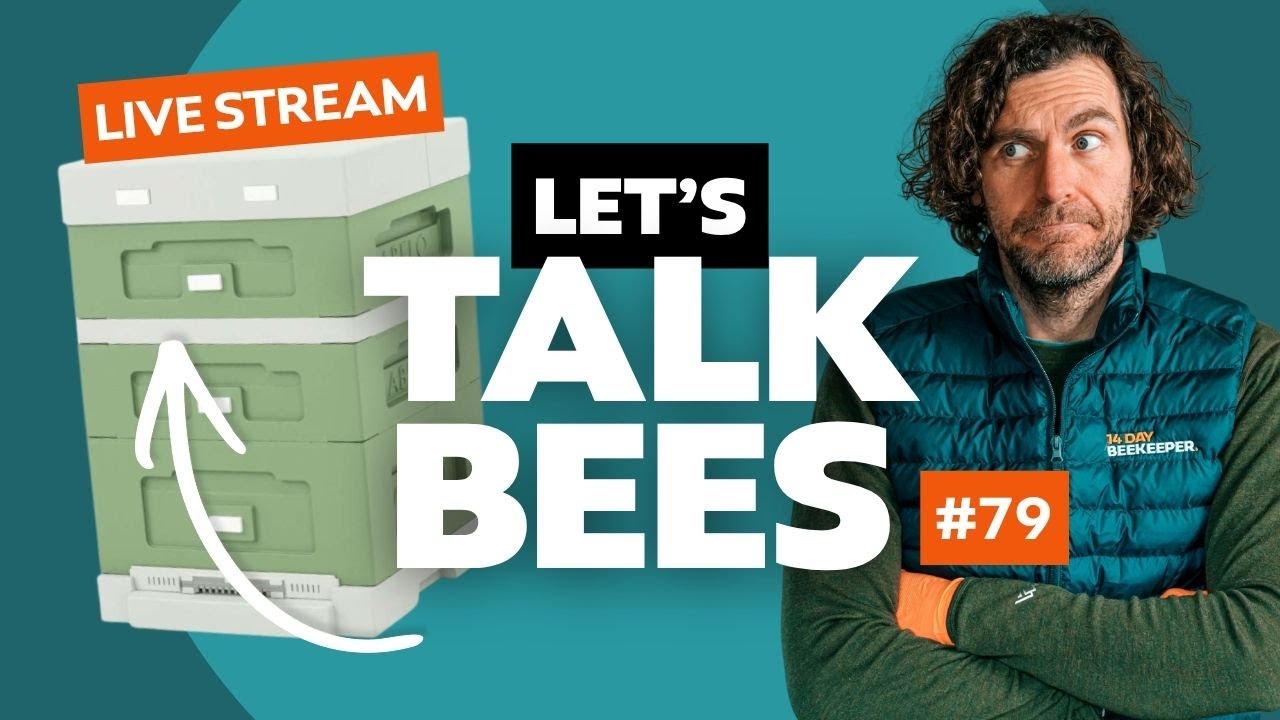
Laurence Edwards answers viewer questions on managing honey-bound hives, feral queens, swarm cells, varroa treatment timing, and demaray splits. He covers apiary scaling, hive colors, and the launch of HiveQ community on Circle, plus updates on ordering overwintered nucs and queens.
Chapters
Hello everyone and welcome to episode 79 of Let's Talk Bees. I have decided that it is a little bit silly for me to do weekly streams. So I got it wrong, I get it wrong like on the intro every time. I have realized that it's better for me to come back every single week in the season and do a live stream, and then the flip side of that is that that's way overkill for outside of the year. So we're working on the scheduling the live streams. I'm not going to commit to anything. I'm really bad for committing to stuff, and I know that, but we will nail down a schedule for this. We really will. And my take on it is I should be doing this live stream every single Saturday morning at 7 AM from kind of April through to probably August. And then I think outside of that, I'll go down to once a month, and we'll do the live stream once a month, and we'll do the newsletter once a month as well. Now, if you've not signed up to the newsletter newsletter yet, definitely get over there. I'll stick it in the description for the live stream. It is— I've been spending a bit of time writing a newsletter and quite enjoying it. But Gene from California, I think Gene has come in early and has taken over the show with a lot of questions. So what I'm going to do, Gene, is I'm going to flash through a couple of your questions. So first up, I'm doing very well, thank you very much. Let's go through and I'll answer, I'll answer 4 of your questions because you've asked about 10 and I feel bad for not answering them all, but There's gonna be a lot of questions, so let's go first up. Jean says, Lawrence, a honey-bound hive, should I split it or just take their honey and put more supers on? Oh, that's good. I've never seen it that way around before. Normally it's like, how can I fix a honey-bound hive? So the question you've got there is, should you just take the honey and put more supers on? That's a really nice fix. A lot of people who treat their brood boxes with like Apivar or any chemicals, they're not going to be able to do that. But if you're organic or treatment-free, then you've— you can just essentially go into the brood box and take the honey out. Now, some people don't like to extract honey out of old brood frames. There's nothing really wrong with it, like the bees will eat it. The only risk, as far as I see, is the chemical risk, is the beekeeper risk. So if you're confident with it, you can take that out. The other way of doing it is just to take it out and freeze it. A lot of people do that, take out the frames, put them in the freezer, they freeze up really well, frames, and then replace it with foundation, which removes The honeybound status and then put more supers on at the same time. Definitely do that. I went through on my phone and all my things, and I was like, right, I'm going to stop all the bings and the bongs. And I was pretty confident I'd stopped them all, but I just heard one, so I failed. Right, next question. Gene says, Lawrence, what do you think about feral queens? Now, I've not got— I've not got anything wrong with feral queens. In fact, I wish I could go and collect a swarm like I did the other day from someone's garden two doors down, and for them to be. Really, really nice and friendly and just get on with me, and then I get them in a box and they produce a decent amount of bees and a decent amount of honey, and then they're treatable and disease-free and everything's good. Like, if feral bees were like that, it would be much, much easier for everyone. The sad truth is, I think, for a lot of people is that feral bees are not quite like that, and feral queens don't carry a lot of those traits. And like, I've been out and catching this swarm, and it's a little bit of a challenge for me at the moment because Like we're filming stuff that people aren't going to see unless you're Hive Q member or channel channel channel Q. I forget what's going on. Unless you're a member and you're getting early access to the videos, you're not going to see what's kind of happening live. And I'm going to talk about that in a bit and show you around some of the ecosystem. But I went out the other week, this week sorry, and caught a swarm in the neighbor's garden. And they were really angry and they battered me. And I got them into a box and I've gone up there to check on them and I'm underwhelmed. And it's just a bit like, okay, it's like three frames of bees here, and they're not really doing a huge amount, and they're quite angry, and they're hurting me. So no, I've had a lot of a bad experience with feral bees and feral queens, and I'm not a fan. Hence why I've gone down the route I've gone down. There's nothing wrong with them though. Like I say, if if if you're in an area where the feral queens are really good, and they're the color that you want, and they're the temperament that you want, and they're not showing any signs of chalk brood or sac brood or any of the brood disorders, and you're keeping them healthy, and they're not swarming so early. like before they've hit the brood box and putting a bit of honey in there. Like, if they're giving something back to the beekeeper as well, then fine. But survivor bees that are just kind of there for the bees, I don't— if that's the case, then great, but you don't need the beekeeper involved. Just, we'll set that aside to the survivor bees and leave them to sort themselves out. And then I think there needs to be a happy medium in the middle. I was supposed to be doing quickfire with Jean, and I've just gone off about feral queens again, so I'm gonna do one more. One more, Jean. Let's have a look at your one. We'll go down through. Um, are you sound about keeping the family well as well? Thank you very much, and that you love the videos. It is midnight there. Uh, right, how long would you keep a swarm queen for? That's a great little tag-on to what I was just saying there. So I would keep a swarm queen. I'd always keep a swarm queen and have a look, see what's there, unless you know they are vicious or there's virgins in there and it's a runty little queen. If you come across like a queen that's marked. If you capture a swarm and it's marked, I'd always be looking to see like, what we've got here, that's interesting. I went and cut out a colony from someone's house last year and got up there and they were really chilled out, super chilled out, super yellow, very Ligustica-looking bees, and I was thinking, oh, this is like, I'm interested to see what this is, and I thought maybe this could be like someone's breeder queen and maybe the queen will be marked and maybe it will tell me something, but it didn't. It was just a random, very yellow-looking queen. But I'm intrigued, so if I catch a swarm, I want to see what they're like. I'll give them a couple of months, I would say. You want to be taking swarms— for anyone going and collecting swarms, it's a good piece of advice for you— you need to isolate swarms. You need to quarantine swarms. Swarms carry huge amounts of risk. So if you're going out and just collecting a swarm from wherever, putting it in a box, and then bringing it back to your apiary and just managing it within your apiary, like you're you're bringing disease risk in from elsewhere. And do swarms carry disease? Yes, they definitely do. Like, they are an EFB vector, 100%, European foulbrood. So you need to be putting them only on frames and foundation. That's all you should be putting them on. Don't put them on any drawn comb because it can transfer disease over. Everything should be clean, everything should be sterile, or everything should be new. Most importantly though, the advice that I would give if you're going out and catching swarms is Do not feed them if you can get away with it, and definitely do not feed them for the first 3 days. That is the big, big one that I see a lot of people getting wrong, and it's advice that you wouldn't know unless someone told you it. But if you go out and collect that swarm, let's say they have EFB, let's say the colony that swarmed had EFB, and now you've got this swarm that's got EFB in the stomach of the honeybee. If you take that swarm, put it on foundation, or put it on drawn comb and start feeding it, what What the what the bees do is they start to regurgitate a lot of that honey and store it, and then put it into the combs, which is bad, and it keeps the disease there, keeps the kind of bacteria that's in EFB there, and then that colony will just have EFB. However, if you do not feed them, they have to use that energy store that they've got in there to draw out the foundation. So if there's no drawn comb and you have foundation, they have to use that, and it purges their stomach. They've done tests on this and shows that as long as you starve them for at least three days and they use their honey stomach to draw out the wax. It does purge them and the chance of transmission is much, much lower, effectively reduced. So it's good advice, don't feed your swarms if you can get away with it. Definitely don't feed them for the first 3 days. Definitely keep them in a quarantine zone somewhere else, a completely different apiary if you can get away with it. Wash your hands before you go in, sterilize them, washing soda. But then most importantly, I would say 2 rounds of brood as an absolute minimum. Do a full disease inspection, shake all of the bees off. Make sure you are content that the larvae look good. There's no EFB, there's no kind of twisting, there's no desegmentation, there's no scales forming. Really go to town with swarms. They are the biggest risk, I would say, for most beekeepers. So don't just go out naively collecting them and thinking that they're going to be nice and healthy. Do all of your checks. There we go, Jean. I'll give you a good answer for that one, a nice long one. I'm going to jump back down because I would— I think I'd be here the whole hour asking, answering Jean's questions there. But thank you, Jean. Midnight for you, but I've got someone who's even later than that. I've got 21st Bee at 1 AM in Arkansas, and I just thought I'd say thanks for staying up as well. And also thanks for your frames. Your frames, your Infinity frames are so much better than any other plastic frame I've ever tried. There we go. I'll say that. It's a shame that you can't get them over here. Definitely need to sort something out. Right, Paul says, I have a last-minute bargain price queen bought from Black Mountain Honey yesterday and she comes today. Can I make a split today and place her in it? So ideally, no, you would have planned it in advance, Paul, but realistically, yes, you can. So just do everything exactly the same. Go ahead, make your split, leave it for about an hour, take the queen, place the queen in, and then the whole process is exactly the same from there on in. Wait 8 days, take down all the emergency cells, shake the bees off, take them down, get your queen, pop the tabs, put her back in. And then depending on whether you wanna have a 24-hour gap in there, you can choose, but if you're lazy like me, you're probably just gonna go back in on the same day you take down those emergency sales, pop the tab, leave it for 7 days, and all should be good. A few people coming in, we've got Beard and Bee says good morning, morning to the Arctic Beekeeper, Sergeant Snitch, Andy Street, hi Andy, some honey in the post to you, my friend. Mark Jackson says good morning, Julia, it's crazy, I can't see the green text on the black background, just can't even see it, I got it there, Julia, she says, Morning, Lawrence. I have an aggressive colony. Blue queen performed a demeray yesterday, but I would like to replace her before next season. When is best to replace her with a mated queen? That's a really good question, and it's a question that was asked last week, and it's a question that I hadn't really given a huge amount of thought to before. And it's kind of two-pronged, I would say, for you. What I said last week was, if you're if you're if you've got a queen that you think is failing, you've got a queen that's coming towards the end of her life. The question was, should I do the demeray before? Or after— sorry, should I kill the queen before or after the demerite? And I said, well, if the queen's— if the queen's failing, like, a really good test is to put her through a demerite because it means that she has to work quite hard. So I would put her through it, and then at any point that she's struggling to grow, then you just go in, bang, kill the queen. It sounds horrible doing that, I know, but she— she's gonna drag 60,000 lives down with her if she goes, so you need to do it. It's a necessary evil. And then you've kind of got you've got the most bang for your buck out of that queen because you've pushed her as hard as you can, and then like you knew she was going to fail and she did fail. However, I would say with you, that's what, what do you want? Do you want to get the absolute most out of the queen, or do you want to limit the aggression? Because I think probably for you it's going to be the latter. Limiting the aggression is going to be much easier to achieve just by replacing the queen earlier. So instead of getting the maximum out of the last queen and getting her to lay up all of that brood and then killing her and saying thanks for the brood. Sounds horrific though, saying it like this, you know, you get the idea. But if you do it with the angry queen, then all of that brood is going to emerge and it's just going to be angry bees, whereas if you replace the queen before, all of that brood is going to emerge and it's going to be nice calm bees. So I think I've convinced myself that you should replace the queen as soon as possible, and I think that's generally the advice when it comes to angry colonies. Do it, do it as soon as possible. because if you're going to have any open matings in your apiary as well, like you're letting the drones, you're letting the drones out, you're letting the drones fly, so do it earlier on. Limits the drones, but doing it earlier on just makes it much easier to find the queen as well. So I hope you can find her. Good morning, Laurence, hope all is well. Uh, start again, get it wrong. Good morning, Laurence, hope the family is well. No questions this week because we've been watching more 14-Day Beekeeper. Looking forward to getting one of Queens next week. Well, that's a very nice, that's a very nice comment there. Thank you very much, Dave and Ella. I'm gonna try my very best to share my screen here, give it a go. Let's have a look at this one here. I think that is working. So I want to show you around kind of HiveQ, Fortinet Beekeeper, and just give you a flavour because I've not advertised it. The IT guys have said that you can't advertise it because we're in this weird weekend status zone, but we're launching on Monday or Tuesday or Wednesday. Next week, it's gonna be one of those days, and it's live. So we've got 50 testers in there at the moment. They're going round; they're doing everything they want to do, and it's quite fun. I really like it in there, and we've tested it, and it works, and it's fine. So everybody else over the next week, literally within the next seven days, is going to get an invite into Circle, and then I'll just show you around. So this is this is like the Hive Q discussion group. We've got picture of me. If I if I zoom in a bit, should be a sit better. Um, picture of me there, and then got a cheat sheet section. Um, a few little bits. This is where you can just have your chats and stuff. You will see I've done some emails at the moment, or carousels, or offering up free PDF guides. So I thought, well, instead of all— for all members having to put their email address in again to get it, I'm just putting them in here. So anyone who signs up gets all access to this. You've got access to the Hive Shield entrance, making yourself a wasp guard for a pound. Pretty cool. I've done a really good detailed sheet on the demeray there, and then this is the question that most people are asking was, well, I was a member, like I was a channel member paying £9 a month, and I've joined 14 Day Beekeeper now, locked in for lifetime access. Do I still get all the videos? And and the answer is yes. I said to everyone to get all the videos. So all the all the videos, the channel member videos are in here. You see that one there of me saying confidently that that beehive was not going to swarm. And it swarmed like 2 hours later, and me and Zane caught it on camera and then sent it off to Just Alex. It was a pretty good video. This is the thing, like, these are the videos that are being filmed at the moment, and it's going to take ages. It's going to take ages to get them out. But let's go, let's go through. So that's it. And then the last thing I want to show you is if you jump into— I have to go to Fortnum and Debeakey up here. So all of the courses are linked in here as well. So it's not just the community group, it's not just the seasonal channel member videos, it's not just the cheap Cheat sheets, like it's everything. It's all of these videos. So this is 14 Day Beekeeper at the moment, 285 lessons. So each one of these here is is a lesson. You go in, kind of click on it. It will give you all the breakdown, any links, anything you need to know, any additional videos that I've done that are relevant to it, and then you can beekeeper. So there we go. I thought I'd just quickly do that because. A lot of people have been asking, like, when are we moving over? When's it going live? And it's all happening at such a ridiculously fast pace because somebody else is doing it, which is great. So I'm going to put the comments back up there. A lot of people are enjoying 14 Day Beekeeper. If you want to get over for lifetime access, like, I'm not advertising it, but this is the weekend to do it. So there we go. Steve says, morning, Laurence, feel a bit like a kid on Christmas morning. Black Mountain Queen, uh, sorry, Black Mountain Honey Queen arriving today. I get a bit like this. I remember when my first queens came through the post and kind of sitting there, and even like we get breeder queens and stuff through the post as well, and then you're thinking, oh, like, I really hope they're okay. I hope they're okay with the weather. I hope they're okay with the transit time. Hope they've got enough food. Hope none of them die. So it's nerves and excitement at the same time. So I'll rest assured, I say to people, you've not got to worry about the queen not being okay. Most of the time, really high percentage hit rate on getting the queens to you like in really good condition. And if there are any issues, we fix them. So you're not going to worry about that. And also, I've had a few people message and say, are you are you going to send queens out next week? Because it's it's like mega heat wave. And I said, oh no, it's a really good point. And like if if it was nucs, there's no way that we would be sending nucs out next week. It's probably ten degrees C too much for nuc sending. But for queen sending. these queens come from Malta, they're used to, they're used to kind of 34, 35 degrees, and they are packaged up perfectly to cope with that environment. And then most importantly, like, you think of the temperature in the beehive, it's 36, 37 degrees, can maybe go a little bit warmer than that on, on the hottest days as well. So it's not an issue. So the queens will be going out fine. But yes, I, I get excited for people getting excited about their queens as well. So I hope it all goes well. Hey everyone, I made my first, very first honey cell today. That's a really good moment as well. I remember getting the first honey in the jar, like the first taste of the honey is the one, isn't it? You're like, oh wow, okay, I need to share this experience with some other people. But getting it in the jar and then like giving it to someone or selling it to someone, and then the next bit which I know is going to come is they'll ring you up and say, that was the best, that was the best ever honey I've ever tasted, ever. Can I have some more? And then, yeah, you've got your first customer there. But that's brilliant news. made me happy as well. Andy S says, speaking on the ecosystem side, absolutely loving the move to Circle 5, QN14DB, Beekeeper. Such a quality of life improvement, making everything more accessible. Yes, 5 is in the post, Andy. Thanks very much for that, mate. It's true, it's definitely not a plug. Like, I can feel that, and, and everybody that I've spoken to has kind of said the same, which is like, I'm just deleting the Wix app now because this is so much better over here. Long may it continue. The exciting thing for me, yeah, is that we've not even dipped our toes in the functionality of Circle yet. There's so much coming, and they are such a forward-thinking, forward-thinking company. Like, they're a massive company. Uh, they, they do the communities for— they do the community for Harvard University, they do the community for Ali Abdaal, they do the community for like really very well-respected and credible companies and people, and like, I do not know why they've let me in. It's crazy, they're letting in Southeast London. Um, right, Aaron, let's go here. Morning, Aaron. Aaron says, I was chatting on here about one of my hives having Nosema. I did a Bailey comb exchange, it sorted itself out. I requeened it with one of your queens. Maybe stress, not Nosema. So I just check, I check with the Nosema to say like, is it, is it, is it Nosema? Have you tested it? Have you looked at it under the microscope and confirmed, had it confirmed that it is Nosema? That is the only way to confirm it. If it's dysentery, so if you're just seeing like the bees relieving themselves and poo and dysentery and stuff like that outside the front and then it's gone away, probably not Nosema, probably was just dysentery. So it could be a result of just eating something. So dysentery is just like dodgy tummy. They've gone out, they've eaten something, and it's like, oh no. It's like going out for a couple of beers and a kebab and you come back the next day and you're like, oh, I don't feel that great. That's Nosema. It would have been so useful to get it right at that point, wouldn't it? That's not nasema, that's dysentery. Get it right, come on. Early in the morning, uh, and if it's clearing itself up, I wouldn't worry too much. Dysentery is— it's not normal, but dysentery generally has like a root cause. You can say, oh, maybe we fed them some syrup that was a little bit fermented, or maybe, maybe the weather's been quite poor so they've not been able to get out as far. So if it's cold and they're clustered in and they're like, come on, we need some good weather, I need to go, I need to go, and then just the good weather doesn't come, so they have to relieve themselves. That's not the cima, that's just dysentery and bad conditions and stuff like that. So good weather clearing up any sort of dysentery like that, almost certainly going to be they were not able to fly, and that's what you're seeing there. Regarding prepping a colony for the heather, is new drawn comb the answer to having 8+ frames of brood? I have X frames of pollen and stores. Yeah, it's management in that, I guess. It's working out the system. I'm trying to think of a good answer for you there, Simon, to make sure that you do it. A lot of people make up kind of like fake colonies for their heather. They'll go, they'll have like an apiary of 20 colonies and they'll say, right, I'm taking 10 to the— I'm taking 10 to the heather, and they'll build them up from scratch. They're always making sure they've got like the right amount of brood in there, but making sure that you've got young queens. Young queens make a massive, massive difference on the heather. If anyone's watching Zane's First Nook, I nearly gave away Zane's First Nook. What happened? That's it. This is where I get confused. I can't even say that. Watch Zane's First Nook this week. On a completely unrelated note, yeah, I can't even say it because it will give it away. Right, we'll go back. Go and make up colonies of bees from your apiary nice and strong, and I would suggest nice young queens in there as well. There we go. Next, next one is slide it out. Oh, the comments have jumped all the way down. All I was going to say is I need to keep, I need to keep the live streams to 1 hour, so I will be finishing on 1 hour. I'll probably start going quickfire from half past because I never finish otherwise. Not, not that, not that I've got anywhere to go or anything to do, um, just need a bit of a schedule. Okay, I've gone all the way back up to the top somehow. I have found it, I found it. Here we go. I love your knowledge, Laurence. Thank you for sharing. Jean's definitely definitely tucked up in bed now. Can we Demaray split a huge honey flow? So mid-huge honey flow, it is the perfect time to do a Demaray split mid-huge honey flow. It really is. It's just made for it this weekend. If you're going out and you've got colonies, the brood box is full, and you've got 2, 3, 4 supers, loads of bees in there, you're thinking, if I can just keep all of these bees In this beehive here, I'm going to end up with so much honey. Normally you come back next week and they've swarmed, and if you do the demo ray, you've got 3 weeks of it, and if you get the weather, you get the nectar tsunami, you've got the maximum peak amount of bees, you're timing it with the longest day of the year, now is the time to go out and do the demo ray split. It really is. This is the weekend to do it, I would say, if you've not done it already. If you've already done it and you've got 2 brood boxes on already, I would not recommend doing it again. Don't confuse things. Don't add a third brood box in unless, unless you've converted that top brood box to a super, and then you're essentially back on single brood anyway. But yeah, go ahead, do it. It's a brilliant weekend to do it. And, and this is where you— this is where people build the kind of 7, 8, 9 super beehives, because if you can get them into the configuration now, your 3 weeks takes you through— like, we're on the solstice, it's basically the solstice tomorrow— your 3 weeks takes you through to 3 weeks past the solstice. So we're in peak swarming season. Do it now. Peak swarming season becomes like easy season, and then you go back into a much easier place in three weeks' time. So yes, short answer: yes. Simon says regarding your pollen trap video, you need to explain how a small beekeeper can dry the collected pollen. It's funny, Simon. You you you talk to me like I've actually thought of that already. The way that I work at Black Mountain Honey is I go. I get the trap, I put the trap in, I collect the pollen, I go to finish the video, I realize that you— I've not got the facility to dry and get rid of all of the little bits and stuff like that. So the drying but also the cleaning of that pollen, um, needs to be done and needs to be included on the video. So I went off, I bought a pollen drying machine and a pollen cleaning machine, and I've got them there ready to go. And then it's just busy now, but I am sorry. So yes, you do need to dry it. Do you know the, the thing that I didn't include on that video, which was a really simple one, which was I just took the trap off, yeah, pulled out the tray and just built myself like another little pollen tray, and then I put the pollen tray just in my honey warmer, my honey warmer down there, just on a really low heat, and just put it in there and it all dried it out. I have just been eating it raw though, so not dry, with all the bits in it as well, which is equally nice. I take your point on board though, so thank you, Simon. Right, let's jump down. Where are we going next? Darren says hello. Hi to you too, Darren. Julie says it's 2 AM here. Wow, just got home from work. That is, that is super, super early or late. It's weird, it kind of straddles a little bit of both now. A few people saying good morning, so good morning to Mickey, good morning to Steve B's Wales. Hello. If you're doing these every week, is there any chance once a month could be at a later time, evening perhaps? So I'm generally like quite flexible and can change things around. I'm really sorry, Darren, I can't do it. I, my, I just, I get up at like about 4, like half 3, 4 at the moment with the sunshine, and come, come 6 o'clock I'm ready for bed, but I'm not allowed to go to bed until 9 because I like family stuff and kids and baths and dinner. And you know, anyone who's got kids knows what it's like in the evening. So come, so between, between 6 and 9 it's just game over. There's nothing that I can do. And like, I was ready to go to bed at 6, so I can't do a live stream at 9 because I just gotta be like Sleeping away like that. It would not be the most entertaining, but I'm doing the I'm doing the reruns, and you can you can kind of watch them at any time. And Darren's got the hotline. Darren, you got the hotline? So just send me a message, and I'll I'll get your questions answered. There we go. About that scout about the bee dog says when you receive your imported queens, how do you separate the queens from the workers? Do you use CO2 or dip them in water so they temporarily immobilize the queens? So both of those methods are valid. I'm not going to dictate to anybody else the processes that they should go for, uh, go through when importing, importing queens and removing workers. I kind of don't like their process. It's not, it's not the best process in the world because it doesn't actually fix the risk that it's seeking to fix. But we, we comply with everything that we need to comply to with. And, you know, I'm tempted to go, to go down this route and just start uploading our United Kingdom national what's it called, the United Kingdom National Bee Unit import certificate that's signed every week by the UK National Bee Unit, and just putting it on the queens. Not to say that, like, I'm not sure that everybody you're buying your queens from can show you the certificates. Let's just say that. Maybe we'll add that on and start telling some truths on Black Mountain Honey. He's getting, getting very dramatic, right? Uh, Nitron said, can we demerace split the, the same way? So that was actually the same question. Yes, you can. Farmer John says, don't forget to buzz the like button. That's a very good one. Um, yeah, appreciate if people hit the like button though. Uh, Darren says, today's my— today is— start again, Darren. Today is the day for my grafts to be put into small splits and mini nucs. Despite that, I'm kind of excited to our queen next week and our obsidian in a few weeks' time. I hit that up and I shouldn't hit that. That's the first time. Have I been doing that automatically all day? That's ruined it. I'm gonna— I have to read it again, Darren, because you're not gonna get it. You're not gonna get it on the little clips. Darren says, today is my day for grafts. I I've given up. Third time, I'm just gonna answer it. Obsidian Queens, Darren. Ah, they have gone, they have gone crazy, the Obsidian Queens. So I've got, I've got a couple of announcements, nice announcements. The Obsidian Queens are back. We have got an Obsidian Pro line as well. I'm so excited about this. We weren't going to be releasing this until next year, but the public has demanded that it comes into play earlier. So the numbers are limited, as you can see. I think we sold out until like 3rd or 10th of July now with the Obsidian. The Obsidian Premium line will be added in next week or the week after, and then there will be like limited availability through until the end of the year, and then we will see where it goes from there. But lots and lots of people are, yeah, very excited about the Obsidian Queens. Uh, oh no, I've got to put it up. I'm clicking on it by accident. It's thrown me a bit. Maybe I'll have a sip of coffee. Here we go. All right, let's do it. Do you have remote cameras watching your bees? If so, what do you use? So yes, I've got some Reolink ones there, the new whatever they are. I don't even know what it is. I was going to say the new, like, the new Reolink when there's like thousands of Reolink cameras. It's a Reolink camera with like a solar panel on it, and then you can zoom and twist it around and stuff. So it's more of a security camera, but you can, you can use it for your bees as well. It's good. Right, Jean's back, so I'm going to answer Jean's question. Jean says, Laurence, when you do a split, do you spray that hive with lemongrass and sugar water to desplot? I don't know what that means. Oh no, when I do a split. Okay, so when I do a split, I definitely don't spray any hives with anything. What you're getting at there, I think, is the pheromone. Some people use like air freshener to do this as well. It is valid. It's not something that I would ever spray into my own bees, and I wouldn't kind of mix it up or do sugar water or anything like that as well. If that's to get the bees to draw out the foundation and the frames again, I don't think they need it. I think a good flow from a good feeder and you will be good. Morning, Laurence, hope all is well. A week in, so going in tomorrow to make sure my Black Mountain honey queen is okay. All looks good, they are working hard. Fingers crossed, Mark. Fingers crossed, James, hope it goes well. Let's read the next person. Mark says, continuing the queen delivery conversation, I got one coming next Friday, installing her on Saturday. How do I look after her overnight? So we do not recommend ever looking after queens overnight. We recommend as soon as they arrive placing them instantly into the beehives. That is our recommendation. That is the one that covers like the guarantees as well. So we definitely don't recommend looking after them overnight. If you're going to go down that route, keep them in the packet, drop of water on the cage, and just keep it at room temperature. But be aware, Mark, there are no guarantees. We recommend getting them in straight away. Let's jump through, right? So Spreading Ideas says, during summer, what's the best treatment for varroa mite? So I'm a real strong believer, and we teach this a lot in 14 Day Beekeeping, having this kind of full season system when it comes to varroa. The full season system means that you don't have to treat in the summer. It means that you don't have to treat in the spring. It means that all of the time when you're going to be trying to get honey out of the bees or managing the bees, you've not got to worry about any chemicals going in there. You've not got to worry about harsh acids killing the bees or killing the queen. You can just focus on expansion and health and swarming space and collecting all of the honey. So then what a lot of people do and what a lot of the old books kind of get wrong a little bit is they've taken that to the nth degree. So they said, right, let's get all the honey first, we'll deal with the treatments later. So in the UK, you don't see it as much anymore and people are bringing it forward, which is really good, but you used to see this, which was people harvesting their honey in like back into September, early October if they're going for the heather, and then putting in some Apivar and saying, right, treatment's done. And what's happened there is that all of the winter bees have already been produced, so all of the winter bees have been produced under an incredibly high mite load. So all of those winter bees, the bees that you are dependent on to get you through until the spring, have a high viral load, like a super high viral load, and then you're putting the Apivar in and at that point the queen's probably off lay, and it doesn't do a huge amount to the phoretic mites instantly. It's a slow treatment, Apivar. It's not like oxalic acid that knocks them right down. So these bees are just much, much more unhealthy. So the process and the system that we try to use is instead of saying, right, going in back end of the season and doing the Apivar treatment or the Varroa treatment when it suits your honey schedule, we say, well, when would be best time for us to go in and just do like a single summer treatment. And I, I got that time roughly for me around the middle of August. For some people further south, it will be earlier than that. It could be even as early as the middle of July. But you need to work out roughly when that time is, and you'll start to see that. You see that by not treating. You see that by not treating and then going 4 to 6 weeks later and thinking, oh wow, like, should have treated earlier. But we go in middle of August. I go in, take of my honey off, I put my feeders on, feed the bees if they need it, trickle feed through 1:1, put my Apivar strips in. And a lot of people say, oh, that's way, that's way too early, you're losing out on all of the honey that's still coming in at that point. And I say, well, yeah, but the bees can keep a lot of that honey, that's good, that honey is good for the bees. I've had a really easy spring, I've had a really easy summer, I've got all of the honey off, my focus now is fixing the bees, yeah, getting the bees ready for winter, getting the Apivar strips in really nice early, harsh chemical Bear in mind it is a harsh chemical called miticide treatment to knock the mites right down. And then we supplement that. So we say, right, okay, that's a really good knockdown, that's going to get all of the mites down low before the winter bees are produced. And then once the winter bees are produced, we go back in, we feed 2:1 at that point— turning into the longest answer ever, but this is the detail that we do go into in 14-Day Beekeeper— we backfeed the winter stores at that point once all of the winter bees have been produced under low mite conditions, nice healthy winter bees, we backfeed, which means that the colony doesn't need to expand anymore, they get their weight up for winter, and then at that point we don't say, oh, job's good, we come back in kind of between maybe the middle of November to the middle of December, we try and use our 3-week trigger, nice cold snap, 3 weeks later around the winter equinox, you call it the winter equinox, the shortest day of the year, we go in and we do a single blast of an oxalic acid-based treatment. And then what you're doing there is that you're not going to have much brood at that point, or any. The idea is to try and have no brood whatsoever, so you know that all of the, all of the varroa that is in the colony is on the healthy winter bees, phoretic mites. And we know that doing an oxalic acid-based treatment is going to knock down up to 95% of those mites if you get the conditions right. So they're not tight cluster, you want a nice loose cluster, ambient temperature around 8 to 10 degrees. Can you see how if you do that last year, if you did all of that last year, there's no way that you need to treat for mites now in the summer? You're doing the hard-hitting stuff when it suits the beekeeper. You're doing the hard-hitting stuff, more importantly, in good time to keep the bees healthy and ahead of the curve. So this is probably the longest answer ever. If you are in a position now where your bees are really struggling, you have to do a treatment. There's no option in the UK for doing anything that leaves the supers on, so you have to take the supers off. If your colony's struggling, I wouldn't recommend MiteAway Quick Strips. I wouldn't recommend formic acid or Formic Pro. They're too harsh and they can knock the colony back. I would— if you're in an— if you're in a situation now where you're really struggling, I would cut your losses. I would take the honey off, I would get Apivar on, and I would treat the bees through and focus on next year. There you go, that's my advice. Gotta be a good 5 minutes, that one. I bought my first Buckfast queen this year and brother, she is extremely fast. My population exploded and she's not done yet. Yes, love stuff like that. We'll, we'll clip that one for you, John. Jean says, Laurence, how often do you put a reducer on a hive? So our underfloor entrances don't have reducers, they kind of have them built in, but you can add little bungs in to reduce it down. I would say never. Like, it's very, very rare that we come across a colony where they're under that much of an attack that I have to do anything. And if they are under that much of an attack and I have to do something, I just move it away. It's generally a nuc, a nuc that can't manage itself, so I just pick the nuc up, close, lock it all in, robbers and everything, take it off to another site, and then just leave it there. The robbers just work their way, go into somewhere else, and everything goes back to normal. Julie says, I gave everyone honey last year and they said it was the best honey. I also got several orders today to fill for the next few days. Excellent. Jean says, where can I get one of your hats with a logo on it and your signature? Wow, that's crazy that people want hats and Signatures. I can do stuff like that. I need to get the circle community sorted first. Once once I get out of the beekeeping season, I'll have time to do more stuff. We're going to do a bit more merch, and I need to give away some more stuff as well. Talking of merch, I've got stuff like this. How cool is that? One four dbk dot com. Can't talk. Let's see if I've got any other ones. I've got some. I've got some hive Q ones knocking around somewhere as well. These are all for the beekeeper. There we go. Fortin DB Keeper. They're good, aren't they? These are these are my favorite hive tools as well. Like this isn't just me choosing rubbish hive tools and sticking my branding on it. That's the hive tool. It's like solid stainless, really nice bevels on it. No J hooks, none of that. How cool is this as well? Fortin DB Keeper. I thought you know if people are going to steal our reels or people are just going to outright copy them. then I thought I might as well put a little bit of branding on our ones and get, and get some brand equity when the videos get stolen or recreated by, by other people. Right, where are we going here? I'm just gonna say it. Next up, Max says, I've had a mare with queen introductions this year. One colony has just rejected its second mated queen, or seems to have. I've put a test frame of eggs in which I will check Monday. Why would they be so unaccepting? Will I have better luck if I combine them with another colony? Colony genetics could be that they're just saying we don't want those new genetics. In that case, you need to not leave them for 7 days, you need to reduce it, go back in every 2 days and knock down any supersedure cells if you're seeing them. I suspect though, like 9 times out of 10, that it will be— there'll be a queen in there, and if you're interested in like seeing people fail at introducing queens and working out the reasons why, then Zane's First Nuc goes live on, uh, yeah, Sunday night, and it's not Zane making the mistakes. So I wouldn't, yeah, I wouldn't be too hard on yourself. I suspect you'll put a frame of eggs in and they'll do nothing. They'll just draw it out as capped brood, and then you'll have to go hunting for the queen. Oh, Jean, that's a good question. Jean says, Laurence, what do you do when you see swarm cells? So when you see swarm cells, you have to take action. That's the best bit of advice that I can ever give anyone, and that action shouldn't be— I'll have to have a word with Natasha— it shouldn't be just taking them down, hoping for the best. Taking swarm cells down and hoping for the best will result in swarms eventually. It will. So we need to eliminate that. I always say to people, right, go on, tell me, Jean, you've seen some swarm cells, what's most important to you? And I know you can't have the conversation here, so I'll paraphrase for you. Maybe you're saying, oh well, this queen is the calmest queen ever. Like, I'm a bit worried if I lose the queen and then they requeen, they might get angry. And I say, well, there you go, there's the easiest one for you. Yeah, you've seen swarm cells, get in there. Is the queen still there? Are the swarm cells capped? If the queen is still there and the swarm cells aren't capped, then take up a nuc, like make up a nuc with your queen, and then you can make a decision on should it be a 1-frame nuc, a 2-frame nuc, a 6-frame nuc? Do you just want to take as much as you possibly can and be like, right, I've got the good colony there, Take too much and they'll continue to swarm. But take a little split, and then what have you got left, right? You've got a colony with half of the bees there and loads of swarm cells. If you do nothing now, they're just going to cast off loads of little swarms, maybe dwindle to nothing. So what you want to do there is either take down all the swarm cells, get them to hopelessly queenless, or take down all the swarm cells, wait 8 days, take down any emergency cells that they create, get them to hopelessly swarmless, then add in a mated queen. Or do what most people, I would say, do in this situation. Definitely what we do in this situation is just take them all down apart from one, keep one good cell, don't shake it, preferably an open one so you can see the larva up there, position it nicely, and then just put everything back together again. And you've made a really nice artificial swarm there. You've taken the split away and you've just left the bees with a single swarm cell. Textbook artificial swarm. So that's, that's what I would do. Or some sort of like iteration or variant of that. It could it could even be as simple as this. It could be oh well I don't want to keep I do not really want to keep in the bees anymore but I love that queen. I'd prefer to give that queen to say Doris down the road. It could be anyone insert your friend's name here but that could be that could be a way of doing it as well and then just take down all of the swarm cells apart from one leave them with one swarm cell and they might not swarm. Like, there's, there's so many different ways of doing it. I would always try and ease the pressure and not do such an extreme split and balance it a little bit. And then an artificial swarm works a lot better if you, if you kind of split them roughly 50/50. Already mid-demarate and mid-tsunami, can I keep the same setup and roll the demarate by rotating frames between the top and bottom? Yes, it is called the rolling demarate. It's a really, really good system. So just keep it going. Like, you can do it almost daily, um, and the more you do it The more you do it, the more effective the demaray becomes, with a simple caveat though. Yeah, the more you do it, the more disruption you cause the bees as well. So this is the only reason that I don't like suggesting to people to do a rolling demaray, is that it introduces so many frames coming out of the brood box and going back in, frames in, frames out, frames in like that. And for beginners, like, it's— I just think, oh, I don't want to— I don't want to squish the queen. I'd prefer to do do the manipulation once, get it done, and then like just know that it's not going to be quite as effective, but it's going to be much lower risk in terms of the catastrophic act of killing your queen. So that's why I don't recommend the rolling demerara, but if you're, if you're like a competent beekeeper and you know you're not going to squish your queen, rolling the capped brood from the bottom up to the top and replacing it is, is a very, very good way of doing it. Yeah. Harry Plumtree says, morning Lawrence, first time here, loving 14 Day Beekeeper and the move to the new circle. Excellent, I've seen you've been very busy in there, Harry, and I'm glad, I'm glad it's going so well. Jean says, Lawrence, how do you do a hive inspection without gloves or bee suit, and how do you not get— or, and how do you get propolis off your hands? So you might see me occasionally doing inspections without gloves. I should be wearing gloves. When we do videos, like I'll, I'll get onto the apiary, I'll be like, Zane, we just quickly need to do a video about this one thing here, and then I'll go into it and I'll forget to put gloves on. So naughty Lawrence, I should put my gloves on. The ones without the bee suit on, it is just like chilled out bees, and it's, it's so interesting. Yeah, because I've been going back, I said this last week, instead of just churning out videos and just not really putting a huge amount of planning into it, I'm going back and looking through the old back catalogue, and I'm trying to kind of compress things down and build these new nice little ways of learning, nice little PDFs, nice little guides that people can have to, to try and educate them and help them with their bees. And the one that I was looking at is the— this overwintered nucleus system. So going through, and there's another one on there which is like how to use— how to use English sections or wooden section racks, um, and how to use Ross rounds. And we're just looking through some of these videos, and, and they come— they're like 3 or 4 years ago. So it's kind of as I was coming out of a transition of still transferring the genetics over to Buckfast, but still very much like going out catching swarms multiple generations of different lines of queens, some very, very dark lines of queens I might add in there as well, but the bees were vicious. Like, looking back, I was like, there's no way, no way I would be inspecting my bees without a veil there. I'd be like very much blind, I would say, and huge, huge stings all up my arms and legs. So doing a hive inspection without gloves or bee suit is like, obviously put the gloves on, but it just comes down to the genetics of the bees. If you want nice calm bees, you need a nice calm queen. It is as simple as that. I'll caveat it again though, saying everyone should have a veil on. The only reason that I don't wear a veil in some of my videos is video number 2 in Forcing Day Beekeeper is so important to me. Video number 1 is me saying hello, thanks for buying it, uh, is, is the communication bit. If I was doing a live stream like this and saying, oh yeah, hi, well, welcome to the stream, and it's like, it's— I find it Really, really difficult to understand it because I got I don't got my hearing aids in. Like I can't hear. I've got the hearing of an eighty-five-year-old or something like that, and I rely on like lip reading to be able to hear. So I kind of get it the other way as well. So if I have a veil over my face, it's almost like I can't. I'm a bit like oh, I can't communicate properly with the camera. So I feel a lot better communicating, and then having edited the videos, I much prefer watching the videos of me without the veil just because I can. can understand what I'm saying. So I wouldn't recommend it to anyone. Everyone should wear a veil. It's very, very dangerous. If you get stung in the eye, you will get— you will become blind. So I don't think it's anything like— I don't think you should aspire towards doing inspections without a bee suit or a veil or gloves. I think you should aspire to having bees that would allow that if you wanted to. It's just as nice inspecting the calm bees with a veil on and then with your gloves on, and then you've not got to worry about the propolis off your hands. If you've got Heavy propolising hives, definitely wear gloves. Oh, there we go, I need to change leg position. 45 minutes in, I'm gonna go with a different leg cross. We've got 15 minutes left and I think I should be okay getting to the bottom of everything. Right, so Bazza's Bees says, morning, this year attempted swarming amongst my hives is prolific this year, gone from 11 hives to 26. I want to shrink this down, how to achieve this? So heavy compression and selection at the end of the year. Definitely. You've gone from 11 hives to 26. Work out how many hives you want and shrink your bees down to that many boxes over winter. It is as simple as that. You can stack boxes up going into winter. So my winter configuration is like a floor, a brood box, my insulated poly feeder, and a roof. I get all of my bees down to that configuration, but an equally valid configuration if I was merging things together would be the floor, brood box, brood box, feeder, roof. That's fine as well, and all that's going to happen is that you'll come in in the spring and the bees will just be upstairs in the top box. So it kind of costs you 2 beehives in the winter or in the autumn, you put them together, and in the spring you end up with one. And people look at that like, why are you doing that? That's rubbish. But you want to reduce them down, so that is your aim. When you compress big strong colonies together like that, the overwintering success rate definitely goes up if you manage to achieve the combination successfully and keep them queen right, just because you've got the economies of scale. You've got loads more bees, you've got loads more brood, and you do that early enough. So I'd suggest do that like middle of August, take all your honey off, stack the boxes up. You might have some that are on double brood, some that are on treble brood. Get it down to the number that you want, and the bees are unlikely to swarm any further from this point on. And then go back in, you'll be doing like late late winter, late summer inspections to get the bees ready for winter. Just check that they're all queen right, and then it doesn't matter how many hives you start off with, you just dictate the number that you want through the winter. And it might be a single brood box, it might be a double brood box, it might be a treble brood box. Just make it work, because come the following year, they're all just going to be in the top box. They're all just going to have compressed down. Some of the trebles might still be on a double, but you'll be able to take some of those out, and then you can do something again next year. Heavy compression is good, and the best thing about heavy compression is you're really having a big step change in your bees. If you've gone from, you've gone from 11 hives to 26 hives this year, you think of the, like, the variance that's come in. Maybe you've gone and caught some swarms from elsewhere, maybe your bees have swarmed and then the virgins have gone out and they've got mated, they've brought those genetics back to your apiary. Some of those genetics could be great, some of those genetics could be terrible, and compression, shrinking down, gives you the ability to control Everything down and we'll just keep whatever queens we want to keep. Like, do some selection. Go mark your colonies and say, right, this one is really good, loads of honey, nice temperament, disease-free, blah blah blah. Do all your little scoring boxes, score every single one of them up to align with what you want, and then cull the ones that don't conform. And then when you compress together, when you combine, you're just combining the beehive that you wanted to keep with the colony that you didn't want to keep, combine them together, and you make the better hive more likely to get through the winter. And you do that over a few years and you'll end up with like really, really nice bees if you do have some isolation or people working with you. Right, we did Bazza Bees. Right, Carolina, I sent you a WhatsApp this morning. Carolina says, I'm still deciding if I should get a bazillion of queens for my 2026 splits or make honey and get the nucs. It's quite possible we'll be doubling Brace yourself. Wow, Carolina, I need to tell the Carolina story because it is a very, very nice story. So Carolina messaged me this morning saying, um, I need to do a video telling people about heat. Um, so I'm gonna do that video. I've got it in my calendar. I'm gonna do a little short for anyone watching this today. You can drink through your veil. How do people not know this, Carolina? So I do this all the time. I have my veil on and I'll just kind of like drink through it. You don't need to take your veil down to drink, so you just like slosh it through like that. Neck fan, brilliant. Vented bee suit, brilliant. Bring loads of water with you. Soak yourself in water if you're going out and doing any sort of inspections. Then you need to keep yourself cool. My recommendation for you though is do it today. Today, like there's a huge drop in temperature, massive drop. Like it's 21 degrees here today where it was whatever it was yesterday. Today's the day. Get in. Do it when it's cool. Drink through the veil. Get yourself a nice vented suit, spray yourself copiously with water, get in quickly, get out quickly, do it really early in the morning, do it late at night. There's loads of little bits and tips of advice there for Carolina, and you can share those. I will cut and clip that and I'll send it out. But that's not even the Carolina story. Carolina's story is brilliant, and I am going to share it because of what you said there. Brace yourself. I think I need to brace myself. So Carolina bought a Nook a couple of years ago and, and asked some questions and, and wanted a nice Nook to start up. To start up a business, and we we kind of had conversations on email, and we had conversations on WhatsApp, and we produced the nuke, and we sent it to Carolina, and Carolina was happy. There we go. I only said Carolina. I want to make sure obviously I could be could be saying it a slightly different way. I'm going to stick with Carolina. So all was good, and Carolina was happy with her nuke. Carolina messaged the following year and said, "Really happy with that nuke. I would like to buy ten nukes, please." And I said, "That's not a problem. We can we can certainly cater for that." So we'll put the order through and just thanks for coming back and, you know, giving us, giving us a chance to, to kind of expand in this way. And Carolina said, no, no, no, happy with the nucs. So sent another 10 nucs to Carolina and all went well. And I think Carolina learned a lot about bees and how quickly they expand and how much honey they can produce, but was happy with the nucs. I had a message from Carolina last summer saying, we want 65 nucs next year, can you do it? And I said, well, Yes, we can, but we have to close like we have to close all the orders down because that's that's it. We're clear. Do you want me to do that? And she said, "Yep, definitely do." So we we sent the nukes down to Carolina this year and got them all down there. There was a bit of a hiccup with Royal Mail. Couple of them died very sadly died en route. I think it might have been might have been might might have been even more than that. But we always stand by our promises to everyone. Like we that's us. That's for us to own. it's not for Carolina to own or anyone like that. So we sent out a couple of replacement nucs, and I've been chatting to Carolina loads on WhatsApp, and she's been showing me all the boxes she's been making. And I'm sure you've been out chasing bees and chasing swarms, but definitely getting honey. And now you've just told me to brace myself. So I'm guessing we've got like a treble-figure nuc order incoming. I need to get Richard to, to start raising some more queens. But good to hear from you. I like that story. I tell that story to a lot of people. So we've got it now on there and we can definitely clip that one. Max says, got 3 supers on a hive I demarried last week. Do you continue to add supers as required? Definitely. So with the demarray split, you do this manipulation and then just forget that you've done a manipulation. That's the easiest way to explain it to people and carry on managing space as normal. And the question I generally get back from people is they say, well, do I add the super Above or below the top brood box if I'm treating everything as normal? And I say, yeah, I always forget to say that bit. That's a good question. Okay, it doesn't matter. I would put it underneath the brood box personally. That's just always where I've learned to put it for the Demeray split. But the, the logic is the same. You need to manage the space in both the brood nest and the supers accordingly on your weekly inspections. The Demeray does a lot of the heavy lifting for you there in the brood box. It does nothing for you in the supers. Nothing at all. The only prerequisite is that the top brood box and the bottom brood box need to be connected by bees, so don't go adding tons of supers in so you're disconnecting them. You will kill your queen if you do that. So you need to err on the side of caution, knowing that you've got space in the brood box to act as your buffer. But if you're going in, if I was going in and I saw the brood box downstairs was on like a couple of frames, bees drawing it out, queen just getting going, top box was full of whatever it was, brood or honey or whatever, 3 supers are full, I'd be like, yeah, I'm adding in another super. I'd probably get it somewhere in the middle. Good morning, I would like multiple out apiaries as close as home as possible to reduce travel and as close to each other as possible without competing for resources. What's the ideal distance? So I don't think— I think in order to have the bees competing like that, competing for resources, I think you'd have to have them so close together, but also you'd have to have so many colonies there. So if you're talking about— it comes down to the density you're putting there. If you're talking about putting 30 colonies in each of these apiaries here, you need to really consider the distances, and you need to consider, like, are there other bee farmers or beekeepers in that area? If you're talking about having, like, 4 to 6 colonies in our apiaries, I wouldn't worry too much about it, and I would say make it more suitable for you They could all be, they could all be within a mile of each other, and I don't think they would compete as long as you've got that high density. What I think is nicer though is to keep them, like, if you keep them a little bit further apart with different topography and different heights and different climates or whatever, then you get different honey, which is nice. So I think if you're going to have multiple out apiaries, you might as well play a little bit to that, but I wouldn't worry too much about it. The textbook answer is keep them all Like it's it's hard because to get competing resources is they need to be more than three miles apart because you'll have the overlap. But you don't need to worry about it. It's it's a problem that yeah, there's not there's not an issue for you to fix there. So I would say just as long as you're not putting tons and tons of hives in there, just stick them where it suits for you. Jean says Lawrence, do you prefer one brood box and honey super or double brood box and honey super? So I prefer a single brood box system. With the demerara on top of it. I love that combo. Laurel Reynolds says, good morning, first time catching one of your live streams. Laurel, it must be very, very late for you over in America, so what are you doing up so late? But hello, nice to see you here. Give Cayman a shout out as well, say hi to Cayman. Mark says, okay, I'm doing my split today, is next Friday too early to introduce a queen to the original hive? So no, so it's not. So that's, that's a really good question if you're doing religious 7-day inspections like that. And you, you want to make sure that you can introduce the queen on the exact day. So with requeening a beehive, you, you make the split, you wait 8 days, you shake all of the bees off, you take down the emergency cells, and then you put the queen in, and then you wait 24 hours, then you pop the tab. The dates are fixed, they're really fixed, but the important bit is like the reasoning behind it. What you can't do is you can't pop the tabs on the cage before all the emergency cells are taken down. That's the important bit there. So as long as you comply with not popping the tabs before the emergency cells are taken down, you can adapt, you can slightly adapt the process. So what I would do for you on that instance there, if you're going to go in today, it's Saturday today, you're going to go in and make a split, so day 0. Really, you should be day 8 for you Sunday next week, but you're saying you've got Friday. So it's super simple, make the split today, the queen's going to arrive on day 6, take the queen immediately into the colony, Don't do anything, just place her in between the brood frames. Don't open the cage, don't pop the tabs, don't shake the frames, don't take down the emergency cells. No, that's— that is wrong, it's the wrong information. Let's recycle back. You do need to do that, sorry. So you go in on day 6, yeah, take the queen, go through all of the frames, shake off all the bees, take down all the emergency cells, take the queen, place her in between the frames, but don't pop the tab. Yeah, got it right this time. Then you follow the process as normal. So that's just like your day 6 step, and then everything's the same. So you go back in on day 8 and you think, okay, well, just put the queen off to one side. I go through, I shake the bees off the frames, I take down any emergency cells. There might be a couple more emergency cells at that point, there might not be, depending on how old the larvae were when they did them last time round. So all it does is it introduces just an additional shaking the bees off the frames and taking down the emergency cells. But once you've done that again on day 8, that's it, it's done. And the process is the same. Now, the the process there says you should wait 24 hours before popping the tabs. Take down the last of the emergency cells on day eight. Wait 24 hours, then pop the tabs. Do I do that? No. If I was in that situation, I'd go back in on day eight. I would say I'm not coming back in on day nine as well. I'm just going to pop the tabs now. That is fine. They're not going to get through the fondant within the first couple of hours, and by that time they know that they're hopelessly queenless. So yeah, that that is the recommendation. I'm going to update. Oh, how to requeen a beehive webpage, I think, on that one, because it's, it's useful. We get asked that question quite a lot. Oh, there we go. Uh, Shropshire Scruff says, great news that this stream will be weekly. That's a step closer to being daily. Now, very helpful, thank you. Uh, I, I know when it's— I know when something's, um, when there's too much of something. But it's, it's funny because I'm working with this consultant. I've been saying to him, I could do this, could do that, could do that, and he's stopping me doing everything. And it's good advice. Yeah. And he said, you really need to do 2 lives. Do you really need to do a live stream every single week. And I said, well, no, I don't need to do a live stream every, every single week, but I think the people that come and watch it— it's 123 people here today— I think they get a lot, a lot of use out of that. I know it's not ideal for Darren. Darren wants a nighttime one. I think it's quite a useful time for a lot of people. I think a lot of people will be going out and doing some beekeeping later on today, so I think it's a really nice interface time. And then also, like, the, the weeks that I'm not doing the live stream down here, I'm kind of thinking I could be doing a live stream here. Like, I'm up, nobody else is up, everyone's in bed. I've got my coffee. Like, I could do a live stream, couldn't I? So it makes sense for me to do that. I'm not going to commit to it every week. I will do my best to do it every single week throughout the season, and then I'm definitely going to go down to one a month outside of the season. Because I remember this from last year, you get to, you get to the middle of, like, back into September, early October, and you're thinking, I've not got really much to talk about now, and this is just, it's just me and, it's just me and Gene having a chat. We can do it offline, Gene. Um, so So yeah, I'm glad, I'm glad that people like it. Every single week I will do my best. I've got a few corte nucs, the poly form Goody Griff, uh, with the poly feeder. Do I need to paint the inside of the feeder and any paint you recommend? So yes, definitely always paint the inside of any poly boxes when you're using them for feed. Don't cut that one the wrong way around. I don't paint the inside of anything apart from the inside of poly nucs. I can't talk this morning. Apart from the inside of poly feeders, you have to do it. If you do not paint the inside of poly feeders, what happens is you put the syrup in, everything looks fine, the syrup goes down in between all of the little granules and it goes mouldy and you cannot get the mould out, and then you've just got a mouldy feeder forever. So all you do is you paint it. You can use masonry paint, so exterior-grade masonry paint. Um, you, you can use Valspar one, which gives you any colour. or you can use the one that I forget that everyone uses, the Santex one that comes in a few colours as well, or you can use exterior-grade gloss paint. If anyone knows what plaint is, just give me a shout. Exterior-grade gloss paint, done. I've gone back to using masonry paint. I think the masonry paint performs a little bit better in the long run, so there we go. Masonry paint. Gene wants a hat signed by me. Okay, we need to do some hats. Let's do it. Scout About the Bee Dog says, a few weeks ago you shoot a A few weeks ago you showed you picking a queen from an incubator behind you. What temperature do you keep the incubator, and do you need to give them water? So we just keep it like, it's very ambient temperature, that one there. So it's around like high 20s, low 30s. There's a nice gentle breeze going through, and then it's got a humidifier as well. So I keep the humidity up at around 70%. It's not perfect, it's not optimum, but like the bees go in and they come out, they're only in there for a matter of hours, and I just like to keep it nice and standard for them. So that's not, uh, like my recommended settings for long-term keeping of queens. They are in there for— you can see they sell out pretty quick. They come in, they go out, they're done. So we don't store them in there. Uh, Electrical Courses says, morning Lawrence, thanks for another Saturday live breakfast, Black Mountain Honey live gym. I like it, nice process. Um, oh, John, John wants some merch as well. Right, we'll get some merch out. We're definitely, definitely going to do merch. So I, we paused the merch project. Like, I went down and we were doing all the branding, working with the company, and nobody bought anything. And then it was a real headache because, uh, not because nobody bought anything, just because it was like designing all these things and testing, and then there were glitches with the supplier. And I just thought, pause that, we'll pause it, but we'll get it back after the season. We'll have it, we'll have another go. Uh, DMAJ Rika says, hey, new beekeeper here and I received a swarm at the start of the year. A few weeks ago, it swarmed again, and I requeened it with Black Mountain Honey Queen. The hive was aggy before and calmed straight down after a successful introduction. Thank you for all the work that you've done. I'm looking forward to going in again today and seeing brood in all stages. I love a little story like that. I feel, I feel like, I feel like I completely butchered your name because I started reading it out, but I don't want to, I don't want to pronounce it and get it horribly wrong. But that's brilliant. That's a really good news story, and I think it's something that a lot of people could can empathize with, if not sympathize with, because nobody wants angry bees. And a lot of people would have gone out and collected swarms with the best intentions, and then like they grow into these monster colonies. They grow into really, really horrible colonies that are quite aggressive, not suitable for the garden. And people think, oh, don't, don't want to be involved in beekeeping, that's quite a lot of work. But the queen, you know, it's just the queen, it's the genetics of the queen. She is responsible for every single bee and their behavior in that hive. And if it's not good enough You replace the queen and it fixes it, and it does, it fixes it quite quick. I'm looking forward to you seeing what they're like next season because it's always the following season when people see them coming out of winter, people are like, oh, they are super calm. And then April and May are the months where if you want to work without a veil, they're the ones, but always wear your veil. Ellie Gray says, will we automatic— sorry, Ellie Gray says, will we all— I can't get it out. I mean, I'm so in the mode of like retakes for Zane, not getting my words out and then going into the retake automatically. And you can't do that on live streams, can you? Sorry, Ellie Gray. Ellie Gray says, will we be automatically moved over to Circle? So yes, everybody who has already bought Fortinbee Beekeeper or who is in HiveQ, you'll get an email probably over the next— within the next 7 days. And I'll, I'll put it on Wix and I'll put it on Circle and I'll email everyone personally as well to say go and check your inboxes because there'll be an invite to Circle. It might go to your spam. So if you've not got the email, then we can fix it for you, but they will all be coming out over the next week. Thank you for your answer. I've had a second colony that I took a split from. The first introduction failed, then they turned laying worker, but have since accepted a new queen. How long until the laying workers stop laying? Right, the plot thickens, Max. So I would say it is impossible to introduce a queen into a laying worker colony and get those laying workers to stop laying, because before the queen's had a chance to do it, they will kill her, guaranteed, every single time. So there's something else, there's something else going on. Been killed, and she's laid everything up droney, and then there's been another queen that's introduced and she's backfilled with good worker brood. you look at it and you're kind of like, oh, it's drone— it's like the new queen is a drone-laying queen, but really she's not. She's just backfilling, and it's all the old drone-laying— it's all the old drone brood that takes ages to emerge that kind of gives that impression. But the fact that you've got a queen in there now and they were previously laying worker, like, it just sounds to me like there's been a fight. There was a virgin, there was a mated queen in there, there was a failed queen in there that's lost a battle. She was laying drones, and then the new queen's taken over. That would be a that would be a more likely scenario, I'd say. So so I've been thinking this is one of the ones that I pitched to to Paul the consultant, which I think is a good idea. Little one to ones like that. I could I could do some one to ones with people, not not necessarily live, but people have a message and I've got a problem, and then a little bit of to and to and fro, and then hopefully come up like with a solution. Not necessarily there and then, like it could be. A few weeks later and work it out. And it's not even a case of who was right. It's a case of this happened. The customer wasn't sure. They had some problems. Maybe Lawrence gave some advice, and this is what happened at the end of the year. So not who was right, but just that's that's the problem, and this is what's happened. And is there any learning for anyone there? I'm going to start trying to collect that. So we'll clip this one as well. That'd be good. Jean's Jean is up all night in. California. How often do you get stung inspecting a hive? Or get strung? I don't get strung very often, I get stung all the time. So just like fingers and eyes and stuff, but yeah, I get stung and it's nice. I've built up a good immunity to bee stings, which is handy. Good afternoon from Australia, great to finally catch you live. Okay, so we've got so many different time zones, you can see how difficult it is to schedule something to keep most people happy. I think this one Apart from the late night, the late-nighters in America gives everyone yeah gives everyone a chance. But hello to you too. Hope it's nice and sunny in Australia. Sure it is. Jean Jean again says Lawrence, what color is the best color to paint a hive body? Why does everyone do white? I would say white is the most sensible because it deflects the sun and it gives the bees the easiest job of managing the thermal regulation of the beehive. We are in North Wales and we do not have to worry about that because it is. Very, very average temperatures, so I've gone with bold colours. But I would say it's a simple rule to follow: if you, if you're somewhere hot, go light. If you're somewhere not hot, I don't think it really matters that much. Clan D69 says, morning Lawrence, I hope you're well. Thank you so much for 14 Day Beekeeper. As a new beekeeper, I've learned loads. I've got myself in a situation you said not to. I need to find a queen. Do you have any tips? Okay, you can definitely get out of this one. I would say yes, I do have some tips. Work sequentially, so take out the first frame, have a really good look at the first frame, like the longest look on the first frame, because sometimes on the first frame, put it down not into the beehive, so give yourself like a little bit of space, and then work the other way through, so sequentially. So where you've got a little bit of space, go back around the other side, and then pick up the first frame and put it back down in the space that you've got, and then go straight to the next frame. It might sound like teaching you to suck eggs there, but that having the space in there, having the frame out, and then being able to go sequentially means that you can pretty— you're not guaranteeing it yet, you're giving yourself the very best chance that every single frame that you pull out will keep the virgin queen on it. What I see a lot of people doing is just pulling a frame out without— putting a frame out and then squishing it back in because there's not that much space, and then going to the next one, pulling a frame out, squishing it back in. I can guarantee you, if you do that, the virgin's going to see it and just be like Going over there, see you later. Just go hide over here, or you squish her, which is kind of what you're aiming to do anyway. It's not the best way of doing it. You don't just want to randomly squish all of the bees. We definitely don't want to advocate that, but that's the tip. The other tip is, if you've got— imagine you're holding the frame out like that. I see a lot of people like this, and they're like, they can't see very well. So hopefully you've got good eyesight, but if you're like that trying to see a virgin, you've got no chance, just got no chance at all. You need to get your arm at full extension and hold it back like that. And then what I do is I'm not looking for— I'm not looking for the virgin. I'm not looking around and saying, right, where is that bee that looks a little bit bigger than all the others? I'm looking at a frame and I'm looking for behavior, and I'm looking for the individual runners because they're potentially the virgins. You see like them sprinting across the frame. And then I'm looking also for the reaction from other bees. So you'll see it if you've got a nice mated queen in there. The bees will kind of like depart out of the way from a mated queen, so you can kind of see that if I'm looking for a mated queen. If I'm looking for a virgin— virgins are a nightmare for doing this year. You pull the frame out, they're on the frame, you look at them, and then they fly off. So you've, you've got to be like, as soon as you see it, you've got to have it. And this is why I like to get that frame off to one side. And but this is the advice that I give to you as well, so You can find the virgin. If you can actually find the virgin, you need to be quick. Yeah, so first step, find her. Second step, don't put the frame down and say, right, I'm going to go and get the tool and come back, because she'll be gone. You need to find her, straight in, kill her. Good luck, let me know how it goes. She now has a question. So I have one hive that I was given after it swarmed. It was a drone laying worker. I was planning to add a queen, but on last inspection there was a charged Queen cell. How? So on drone-laying worker colonies, um, they can produce like the odd decent egg. I would— I, I'm gonna gamble here. I reckon if you took down that cell, there won't be a larva in there, and you'll just see a perfectly filled pseudo-cell, like a fake cell. They do it because they're desperate. If there genuinely was like no queen in there that could lay a suitable egg, I think you'll find a duff a duff larva in there, but they'll still fill it up. I'm interested to see if it's there. Uh, Connor McLeod from Ireland says hello. Hello to you too. Max says one-to-one would be amazing. There's been a couple of other things that made me think laying worker— drone brood and eggs in super. I have an accolade of queen issues this year I'd love to talk through. So best way to do it, Max, get me as many pictures as you can, get me as much information as you can breaking it down, send it to me on email. I'll come back to you with a few emails, and then we're kind of like baking in all of that data, and then maybe I can do case study or a blog or something. That'd be cool. We are at the bottom. We've got 2 more questions. Aaliyah Fraser Honeybee says, hey Lawrence, new beekeepers here. If we wanted to expand our apiary with 6 overwintered nucs from you, when would we need to get a pre-order in? Best outro question ever, that one. Jean is just saying thank you for answering the questions today, appreciate your teaching. But I'm going to come back to Aaliyah to say that one, and sorry if I got your name wrong. Overwintered nucs, we have received so many people getting in contact and saying we need, like, we want to order overwintered nucs for next year, we don't want to be too late. We normally start taking orders now and we build the orders up through the summer. This is the reason that we, we're selling out way too early, so we're making a decision to not go live until the 1st of September this year with our overwintered nucs. It also gives me the chance to make a few changes. There, there might be a little bit of a cost increase. There's definitely going to be a configuration change. There might be a box change, there might be genetics changes. There's quite a lot that's going to change. All of it is, is done with the intention of making things smoother and ironing out any questions and making sure that people are happy with their nucs. I'll be completely honest, yeah, this year we had a few instances where I just need to make sure that the website is clear so people aren't confused as to what we're sending out. I think it's misleading and poor form for us to send out— it's not misleading and poor form, it's the whole system is a little bit broken. When people get an overwintered 6-frame nuc, they are expecting 6 frames of everything. So 6 frames of stores— not 6 frames of stores, but 6 frames, 2 frames of stores, 4 frames of brood, brood in all stages, some pollen. They're expecting every single bit of that frame to be filled. Now I kind of agree with that, I can see where people are coming from with that one. The challenge that I have is that if we fill the nucs up that much with bees and every single bit of frame completely full with honey, they don't send through the post particularly well. So we need, we just need to be aware of that, like our attrition rate this year has been much, much better because we've reduced the amount of bees going in, we've introduced like a little bit of dead space on some of the frames, like that, and I've been really happy with it, and it's meant that we've got a lot of the bees through. But we've had some people come back and complain and say, no, I've ordered a 6-frame nuc and it's quite clearly a 5.5-frame nuc that you've sent, so I want my money back. And it's like, okay, we'll do our best to fix that one. So going forward, the tweak that I'm going to make is I'm just going to say we're sending out 5-frame overwintered nucs. So going forward, next year there'll be 5-frame overwintered nucs. The likelihood is you'll probably receive a 5.5 to close to 6-frame, but I want to be clear that we're not sending up packed 6-frame boxes for a couple of reasons. One, because they don't send as well through the post, but 2, for the majority of beginners, it's not the— like, you don't want that. You don't want a 6-frame nuc that's bursting at the seams, because if I send you a 6-frame nuc the first week of April and it's bursting at the seams, and then it rains for 2 weeks and you can't transfer it out, they're going to swarm before you've got them out. So I'm trying to bake in a little bit of usability for the beginners as well. So that's what's gonna— that's what's gonna happen. That will be coming. That will all take place in September. And someone's knocked at the door to finish it off, so that is about as perfect as it could be. I am gonna finish the live stream there, go and see who's at the door, and I wish you all a very, very good weekend.










