Live Apiary Inspection - Episode 2
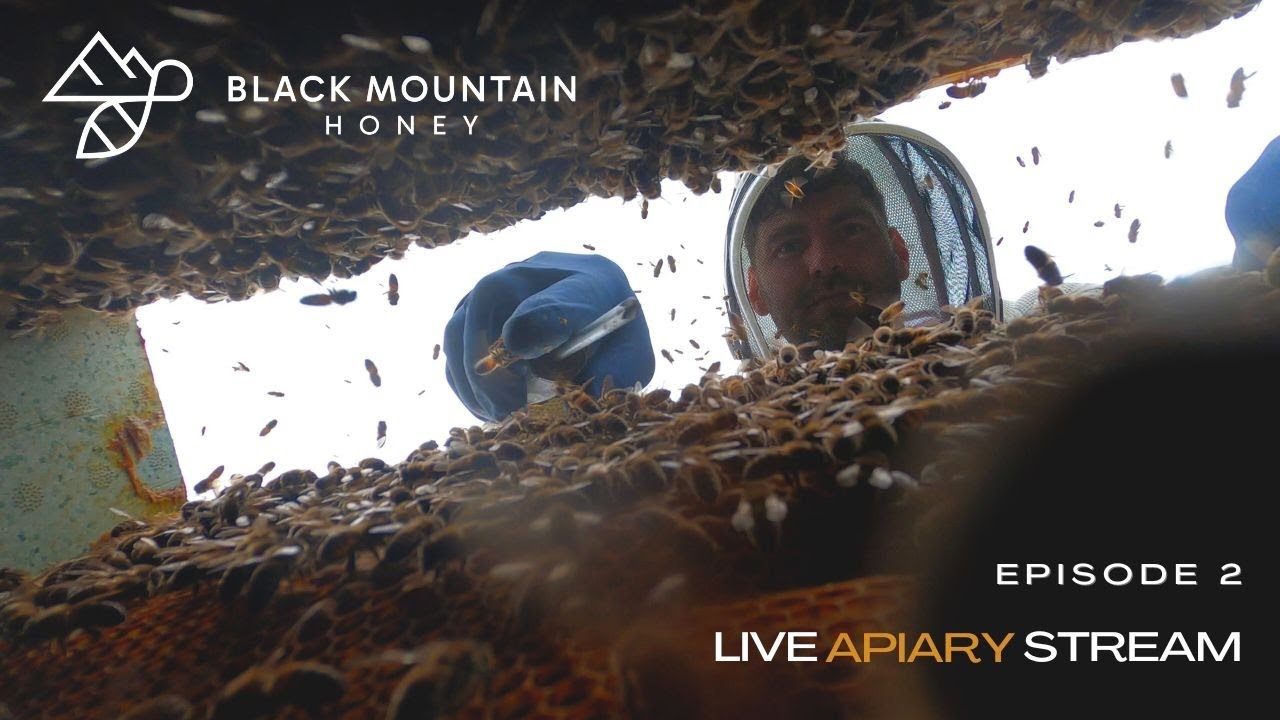
In this 1‑hour‑plus live stream, Laurence Edwards conducts a hands‑on inspection of eleven nuc colonies, documenting hardware failures, queen status, and hive management decisions. He begins by troubleshooting audio and video issues, then moves through each hive, identifying queen‑less colonies, emergency cells, and successful requeenings with various genetics (F1 Buckfast, Carniolan, Italian Lagustica, VSH, etc.). He explains his use of Langstroth feeders, checker‑boarding, frame handling, and feeding strategies, while commenting on bee behavior, temperature, flow conditions, and the importance of space and hygiene. Throughout, he engages with the live chat, acknowledges viewer feedback, and reflects on his experimental, open‑minded beekeeping philosophy. The stream ends with a recap of the work done, plans for future streams, and a reminder of upcoming Q&A sessions.
Chapters
Definitely having technical difficulties today, so I'm not sure if the audio is working. The camera is definitely not working, so I'm on my phone and I just have to quickly nip back to another page in order to go live on Instagram as well. Let's see if that's going to work. This is all good fun. There we go, right, that should work now for Instagram as well, hoping. So If I've done that right, we should be live on Facebook, Instagram, and YouTube all at once. Probably done it wrong though. If someone could give me a thumbs up for the audio though, and I'm just going to go and stand back over there a little bit. I need a thumbs up from someone to say that you can hear me back here. Can you hear me back here? I'm going to do some bee stuff here, but if this mic isn't working, then it's going to be a little bit difficult. All good. Okay, excellent. Right, first ever live A3 stream inspection. Massive hardware failure. I've been testing out cameras this evening. I seem to have every single little camera that does like one thing, but it doesn't do all of it. So my Sony A7S III doesn't do the live stream. The other ones die because of the batteries being rubbish. I bought a new little monitor for my phone thinking that's going to work, and it only works when you're in camera app. I know, sorry, you don't want to hear about my hardware troubles, but I managed to get it working. And this is— I don't know what it's looking like for you, but this is just— oh, the screen's timing out. I can basically have a dark screen in a minute. I'm hoping that it just continues to work if there's a dark screen. I'll have to come back and check, so please do bear with me. It's very, very difficult doing this on my own, but we're going to check these bees here today. So I do actually have some legitimate bee work to do. Uh, oh, Aiden says the audio was quiet when you were far away. Right, that's not good. Let's see how we can quickly change that. I'm going to do some changing that now, so I need someone now to say, is that working with the audio? Can you hear that? Can you hear me? Like, can you hear me tapping that? That would be good if someone can say, I can hear you tapping it. Then, then it will work. Looks and sounds okay. I'm guessing that you can still hear me. I don't want to start— I don't want to start it now, um, and then realize that no one can hear. No, right, no, that's not working. No. Okay, change it again. Right, so I'm back, I'm back to the original one. People could hear me on that one. I'm gonna shout back there and you'll be able to hear me. Can't hear the tapping, someone said. You can hear the tapping now? You hear that? I promise next time this will be a little bit better, but it's nice doing live inspections, it's nice doing live stuff, you know, things don't always work. So I'll crack on with it. Got 11 colonies here today, some really nice healthy bees. I came up here and I introduced loads of different queens up here about 2 weeks ago, so I've got every single different line, every single different genetics that I've got here. I'm not gonna do any questions today because I'm struggling to come back and forth, so I'm just going to shout and I'm just going to get the live inspection done and I'll do some more trials maybe with some channel members later on. But let's get in, let's go and do some inspections. I've got 11 up here, they've all got different queens in. Most of the queens have been introduced. I said last time I came up here to introduce some queens, didn't I? And I forgot. I do have some queens to introduce, a couple of F1 Buckfast queens for the colonies where the introductions, they failed. Had a couple of failed introductions. I say they're failed introductions, all it was is that I put the queen in, I've gone back to see if the queen's there, and there was no queen, there was no eggs. So we might find the queen in there today, I don't know. Hopefully we do, but I've brought the queens on the assumption that I need to go in and do something. You know, maybe you need to find a virgin, maybe you need to kill a virgin. Um, someone's just said there's no lights on the road, is it turned off? No, no, definitely, definitely turned on. My screen's trying to turn off though. This is, it's, um, it's all, it's all going wrong, it's all going wrong. Right, let's just, let's just crack on with it. Hopefully when the screen dies it will still all work, but let's get inside. Right, so I'm gonna get some gloves on, um, my new gloves for people who've not seen it already, Pro-Tech. They're They're really good gloves, I do like them. I'm guessing you kind of wish I'd do it without gloves and without the bee suit and stuff, but I'm not that stupid to do it on live YouTube when it could go horribly wrong. But these bees are pretty chilled out, these bees, and it is a nice day. It's not that sunny anymore, but it's kind of like bluish skies between clouds. You can see little bees flying around and stuff. But they are pretty chilled out, these bees, and the fact that it is a nice day, there is a flow on, a crazy good flow on at the moment, really nice. I have to keep on touching the screen to make it not go off. I don't know how, I don't know how that's going to work. I'm just hoping. I'll let it go black, I'll give it a couple of minutes, and I'll come back, and if it works, then I can just let it go black and we can go. Right, so first hive was a failed hive, right? Let me put my veil up and we'll just crack on. Okay. So this hive here was brought up here a couple of weeks ago, and if people have followed my videos, you'll see the colony that recently died. So basically I've had 2 colonies that have died or come close to dying this year. The same queen was in both of them, so I had a colony of bees that was like on the brink of dying, number 19 queen, managed to just about get that back going again, And then it did it again. So the colony, the queen basically killed another colony, and just the genetics for that buckfast queen were no good whatsoever. The only ever queen that I've had that's done that, that's just absolutely adamant that it wants to go and kill itself. But it tried to do it again, and then I took the queen and I put it into this nuc. And it's still like, oh, oh, right. How are we going to do this? It's because the screen is on like a timer and it just goes out. So you know, at least you know this is like genuine. I'm just looking for my settings now to see about the screen. The screen timeout. I think that's fixed. So I've done it for ten minutes, so it should stay on for ten minutes now. So let's start again. So forget everything, forget everything that started. Hi, welcome to my first live stream ever doing stuff that the hardware is not going to break. Right, we'll get back into it. So what I was talking about here was I had a queen. I don't know how far I got in that that you didn't hear. I had a queen, um, the colony died. I took the queen and I put it in here, and then the queen died. So this colony here has got emergency cells. All of the nucs up here, they're basically 6-frame nucs, and I brought them up here like 10 days ago, and some of them didn't warrant extension boxes, and, and basically most of them didn't warrant extension boxes, but because there's really nice flow at I never want to risk the bees bringing back loads and just like congesting the brood box and then swarming because I've not given them an additional box, and it's way warm enough at the moment that it's fine just to give them an additional box like that. So all of these boxes here, there's not really a huge amount of activity going on up in them, all strapped down, all in Payne's boxes, but you can see there that one's completely empty at the top, so I'll move this one over. I say it's empty, it's not quite empty. If I lift it up there, you can see there's a few bees, there's a little bit of weight on it as well. So I'm just going to put that up there. If there's any queens, they're nicely sealed at the top, that's not going to fall down. I'm hoping it's going to come back. Can everyone, can everyone see? You haven't watched one of your lives for a while. Um, okay, cool, it's all working. Sorry, I'm nervous that I'm just going to do it all and no one's going to see it. Here we go, right. So for anyone who's not seen these before, I love the Langstroth feeders. You must have done, you'd be bored of me talking about them, but it just makes my life so much easier doing inspections when I have Langstroth feeders like that, because I can take them out and then if I want to bring the whole box up— wow, that's super heavy, that box, I was not expecting that— you can see how much space I've got in that box now, so I can just move frames around. It's like having a treble dummy board in there to give me huge amounts of space, and you can see like pretty, pretty chilled out bees, aren't they? Really nice and chilled. So what I'm looking for in this one is, this, this is one of the ones I'm definitely going to requeen. I'm going to go through, I'm going to shake all of the bees off, I'm going to take down all of the emergency cells, I'll bring them up, I'll show them to you as well, and every time I come back I'm just going to touch the screen like that and then it should never freeze again. Right, let's go. So bring the frames up so you can see. So nicely drawn out frames, really nice. You know, I was doing inspections a couple of weeks back and thinking, what's gonna happen? What is gonna happen with the bees this year? They're just all gonna die, they're all gonna starve. And I wouldn't have let them starve, it's a lot of work just feeding them. These bees have all had a really good feed, by the way, but there is a huge, huge flow on, as I'm expecting the majority of you will know at the moment. Right, let's have a look on this next frame here. So this queenless one here, this is the only one where I'm not really expecting to see a huge amount of brood. You can see there we've got a cell in the middle, and this is classic. I did this on the I should stop talking about it, but the channel's members video, I spoke about that cell there. So if you were looking at that, you opened up that frame, what would you think? You'd think supersedure cell, wouldn't you? Because it's a single cell in the middle of the frame. And you know what, if I was coming in and that was the only cell in the whole colony, I would say, yep, definitely a supersedure cell. But it's not, it's not a supersedure cell, it's an emergency cell because there's about Like 20 or 30 other cells in there, but it is an interesting one because that is like a textbook supersedure cell there, right in the middle of the frame, and it looks like a pretty nice cell. So I'll leave that one for a bit. Let's see what else we've got in here. I might just, I might just decide to let this one requeen naturally because that brood is from quite a nice artificially inseminated queen. Not the one I put in there. So as you can see, we've got loads more cells on there now, both sides, and I know at the moment that none of these have emerged, none of these have opened at the moment, which for me is really, really good. It means that I've got an opportunity to come in, I've got an opportunity to requeen this colony without having to worry about virgins being around. So that is, that is what I'm going to do I always like to have a quick look through before I start ripping down all the cells. I just think it's a good, it's a good idea just to kind of see what else you're seeing. That's a nice cell for you to have a look at there. I'll show you this cell. So see that cell at the bottom there? That is like a classic Duff cell. Looks like the best one ever, doesn't it? Because it's so big. But when you see how elongated it is, It's way too long to be like a perfectly viable cell, so what's happened there is the larva's dropped, they just keep on extending it down, so it looks like a mega cell but it's not. Probably the worst one in here, definitely not a viable cell. A couple more frames. The majority of the brood in there now. Oh no, a little bit more brood. Again, if you saw that on one frame, in your colony, you'd say definitely a superseder cell, little picture brood in the middle, and then the bees saying that they want to supersede. I just noticed there Aaron saying, I would be taking them cells and making nucs. I know, yes, I can see why you'd say that, but not for me. And the reason I don't like making the cells, making nucs with emergency cells, is I think they're substandard queens. But also, like, at this time of the year, you don't want to be splitting them out too much, because if you reduce the size of them down, they're gonna— they're not gonna— you imagine these cells here, they're not gonna emerge for maybe like 6, 7, 8 days depending on how old they are, and then you've got maybe another 5 days for them to become sexually mature, and then you've got, depending on the weather, maybe another week before they can go out and actually mate, and then you've got 3 weeks on top of that before the brood is actually going to start to emerge. So the number of bees, if I split them all down, 6 frames there, and took them into 3 2-frame nucs. By the time the mated queens, if they do get mated, have emerging brood, you're talking about like almost middle, back end, probably the back end of July, and you are into robbing season and you are into wasp season there. So I would prefer to kind of like concentrate my efforts on like a nice big strong healthy nuc that can defend itself, and I don't like emergency cells anyway, so I'm going to take— And I say that, Aaron, because that's what I used to do. That is definitely what I used to do. I looked at that and thought, aha, 3 nucs— sorry, 3 frames all with cells on. I'm just going to make up loads of little nucs, and then fast forward 4 weeks and maybe one of them's mated, and then the rest of them are just old bees. I have to condense it all back together again, so it's just like more work for me, and then the good one starts getting robbed out, and you just think, why did I make all those splits? Right, last frame. I just noticed there as well, Harry's just said exactly what I've said. Good point, Harry. Interesting, always end frame, I don't know if other people notice that, you get loads of drone brood. So that was the outside face, that's the face closest to the wall, that's where the drones hang out. So let's requeen this colony. Really, really easy, don't need to shake off that frame, got nothing on it. Whenever I'm shaking off frames, I like to shake them off like into the, into the nuc, obviously into the nuc, but as far down in the nuc as I possibly can, and these Langstroth nucs are perfect for that because you've got so much space to do it. So I just take the frame, shake it off like that, so there's the frame there. Also, whenever I'm knocking down cells, what I always do Because I'll just take the cell, I'll just chuck it back in there, I'll squish it a bit, I'll chuck it back in there, and then that's kind of my hygiene, apiary hygiene, keeping it all in there. Don't do— I see some people just like chuck it on the floor and I just think, what are you doing chucking like boiled jelly on the floor? Definitely don't do it. So let's shake the next one off, and as I'm shaking those off now Um, I just have— I'm shaking it off, I'm seeing the nets are coming out. What I'm seeing here is interesting, is a bit interesting, because what you can see there— let me just double-check. No, I'll show you it before I take it down. I just thought I might have got the timings a bit wrong there. And then that cell there, where is it? That one looks like she might have emerged, but just going into it again, it doesn't— it looks like they've started to take it Down for one reason or another. You can see where they've just like chewed away at the bottom, so you've got like little tassels, but it's not— when, when you— when they've emerged, you'll see it, it's like a perfectly circular with bite marks. I'll just hit the screen again for a sec there. But I'm going to take them down now. So taking them down, obviously you just get in there and squish them, and as I'm taking these down, I can see they're like, they're very immature cells, so I'm pretty confident that that one there hasn't emerged. We'll find out, I guess, in a couple of weeks if my new mated queen hasn't been successfully introduced. So there we go, that's all the cells on that side. And then that one there, you can, you can see it now, can't you? It's just, it's a duff cell completely. I'll try, if I can, just like rest it up there to show you why it's a duff. So normally the larva should be kind of sitting up there And not, not down there, and the larva should finish kind of like halfway. So if I pull it out, the larva should be at this end and not at that end. And as suspected, there we go. Right, let me put this frame back, I'll show you this. So that's how that was sitting on the, on the frame, that way around. And the larva should be up there, not down there. And then I don't know if you can see that, the larva's like fallen, fallen down to the bottom there. So, duff. So that would have never, never turned into a queen. So a few cells on here as well. Close off, bit of nectar, bit of pollen on there as well. See, pretty few bees considering I'm coming in late at night or late in the afternoon when most of them are home and shaking off all their frames, of course. And then that one there, that's just that Supercedure cell that you— it looks like a supersedure cell, but it's just an emergency. And then final frame is just a frame of stores, right? So let's give them a queen. So F1 Buckfast queen. So these, these are now hopelessly queenless because there's no queen, there's no open brood, and there's no queen cells. But as long as you tick all of those 3 boxes, and the no queen one, just for anybody just needs clarification on what hopelessly queenless is: no open brood, no queen cells, and definitely no queen. That doesn't just mean you've inspected a couple of times and you can't see the queen, definitely no queen. Well, I know there's no queen in there because the queen's dead, and then they started creating emergency cells, and I've taken down all the emergency cells, so 100% confident they are now queenless, and not only that, hopelessly queenless. And you can see, or maybe you can hear, the bees nazarinov fanning here as well. They're really having a good go at fanning there. So I'm just opening both of the fondant tabs there. Loads of dramas going on there about fondant tabs and tape and all that. Good fun. But standard introduction method here, no tape. But I don't have anything wrong against tape. I quite like tape as an introduction method for expensive breeder queens and stuff like that, slows it right down. But you do need to open both of the tabs, make sure you open both of them, and then all I do is I just pop it in the middle of the hive, close to where there's some brood, where you're going to get the vast majority of young nurse bees. Now I've got loads of bees hanging around up here, so if you get loads of bees hanging around, the easiest way I find, as opposed to trying to like mush them back in, just swipe them off and let them fly. You're gonna not kill anywhere near as many bees. You can even just tap it onto the floor if it's nice weather like this, just give it a tap onto the floor, they'll all fall off, but they'll all come back up again. If you try to start to like lift it up like that, it can get— you can kill quite a lot of bees, so I'm just going to give them a thump to knock them off. So put the feeder back in. I'm not going to feed this colony, it's got plenty of feed in there. There you go, right, first one done. It won't all take that long because they're not all need to be requeened. That one there is done. We'll move on to the next. Now it's funny because I hear so many people talk about ratchet straps, and so many bee farmers really don't like ratchet straps for some bees. I never ever keep bees without my ratchet straps, they're brilliant. It just— everything stays together, and some people don't like them because it gives kind of thieves an easy way to pick them up. I'm thinking, you know what, if a thief is going to come and nick your nucs, they probably can afford just to go and bring themselves a ratchet strap, and it takes like 2 seconds to put it on. But in the winter, I do, I love a ratchet strap in the winter just to kind of strap everything down and make sure that nothing is getting knocked over. Right, let's do the next one then. So from here on in, I've got the marks, I've got the cages for all of them, so I can tell you what the queens are like. it's not— I'm not able to give you— I can't go into a colony and say, right, this is a Carniolan colony. All of these are Buckfast colonies that have just been requeened with these different queens. So as we move throughout the season, you'll be able to see the different genetics coming through, and then kind of next year they will be 100% genetic. So I'm just going to reposition the camera because I'm aware that the audio might be a bit, bit rubbish, so I want to keep it nice and close. Right, so let's get into the next one then. So this one here is an F1 Buckfast queen, so this one here is the same. I thought it was something else, that threw me a bit there. I wasn't— I didn't think that was a Buckfast, that one. But it's not marked, so it must be the F1 Buckfast there. So this one, you can see the bees are starting to come up and work now in this top box. So no, I have done some checkerboarding on some of these colonies, but I've not checkerboarded this one here, so that is just naturally they've come up there and they're working that top frame, but 3 or 4 frames in the middle that they're doing that too, which is nice to see. We'll go back around that side, it's easier to do it. But I'll just, I'll just quickly show you, so that one there, that's been drawn out as well. Third one being drawn out. So I find when you get the bees starting to draw stuff out, it's not long until you see like mega expansion, because they've got the heat, they've got the number of bees in order to start drawing stuff, so then it's just a matter of time. And you don't even need optimum weather. It's nice if you've got a good flow, it's brilliant, it happens a lot quicker, but now that these have been drawn out, even when it gets a little bit kind of cold, a little bit drizzly, they'll still be working up there because they've definitely run out of space downstairs. So another nice big strong colony, bring it around, you can have a look. The nice thing with nucs, I can kind of bring them up here. You can see lots of different color frames in there, different ages of frames. The oldest is probably about 2 years, but nothing's, nothing's too dark in here though, nothing needs cycling out just yet. And again, you know, give them a little shake, nice calm bees. You can see they're starting to build comb in the feeder, which is, it's a good sign, but it is annoying. I hate it when they build comb in the feeder because you've got to properly get in and clean it all out. But you know, Good sign. Whenever I take the dummy boards out or the Langstroth feeders, I'm always checking for the queen. She does like to hide out sometimes on the side. Now there's some beautiful frames in here. I will— I'm just going to check to see if the queen's on that frame. I'll tell you what, I'm just going to quick— just going to find where the queen is and then I'll shake off that frame and come and show you because that would have Lovely pollen frame, that one. Oh, an equally nice pollen frame. I am— I was doing— when I did the little livestream demo to see if this all worked, and it worked when I did it, didn't work today. I followed it up and I was doing some videos about clipping queens, and I clipped this queen and she fainted, like properly fainted. And I've only ever seen it a couple of times where they do that. Just as a defense mechanism, completely faint, and then just like when they're— when they think that your back's turned, they look up and they're like, no, you didn't really faint. And then she just wandered off. It was really funny. But you hear about that, you hear about queens fainting. It doesn't— yeah, it doesn't happen that often at all. So just checking through here, seeing what's going on. Yeah, we've got eggs, eggs and larvae in here, which is nice. Nothing quite capped over yet, and here's my queen. So it wasn't, it wasn't that hive. As channel members can tell you, I've got memory like a, like a fish. But there's my queen, March Green, F1 Buckfast. Just to show you on this side here. Get a lot of calls from people about, oh no, these are swarming, and you see like something like that in the middle. Doing my best obviously not to drop this frame and lose that queen, but this here, just a play cup, nothing in it. These just practicing. They will use it when they come to finally want to swarm. There's my queen up there. See if we can get a little close-up. I don't know how well this camera does it both thing in. There she is. Everyone back past queen. And a lovely amount of eggs on that frame there, so all of that's going to be turning into capped worker brood within however many days it is, 8 days. Brood in all stages there, so some of it will happen quicker than that. Right, I'll just take off this frame, see loads of nectar coming out of it as well. So that's a nice frame. So you can see the dark area here, you've got all of your brood, even all stages, except like all open brood, and then up there you've just got loads and loads of pollen, copious amounts of pollen. You can see the pale one there is my, is one of my favorites, favorite in that the bees do really, really well on it, it's bramble. Uh, but yeah, nice frame. I'll put that one back together again. Nothing needs doing on this one here. That's just a straightforward check. So like all I'm checking for at this point in the year for these nucs, I'm just checking to see whether the queen's in there and whether she's laying eggs, whether those eggs are turning into capped worker brood. That's all I'm worried about at the moment. I'm not, I wouldn't necessarily go through every single frame looking for any swarm cells because they've got tons of space and Young nucs, like small nucs like that, they don't really swarm, so the actions that I need to take in this apiary here, I need to make sure they're queen right, I need to make sure they've got enough food, I need to make sure that queen is laying properly, I need to make sure that the eggs that she's laying, the brood that she's laying, is like fertile brood, so it's going to turn into capped worker brood and not into drone brood. You do occasionally get drone-laying queens, you know, it's not, it's not that rare to get them. And it can happen at any time with the drone laying queen as well. You know, you can— it can happen straight away as soon as you get the queen, or it can happen however many, however many kind of months after, years after even. Right, let's do the next one then. Let me put my marker back on there. That's F1 Buckfast. So this one here, this is Carniolan, and this is a beautiful jet black queen. She's Absolutely jet black as well. Really, really excited to see how she kind of like takes over this colony. I clipped this one's wing the other day. Well, so you got a little bit of movement, like the tiniest bit, just a little bit down there, than drawing it out, but this one maybe like a week or two behind that one there in terms of drawing out the frames. You can see you still, you know, you've got a chunk of bees on the bottom there. Again, building comb in the feeder, very annoying, but you can see this one here, I'll bring this one around as well, definitely like a week or 2 behind on that one there. But again, nice, nice looking. It doesn't look like— I'm just looking on the screen, doesn't look like there's any bees in there. There's bees on every frame, they're just really busy. I'll show you, I'll pull out some of the frames and show you. Okay, there's bees on the frames, so just have a quick look through. I'll find this queen, I would like to show you this queen because she is She's pretty special, this one. But I'm just checking for eggs again. Blow to move. I do like doing inspections late in the evening, it is, it is a very, very nice time. You probably deal with slightly more angry bees because there's more bees in the hive, but it's just a nice, nice time of day, I think, to come and do an inspection. Finish off the day, get a little bit of me time, talk to some people on YouTube. So no sign of this queen yet. When I was doing a video on this one the other day, it took me a good couple of passes to find this queen. Couldn't find her anywhere. We've got a few eggs on that side. Oh, there we go. So she's quite easy to spot on a very ginger Buckfast colony. See if you can see her just up here. She's massive and she is jet black, absolutely staggeringly black, isn't she? I thought that was pretty cool. But that's not her brood, but there are eggs, so as that brood is emerging and giving her space, she's interspersing that with eggs, so promising. Not 100% guaranteed to be a good layer yet because I have not seen the status of the eggs that she's laying, but I'm confident that she'll be good. Certainly looks well mated with the size of her, but Carniolan queens do tend to be A little bit longer, not sure why. So we'll put that one back together again. I will feed all of these, but I'm not feeding them just at the moment because there's such a nice natural flow on at the moment. I want to wait until it rains again, and then you've got to have all the bees like hankering at the entrance, kind of thinking, I want to get out. Uh, what have we done here? 2 roofs. And then, and then I'll come back and feed, and I'll get rid of all the, um, The the wax in the feeder as well. Right, we'll close that one up. So it would be nice to be able to read what you're saying. I guess at the same time here, I can only see on here. I've got StreamYard on my phone, so I can I can see like two or three of the comments. I can see like Bee Enthusiast Peter saying, "Hi everyone, hope you're all well." Been Very pleasant down in Sussex today. Bees very active, but no capped honey yet. So I hope I hope get some capped honey soon, Peter. Right, let's go on to the next one—an Italian Lagustica queen, Continental Gold Star. This one—it's it's worthwhile actually saying this. I just had a message from Amano, the breeder at the League to Bees, saying the special genetics that we've got. So all of our special genetics, basically everything that's not the Buckfast queens. Got 2 more weeks left. So we've got this week's batch that people have ordered already, and they're obviously being sent out on Thursday. And then I've got 2 more weeks of the special genetics available, and then they'll just be dribs and drabs. So they're— they don't run those all the way season, they just kind of revert to doing Buckfast. I think, I think you can still get the Lagustica, and I think you could possibly still get some of the Carniolan as well. And I should be able to get like ones and twos of the rest of them, but if you are interested in buying like big batches of Caucasians or Carniolans— not Carniolans, Carpathians— or the Elgons or the Primorskys, get the orders in for next week because we're not going to be able to have orders for that much longer. This one here, I'm just storing this box on top, so that just— that is an empty box, a sealed empty box with nothing in it. And then this one is just the same as the rest of them. There's literally nothing in that top box. There may be A couple of stragglers, but pretty much nothing. I do like it when my bees are on like their best behavior, pretty chilled out. It is, it is good to see. Like, they could be battering me at this moment, but that is— it's like a full— it's a full 6-frame nuc, and they're pretty, you know, give them a little wobble, they're not doing anything. And it is, what's it like, half 7 at night now? 95% of the bees that have been out today are going to be going to be in here, so all of the angry ones are going to be there as well. So this is, this is the colony with the queen that fainted, so if we go in here today and we find the beginnings of emergency cells, then it wasn't a fainted queen, it was a dead queen and I killed her. But I don't think I did, I'm pretty, I'm pretty good at picking up queens and being gentle with them, but sod's law, it is, it is a live YouTube stream, so we'll find a dead queen at the bottom of here now, I guess. I'll bring up the frames one by one and show you. So a couple of the nucs that were made here were like drone-laying queen nucs, so that I made up a nuc, queen didn't get mated, turned drone-laying, and then you end up like drone city like this. So these ones will take a lot longer to get going, but I don't mind. I'm just getting these ones ready for winter really. It's not a huge amount going on up here. And there's plenty of young worker bees in here, enough to turn it round, but a lot of drones in there as well. So eggs, which is good, good to see eggs. Still no queen though, and you can see the remnants of the drone brood on the back of there. They've still got the old drone brood coming through, but it's good, good drones, so not too fussed about that. Right, this is a brand new nice light frame here. You might not be able to see through my veil, but I'm smiling behind here. So that is full to the brim with eggs, and there we go, there is the Lagoostica queen. So let me just touch that again. I see Harry saying he loves the Lagoostica queens he has from me very much. They are good. Glad you're doing well with them. Right, where's she gone? I think she has actually fallen off, hasn't she? Right, I was not paying attention there. She's not falling off. I just couldn't find her there. It did look like she'd fallen off. I do, I do need to be careful though with the queens and making sure they're not falling off. So let me just try and get her back in the center of the frame. She knows, she knows, like, that's the guy, that's him. Get away from him at all costs. There we go. You can see her there, beautiful orange Lagustica queen, and she will turn this failing drone nuc into an absolute monster brood factory. That is the plan. So when people talk about like simulating a flow or stimulating through feeding syrup, like syrup's only part of it really. And you could take a nuc like this and leave them just on whatever they're getting out in the natural flow, and it is a good flow at the moment, but let's just say there was just an average flow on versus giving them sugar syrup, 1:1 sugar syrup. You wouldn't really see like a noticeable difference. You'd see a noticeable difference if there wasn't a flow and you were feeding them sugar syrup, but you wouldn't see that much of a difference. It's only when they kind of get to a point where what you're feeding them is greater than what is available in the wild that you'll see any benefit. But then the other caveat is that unless there's available natural or supplemented protein, it doesn't matter how much sugar syrup you feed them, they're not doing anything with it. But then the other factor that comes into that as well— make sure that's on right— is, is like the temperature and the warmth, and bees need warmth to draw wax, so they can't build wax because The temperature's not right, then it doesn't matter how much syrup, it doesn't matter how much protein you're giving them, they can't build it because it's too cold. So you need to like factor in that, so then when you get all of those things happening at once, you get like a nice flow, and you get warm nights, and you get bees that are ready to go, you get like this rapid expansion, really, really good growth. I'm just going to put that loose roof on there. I will do, I'll do these again, like I'll probably just stick to these This apiary here because I know it's got good reception, but I'll come and do maybe like every couple of weeks, do like a live stream. You can see these nucs growing because give it 3 weeks, they'll have all filled the top boxes with bees and probably got brood up there as well. It's, it's always the way with beekeeping. It's kind of like nothing, nothing, nothing, nothing, and then everything. And it's like watching, um, I got a little tap. My wife's got a reverse osmosis tap. She loves it. fancy gadget and it's quite healthy, not like me, but there's— they've got a tap and it's like the water comes out of the tap really slowly, really slowly, so I put the tap on and I'm like standing there just like, tap's taking so long, so I go and do something else and then come back and there's water just everywhere, and that is so like beekeeping. It's like you watch them and it's just like, this is way too slow, nothing's happening, and then you go and then you come back and there's 3 supers full of honey or water all over your kitchen floor. Right, let's get on to the next one. So that was the first full stand, that's gone pretty well. Let's have a look at this one here. Right, so this queen here, that's all right, that's good, is a Carpathian queen. If you remember these ones, I think I spilled something on the top of these. I can't remember what it was, but like the things are stained a bit. I'm not sure what it is, it's not, it's not a flower stay. I don't know what I've done with these. But these are busy drawing out the frames as well, probably on like 3 or 4 of those top frames in that extension box. Again, completely filling the brood box, which is nice to see. When I go back to like inspecting my national nukes, sorry, I'm just aware you can't you can't see that camera. Let me adjust that a bit so you can see me and it. When I go back to inspecting my national nukes. Darts, you're in a universe, so you can see. And just for the space, and I kind of think, I really, I want that space, but you can't really get it. There's no way of doing it. Right, so very heavy side frame, a little bit of brood from the split that I made. It is so good to see that the bees are heavy though, got everything they need now to grow. And again, this was a droney split, so you can see the remnants of the drone brood on there. It takes ages for the drone brood to emerge. I know Harry got me last time. 113 watching but only 32 likes, come on people, hit the like button. Very nice, thanks Jessica. 33 now, I do appreciate the likes, whether you're on Facebook, Instagram, or YouTube, hit the like button please, that'd be great. Drones do take a long time to hatch. I know Harry, remember it now, Harry, it's 24 days, isn't it? But I only remember it because you told me it. But I'm not one for learning all the stats. Right, let me get back into my stats. I'm just one for having fun with the bees and trying new things, and I see loads of the spats and stuff on Facebook and Instagram and people getting like angry and say, you're doing that wrong, don't do that, that's not the way to do it, and I just I'm so the opposite of that. I just think, yeah, why not have a go, see if it works. Does it work? How was your experience with it? Tell me about it so I can see if I can use it with my bees and see if I can adapt it. I just don't get the defensiveness when it comes to beekeeping and trying to tell people that you're doing it wrong. And you could say that that's a bit like hypocritical of me saying that because I run a YouTube channel that's trying to tell people, but I never say that like a there's only one way of doing things. There's a million and one way of doing things in the beekeeping world, and all of them work, and I think the bees just tolerate what we do. They're just like, what are you doing, you stupid beekeeper, you have no idea. But I like trying things, I like breaking things, I like seeing what works, I like talking about it, but I like the reverse of that as well, which is speaking to other people and seeing what works for them, seeing if I can bring that on board. And you know, I've got loads of Those are little snippets from Richard, which is great for telling you what you're doing wrong and saying you're doing useless. Oh, nice bit of sun coming out there. I like that. So a lovely frame there. Rudinal stages. What I sometimes like to do with the Langstroth nucs as well is just pick them all up and then put them on the other side. So you're basically just like shifting it from left to right, and then you've not got to readjust everything at the end, so it saves any squishing. Let's see if I can get like a zoom in on that bit of egg, egg laying there. It's a nice bit of egg laying all the way over there like that, it's just full to the brim. I don't know how, I'm guessing you can't really get that on there. Um, yeah, is this, is this enjoyable? Is this useful? Hope it is. I'm enjoying it. Definitely gonna have to fix the hardware for next time, but you know what, if this camera's worked all right, I might just stick to this camera and then just work out how to fix the audio. That would make things a little bit easier. Loads of eggs but still no queen, so I don't think she's going to be On the final frame, I'll have a quick look. You see there, just squish a bee, but I came close to squishing a bee there. Great, these gloves, because they give you they give you enough notice before you start kind of getting your big sausage fingers in and squishing bees. But they didn't they didn't like it that much. Really nice heavy frame there. Big heavy frame. I'm gonna have one more pass through this one. If I can find that queen. When I'm making up nucs like that, I do, I do like to see the queens because it is— you do occasionally get it with different genetics especially where they will bump off the queens. It's nice to be able to kind of see them, just confirm that they're still there. I have to say, I get— I'm getting used to using Langstroth frames and I really do like inspecting Langstroth frames. They are much easier to drop than the national frame. I find myself, I do occasionally drop a Langstroth frame. I rarely drop a National frame, but I like how robust the frames are. Very, very rarely, I don't think ever, never had a broken lug on a Langstroth. Oh, there she is. Never had a broken lug on a Langstroth, but oh my God, I've had so many broken lugs on Nationals, especially 14x12 where they're so heavy. Where is she? Up in that top corner there. Down there somewhere. Beautiful Carpathian queen. So I'll put that one back together again. It's all looking good. You can see, like, just a little bit more feisty, these ones. Not, not in any way angry at all, but not moving for me quite as much as the other ones, just occasionally buzzing up a little bit, but no, no I'm not taking any stings yet. I'll tell you if I take a sting. Oh, the screen's gone. No, no, no, let's do that. Hopefully that didn't freeze. Someone's saying it needs to be in 4K. No, I know, I don't. I hate the fact that this is in 720p and it hurts me inside that it's such low quality, but there's just no way of doing it. Like, I can pay, yeah, and I can upgrade to 1080p, but I don't think I've got the signal up here to do 1080p. So I need like 7 meg apparently, or 5 to 7 meg, but I'm good 1080p stream and I don't think I've got it up here. But I, I'm with you, Jay, it does, it hurts. Hopefully everyone can see the queens when I bring them up there. That's not a waste of time. I'm more concerned that people can't hear the audio. That's very annoying. But we will fix that. Right, good to see so many bees up in that box, just got a few messing around on there. I'm gonna go and adjust the camera again, get it right. So we're coming up to more colonies now, what we've done, this is the 5th colony, so probably just not even halfway yet. I do normally inspect these a little bit quicker than this. Let's move this one back. It's like crazy terrain here, mega clay, and it's like ruts where the farm have been over it. Oh, Jessica's saying nice and clear video. That's good. Thanks, Jessica. Appreciate that. Right, let's get into the next one, which is VSH Buckfast. And if I remember rightly, this is what confused me over there. It was the second one in. I was like, the second one was VSH, but it's not. That's Buckfast. This VSH. So Varroa Sensitive Hygiene, queens that are bred specifically from Varroa-sensitive queen mothers, doesn't necessarily mean that you're going to get like that trait passed down to the F1, but then they check the F1s and they do tests on the F1s in terms of kind of like batch tests. So they'll take a mother, they'll do 10, and then if they're getting like 80% traits being passed down through the drones that are in the area, they'll call VSH, but it's not, it's not a silver bullet. It's not a case of, right, put a VSH queen in there and you don't need to treat for varroa, but it just helps in the battle and means that you can maybe like switch up your treatments and use slightly less harsh treatments. But they're going for it, you can see, nice and friendly as well. These aren't the daughters of the VSH queen, by the way. But Buckfast that I built up— something stuck there. Feels like I have. Yeah, right, get that off. This is the danger with live streams because anything can happen. Right, that one there, that one up there. I really don't want to like drop a box of these live. Live on YouTube. Right, let's see if we can find this queen. From my memory, she was a very, very nice queen, this one. So frame of stores. I'll bring some of the frames up, show you them. I know I'm quite a bit far away. Go. So lots and lots of stores in this one here, and you can see why they're moving upstairs because they are definitely like honey-bound or syrup-bound down here. There's my queen. So I know you're not going to be able to like zoom in and see— oh, where's she gone? Yeah, she done me. There she is on that side. She's a really nice, big, healthy orange BSH Buckfast queen, but she has laid this up something crazy. Like, that is just full to the brim with eggs all the way around. Hate taking the frames away from the hive and then not being able to find the queen. So where's she gone? It gets me very nervous because she could just fall on the floor. So I have lost her. Where's she gone? She could just be hiding. I can't see her. Oh, there she is. I got her. I just, I won't bring her back. I'll find another frame and I'll show you what I was about to say there. See if we can find another frame and show you that. Typical, isn't it? It's only on that frame that you can see it, right? I'll notice it, but basically what it is, is what Richard was saying about some of the frames that you can get where they're— the sizing of the foundation slightly off, and then the sizing of the sidebars relative to the end of the hive is slightly off as well, so the bees, they don't have the bee space between the hive and the sidebar of the frame should have like an 8mm gap in between there. The Langstroth doesn't have that either, the Langstroth is a lot— is way too tight for that. I've just— I've got my first bee that's tried to sting me there, it's annoying, so I'll get a few more stings on there now. But because they don't have that sidebar gap, it means that they burrow through the foundation, because the foundation doesn't come up to the edge, they basically have a gap all the way around, and it's just like a perfect place for the queens to go and Together again. So the next 2 have both got queens in as well, and then it's as we get further over there, I think— but oh no, maybe this one here is— we'll have a look. I thought I'd taken all of the boxes off where They hadn't been accepted. We'll have a look, find out. Put this one back in. Right, so this one is another Lagustica, another Continental Gold Star Italian Queen. Do like the Italian ones. This one here was bigger, considerably bigger, so I've checkerboarded this one here. So the first 2 frames are just foundation, that one's empty, But that second frame in, they are working it, but that's not been checkerboarded. That is an outside frame. And then that next frame is just a frame of stores, so I just checkerboarded with stores up there. And then miss a frame, then there's another frame of stores, and then I'll just checkerboard the one in the middle, which— happy to see that they are working on both sides like that. So that's gone well. I'm not going to go too aggressive with the checkerboard at the moment. Checkerboarding is great, really, really useful tool, but you need to like work within the limits of what the bees can actually do. So they were really honey-bound downstairs, so I just lifted up 2 of the most honey-bound frames and replaced them with foundation, and then I put them in slots 3 and slot 5, and I just put one in the middle. I hope you can see that there, kind of like 2 stores and then one checkerboard in the middle. I've lifted that up, that's a really heavy box already, that one. And then I made a lot of space for them downstairs. So because I didn't lift any brood up, what that does is it keeps all of the brood downstairs, keeps all of the young nurse bees downstairs, which means that when you put the new foundation in down there as well, got loads more bees, more warmth, and the queen's down there with the brood. So more requirement for them to kind of draw it out a little bit. But as I say, like, that's not me saying I know how that's done and I've got a great technique, that's just how I do it, and the bees are like, yeah, whatever, we'll fix all that rubbish that you did, don't worry. You could just put the box on top and the bees would get around to it, so don't, don't take any of these things too seriously. Just the main things for inspections are like Be hygienic, give your bees enough space, and like have nice young healthy queens. I think if you do those 3 things, you'll get a decent amount of honey, and obviously try not to let your bees swarm at the same time. So that's just an emptiest frame on that side. So these are like brand new frames that have gone in here, and they are like fully drawn out and pretty much Well, pretty much, pretty much fully drawn out apart from a little bit on that side, but they're putting nectar in there as well now, which is really good to see. So this one I would say is a little bit more advanced than the rest of them, but this might be the one actually that's not got the queen in. I, uh, I should have made a note of that really. Yeah, I'm pretty sure it's this one because there's no eggs anywhere. I'm not sure why I put the cage back on it. I could have swore that I took that cage off it. Um, but as, as channel members will attest, I don't, um, remember much stuff. I blame it on the baby brain. Definitely used to have a better memory than that. Okay, so it's not. I'm just confusing myself here. So there is there is eggs. There is brood in here, which is good to see. So there you go. There's the queens. Blame everything on the baby queen. Bottom right, bottom left, depending on where you are. There, around there. Big queen. Very nice queen. Right, let's get this one back in. So it's a strange one, this one, because this one is like more advanced in terms of like the number of bees, but it's not got anywhere near as much brood. There's only a couple of frames of brood in there, but the queen will sort that out in pretty quick time. Sometimes you get a big like wall of bees and I can't put the feeder back in, so I just— one thump like that, they just all go off. Squish a lot of bees otherwise. I know that looks aggressive, but that is— that's me trying to not kill bees, not get them angry. Right, so I think it's this next one. I'm pretty sure it's the next one that's not got the queen in. Let me just adjust The camera again. Oh, I love that, I've just come to see it. Neil said, Jessica Fairfax is why we changed all our hives and bees and queens from Lawrence, simply fantastic temperament. Thanks very much, that's what we like. I can't be dealing with angry aggressive bees, like you look back at some of my old videos, shocking behaviour from those bees, absolutely shocking. But I'd say it doesn't, it doesn't like take time, but it takes like effort, and it takes a bit, it takes a bit of money, but not, not a huge amount. I think the cost of queens, the cost of good queens pays you back in honey in the first year every time. £40 for a queen, if you're putting that into like a colony that's not performing, a colony that's not doing very well, or an angry colony, then you get an extra super of honey and really nice calm chilled bees, and you can take a split out of it, then you've done well. Well, I'm pretty sure the reason I put that on there is because it didn't have the queen. Caucasian? No, got Caucasian queen. I am losing my mind. I think it's the next 3, so let's see what we find. We've done quite well so far though, everything's had a queen in it so far, barring the first one which had cells, which I knew had cells. So I'm happy with that. Nothing really upstairs. What I don't like about this one here, so they've not taken their syrup down, and I never like it when a colony doesn't take its syrup down. And I remember doing this last time, I kind of helped them a bit and showed them where it was, and they started having a little nibble, but They're just not taking it down, and bees love syrup. There's no real reason that the bees shouldn't take it down, but if they're not, if there's not— the colony isn't healthy is a reason why, or there's like a drone-laying queen and they can't expand, or there's not enough bees to process it, then they will shun it. But there's nothing, nothing untoward in here. There's 6 frames of healthy bees, but they are not taking their syrup down. And there is a queen, so I've got a nice frame of eggs in there, so it could just be that they've not like really found it. And queen's on that side there, and you can see there's loads of, loads of stores, there's loads of fresh nectar or syrup in the frame, so they're going out and they're feeding, but they are shunning their feed, and I really, really don't like it when they shun their feed. I'm just going to touch the screen. I've been doing it for an hour already, battery's holding up quite well, which is good. Right, I'm just going to spot that queen again. I'm just going to put this one back. There she is, because I've seen all I need to see on that first frame, which is eggs and a healthy-looking queen. Close that one back up. I don't want to get my hands dirty again with syrup, which I did last time, so I'll use this. But what I did, I'll try and kind of like entice them a little bit. Aware that you can't see the hive there, let me tilt it down. So if you've got syrup there, I'll kind of try and get the syrup and like give it a stir, just because there might be like a film or something on it, and then I'll kind of like baste the area there and like trickle a bit on the bees and almost just say to them, look, there's syrup here, get it? Make it irresistible for them. And then the only, the only other thing that I can think of with this syrup here Is that I've like slightly over-diluted it, and because it should go mouldy if it's been over-diluted, and then it started going mouldy and it's not. It's like crystal clear. And it's weird because when I put it up here, you won't be able to see it, but the bees are going— bees are going mad for it, but they're just not taking it down. Very strange. Hopefully that changes, and when they start kind of doing rapid expansion, they're going to need all the syrup they can get. it will be there. In terms of adding stuff like Hive Alive to syrup, I'm a big, big fan of Hive Alive, but I don't use it in the season because it really restricts what you can do with the colony. You've got a thymolated syrup knocking around in there, then that is not a good option. Right, 100%, this next one has not got queen, and I'm not just making this up. Will all these nucs be for sale, or will they move up to a large box? So Brian, these ones are They're basically YouTube nucs and they're going to be YouTube hives. So I've got a farm here that I've said for ages I'll bring bees up here and provide honey for them, but I also want to keep the different lines that I've got on the website and manage them and show people what they can do and stuff like that. Video quality only 720p and a bit blurry, Laurence. Sorry, it is a live stream, so it is the best that we can do. We are live, all of the live streams are only ever 720p, but it's We're out in the wilderness of Wales, so unfortunately it is the best, best that I can do. I might try, I might try the upgrade though, see if I can get the 1080p working. We'll have a go. Apparently you need like 30 meg for a 4K stream, which I tried to do first. Right, so this one here has definitely not got a queen in, 100% not got a queen in, because I checked it and there was no queen and there was no eggs. And this one is definitely the most angry one out of all of them. And this one here is on frames and feeders frames as well, which I'm not a massive fan of. It's not that I'm not a massive fan of them, but it just every time something goes wrong with the colony, they're on frames and feeders frames. So maybe it's me just being a bit unfair to them, but like they've probably had like 3 or 4 times the amount of feed as the other ones, but then the feed just goes. I don't know where it goes in here, they don't store it, and they don't build out the frame. So like these frames have been in this colony, or these nucs, for 18 months and they've still not drawn it out. It's like not touched it at all. You've got like the tiniest bit drawn out up there, and there's just— they're just not interested in— Not interested in whatsoever. So you need like perfect conditions to get them drawn out, perfect flow, massive bumper colonies in there. You can see those colonies I've got over there, they're small, small colonies, like 5, 6 frame nucs, and they're drawing out the second extension boxes, and then frames and feeders, they're not even, not even drawing out the ones that are in the brood box down there. And all it is that I'm guessing is that they're just, It's a bit unnatural for them, but also it's, it's a lot more effort in terms of resource. So it's not that I hate them, and like, look at this frame here. Once they've drawn them out, they are brilliant. The density of cells, brilliant. They're very robust. You're never going to get any breakages. Once you've got them drawn out, they are fantastic, and I prefer them to wood. But getting them drawn out... Is so, so difficult. Right, so this is very interesting. We have eggs in here. We have eggs in here. Excellent. So this means that we might actually find a queen. I'll be over the moon if we find a queen in this one, I'll have to say, because I'd written this one off. And I say the reason I'd written it off is because all of the rest of them, when I introduced the queens into all of the rest of them, I knew that they were hopelessly queenless. That one there, I didn't know it was hopelessly queenless, and sometimes you've just got to take a risk, you know. You get a colony, you think, well, I've not got the time to put a frame of eggs in there, I need to— when you're doing multiple things, you just sometimes say, I'm gonna stick a queen in. Stuck a queen in and then come back, no queen, no eggs. So I thought, right, they've killed the queen, there's a virgin in there. Tried to search for a virgin and just couldn't find one, but now I'm finding eggs, that's definitely a good start. Obviously it could be a drone laying queen knocking around it there. Those eggs are the beginning of drones, but you never know. I'd be really, really happy if we find a marked green queen in here. Oh, I'm confident that there's a good queen in here though. Beautiful laying pattern there. Say it's not definite, but like Very dense eggs in the middle. When I say dense, like no missed cells. The odd one with like one or two— sorry, the odd one with two, sorry— which is perfectly normal for a queen getting going. On the bottom of the cells as well, so not up on the cell walls that you'd get with laying workers. Another thing I'm not keen about on these frames and feeders, but I think this is also a fact with the pains me running the ventilated screens Is is the burr comb on the top? Slightly annoying. Right, eggs all the way through here as well. So something's happened here. Definitely a queen in here. Got some play cups going on on there as well. You see the play cups? Let's have a quick look in those play cups. No, nothing in them. No marked queen though, so all I can think is that there is a— there was a virgin in here, was a virgin in here, she killed my introduced queen and then she's gone out and got mated. That's going to be my guess and we will see, we will know in, I don't know, 8 days, whatever it is, we'll see how that brood gets capped over. Hopefully Nice capped worker brood, and then we'll have a nice queen in there. That'd be good. So that's— it's even better than I thought really, because I've brought 2 queens up here. I know, I thought there was going to be 3 that needed requeening— 2 failures and one with the emergency queen. Um, I've still got one queen in my pocket. I'm pretty sure there's one left that I don't think it's got a queen. So if I go home with a queen in my pocket, that's even better. Got somewhere to put that. Right, two more to go. Hope you're enjoying it. Just the signal a little slow. Sorry, I'm I am sorry. It's should be okay. Hoping it's okay. It's a live stream. If these are useful, I can just record these. If if you're if you know what? If you like, if you want to pay me some money, channel member exclusives. I do this like every week. Couple of videos like this every week of me just going out and talking. Through my inspection. So the exclusive content section, you can, can get me just babbling away. But I will do, I will do a few live streams as well because I think it is quite cool and I think it's useful, as long as, as long as people can hear me and as long as people can actually see. If not, I'm better off just doing it in like full 4K and giving nice close-ups and stuff and editing the videos. Right, so this one here was definitely checkerboarded as well in the same way slots 2 and slots 4 bees upstairs. Oh, that is, that is heavy. Lots of bees, lots of honey in that, which is good. Queen might be up there. Lots of bees on the feeder. Right, so again, I think this one here has not got a queen. Let's go through and have a look. No eggs yet. Checkerboarded frame there, checkerboarded frame they've not drawn out, so for me that is— I don't want to say that's a sign of no queen in there because then, God's law, next queen, but it is, that's a kind of sign of the next, that there's no queen. You're checkerboarding in between 2 old frames of brood and there's no queen. they're just like, yeah, whatever, we're not doing anything. But if there's a laying queen in there, that's going to be the first frame that they're going to go for. And then I'll try give you a close-up on this one as well. So that's the next frame, you can't really see it. The signal seems to be behaving suspiciously well. Good stuff. So very, very syrupy nectar bound in this one. I did give them a good feed. I gave them a good feed, and I gave them lots of space as well. But sometimes the queen does like to go upstairs. The fact that I checkerboarded, if there is a queen in here, she might be upstairs. It's probably the nicer place to lay at the moment. Now, I have a very, very syrup bound down here, so there could be a virgin in here. Like I've introduced a queen into here. And they've killed her, or at least I think they've killed her. I'm going to go through all the frames on this one, and then they're not taking really much notice of any of the wax frames, like the foundation frames I'm putting in there, which is a sign that it's not a mated queen in there. Could be a virgin in there. Just gonna have a quick look on this one here. So what I should— what I should really do here But I've got a queen, so I'm just gonna fast-track it. What I should do is put a frame of eggs in, see what they do with the frame of eggs, come back. If they've done— made emergency queen cells, then there's no queen. If they don't do anything and they just turn it into capped brood, then there is a queen. And I know I've got to go through and I've got to kill it, but I do have a spare queen. But what I'm going to do is I'm just going to— I'm going to hold fire before doing anything because I've got one queen left, potentially 2 queenless colonies. So I just— I want to make sure that I'm getting like the best bang for my buck. And putting it in the one that really needs it. So tiny bit of drawn comb on that one. I'm going to hedge my bets and say this colony here is queenless, or there isn't a mated queen in there, and I think that there is a virgin running around on that one. So I'm going to try and find her. I'm going to have a second look through. I'm just going to go over to this one over here. And if there's a queen in this one, then I kind of buy myself a little bit. Time and make sure— Here we go. I had no idea what happened there, it just completely cut out. I don't know if you could still hear me at the same time, so here we go, we're back, we're back. Right, last hive, we're gonna have a look in, see if there's a queen in there. I'm gonna stop touching the camera because I think whenever I touch the camera it goes a little bit crazy. So let's have a look at this last one here. So F1 Buckfast queen in this one. Pretty sure I introduced this one last time, so hopefully we find a queen in here. Not much action upstairs. I remember this one. This is like the second most feisty nuc. I don't think there is a queen in this one either. There definitely wasn't a queen in this one last time I came because I remember it's got the broken frame that I need to cycle out in here. So let's have a look. It would be very nice to surprise me on this one and have some frames of eggs, nice queen running around. Be very happy. I, I always— whenever I see like interspersed nectar in the middle of cells, kind of don't give up hope. I'm thinking, yeah, I'm not I'm not thinking there's going to be a queen in that one. So if these are both queenless, what I will do is I'll add a frame of eggs into one, add a frame of eggs into one, and I'll give a queen into the other one. And as I said, if you were doing— if you're doing it properly, you would just add a frame of eggs into both of them. That'd be the proper way of doing it. But I do have— I do have that queen. Oh, that's really stuck well down, that one. Yeah, so no eggs in that one. So it's an interesting one to see. I think there must be a virgin knocking around in one of these. Now I do lots of videos of me trying to find virgins in beehives, and sometimes they're pretty quick to find, sometimes they take absolutely ages, and It's a good time of night to find them. It's a little bit slower because there's more bees in the hive, but if there's a virgin in here, like, she'll be in here definitely at this time of night. And you can just see on that frame there, I don't know, you get to, you get to read the behavior a bit of a colony, I guess. You see how the way they're moving around, a bit like, don't really know what they're doing, a bit runny. And they do that when they've not got a queen because they're just like, we've not really got anything to do. Too late to go out and forage. I've got any eggs, any larvae to tend to, so we're just going to run around. So I don't think there's one in there, so I'm gonna put this one back together and I'm going to give the queen to this one here, and then we're going to go back to the other one and we'll give the other one a frame of eggs. Only reason I'm doing it this way around is that this one is— yeah, I just got stung on the finger again there. This one is like the least friendly of all of them. Right, so I'm going to pop my queen open, another F1 Buckfast queen. If you're kind of looking at these bees and thinking, why are these bees so chilled? It is just as simple As queens. Like, there's nothing really more to it. The other thing that I would say is like cleaning your bee suit regularly definitely helps, but like new gloves every time. If you're going in and you've got like big old leather gauntlets that are dirty, that haven't been cleaned, and you get stung on the fingers all the time, and you just put them near a colony like that, they'll batter you because they can just smell like the sting pheromone on it. Apart from that, once you've got nice calm gentle bees, Pretty easy. Yeah. And you will still get differences, like even the nicest colonies, they can be grumpy, they can have their off days, and they might— if you've got like strimming near them, they might take that as being attacked, or if there's not much flow going on and you're coming in unnecessarily doing loads of inspections, they might, might be a bit grumpy with you as well. But once you get nice queens, it is really easy. But don't think putting a nice queen in like fixes a grumpy colony. does take a bit longer than that. If you were to put a queen, an F1 Buckfast queen, into a grumpy colony now, it's not really until next year that you'd see the difference. But come April next year, you'd see like dramatic difference. And it's weird because when they're small, they're not as bad either. It's when they get a bit bigger, they can get angry. So these ones are all little babies, but when you've got your overwintered nucs and you're building them up, putting them into hives, and then they're getting bigger, and you're thinking they're just, you They're pretty chill. This is, this is really nice and fun. Like, I reckon I could do this without a bee suit, definitely. Just looking at— there's like a bee stuck to the side of the hive. And just wearing a veil and gloves, I could, I could definitely do that. They're not, they're not trying to sting me. I've taken one, one or two stings to the finger. Right, so I'm going to add a frame of eggs into that one there, but I think I'm going to call it a day on the stream, let you people go home. Hour and 15 minutes of a stream. Hope you found it useful. I'm really interested to go and see what the quality was like. I'm interested to go home and see if that audio is actually working, and if it's not, I need to fix it because that will be loads better next time. You're putting the proper audio on. So I'm gonna go, and I'm gonna go back home, have my dinner, have a shower. I'm pretty hot. It's, uh, BB Wear Ultra suits are definitely what you need at this point because it's, uh, it's quite hot in these suits. And in the gloves and stuff, even it's like what half eight at night. It's very bright. It's nice, but it is like super super warm. The reason the reason I've not been wearing my ultra suit is because in the videos it's just really difficult to get exposure right. That's that is the only that's the simple reason. The only reason, and I do notice the difference. Like it's it's warm. I'm sweating. It's hot at the moment. So I'm looking forward to kind of going home and chilling out. I'm going to go before these bees sting me because that will be. Perfect ending, wouldn't it? But I hope, I hope you enjoyed it. I'll definitely do it again soon. I will still do my Q&A livestream if, um, if anyone's still got questions after Griff's mammoth 2-hour one the other day. Little kids knew it'd get me, right? See you later. You got one in the air. Call it a day there.










