My First Nucleus – Episode 1 – Should I Keep Bees Hiving the Nuc and Feeding
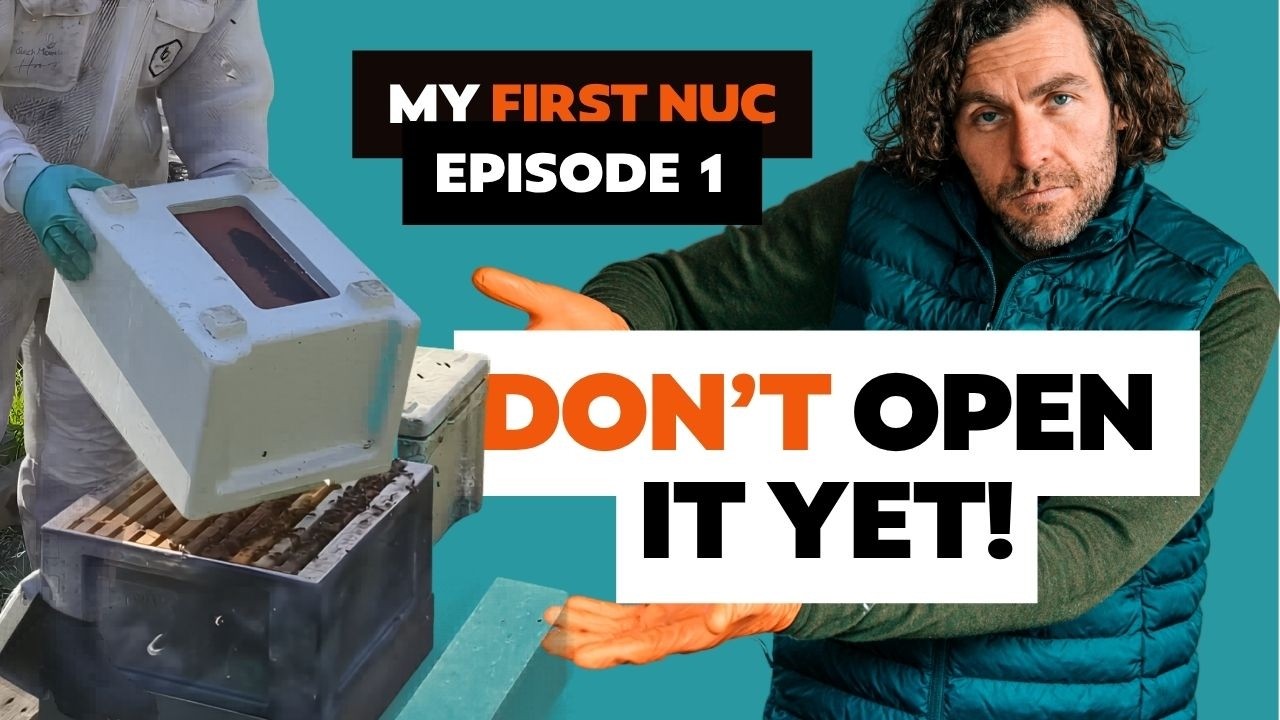
In this introductory episode of the "No Nonsense Beekeeping" series, Laurence Edwards of Black Mountain Honey walks viewers through the complete process of receiving, orientating, and installing a first nuc of bees into a permanent hive. He begins by explaining the series format—weekly short updates that will cover common beekeeping questions throughout the season. The tutorial then covers (1) selecting the final hive location and orienting the nuc entrance, (2) allowing the bees to acclimate, (3) moving the nuc a short distance and replacing it with a full hive placed in the same orientation, (4) arranging frames (warm vs. cold method), choosing foundation or drawn comb, and positioning the nuc frames centrally. Edwards emphasizes safety gear, proper use of a smoker, and handling techniques for opening the nuc and locating the queen, noting that seeing the queen is not essential on the first inspection. He demonstrates tapping the bees out of the nuc, transferring frames in order, and ensuring the queen is present via recent eggs. The episode concludes with feeding recommendations: a 1:1 sugar‑water syrup using a poly Ashforth feeder (or equivalent), the amount to feed, and the purpose of feeding to jump‑start comb drawing while warning against over‑feeding which can trigger swarming. Throughout, he stresses practical, no‑nonsense advice, encourages viewers to ask questions, and outlines the schedule for future weekly videos.
Chapters
Hi, I'm Laurence Edwards from Black Mountain Honey. Welcome to another episode of No Nonsense Beekeeping. I've decided to set up a series and take you through all of the stages of getting your first nuc of bees. So this is the very first video in this series, and what I'm going to do is I'm going to record a new video every single week. So in this video, we're going to get our first nuc of bees, I'm going to show you how to take that nuc, how to set it up into your apiary, how to transfer it over into your beehive. Also going to show you how to set up the feeder, because you do all of that on day 1. And then throughout the rest of the year, we're going to do another video every single week, just giving you a quick update on that colony. And obviously there's going to be differences depending on where you are in the season, but what this is going to do is going to answer a lot of the questions that you might have. So when the box is getting full, do you add a super? Do you want to go double brood, brood and a half? When to add your queen excluders? What does a play cup look like? Are your bees trying to swarm? When they do try and swarm, should you make an artificial split? What's the best artificial split to make? We're going to go every single week and I'm going to identify all of the common issues and themes that you're going to see throughout the year. So hopefully you're going to find this series very, very useful. It's really fun for me taking a nuc and putting it into a hive and then seeing how it goes. I have no idea how well that nuc's going to go. I'm just going to pick a random nuc from my apiary down there. I'm going to set a hive up. I'm going to show you exactly what to do. Now what we're going to do with these videos, this one will be a little bit longer just because I'm explaining what we're going to do. We're going to try and keep them to between 5 and 10 minutes long. Really simple, no-nonsense beekeeping. I'm not going to talk for 25-30 minutes on each video. talking about every little thing that I see. Just going to go across the major themes, the major activities that you need to complete throughout the year, try and answer a lot of your questions on the videos as well. Now, if you're seeing specific things in your beehives and you want me to cover that in one of these videos, obviously my bees need to be showing the same sort of issues as well, but I'll do my best to accommodate any queries that you've got, so just give me a shout. Right, so let's get the beekeeping suit on then, and in today's video I'm going to show you The first thing to do with your nuc of bees when you get it home. We're going to do it no-nonsense beekeeping style, as quick as I possibly can, so I'll try to cut down on the jibber jabber. So let's get the bee suit on and get into the bees. Right, so when you get your nuc home, the first thing you want to do is go and put it in its final position. Covered this on previous videos, but you only really get one chance to do this, so work out where you want your bees to go, take the nuc And put the entrance disc facing where you want the entrance of your beehive to face. So I'm gonna put it on this stand here. Just take the nuc, put it down like that, open the entrance disc. Now what we recommend is letting them go for about 2 or 3 hours. If you've got this in a, in a poly nuc, you can leave this for a good few days. As long as there's good amount of weight in there, you really can leave it for a good few days. What you want the bees to do is you want them to orientate from this spot. So they're gonna fly out, they're gonna go, Wow, we're somewhere new. You're going to see lots of activity at the front. They're going to orientate to that spot. If you get it in a polynuc, give it a couple of days if it's nice weather, and then you can fast forward to the next step. So assume fast forward 2 days now, we come back, the bees have been going crazy over the last few days, they know where home is, which is here. You can move on to the next step. Really simple start. So then a couple of days later, or however many days later depending on the weather, What you need to do is you need to move the nuc from the spot. And don't worry, as long as you're moving that nuc a good few yards or feet away, at least 3 feet, they're not gonna know where to go. And what you're gonna do is you're gonna put your beehive in the exact same spot as where the nuc was. That's the important step here, 'cause they get a little bit confused otherwise. So you're locating them to this spot, not to this box. So you can take your nuc away now, pop that up there. I've closed the entrance. And then in its place, you put Your beehive entrance facing in the same direction that the nuc entrance was facing. If you put the entrance at the back, you really confuse the bees. Remember, they know their flight path in and out to that spot. They're not recognizing the box so much. Then you want to prepare the hive for your bees. You can have the frames, if you're using a national system, in the warm way, or you can have them in the cold way. And just don't worry about that, it doesn't matter. Put your bees down however you see fit. This is the warm way, which means the frames are running in that direction. And the frames that you want to put in there, this is a Suyenti box, so it takes 10 frames. I've got 4 frames in here. So I've got my 6 frames in my nuc plus 4 frames, that gives me my 10 frames. Now what you're almost certainly going to have here is foundation. Foundation's absolutely fine for this, nice new wired worker brood foundation. That's what you want in your brood boxes. If you've got drawn comb, Even better, drawn comb gets the colonies going so, so quick. And even better than drawn comb, some leftover stores from another colony, preferably a mix of all 3. That's what I find works really well. Don't put a nuc in with 4 full frames of stores, 'cause then the queen's not got anywhere to lay. Most people in this situation, you're gonna have wired wax foundation, and that's what we're gonna base this instructional on. So once you've selected your foundation or your combs that you're gonna use, you wanna set it up something like this. So 2 frames at the front, 2 frames at the back. I always like to put the nuc so that the bees that are on these frames here in the middle, give them a little bit of space either side. That's just the way I do it. Some people put them up to the side, doesn't make a huge amount of difference. Beekeepers love to do things differently, this is just the way I do it. So I'm going to put the 6 frames from the nuc in the middle of the colony. Now without a doubt, this is the most daunting part of beekeeping for any beekeeper, the first time they open their nuc of bees. They just don't know what to expect. Prepare yourself for the worst, that's what I would always say. So really good quality gloves, really good quality bee suit, make sure all the zips are tied up, make sure you've got your wellies on, your sleeves down all the way, pull your gloves up like that. Chances are you're going to get stung, so if you've never been stung before, probably good to have like an EpiPen or something on hand as well. Pyriton is the best thing in the world for beekeepers. Always keep Pyriton with you, 'cause if you have a bit of a reaction, you can just take some Pyriton and it really does help ease that reaction. But just beware, the first time you open bees, you're gonna be like, whoa, what is going on here? This is crazy. So I would recommend a good smoker, and you wanna open up the colony like that, just crack it open, and then you wanna puff some smoke in. So first time, go wild with the smoke. The only thing I would say is that the more smoke you use, the potentially more difficult it is gonna be to find the queen that is in here. And you don't need to find the queen, but it's nice if you see the queen and it does help build confidence. So then all you're going to do is you're going to transfer the bees over from this nuc, you're going to put them into your hive. So a couple of really important things to note there. One is doing this late in the day, the bees are a little bit feisty because everyone's back home. So all grades of bee are back home and the more defensive older bees are back home as well. So I've gone away to get some smoke Just to chill them out a little bit. The second thing is, look where all the bees are returning to. They've come out of the nuc. They thought, "I don't like this guy. What's he doing?" And they've gone back into the hive. They've not gone back into the nuc that's sitting there because they realize that that's the way to get home. So already got loads of bees in the hive. That's really good, and that's the purpose of this video to kind of show you that the bees orientate to a spot; they don't orientate to a box. So there's nothing wrong with taking a break if. If the bees become too much for you, this is the first time you've ever done this, this can be overwhelming even for experienced beekeepers. So the first time you do it, it can be really overwhelming. But look at the difference from me going away and getting that smoker. I've not even puffed them now. They're so much more chilled out. So don't be put off straight away. Go away, have a cup of tea, let them chill out. It's nice and warm. You can leave that roof off. Give them a few puffs with this smoker. Oh, that's lovely. You'll see a world of difference with your bees when you use a smoker, you learn how to behave with them properly. So then when you're going in, these are going to be really well propolised down. I always recommend the 5th or the 2nd frame. Don't try breaking into the outer ones, surefire way to crush your queen. So going for the 2nd or the 5th frame, that is my recommendation. So this one here got a nice frame of stores. I have a quick look around for the queen, but I don't fret too much. I want to get the bees in there, The queen's going to be in that box because I've seen her like 24 hours before I send her to you. So don't worry too much about seeing the queen first time. Just get them into the box, get them in in the same order, and then the next time you can come back and you can see the queen. As long as you can see eggs in there, you know the queen's been there in the last 12 hours, so you're all good to go. If you see charged queen cells or any sort of big queen cells, then give me a shout. There's something wrong. We can help you out. So I'm just taking my time trying to find that queen. You can see how much the bees have calmed down now. It's just that first little bit of excitement where they've not been opened for a while and they're thinking, who's this guy coming and opening up and having a look around? They do calm down, so just get the smoke on them. Take your time at this point, just trying to find that queen. Don't worry too much if you can't find the queen. It is difficult to find queens. You do get better at it as you inspect more and more. As long as you can see Eggs, the colony is good to go. So just get them into their new hive. You can find the queen on your next inspection. So that is the outer frame of stores. So that's going to go back on this side over here closest to me. You want them to go back in in the same order. And there we go, that's the last frame in. So I didn't find the queen, and I didn't need to find the queen because I know that the queen is either in the bees that's left over in this box or she's in there. That's the only place that she can be because I've seen eggs. So I know she's there in the past 12 hours, and all I'm going to do now is show you how to make sure that you get her from there into here if she is in there. So the first thing I'm going to do is I'm going to have a look for her. I might as well see if she is in here. If I can see her easily, I can get her out, pop her in there. You don't need to pick her up, you can just tap her out. It's always good just to have a look, see if you can see her though. And I can't see her in here, so all I'm going to do now is I'm just going to tap out All of the bees from this nuc into the hive. And this can seem a little bit aggressive, and again, this is why I wanted to do this video, because this is what you need to do to make sure you're going to get that queen out. So you want to turn it over like that. You may well get a stick fall out if it's a Payne's one. Don't worry about that, that's just to stop them drowning in the feeder. And then you want to give them a sharp tap, just one tap, and they'll all fall out. Good sharp tap. Now the paint box is empty. Move that box away, 'cause they will recognize that still, especially the smell as well. So just move that box away now. And you'll notice at this point, it's a little bit crazy. Like the bees, they just don't know what's going on at this point. You've just taken their home away and put like a real foreign home in there. But what you've done is you've transferred over all of those frames in the exact same order that they were in the nuc. That's really important, means you're not going to squish them between 2 frames that don't fit next to each other. And you've got all of the bees, every single last bee out of the nuc, you've tapped them in there. Now you've got some bees flying around, they know where to go because they've orientated. You've got the queen in there because she was either on one of the frames and you didn't see her, or you tapped her in there. If you tap her in there, she's going to go straight down onto those frames. She doesn't want to be out here in the light. She's going to go down there. And that is it, that is all you need to do really. Don't worry about not seeing that queen. I've kind of purposely not really looked for her very well because it's an important thing to note is that you do not need to see this queen. I'm going to come back in a week, I'm going to do these videos every single week, and we're going to see how this colony grows. So you'll see next week the queen, the queen is still in here. If she's not or something's happened, we'll see queen cells, but I'm pretty confident we'll find the queen in there. Next week and all will be good. So once you've got all your frames in the hive like that, there's eggs in there, the queen's in there, everything's in there, they've orientated to where they want to, we're going to feed them. And that is what I recommend everybody who buys a nuc from me, everybody who installs a nuc early in the season, an overwintered nuc, I would recommend feeding 1:1 sugar syrup, 1 kilo of water, 1 kilo of sugar. Heat it up so it melts. You want a nice cool clear water. 1:1 sugar syrup. I'm going to feed that to the bees using a feeder. So what I've got here is a poly Ashforth feeder, highly recommended. Don't care what brand it is, a poly Ashforth feeder or a poly Miller feeder, really, really good recommendation whether you're on poly hives or wooden hives, doesn't matter. Very, very useful piece of kit. So then you can take your poly feeder and you place that on the top like that. Any feeder will work here. You can use a bucket feeder, a frame feeder, a rapid feeder, Any feeder that you want to use or you feel comfortable with using. I recommend a polyash forth feeder though, and I recommend a polyash forth feeder in lieu of a crown board. So I don't use any crown boards, I just get polyash forth feeders. And then you want to add some syrup into the mix. So I've got some leftover 2:1 syrup from another colony. I've just watered it down to get it nice and thin, but you're going to use 1:1 syrup here. Pour that into the feeder. You don't need to go crazy, 1 or 2 litres at a time. You're not doing this so they're going to store loads of food, you're not doing this to feed them, you're doing it to take away the burden of drawing out that wax foundation. And that's it, you just put the lid back on now. That is the manipulation complete. It's a really simple, easy manipulation. I've taken quite long talking you through all of the steps because I want to give you a real in-depth look as to what you do when you're transferring over your nucs. I'm going to do this video every single week, so we're going to, we're going to cover this colony every single week. So next week we're going to look for that queen. I'll prove to you that the queen's in there, maybe find her, maybe mark her. We're going to look at the impact of that feed and how they've started to draw out that foundation, and we're going to look at how that colony grows. So I hope you enjoyed that. That is the first thing you need to do when you get your nucs. It can be really daunting getting your nucs for the first time. If you follow those key simple steps, you're going to set your bees off on a really, really good path. The only thing I would say is just beware, you need to stop feeding at some point. I've given people the advice before that when you put your nuc into the hive, you put the foundation in and then you want to give them a feed. They didn't understand when, when it was right to feed, and if you overfeed, that is the perfect way to get that nuc just to swarm. So you want to go easy on them, If the weather's nice and they've drawn out a couple of those frames and it's like 20, 25 degrees or whatever it is down south, nice temperatures, the bees are out foraging, bringing in nectar, bringing in pollen, you can take those feeders away a little bit early. You just want to give them that kickstart just to get the queen laying, just to give them that boost to get that foundation nicely drawn out, and then that sees the colony really strong going into spring, and then hopefully you should see a really nice summer crop. If you feed them too much, you do end up with issues, so this is why I want to do this series of videos just to show you when To do certain things and how to get those timings right. So I hope you enjoyed that video. We're going to release this video every single Friday at 7 PM without fail. You know I do like a good schedule, so Friday nights, 7 PM, we're going to release our once-a-week colony update and show you what our colonies are looking like. Hopefully your colonies will be in a similar state to mine. I'm probably going to be about a week behind, so you might be playing a little bit of catch-up, but But hopefully the content is good and relevant. So I hope you enjoyed the video. Thanks for watching. As always, please hit the subscribe button, please hit the bell so you're notified of every video. I'll see you next time.










