My First Nucleus - Episode 13 - Back to Full Strength Brood Box
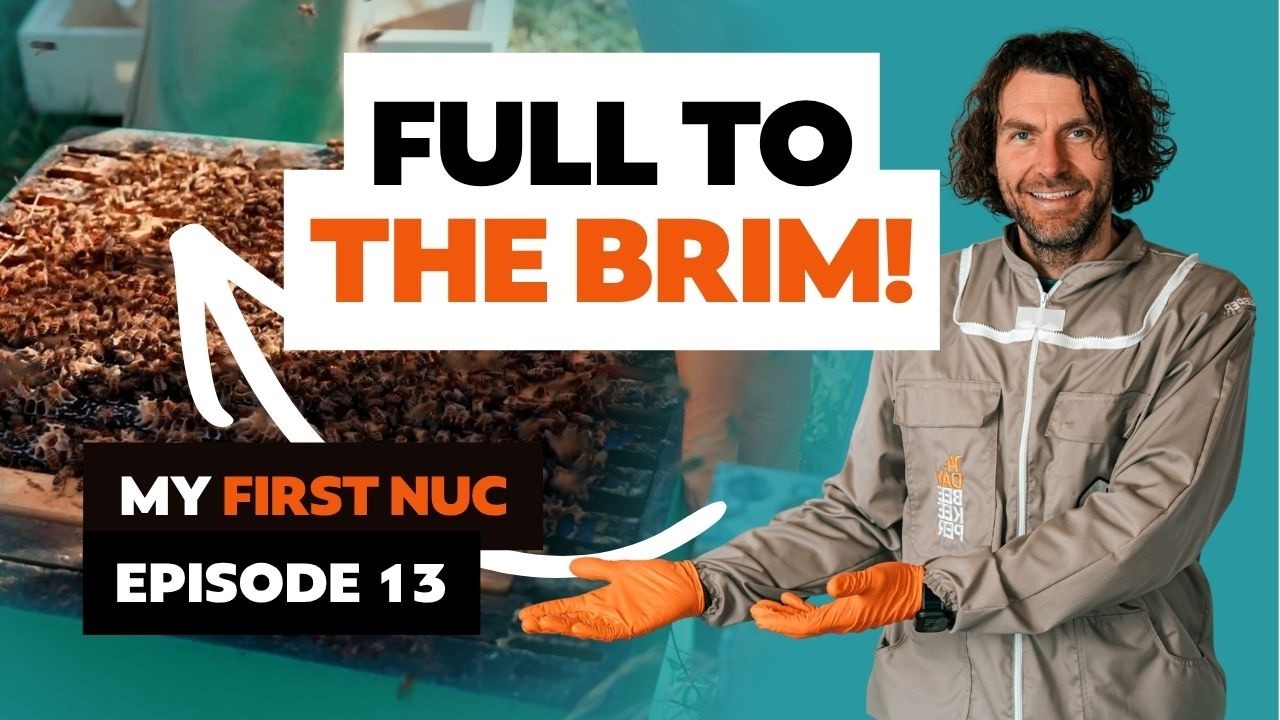
Laurence Edwards inspects a nucleus colony that's now filling a full brood box with bees and brood. The 2021 F1 Buckfast queen has made the bees gentler and appears to resist chalkbrood. He's moving the colony to the heather moors to catch the upcoming nectar flow.
Chapters
Hi, I'm Lawrence Edwards from Black Mountain Honey. Welcome to another episode of No Nonsense Beekeeping. We are up to episode 13 of the My First Nuclear series. We're going to get inside, take a look at how this colony is expanding in perfect time for the upcoming flows. So this colony is doing really, really well. I'm expecting to see that brood nest fully expanded today, covering All frames of bees and maybe 7 or 8 frames of brood, filling up nicely with honey as well. The bramble is well and truly open up here now, Himalayan balsam as well. Lots of plants coming into flower, coming onto flow at the right time of year when I've got the strong colony of bees. We've got a new 2021 F1 Buckfast queen in there. She's busy expanding that brood nest. Lots of bees in there. The colony is at peak strength. And it's really good timing for the flows. So the supers are filling up nicely in this colony, but what I'm going to do is I'm going to take this colony to the heather. So I've got all of my colonies up at the heather already. I'm not moving many around this year, but just for the purpose of this video, I'm going to get this colony ready for the heather. I'll take off the honey, I'll get them into some new boxes with some drawn comb, and I'll get them up to the heather in time to hopefully take advantage of the heather and get a really good heather crop. So stay tuned for the rest of this series. Maybe episode 14, 15, and 16 will show me getting this colony ready for the heather, taking it up to the moors, and then we'll follow the progress of this colony up at the heather moors to see if we can get a bumper crop of heather. So I'll get my bee suit on, I'll get the smoker on, we'll go and see how well the colony has expanded since last week. Right, so everything is getting a little bit grown up in this apiary. The nettles are taller than my tripod, so things are sitting about 6 or 7 feet tall. Might need to come in here, get the strimmer out, just tidy things up a little bit. Becoming a little bit too bad in this apiary. Right, we'll jump straight into the colony then. Not going to look at the top boxes again because all that's in there is lots of honey, lots of bees. I've been in, they've still got a bit of space up top, so there's no action needed. We'll jump straight into that brood box, see how big the colony has expanded, see if they filled up the brood box yet. So the bees are filling All of those brood frames now. And I know it doesn't quite look like it, it's because I've just smoked them down. But if you go across all of the frames along here, you can see they are covering every single frame now. So we're back to where we want to be, which is a brood box that's absolutely full to the brim with bees, bees across all of the frames. And there'll be lots of frames of brood in here as well. So we've got a brood box full of bees, which is really, really good news. So I know I talk about this every week, and it just goes to show, week by week it really is getting a lot better. But it's really, really miserable here today. It's cold, it's wet. You can probably see the drips coming down as well. And the bees are just so much more gentle. The transformation is quite remarkable. These are the F1 Buckfast queens that we're selling now. So if you're in a position where you've got a grumpy colony, horrible colony of bees, and you want to add an F1 Buckfast queen, this is pretty much what you can achieve. And I'd say this isn't really even indicative. This is kind of halfway there, or maybe two-thirds of the way there. Next season will give you the real indication as to what these bees are like. But you can see, if you've watched this series all the way through, you will know that this colony was nowhere near as friendly as this. Got the odd occasional bee buzzing around, but I can stand here, talk to you about the bees, and they're pretty much leaving me alone, which is really nice. But you can see as well, colony's looking really good. Nice big strong brood frames, lovely brood pattern as well. I'll just flash up a few of these frames here just to give you a bit of an overview. First frame was just nectar. This is the second frame onto some nice brood. Next frame along, Not fully capped, but lots of brood in all stages there. You can see the queen, same queen as before. She's just kind of pottering around doing her thing. Nice colony here though. Another nice frame. As you can see, I'll zoom in a little bit, no chalk brood to be seen, which is where we want to be. That was the whole reason that we requeened this colony anyway. We're getting the benefits of nice genetic friendly material. in there as well. Another frame there, brood in all stages, bees working really well. This is what we want all of the frames to look like. Little bit of comb drawn on the bottom as well, that shows that the bees are doing well, maybe running a bit out of space, but at this time of the year there's no action to be taken. Next frame along, no capped brood but full of eggs, full of larvae. They'll cap all of that up All the way to the edges. Queen's doing the job nicely. And there we go, shaking a frame of brood off there for you just so you can see. Not absolutely perfect in terms of brood pattern, but again, I would be very happy if all of my colonies were like that. A few little gaps dotted around, but she's gone right up to the edges. That is going to turn into a huge amount of bees, give it a couple of weeks. And then they've backfilled some of it with nectar as well. But really nice brood pattern overall, very happy with that. Then you often find this with colonies, they like to turn some of it into drone brood. Don't be alarmed if you're seeing this in your colonies, this is definitely not a drone-laying queen. Some colonies have up to 20 or 30% drone brood at the height of the season. This is pretty much all this colony's packed in here, so nothing to worry about. You can see nice worker brood over there, and then they've just decided to turn some of that No drone brood in this side. And then the rest of the frames, we've just got stores and some drawn-out foundations. So I've got bees over all 10 frames down in my brood box, and I've got 7 frames of brood. Massive expansion. That's what happens when you add in a new queen, 2021 queen, or the queen that's mated in the current year, and they really push to expand that brood nest as much as they possibly can. Obviously everything's emerged up top now. We've just got honey. I'll pull out a couple of those frames and I'll show you, just indicative, couple of frames from each maybe, just to show you what they're doing up there. But they're doing what they need to do, storing the honey upstairs, brood downstairs. Really nice looking colony. So I'm just gonna put this colony back together now, putting it back together in the same order that I took it apart. But that is, and you can tell I'm not messing around, that is a full national deep of honey. And it's a wooden box as well, so that is pretty heavy. I'll just pull out a frame now and I'll show you what the frame looks like from the middle, but the bees, they are going for it at the moment. The flows are really good and I didn't take a spring crop off this one as well, so I've still got all of my spring crop in here. I'm reluctant to add another one because what I'm going to do with this colony is I'm going to take it to the heather, so I don't want them dispersed over 4 or 5 boxes. I want all the honey condensed into 3 boxes. I'll take that honey away, add another box in for transport, and then take them up to the heather like that. So there's a couple of frames from that top box there that I've just put in. As you can see, this is the one that emerged with all that brood, so you've got the ring of stores and then you've got the central bit where they're gonna backfill that with honey at a later date. You do tend to find this with a Demerare, you'll get the honey, it's a bit sporadic and all over the place where they put it. Just need to give them the time and they will backfill that at a later date. As you can see, all the way around the edge there, lots of honey, All stored very nicely indeed. So here's a frame from the next box up, and as you can see, very similar story. Wax cappings all the way around the edge, but then in the middle of this one, they're backfilling it with nectar. And that's what you find with the Demeray. Like I said, they put it all over, but they do eventually fill everything up. And then this is indicative of what we're seeing in that top box there, maybe 5 to 10% capped. Little bit of nectar, mostly empty. This is where they've got the space for the upcoming flows. Next 2 to 3 weeks looks amazing here, and they've got plenty of space to put that honey in the frames. So I'm really, really happy with the, the changing temperament of this colony. That queen is doing the job. She's making the colony a lot more gentle, makes these guys so much more pleasurable to work with. And also, I have not seen A single cell of chalkbrood out of any of those frames there. So I know it will change throughout the year. You need to look at this colony again in maybe April, May next year and see how that chalkbrood situation evolves throughout the spring. But at the moment, there's no chalkbrood, and I'm hoping that's because the queen we've put in is resistant to chalkbrood. So to keep this series a little bit more interesting, like I said, I'm going to take this colony to the heather. The first super, I would say, is about 80% full of honey. Next one up, probably about 60 or 70% full of honey. And then the top one, I'd say only 10 or 15% full of honey. So what I'll probably try and do is condense all of that down into 2, and then I'll let them run the next couple of weeks, building up as strong as I can possibly get them. Then I'll take all of that honey off, add some empty boxes on, and I'll take this colony up to the heather And then we'll have 4 to 6 weeks up at the heather, see how much this colony can produce if we get the right conditions. So I hope you enjoyed that video. As always, please hit the subscribe button, please hit the bell so you're notified of every video, and I'll see you next time. Bye.










