My First Nucleus - Episode 14 - One Last Week Before a Trip To The Heather
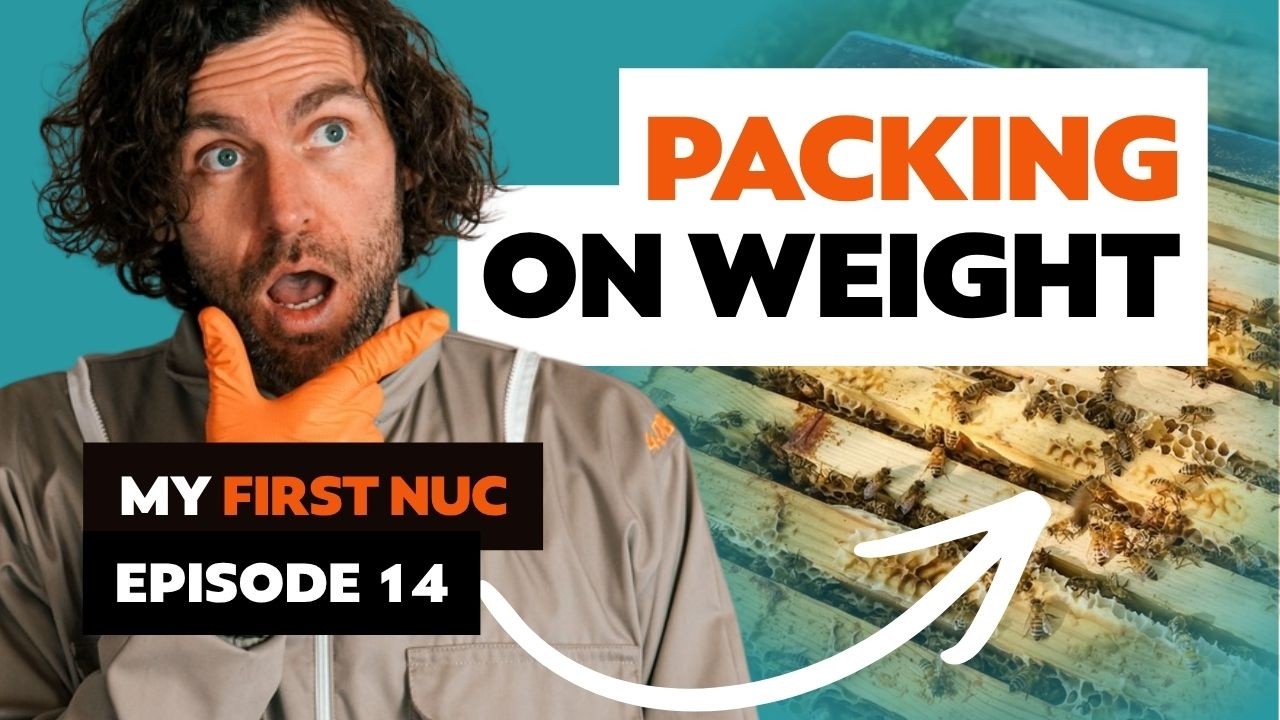
Laurence Edwards inspects a strong nucleus colony before moving it to a heather apiary. The hive has seven full brood frames and heavy honey stores across the supers. He'll harvest the honey, add drawn comb, and transport the colony by July 24-25 to catch the heather flow.
Chapters
We're on to episode 14 of the My First Nuclear series, and this is the last week in this apiary before we harvest the honey, close the bees up, take them to the heather. Hi, I'm Laurence Edwards from Black Mountain Honey. Welcome to another episode of No Nonsense Beekeeping. We're on to episode 14 of the My First Nuclear series, and we have had the best week on record throughout the whole of this series. They have packed on a lot of weight, and this is the last week in this series in this apiary. So at the end of this week and episode 15 of this series, I'm going to take off all the honey. I'm going to add on a couple of boxes of drawn comb, and I'm going to transport the bees up to the heather because we need to get them up there early. I like to go 24th, 25th of July. That really, for me, is the absolute drop-dead date to get them up for the heather because it's starting to show already. But the colony is coming on leaps and bounds. I'm going to get my hood on, get the smoker lit, and let's go and have a look at how well the colony has come on in a week. Episode 14, let's get straight in, see how much honey they've collected, take a look at that brood box, check the chalk brood, check the temperament, see how far this colony has come on. I can't believe it, 14 weeks. It's been such a journey. I love doing stuff like this. I love going back, looking at the videos. This started off as such a small nuc. And it's just an absolute monster now, so we've done really, really well. Let's open it up, see how good they're looking. So working from the top down this week, this is what the top frames look like. Nothing capped in here, but pretty much full of nectar. Still got a few empty cells there, but this is a real improvement on last week. When we looked last week, we were saying these are about 5 to 10% full of nectar, and I'd say they're probably 60 or 70% full of nectar So real good improvement, lots of foraging going on in this week. So this is the second box from the top, and as you can see, a lot of brace comb there bracing it all up. There is quite a lot of honey in this box. I'll pull out a couple of frames now and you can see, but I suspect we're going to see a fair amount of capped honey in this one. And as predicted, the bees are capping it over nicely. So last week we were looking at about 60 or 70% capped, and we're probably up around 70 or 80% capped. Now just got that last little bit in the middle there to finish off. It's mostly full, and then we've got lots of capped frames of honey. So the bees have had a very, very strong week indeed. They've brought in a lot of honey, and they've been really busy capping all of their stores as well. And lifting that box there is a really, really heavy box, so much heavier than a fully laden super. It's more difficult to lift the boxes, but it's fewer boxes And it's so easy when it comes to colony management. So this is the super, the national deep that's closest to the brood nest, obviously going to be the most busy one as well. I'll pull out a couple of frames in there. This one is going to be heavy though. I can tell already there are going to be some lovely frames of honey in here. So there we go. Similar again, probably 60 or 70% capped on that frame. We do find the closer they get to the brood nest, the more likely they are to pack a bit of pollen in there. And then we've got some frames like this as well that are probably up around a 78% capped, and then it's just that bit of drone brood there that they're just filling up now, nearly done. But that's indicative of what the frames are looking like in that box closest to the brood nest. And again, that is an absolute whopper of a box. I've got bad posture with this one, so I'm going to put it down, but it is a really, really heavy box of honey. And then we're on to the brood nest itself, and as like last week, it is full. So we're back to full now. Really important to continue your weekly inspections this time of year. This colony could easily swarm. We're going to go through every frame, take a look at those frames of brood, but we're going to be checking for swarm cells as well, as we always do. Don't want to lose swarms at this time of the year. It's a nightmare when you lose a swarm the week before the heather. You pretty much lose the entire heather crop for that colony. But again though, I'll just ping back out to me here. We just couldn't have done this with this colony. I know I'm going on about this week on week, but I do want you to the iterative change in this colony's temperament. Early on in the year, I would have been smothered with bees just opening that brood box, and now I can just open it and they're not too fussed with me at all. So we're going to go through now, I'll snap a few pictures of the brood frames, I'll tell you how many brood frames in total we've got, and hopefully we won't find any swarm cells. So this is frame number 1, brood side to side, both sides, really good looking brood. No signs of any chalk brood anywhere as well. Really good. No swarm cells either. There's frame 2. Again, I know they look very similar, but they're not. That is a different frame. Brood side to side. The queen is in overdrive, and that is a result of doing the demaray, the preemptive demaray when we did. Gets that colony so strong at the right time of the year. Frame 3, another frame of really nice looking brood. Bit of pollen in there as well, bit of drone comb down at the bottom. Nice big strong frame of bees though. And there we go, another frame of brood end to end. This queen is so good. This is one of our F1 Buckfast queens that we sell, and this is what you can expect from the colonies that were raised by those F1 Buckfast queens. Nice gentle colonies, brood end to end, really nice brood pattern. Next frame along, don't mistake that for a bad brood pattern. They are Full to the brim with eggs that you can never see on camera, but that is laid up all with eggs. That's just emerging brood that she's gone and backfilled. That one will be a full frame of brood next week. Then the coloniers decided to rear some drone brood in the center of this frame. Bit frustrating when they do that, but I let them get on with it. If they want to have drone brood in there, they can have drone brood in there. It's not like I've given them a gap. They've decided to turn it into drone brood, so I just leave them to it. And there we go. That's it for the video. They're over. 7 full frames of brood, and then there's a little bit of stores and a frame of eggs in there as well. So 7 frames of capped brood, 1 frame of eggs, and a couple of frames of stores. Perfect for this time of the season. That's what you want to be seeing. So I'm going to close this colony back up now. We'll finish off the video. So there you go, that's it for the video. Next week's episode, episode 15, is going to be the final week in this apiary. I'm going to be taking off the honey, I'm going to be condensing the colony down ready for its trip to the heather, And then we'll transport it up to the heather, do a quick inspection of them up there, and then we'll see how much honey we can get from this colony at the heather. So I hope you enjoyed the video. Hope you're enjoying the series. As always, please hit the subscribe button, please hit the bell so you're notified of every video, and I'll see you next time.










