Overwintered Nucs Sept Update
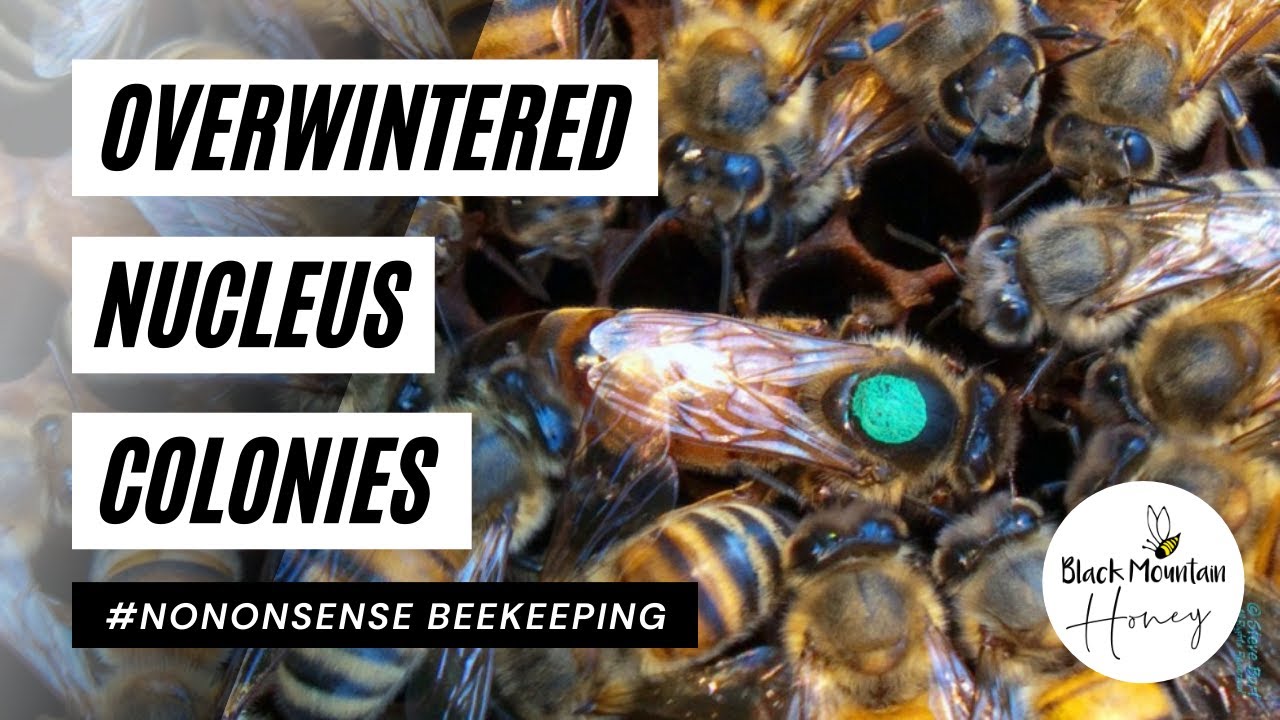
Laurence Edwards inspects overwintered nucleus colonies in September, checking for packed bees, brood patterns, and stores. He walks through his varroa control routine: Apibioxyl followed by six weeks of Apivar strips. Good ivy flow means he can delay feeding for two weeks before weighing colonies and removing Apivar in early October.
Chapters
Hi, I'm Laurence Edwards from Black Mountain Honey. Welcome to another episode of No Nonsense Beekeeping. Today we're in the Orchard Apiary and we're taking a look at our overwintered nucs for 2021. So I know the dates can sometimes jump around a little bit on this channel. Today is Saturday the 5th of September 2020, I promised you the last time we did an overwintered nucs video around kind of middle of July, August, that we'd do an update showing the colonies later in the year. And I wanted to give you kind of an indication as to what these overwintered nucleus colonies should look like now, so first week in September, if they're going to kind of stand a good chance of getting through the winter. So a few things that we're looking for at this time of year to make sure that you've got kind of good chance of getting through that winter period. The first one is you want your nucs absolutely jam-packed full of bees. You can't really fill them too much, and it may seem like towards the end of the year, so as you're kind of coming through August, that the bees don't have enough space. Now, the bees will contract, so from September onwards, the bees will really, really start contracting that down. So if you've got a significant amount of bearding on your colonies, I really, really wouldn't worry about it. What you want to do is as you're getting through into kind of October and November, you want the bees to fill the void perfectly. Now, whether that's a 6-frame nuc or a 12-frame nuc or whatever box you've got, you want the bees to fill the void. And that's how you get the good overwintering performance. So what we're going to do in this video is I'm just going to open up a couple of the colonies and show you what the nucs are looking like. I'm going to go back specifically to the colony that we went to last time. Sorry about that, I was standing right in the bees' flight path and I've just had a shower, so the bees weren't particularly happy with me. They're trying to sting me. So yeah, as I was saying, you need to follow these steps to kind of get your bees to overwinter, but you can't start following these steps in September. It's a real kind of early season thing to get your nucs prepared for winter. You need to build them up to the correct strength, make sure you've done all of the correct treatments, and then you need to feed them and get them up to weight. So this video, I'm just going to show you what the nucs should look like first week of September, which I find give you a good chance of overwintering. So let's get inside, take a look at the bees. Right, so I remember my smoker today and my fuel and everything, so hopefully we keep the bees nice and calm. Always like to give the bees a really nice puff of smoke like that. Some people don't use that much smoke, but, you know, just get in there, give them a really, really good smoking, especially when you've not been into them for a while. I like to give them that smoke and then wait 30 seconds, and then you want to get in there. So this is the same nuc that we did last time. So hopefully, if you want to see that video of 6 weeks ago, you can see how this colony has come on. It's really, really doing very well. Really nice colony. One of the ones that we're going to sell later on in the year. But it gives you a good indication of what they should look like kind of middle of July, and then what they should look like and grow to look like kind of first week in September. So when you're smoking colonies, I smoke them from the entrance and then I just give them a little puff of smoke in like that as well. And that really does help keep the bees calm. And that's what the beekeeping inspection is all about, you know what I mean? You might see me with loads of bees kind of flying up all around my face, and it's when I don't use the smoke. The smoke is such a good tool in the beekeeper's arsenal. It keeps those bees nice and calm. And it makes the inspections easier. I've fallen guilty of it a few times of just trying to rush and kind of do things quicker. This time of the year, I've not got as much to do, so I take my time, I remember things, I use the smoke, I keep the bees nice and chilled, nice and calm. So let's get into this colony and have a look. So that little mini crown board, really, really well stuck down. You can tell that I haven't been into this colony for a good while. So I give the bees just one more puff of smoke, make sure they're nice and calm. So I remember my smoker today, but I forgot my hive tool. So I've just got this kind of like little wrenchy screwdriver thing just to help ease the frames out. Can be really difficult on Payne's poly nucs when you haven't opened them for a while. They stick the frame lugs down and it can be really, really difficult to get them out. So since we've last seen this colony, there's been a few changes to it. Obviously, it's had lots of feed, only as and when required to keep that queen laying and to give them food. It's also been treated once with apibioxyl to drop the mites, and then it's had a 6-week Apivar treatment. And we're into week 5 of the Apivar treatment now, so the mite level on this colony should be really, really low, and it puts them in a good stead to raise the winter bees so that you've got varroa-free winter bees, and that's how you get good overwintering performance. So the first check to do at this time of the year, and obviously I've been coming back kind of every fortnight or so and doing this check, is give them a lift. And I can feel that it's jam-packed full of stores. So what you're not going to find in a colony like this is you're not going to find 6 frames of brood, and I can tell you that because I can feel the weight. And I know that probably the outer 2 frames are going to be jam-packed full of stores, and then I'm hoping the middle 4 is going to be a mixture of stores and brood. You still need to allow the queen room to lay at this time of year, so if it is completely full to the brim of stores and you've not got any brood, what you should really do now is take out a frame of stores, add a frame of foundation, and then the bees will, on the Ivy Flow, draw that out and they'll use that to rear new brood. So that's a good tip if you do have kind of completely backfilled nuc boxes at this time of year. You almost still want to give them that additional frame, preferably drawn comb, just to give that— the queen a little bit more space to lay in. So let's take a look in this colony and see what we've got. So as suspected, that first frame there is just stores. That's all that's in there. There's no eggs, there's no brood, no larva, nothing. It's just stores. And that's what I want to see really on frame 1, is a lot of capped stores. That means the colony is going to have enough food to get through the winter, and I don't need to continue feeding this nuc. So you can see that on the close-up, lots of capped stores. That's good bee food for the winter. So then the next frame in, we've got a mixture, and that's what we want to see on frame 2. We want to see a mixture of stores and brood, and this one's perfect because you've got capped stores, uncapped stores, capped brood, uncapped brood, and brood in all stages, and a little bit of space for the queen to lay as well. So perfect really, this colony. There's nothing that I would do differently, and I'll just show you a couple of close-ups. So you've got lots of eggs, some really nice capped brood on that side, and lots of food as well. So that's a good-looking frame number 2. So then frame 3, this is exactly what I want to see on frame 3. I don't want to see too much stores. A little bit of stores is okay. I want to see mainly brood. Now whether that's brood in all stages or capped brood or uncapped brood, it doesn't matter. You want to see eggs ideally, but you definitely want the majority of the frame to be covered in brood. You don't want to see frame 3 and 4 with lots and lots of stores or even all the stores, because then there's nowhere for the bees to lay or nowhere for the queen to lay her eggs that's going to turn into the winter bees. That's what you're doing at this time of year. You're giving the queen the best chance Giving the queen the best chance to lay her winter bees, and they're the bees that get you through the winter. During all these bees, they'll be dead in 6 weeks. It's the winter bees that last long and see that colony all the way through the winter. So you need to make sure that you give them the space for that queen to lay. So, you know what I mean, really nice temperament on these bees. Makes a big difference when you smoke them. But as you can see, that frame there, probably easier to see it on that side, lots and lots of capped brood, a bit of uncapped brood on the other side as well, and a little bit of stores. So that's a really, really nice frame 3. So one thing to mention as well, just while I'm doing these inspections, you might notice that I'm being really as ultra careful as I can possibly be, much more so than I am in the season. And that's not to say that I want to be kind of slapdash in the season, But timings are dictated to me by kind of what I need to do. So I'll probably work a little bit faster. This time of the year, I mean, I'm going into this box today to show you. That's the only reason I'm going in here. None of my other nucs I'm going into because I can tell pretty much everything that I need from the outside. So what I do not want to do at this time of year is I do not want to squish or kill my queen because all they'll do is they'll do loads of emergency cells and that colony is not getting through the winter. Very, very unlikely that they're going to get mated kind of into October, November. Not to say that it won't happen, but the chances are very slim. You miss the opportunity to get those winter bees kind of laid into the combs and then for them to grow into good winter bees throughout the winter. So let's take a look at frame 4. Whenever I'm doing this, make sure that you put the Apivar strip somewhere sensible. You don't want to take that out yet. The treatment's not over, so it's very easy just to leave that on the side and then forget to put it back in. So I'm just going to rest that on frames 1 and 2, and then we can continue to look at the rest of the frames. So again, this time of year, I want them as calm as possible. I really don't want to damage any of the bees, damage the queen. So you can use a little bit more of that smoke. So what I want to see on frame 4 is basically the mirror image of frames 1, 2, and 3. Doesn't matter which side you really start at. And I mean, this is a lovely frame. So I'm going to shake the bees from this frame just to show you how nice the brood pattern is on it. This is what you want to see. Frames 3 and 4 in the middle, you want them jam-packed full of brood and you want the stores on the outer edges of the colony. That is the natural way that the colony will set itself up. So there you go, you've got a little bit of an unusual bit in the middle there. That's just where the frame next to it is a little bit chunkier, so they've decided just to put a little bit of stores in there and not brood. But then you look on that side and you've got a lovely full frame of capped brood. That's what you want to see this time of year, frames 3 and 4, lots and lots of really, really nice healthy brood. What's good about seeing the brood like that is you can tell the queen is very, Very well mated. You don't want to see any dodgy matings at this time of year. If you've got spotty brood, you've almost missed the opportunity to kind of deal with it. You want to be dealing with that in July and August. When you're looking through colonies at this time of year, which should be minimal anyway, you want to see really strong brood patterns. You know you've got a well-mated queen then. So there's frame 5, and again, lots of really, really nice brood on that one. That one side's got a huge amount on, and then that side there, a little bit less brood, a little bit more stores. There's some fresh nectar in there, which is a really good sign. Hopefully they've kind of just about found out where to get that ivy from. Really, really nice frame. You get the picture here. Frames 2, 3, 4, and 5 should have some brood on it. Frames 3 and 4 should be jam-packed full of brood, and frames 1 and 6, you want them ideally to be pretty much full of stores. Doesn't matter if there's a bit of brood on there as well, but 6 frames full of brood and no stores is not the end of the world because you can just feed them, but it's not really what I'd expect to see kind of first week in September. I'm expecting to see a little bit of contraction and for them to start backfilling that brood nest with the stores to get them through the winter. So we'll put this one in, take a look at final frame, which is frame 6. And as soon as you lift out frame 6, You can tell it's really, really heavy. So, you know, the bees are doing exactly what they should be doing, backfilling those outer frames with stores to see them through the lean winter periods, brooding in the central 4 frames to give them the winter bees that they need. And generally, do you know what I mean, these are just all-round healthy, calm, nice bees. And I'm pretty sure these guys are going to do really, really well and see themselves through the winter. So I just got a glimpse of the queen as well. She was on the bottom of the box. She wasn't on any of the frames. Always nice to see the queen just so you know you haven't squished her. I've just seen her. She was on the bottom of the box there. So I'm not going to try and go and search for her for the camera because I could potentially do more damage just by searching for her. This is a great colony though. You know, this is exactly what I want to see. And I'm sure that if I went into these other colonies as well, we've got some 12 framers, 12 framers, and some more 6 framers here. They're all going to look very, very similar. There's a lovely flow on today, and you can see this on a couple of the bees, and I'll do a couple of close-ups. You can see they have found the ivy, and I'll show you how I know that is because I can see the ivy pollen on the bees' legs. I mean, they're bringing back bright yellow ivy pollen. I know that the ivy's in flower now, and what's amazing this year, and we didn't get this last year, is that September, the first 2 weeks, look Fine. The weather looks set, and it means that just as that ivy is coming into flower, we've got good weather, and that's really important for winter feeding. So for me, my feeding is postponed. I'm not doing any more feeding now for at least 2 weeks. So from the 5th of September up to like the 22nd, when that weather's set, when that set weather looks to end, I'm just going to let my bees get on with it, finish my treatments, and see where we are at the end. And then we'll do some hefting, we'll do some weighing, and we'll see how the colonies have got on. So I'm going to put this hive back together again now, and I'll talk to you a little bit more about the tips for overwintering nucs. Right, so that's the colony back together again. Really, really good-looking colony, very happy with this. This is generally what I'm seeing this time of the year. Frames 1 and 6 full of stores, frames 2, 3, 4, and 5 a mixture of kind of brood and stores. Jam-packed, absolutely full to the brim with bees. I've done my varroa treatments, I've given them a number of rounds of feed. We're into the nice period now with good weather, good ivy coming in, so we're just going to leave these guys and we'll come back kind of first week in October. We'll take that Apivar out, which we need to do anyway, we'll give them a bit of a weigh, and we'll probably give them one last feed. At that time of the year, you can overfeed them, as in it's not that bad to overfeed them because they're kind of already in the of the winter bees. So if the brood's there to enable you to have the winter bees, putting a little bit of extra food in there isn't the end of the world. But I'm really confident in these guys, they're in a lovely position here in the orchard apiary. I'm confident we'll get these guys through the winter, as we will hopefully with the majority of the rest of our nucs. So that's it for the video. I hope you've enjoyed this one. I think it's really important to kind of give you that snapshot of the colonies in the season and then to come back and show you the same colonies again. It gives you that indication of how they progress throughout the season and what you should be looking for at certain milestones. So as always, please hit the subscribe button, please hit the bell so you're notified of every video, and I'll see you next time. Bye.










