Plastic Frames - The GOOD And The BAD!
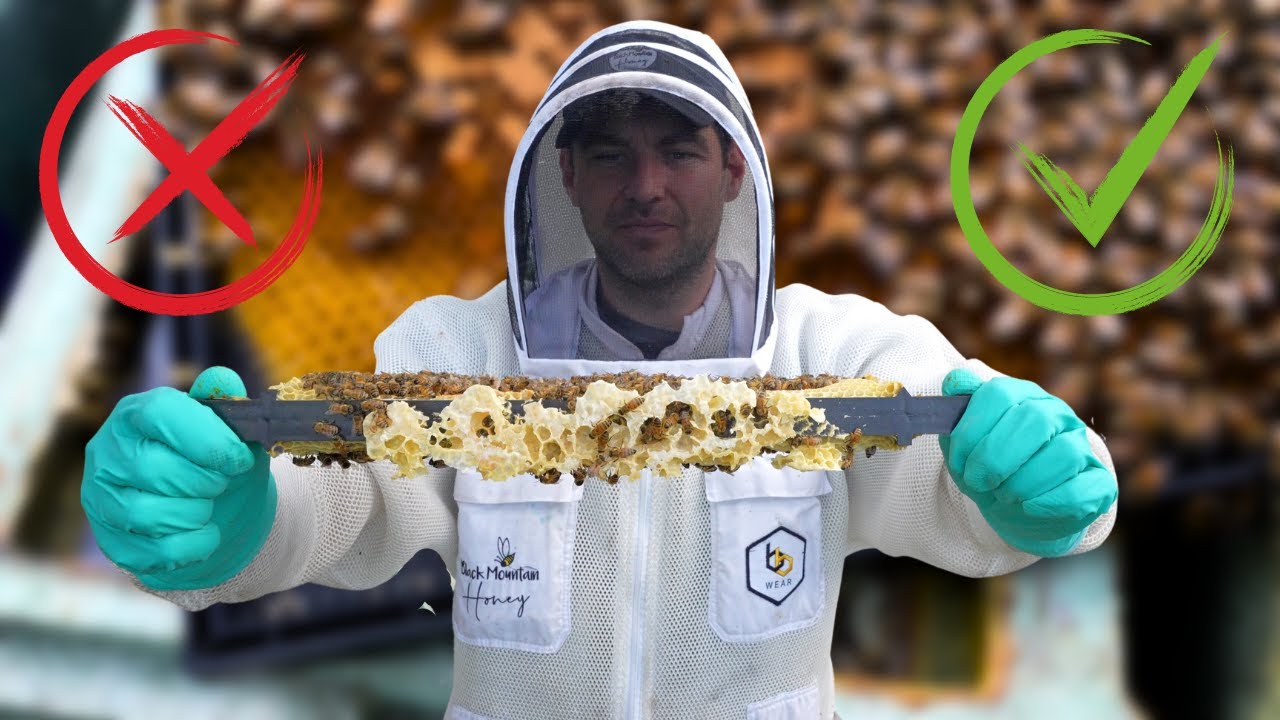
Laurence Edwards tested UK-made plastic frames for a year. Bees accept them quickly and produce dense worker brood, but draw them slowly, leave gaps at the bottom, and build excessive burr comb that needs scraping. He recommends them anyway for long-term time savings, with tips like using shook swarms and heavy feeding.
Chapters
I've been running this apiary here entirely on plastic Frames and Feeders frames for the entire season. In this video, I'm going to give you the lowdown, the pros and cons, what's good about them, what's bad about them, and most importantly, I'm going to show you them in action. So for those that don't know, the Frames and Feeders frames are an entirely plastic moulded frame, not separate foundation with a separate wooden frame. The first frame of its kind in the UK. And I was so excited when these came out 'cause I thought these are gonna save me so much time. And they definitely do, without a shadow of a doubt, they save you a huge amount of time. Because you just buy them, they're pre-waxed. You can get a non-waxed version, but if you are gonna buy them, I do advise get the pre-waxed version because if you wanna save time, get them pre-waxed and you don't have to do it yourself. And it's as simple as that. You just slot them into your hive and the bees will go for them straight away. The other thing that I really like with them, and you'll see this later on in this video, is that the bees, do take to them very well. And when I say they take to them very well, what I mean is that once the bees have drawn out all of the wax and they've drawn out the frame, all of that hard work is done. And I find that you get a huge density of worker brood on the frame, and you don't get any drone brood whatsoever if you get them to draw them out correctly. So these are the things that I was looking for. I want them to be really, really quick. I want them to be long-lasting, and I can't really comment on that yet because I've only had them in for about a year. And I want the bees to do very, very well on them. And definitely the bees have done very well on them. Few issues I do have with them though. The first one is that although the bees do take to them well, it's very, very slow in comparison to normal wooden frames and wax. And when I say slow, I really do mean it takes the bees a long, long time to draw them out anywhere near to the same level that you would get with, say, a wax frame. Also, the bees don't tend to draw it all the way down to the bottom. You'll see that later on in the video. They leave a little bit. And I do think over time they'll eventually fill that out, but they've left a little bit of mine and they're just not wanting to draw it out whatsoever. The next bit that I'll say is that you need to get almost perfect, say optimum conditions to get them to draw it out, but more importantly to get them to draw it out properly. This is one of the gripes that I have is that they don't always draw it out absolutely perfectly. So you have to scrape it back and then let the bees draw it again. And being able to scrape it back and let them draw it again really is a huge benefit. Now you'll notice loads of bees buzzing around me now standing in their entrance. Let's get inside. Let's show you some of these frames and we'll continue talking about what I like and what I don't like. Now these nucs were shook onto these frames early on in the year. They were on full-size colonies. I did a shook swarm and I put them onto these new frames. Now I've found that that's probably the best method for trying to get them onto these frames. I wouldn't do a Bailey comb exchange. I wouldn't try and add another box underneath. If you intersperse these frames with normal waxed frames, the bees do not like them at all. So I find the best way of getting your bees onto these is just shaking them off, completely shaking them off onto these frames, feeding them, and giving them absolutely no other option but to use these frames. Right, so we're on to the next thing that I'm really not a massive fan of, and I'm not sure why they're doing this. They don't tend to do this with any other frames that I've got, but they're doing it to every single colony where I've got these plastic frames in there. And that is they are building insane amounts of burr comb on top of the boxes. Now it's no massive deal, it's just a bit frustrating 'cause every time I scrape it off, they just build it back again. You can see they've got it all over the top there and they are probably running out of space a little bit in here, but they did it from day one. You do have to scratch it back and make sure that the bees don't build it up there. It's not a bee space issue. I really don't know why they're doing it. So I know I've focused in on a few of the negatives there, haven't I? And I'm always open and honest in these reviews. I don't get paid to say it. I can say what I like. But when you get to this point with these frames, I am so impressed and I'm so, so happy that I took the plunge and I got some of these because I really wanted to get them to this point, which is fully drawn out. And I'll go through all of the frames here and I'll give you a close-up of every single frame. But you can see here they've drawn out maybe 85, 90% of it and they are working it very, very well indeed. And not only that, they've drawn it out well. It's not scattergun, it's not a little bit here, a little bit there, and wavy. It's pretty much dead straight. So just give you a little close-up on that side of the frame there. Very windy here today. And then we can see that side of the frame as well. So pulling that frame out there again, you can see lots of burr comb on the top, but very, very well drawn out indeed. All the way down to the bottom. You can see though around that bottom there, they're not overly keen to go all the way down. But I do think come the new year when they run out of space, they will fix that. That completely. Give you a little close-up of that side as well. And then you can see up there, I would say probably 90% drawn out on that side. So what I really like about these frames, as I said, no drones in sight. Not a single drone cell, because you're not giving them the flexibility to draw that, 'cause they're just pulling it off the wax. Okay, they've not completed that corner there, but I do think, give them time, they will complete that eventually. But what you can see is they're drawing it out well. It's not layered up. Really good quality worker brood. So this frame here gives you a very good indication of what is going on here. This side here completely drawn out, and then this side here maybe only 40 or 50% drawn out. Now this is slow. These nucs have been working and building up all year, and I have been feeding them, and I'm happy with the outcome, but I'm not happy with how slow they are building these out. Very, very slow indeed. I might experiment next year with putting some more wax on them, see if that's the issue, but it's definitely not the fact that they've not got enough food because they have been fed pretty much nonstop. But even though this frame here isn't completely drawn out, there's nothing wrong with it. It's not being layered up. They will complete that frame when they get round to it, when they get the suitable conditions, when they've got enough bees. So overall I'm happy, it's just taking quite a long time. So more of the same on this one here. You might have noticed that I got the Apivar strip in this one as well. Early treatments this year because the weather has been so rubbish. Pretty similar, this one though, maybe 40 or 50% on that side, 80% on the other side. Lovely calm bees though. Going across all of my apiaries at the moment is showing the hard work of chasing out all of those horrible genetics is paying off. No buzzy bees, very calm, really, really good stock. So there's my queen, she's working hard in this one, and she's probably thinking, come on guys, get a move on, you need to draw out the wax a little bit quicker. The bees are kind of struggling to keep up with the queen. And it's because they're struggling to build that wax quick enough. It's almost as if they need to go out and forage and develop their own wax in order to build it out. Even though the frames are waxed, I suspect there's maybe not enough wax on there, and maybe next time I will put a little bit more wax on myself. You can see the queen though, there she is, busy at work. Lots and lots of eggs. Every single vacant cell in here is pretty much full with an egg. Definitely gonna give them a feed though, 'cause I do I think they're a little bit light on stores yet again, even though they've had a ton of food this year. Weather's just been rubbish though, and the bees really do need something just to keep them going. And there we go, final frame, pretty much full on that side. And then come over to this side and it's the same story again, 50-60% full, even though the bees should be more advanced than this. So one thing that I would say is really important is when you're putting back the frames together with those frames and feeders frames, Make sure they go back in the same order because they do get drawn out at slightly different depths, and I found that it's quite easy to crush bees, a little bit more so than if you had normal wooden wax frames. So there we go, there's some pros, there's some cons. If you said to me, are they a good buy, should I go and buy them, I would give it a resounding yes. I'm really, really happy with them, with those caveats mentioned there. They are considerably slower, you need to make sure that you have the right conditions to get them drawn out properly, But once you get them to a position where they are drawn out completely 100% well, I think they'll make a great investment. I think I'll get a little bit more productivity out of my bees, and I'm hoping that further down the line when it comes to renewing and refreshing those frames, it's going to save me a huge amount of time.










