Possibly The Best Overwintered Apiary Ever!
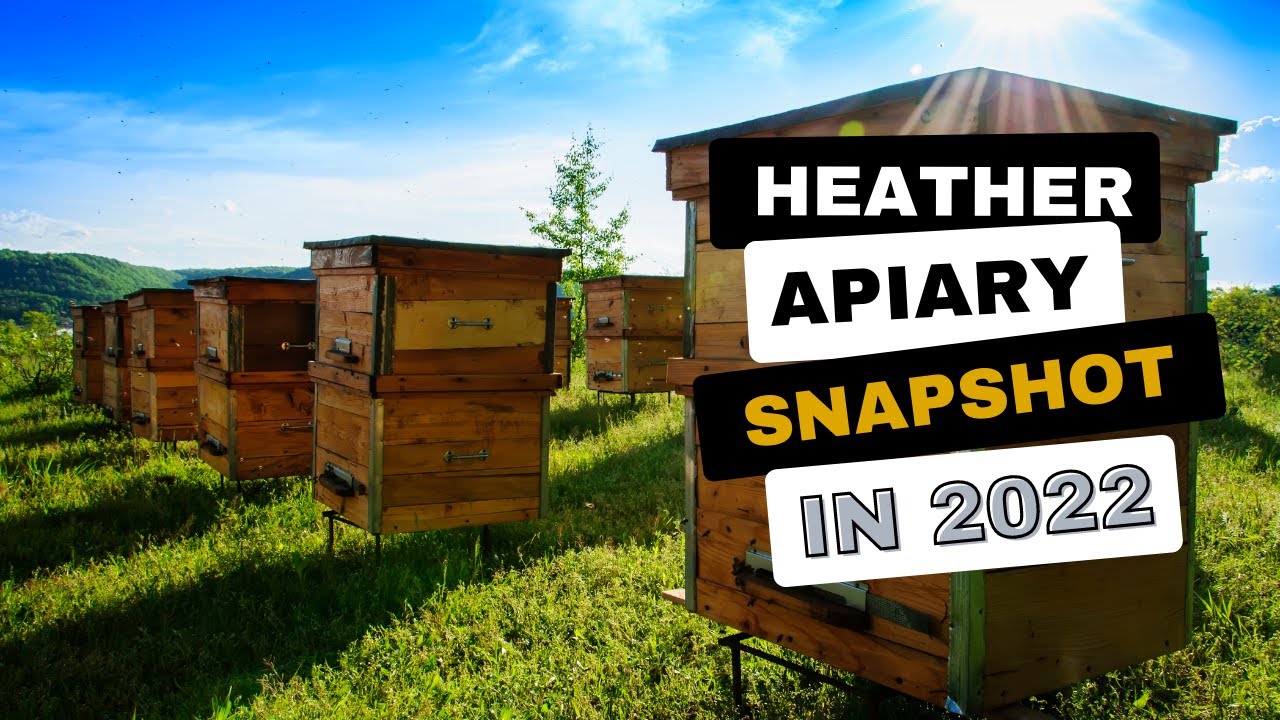
Laurence Edwards inspects his 23-colony heather apiary after two winters outdoors. All colonies survived, mostly with young Yolanta queens. He adds boxes for their heavy stores and plans spring splits.
Chapters
We're up at the heather apiary today and we're going to do a snapshot look inside every single colony up at the heather apiary. So this is the second winter that the bees have stayed up here all the way through the winter, but also all the way through the summer as well. I took 23 colonies into the winter after what was an absolute bumper heather honey crop in 2021. Some people say you should never leave your bees up at the heather all year round. Heather honey over winter gives them really bad dysentery. I have not found that in this apiary. They do very, very well all the way through the year. There's good spring forage. It's a little bit late. There's good summer forage, and then there is an absolute bounty of heather forage up here as well. Personally, what I've found, as long as you keep the queens very young, so all of the queens up here, they're either last year's queens, white marked 2021, or blue 2020 queens. As long as you keep those queens young, the colonies build up nice and strong, go into winter strong, And I find they come out of winter even stronger. So in this video, I'm just going around double-checking, seeing what the colonies are like, checking for stores, trying to get the queens out and get them clipped if I possibly can. I'm adding on some extra boxes as well underneath the brood box because there is a lot of fondant left on all of these colonies. Definitely overfed them, definitely underestimated just how much heather honey they'd packed away into that brood box. But because it's a heather apiary, I'm not chasing any spring harvest, I'm not chasing a summer harvest. More than happy to let them build up on double brood, and then come May, come June, I can look to do some splits, build up the numbers here, and hopefully they will get through all of the fondant and draw out my new wax foundations. So I'll get my bee suit on, let's go and take a look at how the colonies have got through the 2021-22 winter up here at the Heather Apiary. So here's the first colony, big strong 14 by 12 colony covering pretty much all of the frames. Hopefully they'll all look like this. Next one along, again on a 14 by 12 format covering I would say 90% of the frames. Really good to see such big healthy clusters Coming out of winter. This is probably the strongest one of the lot so far, covering all of those frames. I would say 80 to 90% of the queens up here are 2021 Yolanta queens. They build up very strong, they produce a lot of honey. This is what you want to see when your bees are coming out of winter. So this colony here has got a little bit of a backstory. It's only a national deep, and I took 7 frames of brood out of it in the middle of September. Making up loads of nucs, and look how well it's recovered. It's back over 7 or 8 frames of bees, really big, strong, healthy colony. Not quite as big as the rest, but I'd say well above average for this time of year. I'm gonna get another box on this one now, give them some additional space, and I reckon they're gonna rock it into 2022. Back onto the 14x12s, this one here covering all the frames again. Big 10-frame 14x12 colony. Love how similar all of the colonies look in this apiary. Like I said, they're mostly Yalanta Queens 2021, and the buildup of them is just very, very similar. You don't get big colonies and small colonies. They're all pretty even, pretty average. And when I say average, I mean absolutely massive. Right, next up, slightly smaller this one, over maybe 7 or 8 frames. So that's still a really good size of cluster for this time of the year. Nice calm bees, even on a cold day. Gonna get another box on them now just to give them space to expand into spring. Right, this one doesn't look good to me. I'm gonna pull a frame out 'cause I sense These are going to be a drone laying queen. So much smaller than the rest of them, haven't touched their fondant at all. If it's a drone laying queen, we'll just shake them out, let them boost up the other hives around them. But you could just get that impression that there's something not right, not quite up to the same speed of the rest of them. And this one here, I did have issues with them constantly superseding late on in the year. So my guess is a really late supersedure. She's not mated and we've got a drone layer on our hands. I haven't gone in to check yet, so I'll pull out some frames, see if I can confirm that it's a drone laying queen. And there we go, it's just me talking nonsense again, so excuse me predicting stuff and always getting it wrong. I've opened up 3 frames, all I can see is eggs, worker brood, young bees. Just a small colony, obviously dwindled down a little bit late on in the year when they were building up trying to supersede. Hopefully though we've got a decent queen in there, they're just going to take a little bit longer to build up going into spring. This colony here was a feral swarm that I caught around July, about 2 or 3 weeks before the heather kicked off. And they gave me 2 full supers of heather honey. Absolutely madness, swarm that came in July. But they look pretty good, probably covering 70 or 80%. I'm going to give them another box, looking really nice. Not found any yet that are dead or dying out. So you can see why I love this apiary so much, because they do so well on the heather up here. They come through the winter just like the very best. Got 23 up here today. I reckon we're gonna get 23 out of 23 through the winter. But just look at these bees. Like, there's so many of them. Absolutely incredible density of bees in these boxes. 14 by 12 boxes as well, so those clusters will go all the way down. That is a lot of bees for this time of the year. They definitely need some space. Next colony along, pretty small for this apiary, but still covering 7 or 8 frames. Nice big cluster of bees, really working that fondant. Quite a light box as well, so I reckon there's gonna be a lot of brood in there. We'll double them up, give them some space, see how they go. It's sometimes funny how the colonies that were biggest going into winter don't come out that big. By all means, this is still a pretty big colony. It's a cold day today, so they're clustering down, but you open them up expecting to see bees everywhere, and then the colonies are a bit small. And then some of the smaller ones, you open them up and there's just bees everywhere. This one here, I would say again, pretty average. We'll give it another box, let it grow going into spring. This one here was one of the best performers of late last year. And it did try and supersede itself. In fact, it actually did supersede itself late into the year, and I let them supersede because I think there was something wrong with the queen. They tried it twice, and I always think when they're going for a late season supersede on a queen and they do it twice and it's a young queen, bees probably know best. The fact that they're so big and strong now though looks like they probably mated that queen well, or she went out and got mated. Really happy with what I'm seeing in this apiary. Nothing of concern. This one here definitely needs some space though. This colony here swarmed, I think, either the last week of April or the first week of May last year, and then they really struggled to get that queen mated. In the end, they were down to about 2 frames of bees with a dwindling virgin. Found the virgin, killed the virgin, added in a new queen, and I reckon they've taken off because there were 2 frames of bees kind of July time. Didn't get any honey from this one. It's amazing how you remember the backstory of each and every single hive here, but they've taken off. 14 by 12, completely full. They need some space now. You just can't apply logic when it comes to bees. This colony here was a triple demeray. It had 3 14 by 12 boxes on, 2 of them full of brood, one of them full of honey, and 4 supers when it came to extraction last year. I condensed them down. They were on Double brood going into winter, and then very, very late in the year they were clustered up in the top box, so I removed the bottom box. And now look at them, they're pretty small, one of the smallest in the apiary. Look like they're clustering with purpose though. I don't think there's anything wrong with this one. Still going to give them the extra space though, going to put it underneath, and we'll see how they get on going into the spring. This one here, also just on the national deep, and also had 7 frames of brood stolen kind of like middle to late September. I had to make up some real emergency late season nucs, and I sacrificed a couple of the colonies up here to do that. And both of the colonies that I sacrificed and took pretty much all of their brood, they have come back with an absolute vengeance. So you don't get colonies like that at this time of the year without some brood being in there. They need some space now. I really like this colony. It's got a very good temperament, grows really quick, brings in a good bumper crop of honey as well. Pretty much every single colony up here has got a backstory, hasn't it? This one here, for about 2 weeks of the heather flow, I blocked them in. They've got one of these silly entrances that I built that if you don't put the boxes on correctly, you can block up the entrance. And when I realized they weren't flying, I went in there and all the brood was dead and the bees were hanging off the frames. I thought, wow, there is no way this colony is going to make a comeback. And I'm going to go ahead and say I reckon they've made a comeback because they look pretty good. They need some space, they're going to get a box. Got high hopes for these this year. If I can keep those entrances open. Right, you're probably getting bored of all the backstories, but the feeder on this next hive, if you can read that, it's upside down, says shake. This colony was a complete and utter mess. Super seizure after super seizure, tons of drones in there. I think we had laying workers at some point as well. And they don't look too bad. I'm not going to say they've made a complete dramatic comeback, not as strong as some of the others here, but you look down into it, Can't really see that many drones knocking around. There's a lot more bees there now than there was going into winter. I reckon we've got this one through. One more colony to go after this one. Are we going to get every single colony through the winter? So nice to finish with a really strong colony. I knew this one was going to be good. This was the top performer from last year. It had 8 full supers of honey out of it, some on the heather, some in the spring, some in the summer. It just did not stop going, this one. It's a great colony, superb honey production, definitely not the most friendliest though, so I'm not going to keep this anywhere near my queen rearing apiary. And as we're speaking there, they just stung me on the finger, so thanks bees, good timing. Not going to keep this one in the queen rearing apiary, very good for stocking up on your honey though. Now I'm not going to be naive to say we've got all of the colonies through. All I'm going to say at the moment is that there are no colonies that are dead. Fantastic. I need to go through them all. We need to get to the point where we get to that crossover day where the number of emerging brood kind of Outnumbers all of the dying bees. The churn rate and the mortality rate is going to be really, really high at the moment. I'll wait until we get into May and I've gone through all the colonies to say how they've got on up here, but at the moment we've not got any obvious losses. So how about that? The bees look fantastic. This is the best they've ever looked up here, and last year I got 21 out of 23 through, and the only 2 that failed because they were drone-laying queens, late supersedures, and you can't really do much about that. Every time I come up here, I'm surprised at just how big and strong they are and how How well they do at all the times throughout the year that isn't actually in the heather season. They just stay so big. And even today, it's so cold today, I really shouldn't be up here doing stuff, but I'm running out of time. I'm running out of space in these colonies. I need to get those boxes on. But even now, the bees are flying. They're out there. They found something. Next week is looking very, very good in terms of temperatures, and all of the good forage is coming into flow here. So I think we're going to start to see quite a lot of nectar coming in next week. That's why I want to make sure the colonies up here have got a lot of space. If you want to see just how good this apiary is, check out this video here showing some of the average harvests I got from some of my heather apiary colonies.










