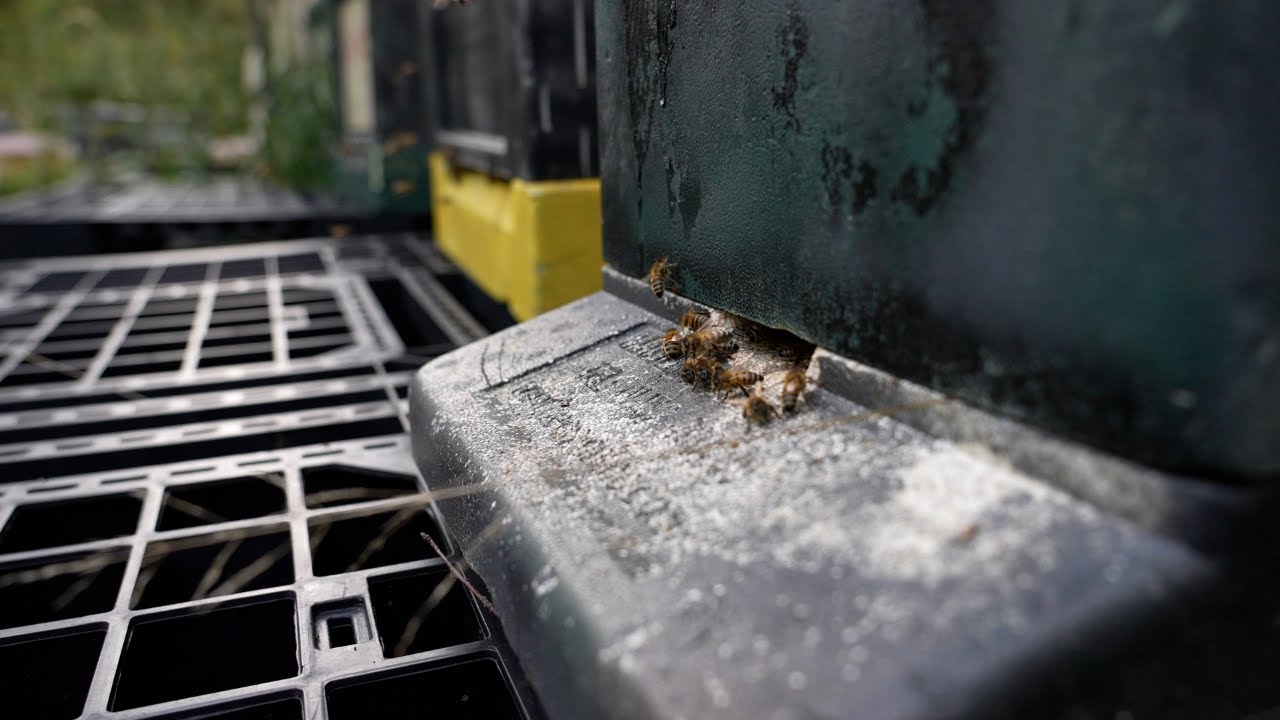
Beekeeper Laurence Edwards inspects an overwintered double nuc re-queened with a pure, artificially-inseminated Buckfast queen. The colony shows a calm temperament, predictable brood placement in the lower box, and strong stores. Edwards notes the queen's distinctive behavior of hugging the bottom wall and assesses the hive's readiness for the North Wales winter.
Chapters
The season is nearly over and it's my last chance to go into some colonies and show you how they're getting on. In this video, I'm going to show you an angry colony that I requeened about 4 weeks ago using an F0 pure breeder queen. Delete the words as appropriate. So before I get any more stings to the face, I'm going to get my bee suit on. Let's go and take a last look at one of my overwintered nucs with an F0 pure artificially inseminated Buckfast breeder queen. So this is the double nuc I'm going to show you today. They were angry about 4 weeks ago, and you can already see that they've really started to calm down. At least you will when I get the lid off. Treatments are in, feeders are on, getting ready for winter, and this is my last chance to show you my new artificially inseminated queen. So I always get a little bit sad at this point of the year. Half of me is thinking, ah, I cannot wait for a break, summer is too busy, and the other half is me thinking, oh, I'm not going to be able to go into my bees and do videos, or go and spend time with the bees and just chill out. Kind of a very bittersweet part of the season. I think at the moment I'm erring on the side of I'm looking forward to taking a break. But let's get inside though, show you these bees, show you how they're getting on. Last time I went into these, they battered me, absolutely battered me. Wrong time of the year, weren't being fed, horrible feral genetics. Now they're going to have the very best genetics in them. We'll be able to take F1 daughters off these breeder queens, and I have bought so many this year that we're guaranteed to get a lot of them through the winter. So as always, clean hands, clean hive tool. Let's check out, see how the bees are getting on. So what I really like about configuring 6 over 6 configuration is just how predictable it is. The bees will always build loads of brood downstairs in the bottom 6, and then they store loads of stores upstairs in the top 6. You get to spring, the bottom box is empty, and all of the bees and the brood is upstairs in that top box. I'll pull out some frames now and show you just how predictable they are. So a couple of things. First one is they're not flying out and battering me, thanks very much. Definitely doing the job. It's only 4 weeks though since I put that queen in, so I'm not expecting dramatic transformation. In fact, I'm only expecting to see the very first few of those nurse bees coming through. Second thing is it's nice to see bees so high up there. Means that they're storing honey up there, means that they're preparing well for what is in North Wales a very, very long winter. Okay, not quite as long as the Canadian winter, but for us it's relatively long. So you can see the bees there. This was a top box of foundation about maybe 3 or 4 weeks ago. I put it on during the heather flow. There'll be a mix of heather and stores in there, and that explains why it's not fully capped over, and that explains why it's not fully drawn out either. Plenty of time left to do that though. Gonna keep on feeding them. Ivy flow's coming up as well. These will be jam-packed full of stores ready for winter. So next frame along, pretty similar. Not fully capped over. The bees are starting to cap it over now though. Got the syrup coming in, and it's nice to see that the bees are calming down now they're taking on a feed. Same on this side here, and you can really feel the weight in this frame. This is the business end though, and this is what I want to show you today. I wanted to do the snapshot of this colony so I can show you what they're like next year. You can see at the moment, yep, they're not absolutely battering me, but they're still a little bit feisty. A lot of them flying around. Got my Apivar strip in there. I've got my queen cage in there because I've got my queen numbers on there. A little bit of a poor performance tracking system for me. I'll have to write it down somewhere else as well, but I do like to leave them in there overwintering just so I can remember where those queens are. Let's get in here, find the queen, and show you some of her brood. So outside frames of the bottom box, lots of capped stores. This is really good. I've been through and I've counted up about 3 or 4 full-size frames of brood over about 5 frames. This time of year they are condensing that brood down, and it's always a fine balance between leaving enough space, waiting for the late ivy flow, and leaving enough space for the bees to actually create their new winter brood. Invert sugar syrup in a poly hive, you can top them up late, so I always err on the side of caution. So what's really strange with this queen in here is she loves hugging the wall. See if you can spot the queen in there. She's right down there at the bottom. She's got a little yellow disc on her. There we go, nice little shot of her there. Oh, she's always on the bottom, she's always on the floor, she is never ever on the frames. I'm not gonna mess around with her, I'm not gonna try and get her out, but how annoying is that? She just runs around the floor She's doing the business, she's laying eggs, but she's never ever on the frames. Right, so I just want to do this as a little snapshot as to what this colony is like middle of September 2022. We're hopefully going to get this queen through the winter, and I will show you what this colony is like in April 2023. The difference is going to be astounding. So before I close it all back up, I'll pull out a couple of frames of brood, just show you the small patches of brood that are on here. Show you that queen's laying a really nice pattern, and then we'll close them up for the 2022 season. Cross our fingers that all goes well in 2023. So on that frame there, we've got some really nice uncapped brood. You can see pearly white segmented, good-looking larva, nice healthy pattern. And then on the other side of the frame, you can see they're starting to cap that over. Only 4 weeks since that queen went in, so this is the first round of brood. Takes them a good few days to get laying again, and then you can see can see now that they're starting to cap everything over. And then slightly better pattern on this frame here, nice ring of stores, little bit of pollen as well. I cannot wait to see what this queen does in 2023.