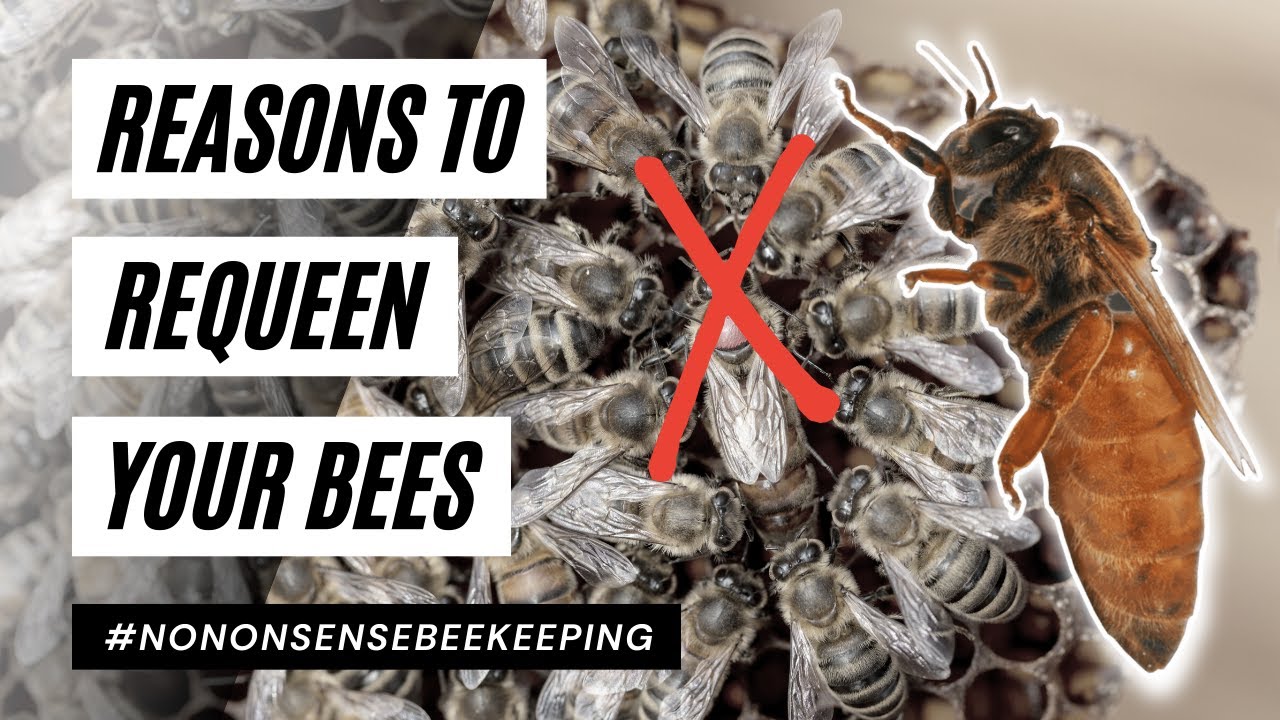
In this instructional video, beekeeper Laurence Edwards (Blackman's Honey) outlines six key reasons to requeen a honey bee colony and offers practical guidance on how to do it. He begins with temperament, explaining how aggressive colonies can be transformed by replacing a poor‑tempered queen with a mated queen of known gentle genetics, and notes the rapid improvement seen within 6‑8 weeks. He then discusses disease control, focusing on persistent infections such as chalkbrood and EFB, and how requeening with a resistant queen can eradicate these problems when other management steps fail. Edwards describes the impact of queen age, recommending a routine two‑year requeening schedule to maintain colony vigor, improve overwintering survival, and boost honey yields. He covers obvious queen failure—damage, poor mating, or drone‑laying—and advises immediate replacement. The fifth reason concerns matching queen genetics to the local environment and forage, such as selecting Buckfast for rapid spring buildup or Carnica for milder winter activity, and considering varroa‑resistant lines for specific pollination periods. Finally, he explains how requeening facilitates splits and colony increases, encouraging beekeepers to rear and bank queens so they have a ready supply for emergencies or expansion. Throughout, Edwards emphasizes using mated queens of known origin, timing requeening in late summer for assessment the following year, and the broader benefits of maintaining a queen bank.
Chapters
In this video, I'm going to tell you all the reasons you should consider requeening your bees. Hi, I'm Laurence Ederson, Blackman's in Honey. Welcome to another episode of No Nonsense Beekeeping. In this video, I'm going to give you 6 examples of when it's a wise decision to requeen your colony of bees. Number 1, and this is probably the biggest reason, temperament of your bees. I speak from firsthand experience here. It is not nice dealing with horrible, horrible bees. You get stung so many times. Like, I remember coming back in the early days of beekeeping just trying to get through it where I had hundreds of stings on my arm. You take loads of Periton at the end, you kind of get through it, you don't get the inflammation, but your arms throb at the end of the day and you don't look forward to your beekeeping. It really puts you off. If you've got a colony of bees with a bad temperament, you squish that queen and you add a mated queen of known origin. Not a virgin, not a queen cell, a mated queen of known origin that's designed and that's been bred to be really, really gentle. So if you're requeening in, say, August or September, wait until the next year, so it's 6 months, to see what that colony is going to be like. And you will be amazed. You can have the worst, most aggressive colony in the world, a 1 out of 10 when it comes to marking temperament. You squish the queen, add a mated queen of known origin, and then they can become pussycats within such a short amount of time. I always say though, give it that long just to be able to judge them, but you should see an immediate impact within about 6 to 8 weeks. The only reason I say about a mated queen in this instance is is that if you've got a nasty colony, or you've got nasty colonies, or your local drone population has nasty genes in it, by adding a virgin queen, or by letting them requeen themselves, or by adding in a cell, you're kind of at the mercy of the local drones that are still there. If you add in a mated queen, a queen that's ready to go, that's been mated elsewhere, preferably somewhere where they're controlling the drones, that's how you're going to see the biggest impact in terms of getting that temperament where you want it to The next reason to requeen is for disease. So things like chalkbrood, very much dependent on the type of bee that you keep. Some have a predisposition to it, some don't. Chalkbrood is the best example here, but it can even be things like EFB. Certain types of queen, they just don't get EFB as much as other types of queen. There's been quite a lot of studies into that. It's not quite as easy to go to a queen breeder and say, Can you give me a queen that is resistant to EFB? Definitely not that straightforward. But something like chalkbrood, if you've got a colony that's got really, really bad chalkbrood and they're getting it year in, year out, obviously you can try and change the conditions that hive's in, put them in full sunlight, try and reduce the condensation in the hive. If none of those things work, then requeening is a really good way to eradicate those persistent diseases like chalkbrood. The next reason to requeen your colony is age of the existing queen. We requeen our colonies every two years, and that's just what we do. That's just our process and our cycle of requeening. That's not to say that at the end of the two years the queens are no good, but we find that the performance does dip down a little bit. But also it minimizes the chance of the colony failing over winter. So for us, we see it as a little bit of an insurance policy. Add in a new queen kind of at the end of that two-year process, and we find that we get more colonies through the winter. But we find it more successful than trying to let the queen run for as long as possible. And then identifying when that queen is about to fail and then going in and replacing her. So they might only last 6 months, they might last 4 years. You need to make that choice for yourself, but age is definitely a consideration, and we requeen every 2 years. This will definitely result in improved overwintering performance, and you should see an improvement in the honey yield as well, definitely in the first year. The next reason to requeen a colony is a pretty obvious one. Your queen is failing. Maybe you put a virgin in there and she's not mated properly. Maybe the queen's just completely run out of steam, she's got too old, links back to the other one, she's turned into a drone-laying queen. Maybe you've damaged the queen in some way and the colony's looking to supersede her. You could just leave them in that situation if you're happy with the disease element, you're happy with the temperament, and they're trying to supersede the queen. No reason to add a mated queen in all of these instances. It's only for disease and for temperament that you need to do that so you can control the drone element. But replacing a queen that is either damaged or failing in any way is a really common reason to requeen your beehive. Another reason, and this is a little bit of a niche one, is the suitability of your queen or your bees to your specific environment. Now, you might have colonies that don't build up very quick in the spring, and they're good at building up for a summer flow, but you're surrounded by oilseed rape. So you might think, well, actually, I want to go for something a little bit more suitable something that's got a rapid spring buildup. So you might change out to like a Buckfast, which is going to give you that rapid spring buildup, or even a Carnica as well. Carnica is well known for giving you a really good fast buildup in the spring and then much smaller going into overwinter. So it's kind of looking at your environment and seeing what works for you. If you're going to the heather, you might look for a bee that's been specifically bred to manage the impacts of varroa, because when you go to the heather, you're delaying that varroa treatment cycle. Which means that you might have issues with a colony that's more susceptible for varroa. So it's all about looking at the suitability and the genetics of the queens that you've got, and then looking at the environment that you're in. What are you asking those bees to do? And then kind of matching the two together and finding a queen that's suitable for what you are doing. And then the final reason, it's not really requeening, but it's making increase and making splits. That where you're introducing new queens into splits of a beehive, is a very common reason for getting queens in and making splits to get increase as quick as you possibly can. So the final thing I'd say is have a go at rearing queens. We sell queens at Black Mountain Honey, but this isn't an advertisement for our queens. This is just talking to you about the different instances in when you would requeen a colony. But I would just recommend it to everyone. My favorite part of beekeeping is rearing queens, looking at the queens that are doing well, bringing in breeder queens, doing the grafting, Feeding up those larvae so they're really good and strong, going away, getting them mated, analyzing how well they're doing, looking at the daughters. It is so much fun. So if you haven't tried it already, definitely read up a little bit about it and have a go on this upcoming season and try and keep more queens than you need. See if you can overwinter some, see if you can bank some. Having queens on tap is so useful, having them available for when one of those things happens. So you get a really angry hive or a queen fails or you break her leg or something happens. Having them available just to hand to make those splits, to make those interventions, is really, really useful. So I hope you enjoyed that video. As always, please hit the subscribe button, please hit the bell so you're notified of every video. I'll see you next time.