Removing Apivar Strips - Autumn Varroa Treatment Finish and What to Do Next
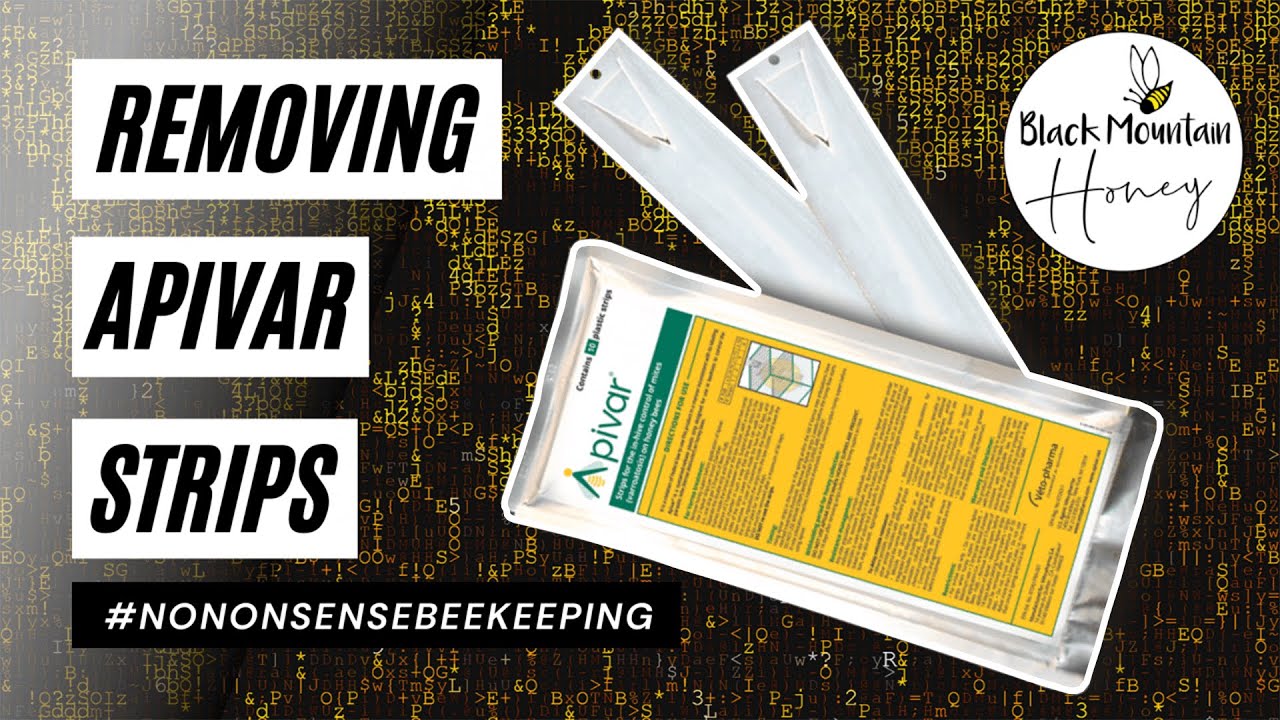
Laurence Edwards shows how to remove Apivar strips after eight weeks of varroa treatment, checking for queen, brood, and mite signs in the process. He warns that timing matters to prevent chemical resistance and honey contamination, then outlines the next step: api-bioxal application in mid-December.
Chapters
It's the back end of October. It's been 8 weeks since I added my Apivar strips, and now I'm doing the most important job of the year. I'm taking out my Apivar strips so the bees don't build resistance. Hi, I'm Laurence Edwards from Black Mountain Honey. Welcome to another episode of No Nonsense Beekeeping. As I said in the intro, this is probably the most important step in the beekeeping calendar. And it really doesn't seem like it. It seems like such a simple task that you can easily, easily forget. Put it in your calendar when you put your Apivar strip in, and then stick a big alert on your calendar, on your phone, wherever you keep your records, to tell you exactly 8 weeks. Stick that notification in your calendar and make sure you take the strips out when they tell you to take them out. Apivar is a plastic strip that is embedded with a chemical called amitraz. And as with all chemical treatments, be it in the bee world or the farming world or the human world, you can build resistance to it. See it with antibiotics at the moment, humans building resistance to antibiotics because they use them so frequently. Now it is very important when using Apivar that you make sure that you do not leave the strips on all year. One, because you don't want it tainting any of your honey supers when you put it on, but two, and most importantly, you do not want your bees Building resistance to Amitraz. If your bees build resistance to Amitraz, you are in lots of trouble because all it's doing is it's reducing down the pool of effective treatments that you can use at various times throughout the year. You might have to use thymol, but the weather might not be very good. You might have to use Max, so you might end up killing the queen or you might end up damaging the brood. In my view, Apivar is my most effective treatment by a long way, but the most important part of that is it's the easiest treatment in the world, and it aligns really well with my season in terms of taking the honey off, feeding, putting the Apivar strips in, feeding while the strips are there, and then coming back at this time of the year and taking them out. So the last thing I want to do is eliminate a really useful varroa treatment because my bees have built up a resistance to it. So in this video, that's all I'm going to do. I'm going to pop open a couple of colonies, I'm going to get those Apivar strips Out. Might take a little quick peek in the colony as well because it's the last chance that I'm going to get, and then we're going to close the bees up for winter and we are not going to go back in there until we do some apibioxal treatment around the middle of December. So I'll get my bee suit on, let's go and take a look at some of the colonies and get those Apivar strips out. Right, let's get into a couple of colonies, get those Apivar strips out, get them ready for winter. Right, here is my colony of bees and they're looking pretty decent. So I just wanted to kind of run over and show you how difficult it is to see those Apivar strips. So I know I changed that process late on in the year and I put them down, but already I'm going to say I'm not going to do that next year because this is going to be really difficult doing this to this colony and to all of my other colonies as well. It's going to be disruptive at this time of the year, so I'm going to go back to the toothpick method of balancing it on those top frames because I find it's pretty difficult to see where those Apivar strips are in this colony. It's going to be difficult for me to rip it all out as well. So it's really frustrating that, and I always try and share my experiences with you, and those experiences and those opinions might change throughout the years, they might change throughout the weeks as well. So 6 weeks ago I thought that was such a better idea because it's going to slip that Apivar strip down, give me greater efficacy, whereas now I'm thinking, boy, I wish I didn't do that. This is going to be Difficult on this colony, difficult on all my colonies. It's going to slow me right down and it's going to disrupt the bees at a point where I really don't want to disrupt them. So I'm going to hunt around. At least I know how many Apivar strips are in all of them. On my 14x12s, I've got 3 strips because they're big colonies, and the average that you're supposed to put in is 1 strip of Apivar per 5 frames of national brood. So I've got 10 frames of 14x12. I've adjusted that and said it's 3 frames. So I'm going to get in here now, I'm going to hunt for them, I'm going to see what they're looking like, get those frames out. Well, I know it's not going to be like this on every single colony, but how lucky was that? There's the queen. So I'm going to put this frame off to one side. The queen is nice and safe. I can go through all the rest of the colony and get those Apivar strips out knowing that I'm not going to crush that queen. Just hope sure she doesn't run off anywhere. But really good amount of brood in this colony as well here. Looking down, we've got eggs, so she is on to winter bees here. Blue queen, she did really well last year, so we'll have to requeen her at some point next year just because they do get a little bit old and they just run out of juice. But the colony is looking good. No signs of varroa in here whatsoever. Obviously there's going to be varroa knocking around. There's no deformed wing virus. The bees are looking really nice. That honestly has made my life so much easier on here, so I'm just going to whip through Get the rest of the apivar strips out, put the colony back together again, make sure I don't crush that queen. Some lovely frames of brood though. Look at these frames. These are 14 by 12 frames. They're pretty much covered on both sides. They're into winter bees, but really good to see such a healthy, big, strong colony. Right, so there's my first apivar strip straight on a frame of stores, which is really annoying. The brood does move around a bit, so that's not going to have done a huge amount of work, but it I would have done when I put it in because it was on a frame of brood. You can see the bees getting tetchy with me, so I'm going to be quick. That's the first strip of Apivar out. Just look at these frames of stores. They have got lots of stores. I love it. So much stores in these colonies at this time of year. This is one of the good reasons for 14 by 12. Plenty of bad reasons for it as well, but they do have a lot of stores. This is why there's a little bit of syrup left in the feeder, because they have packed it away in the brood box. So this This is the frame of foundation that I put in 4 weeks ago, and as you can see, not only is it drawn out, it's got a beautiful ring of capped stores, beautiful ring of open stores, and then loads and loads of brood in the center as well. So there we go, I've got all of my Apivar strips out. The bees are not happy with me. I'm gonna pop the Apivar strips off to one side. I can see the queen there. I'm going to put them back in really, really carefully, make sure I don't damage that queen, close these up, and I'm not going to see them again until I do my api-bioxal treatment in the middle of December. Just a note to say, when you're putting those frames back together, if you do need to go in and pull out frames to get out the strips, put them back in in the same order. The bees have worked hard to get them all into a certain place. They know what they're doing, so don't mess things up. Don't move brood all over the place. Just put all that brood back together exactly the same order. You can close them up for So there we go, simple as that. It really is so easy to take the Apivar strips out. Now there's a little bit of a debate as to how you should put the Apivar strips in, and I always thought you just pop them in over the top, put a toothpick in, job's done. However, someone showed me earlier on in the year how you can embed them in the frames, and I thought this is a great idea. It's going to push that level of strip down, going to mean that more bees are coating it, which is going to give me a greater efficacy against varroa. How However, at this time of the year, I kind of wish I'd used the old method because previously all I had to do was pop the lid, lift that strip out. Pliers are really good for getting the strips out if they're stuck. And that was it. I just closed them back up again. Now I need to pull frames out and the frames are very stuck down at this time of year. So maybe next year I'm going to have to reevaluate my choice. Maybe I start off embedding them in the frame and then when I'm readjusting them throughout the winter season, the final one, I'll pop them back onto that toothpick or just balance them on the top of the frames. So when I'm coming to take them out, makes it a little bit easier. Final reminder, if you've got apivar strips in, get in as soon as you possibly can, get them out. Don't leave them in over winter. Hope you enjoyed that video. Hope you found it useful. As always, please hit the subscribe button. Please hit the bell so you're notified of every video, and I'll see you next time.










