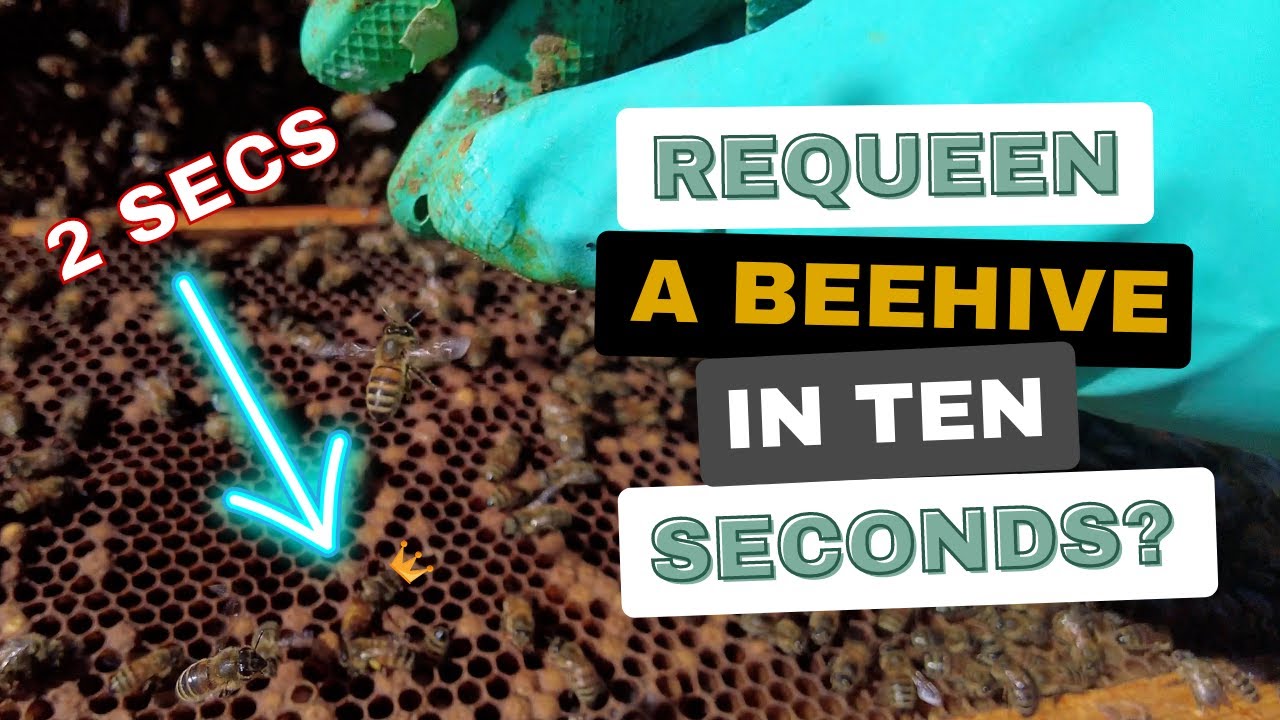
In this instructional video, Laurence Edwards demonstrates a rapid re‑queening technique that bypasses the traditional 48‑hour slow‑introduction method. He takes a mated, egg‑laying F1 Buckfast queen that was just laying in a healthy colony and places her directly onto the frame of a hopelessly queenless hive (no eggs, larvae, or queen). Within seconds the worker bees accept her, cleaning and feeding her rather than balling her. Edwards explains that the key factor is the queen’s fresh egg‑laying pheromone, which signals a viable, productive queen and triggers immediate acceptance. He warns that the method only works when the queen is actively laying and the target colony is truly queenless; a virgin queen present would kill the introduced queen. The video references established beekeepers such as Peter Little and Brother Adam who have used similar techniques, and contrasts this fast method with the conventional fondant‑tab, 48‑hour waiting approach, highlighting its efficiency and reliability when conditions are met.
Chapters
This hive here is hopelessly queenless, and I have just put a mated queen onto a frame with no protection, no days' wait. I've just taken a mated queen, I've dropped her in, and the bees have accepted her. In this video, I'm going to show you how to do it. So I'm just keeping an eye on this queen. I don't want her to go away because I want to show you just how nice the bees are being to her. So this colony here was an early season split where the queen failed to mate. I found the queen, she'd gone a bit droney, I killed the queen, And I got this colony to a position where they were definitely hopelessly queenless. No eggs, no larva, no brood, no queen, hopelessly queenless. So normally in this situation, you would say you take your mated queen, you put her in like a fondant tab, give it 48 hours, you're gonna pop the tab, and then you're gonna give them like a week or so to do a slow introduction. Not today. What I've done today is I've taken a mated F1 Buckfast queen, I've picked her up and I've just chucked her in. The bees have accepted her, and you might think that's crazy. Surely everything you've always said is that the bees don't accept them, you need to do a slow introduction. But there's something different about this mated queen versus a queen that you might get, say, in the post. So what's different with this queen? I've been doing my inspections today on a colony over there, a blue-marked F1 Buckfast queen. The colony is swarming, they're trying to swarm. I found open charged queen cells. And I found the queen as well. Now that queen is the queen that I've just taken from that hive over there. She's laying eggs. I've picked her up and I've just placed her straight into a hopelessly queenless hive. Now it's incredible just sitting here watching how the bees are reacting to this queen. It's a little bit frenzied, but they're not balling her. They are so pleased to see her and they've accepted her completely within seconds. You can just tell. You throw that queen onto the frame. Okay, you place the queen down nice and gently onto the frame, and you can just tell immediately that the bees are so, so keen to get in there to clean her, to feed her, to make her well. And the reason that they do that, and the reason they accepted her within about 3 seconds, is because I've taken her from a laying colony. She was literally laying eggs 10 minutes ago. So the pheromone coming from that bee is from an egg-laying mated queen. That's very different from a mated queen that you might get in the post, and that's why this introduction has worked, and it works every single time. I know a lot of queen breeders and they do a very similar method to this. Peter Little as well, he's the one who gave me this tip. I know he used to use this technique a lot, and I know Brother Adam used to use this technique a lot as well. So let's take a look at this queen. I'll rewind a little bit, I'll show you her in my hand, I'll show you me placing her onto the frame, and then I'll give you a little bit of detail as to how the bees are responding to her. So I've got the queen on my hand. She was laying eggs 10 minutes ago. The colony is hopelessly queenless. Don't try and do this if you've got a virgin running around in the colony because the virgin will still kill her. But these bees here, they are going to accept her within seconds. So there you go, she's on the frame now. She's running around. The bees are checking her out. They're thinking, what is going on here? We have got a mated queen. And not only a mated queen, we've got a queen that is laying eggs. We need to tend to her, we need to take care of her. Our colony is now safe going forward. So there you go, simple as that. I'll fast forward 5 minutes because as I've been doing this video, the behaviour is slightly changing, but it's not getting aggressive. They're just mobbing her, not in a bawling kind of way, but in a really excited, wanting to get that queen back to laying again. It's really interesting watching the queen as well because the queen just wants to go and lay an egg, and she's looking around at all these bees and saying, why are you making such a fuss of me? Just let me get on and lay my eggs. But they're just so happy, so excited they've got a mated queen that they really are fussing her to the nth degree. But I'll zoom in again, show you how they're behaving now. No doubt in my mind that is a safe introduction. See what you think. So this is about 5 minutes on. You can see all the queen wants to do is just get on with her business laying eggs. Trust me, if this was a failed introduction, that queen would be long gone by now. She'd be trying to fly away. She'd be running all over the frame to try and get away from bees that are trying to ball her. And this behavior here is definitely not balling. This behavior here, they just want to clean her. And I'll leave this rolling for a little bit because you could confuse this with quite aggressive behavior. And when they ball her, they really do kind of go in a very tight ball around her. But what I'm seeing here is excitement. You look at the mandibles, you look at how active those bees are, they're trying to Feed that queen. There's no stinging. You can see stinging really easily from bees. If they're trying to kill her, they'll be on top of her, they'll be bending their abdomens over, and they will be trying to sting her to kill her. You can even see there— this is amazing, I'll try and zoom in— you can see an egg sticking out of the end of the bee. That's how long she's been away from laying eggs, literally seconds, and the bees can sense that. They know they're onto a winner here. They know this queen isn't gonna let her down, so they wanna take care of her. So there you go, simple as that. Bet you didn't think you could do that. How to requeen a colony of bees in less than 10 seconds. Make sure she's laying eggs, make sure they're hopelessly queenless, drop her in, leave them to it. If you wanna see a more traditional method to how to requeen a beehive, check out this video here, which gives you a foolproof method to get them hopelessly queenless and get a safe introduction.