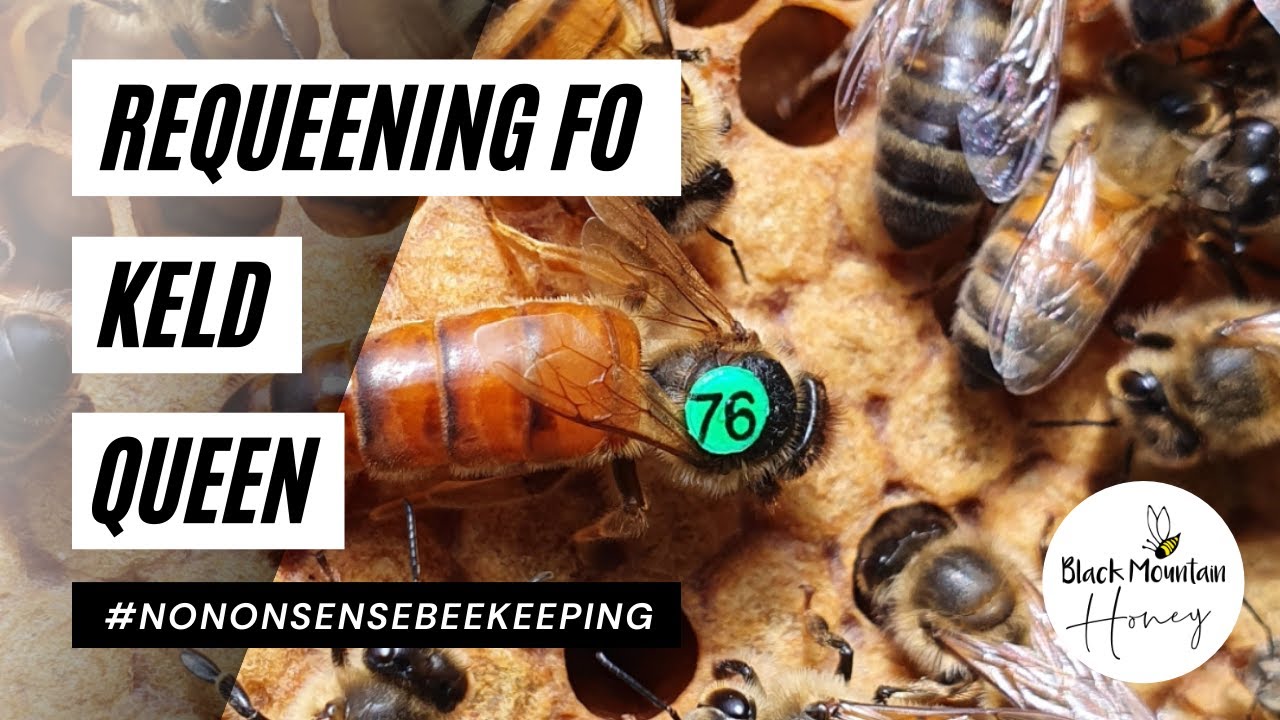
Laurence Edwards of Black Mountain Honey bought a £150 breeder queen from Keld to start a nuc late in the season. The colony failed: no brood, few bees, mold growing. He's caging the queen to move her to a stronger colony rather than lose her.
Chapters
Hi, I'm Laurence Edwards from Black Mountain Honey. Welcome to another episode of No Nonsense Beekeeping. Back in the apiary today, um, I've got a bit of an issue with one of my nucs, and I'm really frustrated with what's happened. So a bit of a backstory is I bought, uh, an F0 breeder queen from Keld later on in the season. I missed out on the early deliveries and I had a couple of issues with queens getting damaged in the post as well, so I ended up getting this queen kind of the back end of August. I knew at that point that it was going to be a real gamble and that I potentially wasn't going to be able to build up the nuc sufficiently in order to get it to over the winter. In hindsight, what I should have done is I should have taken one of my really strong colonies and requeened it with the Keld queen, but I didn't. I took the gamble. We're kind of in a reasonable heather location and I thought I'd try and build up the nuc To get it through. Now, this is the nuc in question here, and it's very, very small. I checked it the other day, there's no brood, there's hardly any bees, so I need to go in there and make a bit of an intervention. At this time of year, it's such a huge gamble. Like, I really don't like even looking in the colonies at this time of year, but I could tell that something was up with this one because when I knocked it, I didn't get any hum. You could tell that there were hardly any bees in there. So I took a look and obviously that's what I found is that there were very, very limited bees in there. Now if this was any other nuc, I would just leave them be. I would say, right, I'm not happy with the queen's performance, it's going to dwindle, there's no point me adding anything at this time of year, I can't take any resource or eggs from any other colonies, I don't have any spare queens, so I just let the colony die. And that's a bit of a harsh view, but that's kind of reality. If the queens aren't up to scratch, then they just dwindle and they die. However, as I spent £150 on this queen and I was potentially going to use it for breeding stock for this year, and the fact that getting the F0 breeder queens early in the year is actually quite difficult, I'm going to take a bit of a gamble with this one and I'm going to try and capture the queen, put it in a cage with some attendants and some fondant. That's the easy bit. And then I'm going to go and find another colony. What's the plan? It may be a colony that hasn't got a queen, but more than likely a colony that didn't perform well last year. I'll do that on a warm day. I'll make sure that the cluster is moving and active. I'll go into that colony, I'll find the queen, and I'll dispatch her. And then I'll introduce this new curled queen into, um, into that new colony within its cage, give them a few days to acclimatize, and then I'll release it. Fully appreciate that that is a massive gamble, but as it stands, this colony will not get through the winter. There's just not enough bees there. It's not very cold here at the moment, but if it were to get cold, this— that's it, this colony would be wiped out. It's absolutely tiny. So let's have a look. I'll take it, I'll open it up, and you can kind of see what I'm talking about and see how small it is. If you would do anything differently, as always, please drop me a message, write in the comments below, and tell me what you think. Like, it's, it's a complete learning experience for everyone, and it's good to talk and discuss different ways of doing things. So as with all these videos, I'm not saying that my way is the best. I'm not saying that this is how you should treat your bees. I'm just saying this is what I'm doing. This is why I'm doing it at the moment. And if you think anything different, let's have a bit of a discussion and kind of see where we stand. So I hope that's all all right. We'll have a look and and see where we stand. So when you take the box off like this, it doesn't actually look too bad. You kind of look in, and I'll give you a little snapshot on the GoPro there. It looks like the bees are active. If you just looked from the top like that, you wouldn't really see that there was much of an issue here. And like I say, I'm only keeping a particularly close eye on this colony because there's a queen in there that I really want to use to breed from this year. So if I saw that on any other colony, I'll probably just leave them. But when you take the lid off, you'll see what I mean. It's a very small colony indeed. So there we go, and that's what we're talking about here in this colony. So to me, it's barely covering 2 frames. When you start to lift the frames out, you will see that there is hardly any bees in there whatsoever. So I'll just give you a little look at that now. The fact that there's kind of no movement whatsoever, I mean, they're very still, they're trying to cluster To keep warm. You can see like a little bit of mold on some of the cells there. Like, it's not, it's not a healthy colony. I very much doubt they'd get through winter in their current state, so I feel like I have to take action on it. And as you can see there, there is the queen. So that's, I mean, that's the asset that I'm trying to protect here. Um, you can see, I mean, these are all kind of the daughters of that queen. They're very gentle, I mean, they're not kind of flying up and attacking me. I don't even need to use a veil on this colony here. You've got one bee there kind of flying, checking me out, but I mean, they're very gentle. If you look kind of in there, you can't see any eggs. If there were eggs in there, I'd probably make a different decision. I'd say, right, okay, it's a very, very small colony, but there's some eggs. They've got enough bees to keep them warm, so I'll give it a gamble and see if I can get them through. The fact that there's no eggs, there's not enough heat to be able to be generated to keep that brood warm. So the chances are these bees are going to dwindle, and then there's just not going to be enough bees to get any rearing at any point. So as you can see, you can see the queen there, she seems fine. So I'm going to take that kind of action at the moment to remove her, put her into a cage, and then see if we can rehouse her in a different hive. So I'm not going to do that today. It's a bit too cold to be messing around with the big colonies today. What I'd like to see on a day like this is the big colonies clustered up. So if I went to kind of start pulling frames out to find the queen in the other colony, I risk damaging the colony. Obviously, I'm going to dispatch the queen anyway, but I need to kind of get a positive ID on the queen, make sure she's out before I kind of risk putting an expensive queen into that colony. So like I say, just a quick video for today. Just wanted to get out, show you the GoPro, show you a couple of the issues that we face this time of year. Um, we'll be doing loads more videos like this, so if you have any comments, any feedback, it's always much appreciated. Please hit the subscribe button. If you have any requests for product reviews or tutorials or anything in specific you want to talk about, please drop me a message and we'll do our very best to kind of cater for your needs. So thanks again for watching, and I'll see you next time.










