River Apiary Snapshot - Strongest Apiary Update - Massive Colonies for November
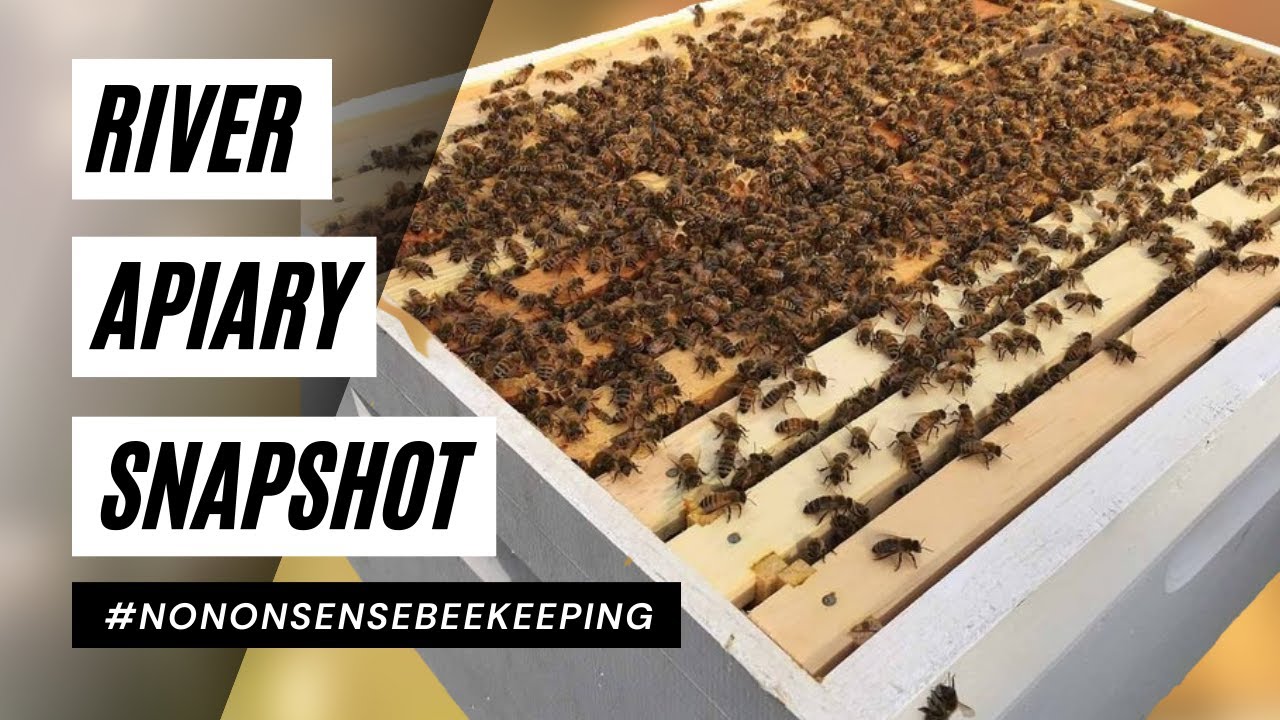
Laurence Edwards inspects every hive at River Apiary in November, finding most colonies strong and covering 10-plus frames. A few weaker hives show varroa damage and deformed-wing virus, prompting plans for oxalic acid treatment in December and requeening some aggressive colonies.
Chapters
In this video, I'm going to give you a snapshot of every single colony down at the River Apiary. Hi, I'm Laurence Edwards from Black Mountain Honey. Welcome to another episode of No Nonsense Beekeeping. I've been doing this with all of my apiaries, but I want to give you a snapshot inside every single colony, show you how big they are, show you how small they are, just to give you a rough feel of what they're looking like. It's the middle of November at the moment. I'm out here putting fondant on. So before I get that fondant onto the colonies, I'll give you a little snapshot inside. You can see how big those colonies are, see what they're looking like for the middle of November. So I'll get my bee suit on, I'll get inside the colonies, and I'll give you that snapshot.
So this is my first colony.
Really good-looking colony covering all 10 frames. Really happy with the size of this colony. Gonna get some fondant on this one now and close it up.
Right, next up, another absolute monster colony.
Really happy with the colonies this year. They're just so big going into winter. You can't beat opening up a colony like this in November to get some fondant on and them looking like this, covering all the frames, boiling out over the top. I'm going to get some fondant on these ones, close them up, and we'll see them again for oxalic acid sublimation in December.
So next one along, not anywhere near as active as the one before.
Don't like seeing them like this, Because it gives me a little bit of a worry. There's nothing I can do though. They've got a decent amount of weight, but I'm sticking fondant on all of these as an insurance policy anyway. We'll see how they get through the winter.
Right, back to the big strong colonies.
There was a little dip there, but we are straight back into it. Majority of the colonies look like this in this apiary. Big, strong, over 10 frames, 14 by 12, putting in that brace comb in between that queen excluder. It's fine, we're gonna go straight on with the fondant now. I have a very, very good feeling about this whole apiary and how many we're gonna get through.
Right, this colony doesn't look anywhere near as strong.
Can't read too much into that though, but also they haven't taken down all of their syrup either. I never like to see that when they don't take down their syrup and also they don't look too strong, but you just can't read too much into it. What I've learned from last year is what a good thing to look at at this time of the year is just to break the seal between the floor and the brood box and have a look underneath. Generally, they're looking good underneath, and that's where you're expecting the bees to be at this time of year.
Next colony looking really good as well, filling over all of those frames.
Another 10-frame colony in a 14 by 12 box, middle of November. This is how many bees there are. Be interesting to see what they look like once they cluster down a little bit, but I don't tend to go in there then. This is the last check for weight, putting those slabs of fondant on, and then I'll leave them alone until I do my apibioxal sublimation in December, and then that'll be them done until the spring.
Interesting point of reference, this one.
This is a double brood, so you've got a 14 by 12 box with a double brood underneath. Reason I did that is because that had Apivar strips in it, that one, so I've just left them on double brood, but they're really big as well, so they've not started to cluster up at the bottom yet. Not finished all of their syrup, but they are really, really heavy, so they've probably just run out of space.
Another really nice big strong colony.
Kind of get the message, don't you, at this apiary? They do well any point in the year, spring buildup going into winter, all the way throughout the season. They're big, strong, prolific colonies doing really, really well for the middle of November.
Another very, very strong colony.
Kind of running out superlatives for these bees because they're just doing everything I want them to do. A few tetchy ones in this apiary that we're going to need to requeen because I'm trying to get this down as my mating apiary, get that stock really nice. But you can't argue with what they're doing in terms of honey production, overwintering, and general health. Very, very good indeed.
Second to last one, looking very, very good indeed as well.
Really impressed with these bees, they're just so prolific. And again, this is the 15th of November, they've not got a huge amount of time in order to actually get Through the year. They start building up very, very early in this apiary because we're so low down. Really good to see how these bees are getting on. And last but not least, this is the colony that had the terrible, terrible varroa issues. Visible varroa, deformed wing virus, open cappings on that brood. It didn't look healthy at all. And obviously I'm not going in and looking for that now, but just looking on the top, not seeing any sort of disease issue. That's definitely not to say that there's nothing going on a little bit deeper in here, but the fact is we've still got bees. They're still over 10 frames, not quite as prolific, not quite as bubbling over, but hopefully that issue with a really high varroa load is fixed. Hopefully we can get this colony through.
So there you go. I think you'll agree the colonies are looking really, really good in this apiary. All of them are super, super strong. The only one that's looking a little bit iffy still is the one that had the high varroa load, but even that one seems to be coming back into power a little bit.
Definitely making progress.
Hopefully we're going to get that one through the year. I attribute the success of this apiary to the fact that you've got this long flow early in the spring, the bluebells and the wild garlic and the dandelions. It is really fantastic, this apiary. And then you've got so many big deciduous trees that get you all the way through the year into the bramble, into the Himalayan balsam.
There's just everything.
It starts in April and it finishes kind of now in November. They're still out foraging on some of the Himalayan balsam at the moment. It might burn the queens out a little bit quicker than normal, but this apiary here has produced by far and away the most honey this year, and I think the bees look really, really good down here as well. So I hope you enjoyed that video. Thanks for watching. As always, please hit the subscribe button, please hit the bell so you're notified of every video, and I'll see you next time.










