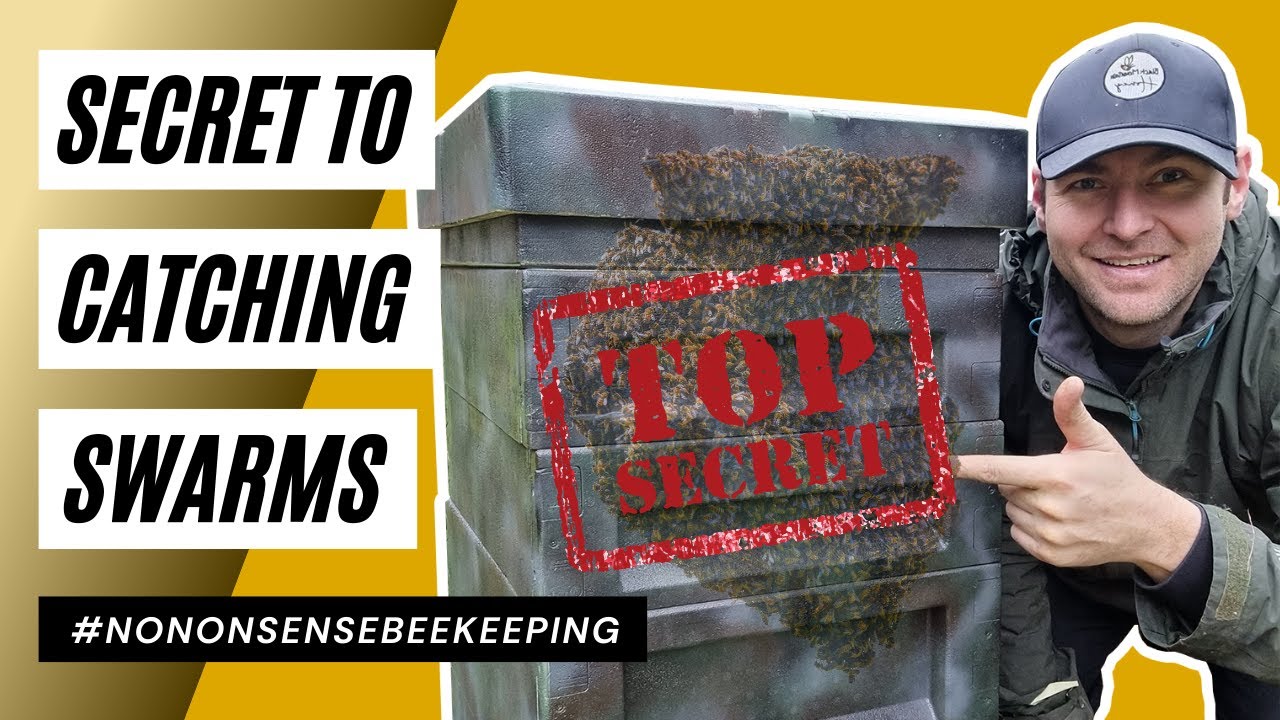
In this solo beekeeping vlog, Laurence Edwards of Black Mountain Honey demonstrates how he captures a wild swarm using stacked bait hives placed in his heather apiary. He explains his standard bait‑hive configuration—stacked boxes with a roof, a gap at the bottom, and dark black comb—to attract swarms. After locating a large swarm that has taken over the stacked boxes, he inspects the colony, noting that the queen is marked and un‑clipped, confirming it is not one of his own colonies. He clips the queen’s wing, shows her, and reviews the brood pattern and stores in a 14 × 12 brood box, highlighting the presence of honey, pollen, and capped brood. He discusses the use of a queen excluder, the importance of observing brood layout, and the impact of cold, rainy weather on colony temperament. Throughout, he offers practical advice for beekeepers on setting up bait hives, identifying queens, assessing colony health, and managing swarms, concluding with a promise to follow up later in the season.
Chapters
Another day, another bait hive, another swarm, and another colony of free bees, because they're definitely not mine again. Hi, I'm Laurence Edwards from Black Mountain Honey. Welcome to another episode of No Nonsense Beekeeping. I'm a little bit late on this video, so I tried to do this 2 weeks ago and I just got caught in the worst thunderstorm ever, so I didn't get far enough into the video to try and salvage it. So I'm up in the heather apiary. There is a swarm that has taken over some stacked up boxes. Standard configuration for those boxes, I just leave stacked up boxes in my apiaries, put the roof on them, leave a nice gap at the bottom, dark black comb, and they seem to just always get taken over by really nice-sized colonies. Probably onto the 4th or 5th swarm in the last week or so, and again, it's not one of my colonies. So as soon as I saw that there were bees in there, I thought, definitely going to be one of mine. I've been through Every single colony up here earlier in the year clipped all of the wings, and when I've looked at this queen here today, she didn't have her wings clipped. So the first thing I did 2 weeks ago was clip her wings, but she was already marked, so it's definitely not a feral colony. It's somebody's colony around here that swarmed into my bait hive. I'll show you the queen today. She's a really, really nice-looking queen. She's definitely not one of mine. 23 colonies up here, they've all got clipped wings. I went around the week when I found the swarm, checked Every single colony, and there was no swarms lost. So it's not my swarm. Another free colony of bees, and they're a really nice colony of bees. So in this video, all I'm going to do—quick video—just going to show you it in one hit today. Go from top to bottom. Show you the bees upstairs in the super if there's anything up there underneath the queen excluder. Go through some brood. Try and find the queen, and just show you a really nice swarm that I've caught. So I'll put my bee suit on. I'll get the smoker on. Let's go and take a look at the swarm. So here we go, this is the stack of boxes in question. I've got them just stacked up like that, you can see various different configurations. They're just on a floor underneath and then I've got empty drawn comb in there, so there's no stores or anything like that, it's not a disease risk. These boxes here are just destined to go onto some of my supers for later on in the year. I stack them up like this though just to give me a chance of catching some swarms as opposed to just storing them With no chance of catching anything. So this is the box here. It was a really big swarm when it came in. I'll get inside now and I'll show you how many bees in there, see if we can find the queen, which I have clipped now, and I'll show you some of the brood pattern. Just goes to show though, you can catch some really, really good swarms. If it's something you're after and you've got spare boxes, you might as well stack them up like this because there's lots of free bees going around. So this is what the colony looks like on the first super. Not packed full of bees, but I have put a queen excluder down there, so majority of the bees now are in that bottom box. Queen excluder wasn't there originally because I want to give the bees the impression of some space. Got a missing frame over here that I need to get back in there before they start drawing it out, but they're not getting in here too much at the moment, so I've got a little bit of time for that. But starting to go, starting to store a little bit, starting to bring something in, starting to build it out. So a good start in that top box, got some bees up there. So even though it looked like there were hardly any bees in there whatsoever, it's half a frame of honey there, so there's enough bees to bring in a surplus of honey even when it's a little bit drizzly here. So they're on to a really, really good start. Give them a round of brood and this will be a very, very big box of bees. So then we move down into the brood box, and it is a 14 by 12 brood box, and you can see just the way it's perched on top of a feeder there, so the bees have just got access Underneath it, there's no floor in place, and as you can see, they're pretty much covering all of the frames there. It's quite cold today, so you can see they've gone back into this classic cluster fashion, which is very interesting. It's only about 14 or 15 degrees here today, so not a huge amount of flying, although you are getting a few stragglers out. But generally quite a nice looking bee, not the friendliest but not the grumpiest. I'll get inside, pull out a few frames, see if we can see some capped Brood, see if we can find that queen as well. So I'm not sure there is any better feeling in the beekeeping world than pulling out the first frame and seeing the queen. It really does make things so much easier. But there you go, you can see the queen, and like I said, you can see that she's had one of her wings clipped. So I have clipped her wings now, but when she arrived here, she didn't have her wings clipped. So there's no miracle of nature, although I do hear tales of swarms carrying queens. I've never experienced it myself. She was marked though, so it definitely wasn't a feral swarm, which generally means that they're going to be mated as well, unless someone's out there marking up their virgins. So I was confident we were going to see eggs, and yep, we do see eggs. But this is a couple of weeks after, so I'm hoping if I keep on going through the rest of this colony now, I'll be able to find some capped brood to show you as well. But nice looking queen though, 2020, so she's not like a really, really old queen. We'll leave her like she is this season, see what she's like, give her a go on the heather and see what she can do. So there we go, next frame. Can't judge her on that first round of brood, it's really not very fair on her. But also, if you look closer in here, it's interspersed with lots of pollen. So it's not a case that she's got a really bad laying pattern there, although if I was to see that on an empty frame, I would think there's probably something wrong with that queen. But it's more likely she's just laid around all of that Pollen, because you can see there's a huge ring of pollen all the way around that brood. And then you look down into the middle and there's loads of pollen as well. But I'd say that's a really nice frame, looking very good indeed. I do like my 14 by 12 for this very reason, that you get this ring of stores all the way around the edge, then you get your pollen, then you get your brood in the middle. It's a textbook looking frame of brood. So much better looking frame of brood this time round. Lots of brood as well. She really has packed that one out completely. Not the best laying pattern in the world, but you zoom in again, you can't see it at all on that image there, but it is eggs. So she has gone back and laid up some of those as a second round, but that's perfectly acceptable. Really big colony this is going to be in a few weeks because there's about 6 or 7 frames of brood all looking like this and like the one up there. Once all of that brood emerges, there is going to be a lot of bees here. Better make sure they've got a super on because they're known to swarm with that queen. So start to dig around with this colony and maybe they're not the friendliest, but it is really grim here today. It's actually raining now, so the bees are saying, give it a rest, give us our roof back, we, uh, we want a little bit of peace, we want to get out of the rain. So I'm going to close these up now, but just goes to show, look at that, completely filling that 14 by 12 brood box. They're working down a little bit as well, which is a bit annoying. I'll have to fix that, but this is going to be a really good colony for me. Hopefully they'll do well on the heather this year. So there we go, that's it for the video. Quick short one today, just wanted to show you the swarm I've caught. Bees are really unhappy with me. Look at the weather, it is grim, it is miserable. But another swarm caught in a bait hive, 2020 queen, got her clipped now. Do a follow-up video later on in the season to show you how well these have done. I have no idea, they say you're supposed to have a current season queen Up at the heather. I'll let this one run as a season before, so a blue queen when it should be white. See how they get on, see if they produce, and we'll take it from there. So the bees will be glad that this video is over. They are really grumpy with me, this swarm. Hopefully they'll be a little bit better behaved on a nice warm day. So as always, I hope you enjoyed the video. Please hit the subscribe button. Please hit the bell so you're notified of every video, and I'll see you next time.