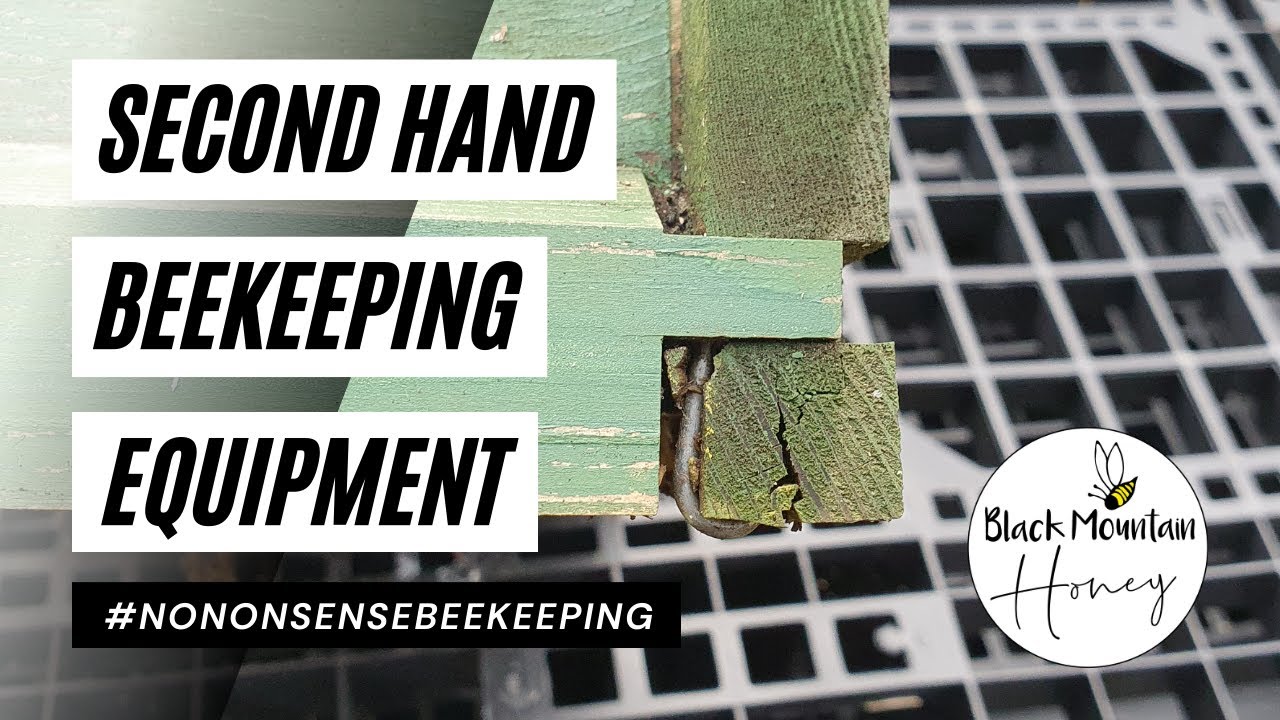
In this No Nonsense Beekeeping episode, Laurence Edwards (Black Mountain Honey) walks viewers through the pros and cons of buying second‑hand beekeeping equipment. He begins by acknowledging the market surge in used hives and states his goal: to give practical inspection tips rather than a blanket endorsement or rejection. Edwards showcases a batch of donated boxes, using them as examples of common problems such as water ingress, split wood, improper fasteners, incorrect bee‑space, misidentified wood species, and poor joint construction. He explains why these defects can lead to disease spread (EFB/AFB), reduced hive lifespan, and management headaches. The video then shifts to a cost‑benefit analysis, comparing second‑hand deals to new or “seconds‑quality” cedar and poly hives, arguing that new or seconds‑quality equipment often matches or beats the price of used gear while eliminating disease and construction risks. Edwards concludes that while second‑hand gear isn’t inherently bad—especially when sourced from reputable beekeepers—it requires diligent inspection to avoid costly mistakes. He encourages viewers to consider new or seconds‑quality options for long‑term reliability.
Chapters
Hi, I'm Lawrence Edwards from Black Mountain Honey. Welcome to another episode of No Nonsense Beekeeping. In this video, we're going to talk about secondhand kit. Is it a good idea, or is it something you should give a miss? So the reason I wanted to talk about secondhand kit is that this time of year you see so much secondhand kit come onto the market. I'm not going to tell you it's bad to buy secondhand kit, and I'm not going to tell you it's good to buy secondhand kit. What I'm going to do in this video is I'm going to give you a few tips and pointers, things to look out for when you're buying secondhand kit to hopefully get you the best deal and to hopefully give you some help and to avoid some of the duds that are out there. So I've got a selection of secondhand kit that I was given here. Had a bit of a problem back end of the year. Someone said, I need to get these colonies out of my area, can you come and take them? I've got loads of boxes and stuff free of charge. Come and take the colony and you can have some boxes as well. These are the boxes that I've got. And I'm not saying these are indicative that's what's on the market. I'm just going to show you some of the issues that you have with secondhand boxes so that you're better prepared if you're going off onto eBay or any of the auction sites when you're looking at secondhand beekeeping equipment. Now, secondhand beekeeping equipment can save you a lot of money, really, really can save you a lot of money. You do get good bargains, but some of the equipment holds its value very well, and some of the things that I see for sale on eBay and some of the auction sites and some of the live auctions, I do laugh a little bit and think, how is someone paying so much money for a secondhand beehive that's potentially got disease, potentially not been put together right? And I just think when you compare that to seconds quality cedar or polyhives that you can get in the sales, there really is kind of no debate in my mind. I would always prefer to go down the route of new equipment. So something like this, I'm burning all of this. This is— I've just brought this back from home to show you. I'm not using any of this stuff. The risk for me is too great if I go and buy some secondhand brood boxes, bring them into the apiary, one of them's got EFB or AFB on it, it spreads throughout all of my colonies. It's too big a risk for me. Now I appreciate if you're starting out in beekeeping and you're going to buy a couple of colonies from someone and they come in the boxes, completely different idea and a completely different discussion that we're having. I'm just going to run through some of the differences and hopefully give you a bit of advice when you're buying equipment. Right, so the first thing to look for is kind of like the stupid test, the laugh test as we call it at work, which is really like, are you actually being serious? This is a well put together beehive, yeah? This one is just a mess. They've used U nails, they've used screws, everything's wrong with this beehive. It's such a perfect demo piece because every single thing that they've done with this beehive is wrong. So the first thing is it's got water ingress. There's splits all fall over it, it's only a matter of time before water gets in here and it starts rotting. So even if everything else was fine, I'd be looking at that and saying that's not going to last 5 years. Is it a good thing to spend my money on? Probably not. I'm going to pass. Next thing is the way it's put together. There is a method for all of these boxes, especially National Boxes, as where the nails should go in, what orientation they should go in, what you should be using— nails or screws. You definitely shouldn't be using U-nails to hold things together. Which this one has as well. Next one is checking for squareness, and this is something that you might not pick up immediately. This one is all over the place. It looks like a rhombus. But a really good test for that is just measuring, tape measure from side to side, corner to corner. The distances should be exactly the same. Check for squareness, 'cause if you've not got squareness, water will sit on those lips and get in through the cracks, leads to a much shorter working life. The next one is frames. Like, I just think, Secondhand frames, don't touch them. It really isn't worth it. You just don't know what you're getting in those frames. You can see there wax moth has completely taken over on that one. I'm not melting these down. I'm not using these frames. These are all going in the log burner. I'm going to burn a lot of them. I wouldn't be touching secondhand frames anytime. The next one is bee space. Really, we talk a lot about bee space on this channel, and hopefully you'll all know by now a national hive like this should be built as a bottom bee space hive, but you can build it as a top bee space hive as well. Now the keen eye people would have noticed this National has been built as a top bee space hive, and if you didn't pick that up when you bought this box and you took it back to your bottom bee space equipment and you start putting it on, the bees are going to glue everything together and you're going to think, what's going on here? This is— this just isn't working properly. So check the bee spaces are right, check everything is correct. Next one is check the material. You see so many hives as cedar hives, And I look at them, I just think, that's not cedar. I see it a lot on Facebook Marketplace as well, people selling oak dining tables with big pine knots in them. I think people don't quite understand the difference a lot of time between pine and oak or pine and cedar, or maybe it's a deliberate tactic to shift some really cheap pine supers onto someone for the price of a cedar super. But it's pretty easy to see. You can see the difference. I can see pine a mile off. It's a lot lighter. The knots do look a lot different. And the cedar has that unmistakable cedar smell as well. It's So if you're buying cedar supers or cedar brood boxes or anything cedar, make sure it actually is cedar and not the inferior pine. Right, the next thing to have a look at is the joints. If you look at the National Beekeeping System, it's done with a finger joint. Now this box that came here is done with a butt joint, so they've just nailed it together with a butt joint, and then the lovely addition on this side that you can see is almost coming off there is, uh, they've realized the bee spaces are wrong, so they've tacked on an 8mm bee space to this side to get it to work. So there are some dog's dinner beehives and pieces of bee equipment out there, and I really don't want you to pick up the duds. So there are lots of good quality equipment out there. I've seen people get them truckloads full of supers that people have been retiring, and they're just getting rid of all of their supers. People are getting rid of their beehives, they're downsizing. I'm not out there to say that everything secondhand is bad. I sell a lot of secondhand equipment when I no longer use it, but I just wanted to introduce you to some of the real schoolboy errors that you might not pick up if it's your first time in beekeeping, looking at getting secondhand equipment, and you think you might get a bit of a deal on one of the auction sites. I look at how much these hives go for on these sites, and I compare them to picking up a sale item. So getting it at the right time of year, maybe around January time, a seconds Cedar equivalent And I find probably 9 times out of 10, buying new seconds equipment is either the same price as buying it secondhand or it actually works out cheaper. I see a lot of people doing this on Facebook Marketplace. They're buying stuff in the sales, seconds quality, they're putting it together, and then they're selling it as a complete hive for say £160, where they've probably paid £80 or £90 for it. And that's absolutely fine. Like, the assembly of these hives is something that takes time. And people need to earn a living, and if that's their job putting together beehives, no problem with that whatsoever. But if you're in it to find the cheapest possible equipment, I really think you're much better off in the long run going for seconds quality cedar or getting poly hives in the sale when they're their cheapest. You avoid any of the disease risk of going for secondhand equipment. You avoid any of the horrible frames which can come with disease and probably going to disintegrate within a few weeks. You avoid any of the spacing issues. You avoid any of the poor manufacture issues. You just eliminate them all, and you start off with really nice, clean, fresh equipment that you know is going to be put together well because you're going to put it together yourself. So that's it for the video. Probably rumbled on a little bit too much about secondhand equipment. Please don't let me completely put you off it. I'm not saying all secondhand equipment is bad. I will buy secondhand equipment off people if a good deal came up for some supers with drawn comb, And they were put together well with the correct bee spaces from a reputable bee farmer or someone I knew that's not going to give me a load of rubbish, that's something that's susceptible to disease. I'm not saying it's all bad, just pointing out some of the really key things that can go wrong when you're buying secondhand beekeeping equipment. So I hope that video was useful for you. I would have loved to see this video when I started out because I bought some absolute beauties. These guys, All of this here, this is all going in the fire, so this is going to keep me warm next winter. I don't want to bring any of that disease risk into the apiary or use it with any of my bees. So as always, thanks for watching. Please hit the subscribe button, please hit the bell so you're notified of every video, and I'll see you next time.