STEHR POLY NUC REVIEW
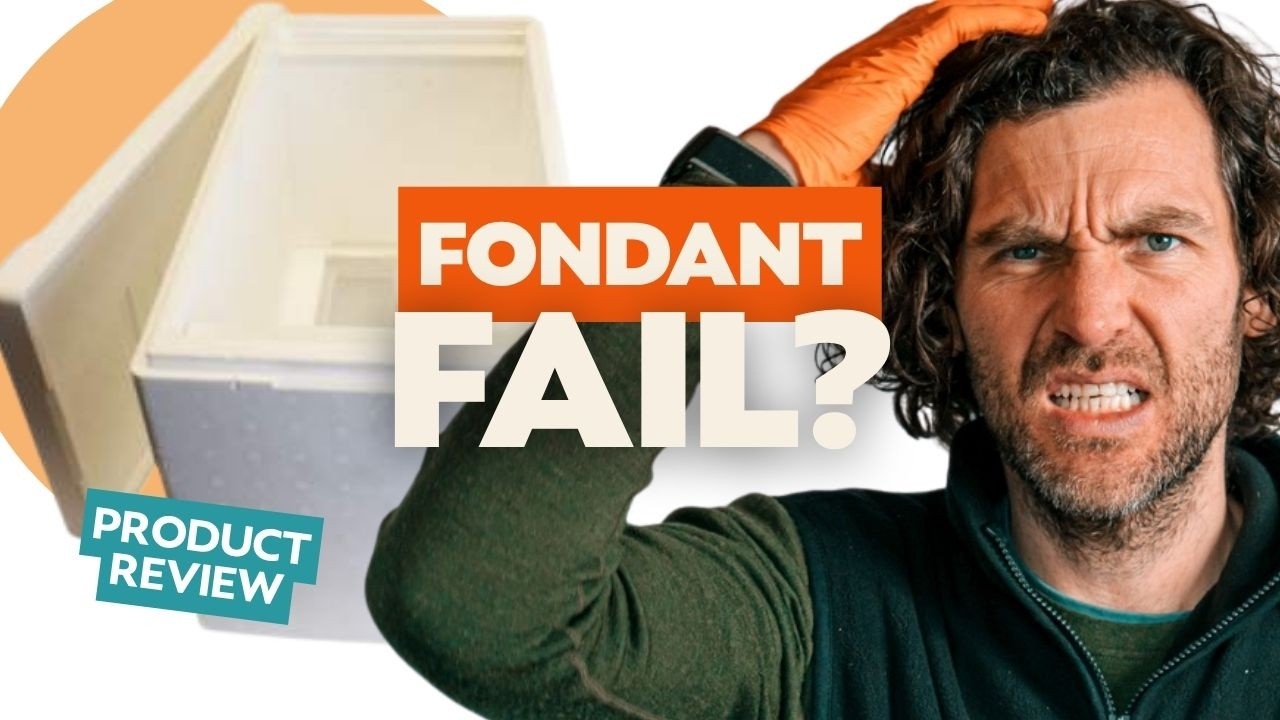
Laurence Edwards reviews the Thorns polystyrene nuc, a £50 option with a large feeder and good insulation. The main drawback: it can't feed fondant without modification. He walks through each part and compares it to competitors like BS Honeybees and Abello.
Chapters
Hi, I'm Laurence Edwards from Black Mountain Honey. Welcome to another episode of No Nonsense Beekeeping. Today we're going to review the Thorns poly nuc made by a German company called Steyr. So this poly nuc here, I've had to buy a new one from Thorns because I damaged my old one of these. This was actually the first poly nuc that I ever bought. I bought it from Seawind Jones, and even they've stopped selling it now, so the only place to get this is direct from Thorns. And in this video, I'm going to give you my honest review and recommendation. So as always with the reviews, we'll go from top to bottom. We'll talk about the roof, we'll talk about the feeder, we'll talk about the box, the runners, the entrance, and the floor. So let's get straight into the video then. The, the Polynuc from Thorns is a high-density polystyrene national polynuc. It's 100 grams per liter density, pretty standard on the UK market. This is German-made though, so it isn't made in the same factory as a lot of the other poly hives on the UK market. It comes unpainted, which is always my personal preference because you can get a nice coat of spray paint on there and it bonds really well to the unpainted poly. Now I'm going to go straight in with a frustration from this nuc, unfortunately, is that it doesn't come with a feeder, so you need to buy the feeder separately. It turns out to be one of the more expensive nucs on the market. The box cost me about £35, so that is the box and the roof. And then I paid an additional, I think it was £12 to £13 for the poly feeder. And in my view, there's no point having a poly nuc without a feeder. They're small colonies, they need feeding, they need fondant. You need to make sure you get a feeder. So the whole package is around £50, which puts it very much at the top end of the UK national poly nuc market. But we'll work our way through going from top to bottom. So let's get on with the review. So it's got a rebated design, very similar to all of the other poly nucs on the market. Full rebate all the way around the edge. So if you were to buy this box as it comes like that, and if you just buy the Poly Nuc from Thorns, this is how it comes. You just get the box and the roof. There's no way of feeding any fondant on this at all. So you need to build yourself an eke or build yourself something to go along to be able to feed fondant. So I would highly recommend getting the Poly Feeder, even though that's not fully compatible to feed fondant. So a bit of a frustration with the roof. It's quite thin, probably about 20mm in its thickest point there. And then it's just got this single overlap, but that locks directly onto the box. There's nowhere to feed fondant on the roof. I always look for that in the poly nuc design, something that I think is pretty much critical in our environment in the UK. Right, so moving on to the feeder then. Similar to the roof, you've got the rebate there, so it locks directly on top of the box like that. You've got a slot underneath where the bees can go up, and then they access down this slot in here, and you've got a polycarbonate insert to stop the bees getting drowned. That just comes out. It's got a nice design, nice ribbed design there, which helps the bees not drown. What I would say though is give it a good coat of paint. What I like to do is throw a bit of sand on these entrances here just to make sure that the bees don't slip down and drown. I found this one though very, very unlikely for the bees to drown compared to some of the other designs on the market. So what I really, really like about this feeder is its volume. It's a nice deep feeder, and because you've not got any central reservations or slits in it or anything like that, you can get a huge, huge amount of feed in there. That's something I really like to see. So if you're the kind of person that doesn't like feeding fondant, just likes feeding syrup, this is about as good as it comes for a poly nuc feeder because it's very, very big. You get the added benefit that when you put the roof on like that and then you put the feeder on the colony, if you leave it in that format over winter, you've got polystyrene Big nice air gap and then more polystyrene, which is a really efficient setup for getting good insulation above the cluster. So I always recommend with all of these Polynucs, get the feeders, leave them on all year round, apart from maybe taking them off once or twice just to give them a bit of a clean. Now the issue that I have with this feeder, and it is quite a big issue, is that you can't feed fondant on it. So whereas the BS Honeybees, you've got a nice big plug in the middle that you can take out, put it onto your box and then the bees can access up into the box to feed the fondant. There's no way of doing this on here. And the fact that you've got the rebated design means it's very, very difficult to upturn it and feed it for fondant. Now you can do it, and this is what I did on my colony for years, but what you do end up with is this edge here that isn't quite as deep in terms of the depth of poly. I would not worry too much about that. The rebate system goes completely out of alignment Nothing clicks together anymore, but in terms of a hive and a poly nuc, that's perfectly acceptable. Like, it will just move, nothing's interlocking. But if you ratchet that down over winter, then you can feed fondant. You can get a humongous slab of fondant in there as well. So if you've got this poly nuc, you're wondering how to feed fondant, that, that is how I would set that up. Don't worry about the rebates, just balance it all together, strap it up with a ratchet strap, and then you can put a nice Big slab of fondant directly on top of the frames. Now, something else that comes with this Polynuc is a polycarbonate board. Now this clears out, you take the plastic backing off, and then you can put that directly over the top, which means that you can open it up in winter and you can see how the bees are doing. I'm not a massive fan of polycarbonate boards, especially flimsy ones like this. Like, I get them and I do quite like taking a peek in my Payne's ones that have these on. It's a lot safer, you can just open them up, see where the bees are, See that they're fine without disturbing them at all. My view is use that poly feeder to the best of your advantage. So in the winter when you're feeding syrup, you're not going to want the poly crown board in. Over winter, I'd prefer just to leave the feeder on, whether you've got a little bit of feed left in it or not, it doesn't matter, it's all good insulation. Then when you come to need to feed fondant, you're switching it over like that, so you don't need the crown board at that point either. And then when you're managing the bees throughout the season, I just leave the poly feeders on because I don't want to have to take them off and go Store them somewhere, so I'm kind of using that as my crown board. So okay, I can't see through it, but it just keeps everything neat for me. So although I like the, the fact that this is included in the price, I tend to not use these personally. Some people love a polycarbonate clear board to look into their colonies, but just letting you know they do come in the pack. Right, so moving on to the box then. This is a top bee space nuc, definitely my preference throughout all of beekeeping is top bee space. I think it's far superior I know national is bottom B space and every single hive here you see is bottom B space, but I do think top B space is a superior format, and I think the better nucs on the market are a top B space variant. So this one here, top B space, which means that you can use it with a flat poly crown board like they've supplied. So as you can see, when you put a frame in there, you've still got your 8mm of space above the frame, which means it's a top B space poly nuc. Now the runners are already glued into place. Very similar to the Suyenti plastic runners that clip in, but these are slightly different. These are inverted and they protect all of the poly. So you've not got a lip like that where the frame actually sits on it. You've got a full mating face, but it is plastic, so you're not going to do any damage to that polystyrene. I'm absolutely fine with that. I think it's a nice design. It's going to be really, really durable and it protects the soft poly. So this nuc takes 6 frames and it actually probably takes a little bit more than 6 frames as well. I quite like that on a poly nuc, a little bit more space. It doesn't matter if you get those frames perfectly lined up. If you're using self-spacing frames, they may well draw a little bit of brace comb over in this side here. I wouldn't worry too much about it though. It's better to have a little bit more space in a poly nuc like this than having them really, really tightly jam-crammed in. But as you can see there, it's quite a considerable amount of space, probably built for the older format of Hoffman-style self-spacing frames. Hence you get this gap in the corner. Now at the bottom of the hive, you get a half strip of OMF, and I'm not overly fussed about having a full OMF floor on there. I find in nucs, as long as you can get a little bit of ventilation in there to keep them cool in the summer, that's good enough for me. What you definitely wouldn't want is a full solid floor because then you've not got the option when you're transporting nucs to keep them cool. You definitely want some sort of ventilation in there to allow the bees to keep themselves cool on a hot day, but more importantly when you're transporting them. So this is absolutely fine. I think it's probably good for cold winters as well to have that bit there nice and solid, and then you've just got that little bit there that's quite easy to close off. All you would do is just put a piece of Correx in the bottom of the hive and that closes it up nicely. In terms of the base, it's a really simple design, so it's not stacking like you get the Maysmoor and the BS Honeybees one. You've just got 4 legs and it's pretty much a flat design. So what that means, it's really nice and solid, not going anywhere. I like the design of the leg. Now the Thorns Polynuc has a bit of a different entrance compared to a lot of the other polynucs on the market. It has a slot entrance like that, so you can take this entrance completely out, quite good for cleaning, and then you can close it up like that to give you a single bee space rim all the way along there. But then also you can push it in and then that's the colony sealed inside. So although I say I prefer the disc-type entrance, I really like that entrance. It's well thought out, it's well designed, and it's simple, effective, and it works well. And it's a time-saving device as well. So to get that from open colony to closed colony is very much just a push. What I would recommend though is if you get this hive, coat these frames here in Vaseline because the bees will kind of start gluing things up. You get a bit of gunk in there. It can get a little bit difficult to close it. So just get them nice and coated in Vaseline, and then you can push that in, take it out really, really easily. So that's it for the review. I have to say, I really, really like this Polynuc. It's not my top of the list. It's not the best Polynuc on the UK market. So if you somehow put the BS Honeybees fondant plug into there and you could feed fondant into this feeder, this would pretty much be my favourite Polynuc on the market. As it stands, it doesn't have that feature, so it is a little bit of a faff working with it. The other thing that this one has against it, and it's quite a big thing, is its cost. This in total is around £50, give or take a couple of quid. So it does mean that it's at the higher end of the nuc market. It's kind of competing with, with the Abellos really of this world. And I do think the Abello's got a bit of a superior design, definitely a bit more solid. It's got the plastic mating faces. I do like the features of the Abello, but definitely this is a recommended product by me. Nothing wrong with this at all. The only slight concern is that you've got to flip the feed around if you want to feed fondant. In terms of the usability of the entrance, of the frame runners, of the roof and the frames, I think this is a really, really good product and I'm happy to recommend this one. So I hope you enjoyed the video. I hope it didn't go on for too long. As always, please hit the subscribe button, please hit the bell so you're notified of every video, and I'll see you next time.










