Taking Over a Deceased Beekeeper’s Hives – How to Handle Abandoned or Neglected Colonies
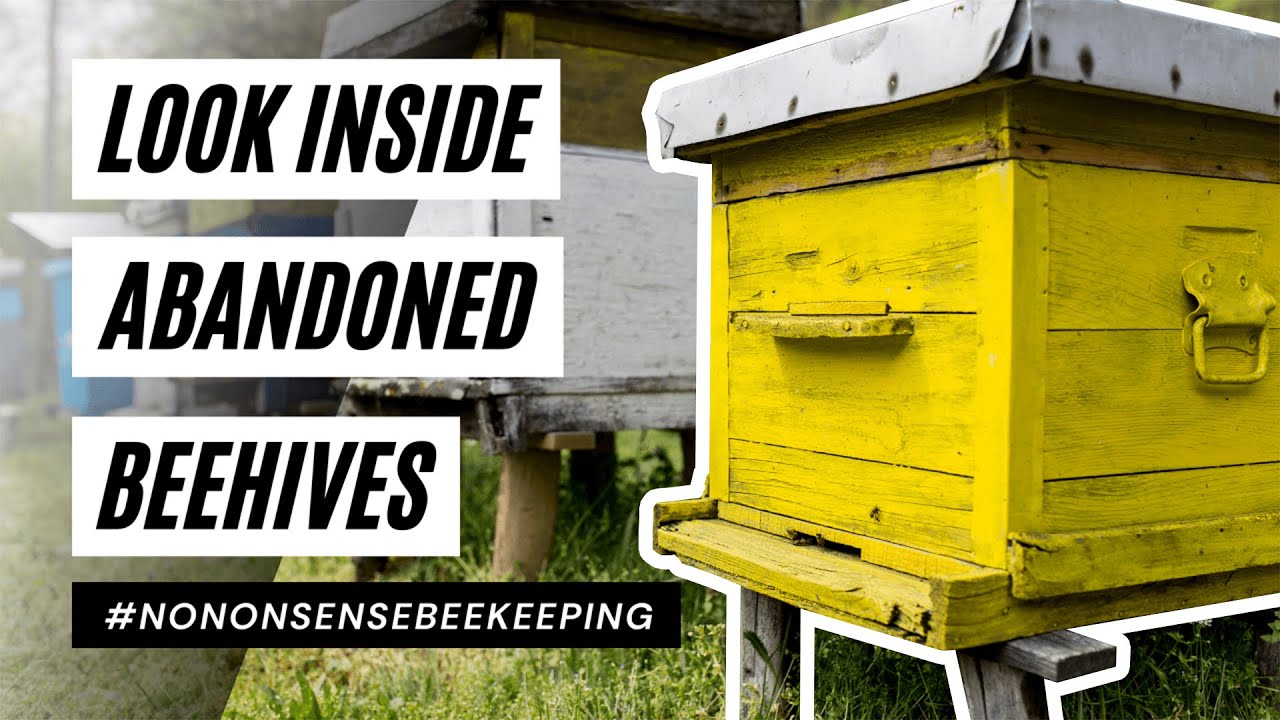
Laurence Edwards rescues three abandoned hives after a beekeeper's death, upgrading equipment and treating severe Varroa mite infestations with oxalic acid sublimation. He uses smoke, protective gear, and sterilization to prevent disease, feeds fondant for winter, and applies ApiBioxal three times over 15 days using a Sublimox device.
Chapters
Hi, I'm Laurence Edwards from Black Mountain Honey. Welcome to another episode of No Nonsense Beekeeping. Today we're looking at these 3 hives. Now unfortunately, the owner of these hives sadly passed away about 8 months ago. The landowner has asked me to come in, take a look at them, and just check them over. Unfortunately, they're not in the best state in terms of the boxes and the floors that they're in. I've actually had a peek inside and they seem to be relatively healthy, so I'm just going I'm gonna exchange some of the kit over, so I'm gonna give them each a poly roof because I like to keep them warm in the winter. I'm gonna check to see if they've got enough food. I'm gonna treat them for varroa. I'm gonna change their floors over because there's a bit of kind of detritus on the floors. We're just gonna kind of do a bit of a spring clean on them. It's a little bit early in the year to be going into the hives, but as these haven't been tended to for over 8 months, we really need to get in there and just kind of check that a few things are okay. Main ones being they've got enough food. If they haven't, we'll give them some fondant. Second one, we really need to get in there and do a varroa treatment. The varroa levels will be very, very high indeed, so we're going to get in there and do some sublimation. And then we just want to check that they're watertight, that they're stable, check that the stands are stable. We're just doing a bit of a kind of sanity check and making sure that they're in good condition. So I'll kit up and I'll get on with it. Right, so one of the first things to say when you're looking at someone else's hives and hives that haven't been treated for a good while is make sure you take as many precautions as possible. First precaution, smoke. You don't know how aggressive they're going to be, so get a good smoker on the go. Give them a good smoking and give yourself the best chance of kind of getting a good inspection in. The second one, and definitely more important than this, is be aware that there's potentially disease in there. The last thing you want to do is go and kind of look for a colony that hasn't been treated. There's potential foulbroods in there, so be aware, look for any disease, and then take the precautions to kind of clean all of your kit, all of your gloves, sterilize absolutely everything when you move on to your next apiaries. You don't want to be spreading disease around the place. So like I say, what we're going to do today, we're going to have a quick look through all the colonies, check for food, check for disease, check for varroa. We're going to kind of upgrade some of the equipment, so I'm going to give them a new crown board, we're going to give them a good floor. I'm going to go for a mesh floor this time to keep the ventilation good. We're just going to give them as best possible chance as we can to get them through the winter. Now, they may well get through the winter as they are, but there's no harm in kind of going in, just doing these checks and giving them the best possible chance. So have a look and see what you think. So as you can see, I mean, a lot of these roofs, they're quite old. They look in relatively good condition. What the old beekeeper's done here is he's put some insulation in, so that's actually really good to see. There's already some insulation in here, so that should have really helped the bees out. The next thing you can see is that we've actually got a super. So this one, the formation is you've got a brood box and then a super on top. And then a queen that's glued on top of that. I'm just for the time being going to remove that in one go. And I'll give the bees just a gentle puff. So as you can see there, nice-sized colony. They're over 1, 2, 3, 4, 5, 6, 6 and a bit frames. You've got a friendly little slug, we'll get rid of him. We're not going to start kind of looking in, we're just going to give it a little bit of a tilt and say— You can actually lift that up and feel that there's a nice amount of, um, there's a nice amount of stores in there. So what I'm going to do now, just to stop them flying around, is I'm going to take one of my homemade crown boards and I'm just going to pop that on top because this is part of the process that we're going to do. So that's just going to keep them nice and quiet while I move on to check the next colonies. So as we go, we'll just move out all of the equipment that we don't want to use going forward. We'll pop that somewhere else, and just to kind of keep things a bit neat and tidy. Just a quick thing to say about this crown board that I make, and you'll probably be able to see this better on the GoPro. I mean, we've got kind of batten around the edges here, and that's enough to get some fondant in. We've got a removable cover like that that will keep all of the bees down there if you want them to, and then we can remove it so they can access up and get fondant. The other side, there's a single B-space rim so they can move freely over the top of the frames. It's important that you don't kind of build something that's going to squish them, so just a little bit of a heads up on what I've designed there. Pretty standard multi-purpose board, you can get them from a lot of the suppliers. I just build my own because they're quite cheap. Right, on to the next one then. Got an old crown board there. And then again, we've got some insulation, so I can hear them buzzing there. So I'm just going to get prepared, just give them a little puff just to keep them nice and gentle, and we'll have a look what we're dealing with. And there we go, that's a very nice colony indeed. So I won't take the queen excluder off, but you just have a look at that. That's probably over 7 or 8 frames, so a little bit stronger than the other one. And again, all we're going to do with that is we're going to have a quick check for weight. That's a nice weight colony. And then we're just going to put that crown board on top there like that, just to keep them happy. So at the moment, we've got the 2 colonies, very happy with them. Do you know what I mean? They're heavy. I mean, I can't, I can't go into the colonies at the moment and look for that brood. I risk doing too much damage to the colony. So all I'm going to do Is I'm going to assume that there is a disease in this colony and I'm going to treat it as such. So I'll make sure that I kind of sterilize my gloves, sterilize my suit. There's no point going in and checking the frames and verifying that at the moment, because if I treat it as if it is diseased, then I kind of COVID all bases. I'll do more damage going in, checking the frames, seeing if they're queen right. You get a feeling kind of when you've been beekeeping a few years and you can tell that both of these colonies are very, very likely to have a queen in there. It's just the way they cluster, the way they hold together, their attitude, and the bees that are in there. So I'm pretty confident these 2 are queen right. So we'll move on to the 3rd one. And again, we'll just have the smoker on hand. And again, there's some insulation in here. So I'm really glad, like, this beekeeper's actually put some insulation in his hives and realized kind of the value of putting the insulation in there. So we'll just get a bit of smoke. And again, very, very happy with that colony there. You can see they're nice, they're a very nice temperament, they're not flying up. We've got 1, 2, 3, 4, 5, 6, 7, 8 over probably 7 or 8 frames again. So we'll just get that crown board, we'll pop that crown board on top, and I'm very happy with it. So we'll have a little bit of a clear cleanup, move some of the equipment that we don't want. You can see the importance of having the smoker lit like this, you know what I mean? I showed you the video the other day about how to keep that smoker lit. It's very good, kind of thick white smoke, very good at calming the bees down. And you only need like 1 or 2 puffs. Like, I probably wouldn't give my bees normally that amount of smoke, but because I don't know the nature of these bees, I give them kind of a little bit more just to be on the safe side, just to make sure that kind of I don't get stung and people around here don't get stung. So we'll keep that one going, burning in the corner. And we'll move on to the next stage. Now the next stage is we're going to replace the floors. Um, yeah, so I'm pretty sure there's solid floors in there. If not, there's Varroa floors with OMF floors with a tray in. I'm just going to change them over, give them a nice new clean floor. These are my underfloor entrances, and I know that these work very well. They stop kind of any wasp attacks, they stop mouse attacks, and they allow the bees to come in and out and do kind of really good flow. So if you get a look at that on the GoPro as well, these are my homemade So I'll swap all of these over just to kind of give them a fresh floor for the season. I don't do this every, every year for every hive, but I mean, if it's, if it's new kind of, um, a colony that I'm taking over, I'll just get them onto the same format as the rest of my hives, and then it's easier for me to work if they're all the same. So all I'm going to do for this is I'm going to try and move the brood box and the crown board over at the same time and just pop it on the new floor. And that's it, simple as that. So as you can see, that was kind of minimal disruption to the bees. Um, you can see the old floors that they were working on there. Just taking a look for some varroa. And yeah, you can— there is a lot of varroa on this floor, so they really, really need a go at treating. I don't know how close up we can get with this GoPro, but even on just that floor there, you can see— Yeah, you can see it. Hundreds and hundreds of varroa. So it's good that we came in at this point. Um, another thing to mention about this floor is you can kind of see their activity. So if you're reluctant to go into your colonies over the winter, you can get a very good indication of what they're doing by looking at the floor. You can see these seams of wax cappings where they've been going through, uncapping their stores, eating it, and then the wax cappings fall down. So, do you mean this shape here? Yeah. As you'll be able to see on the GoPro, that is very indicative of the size of the cluster. So yeah, just another one. It's interesting to see these floors. He's got these kind of like little— don't really know what to call them. Like, you can basically close up the hive for moving it around. A very— I quite like that nice neat design. So it's nice to know that the beekeeper's design is kind of living on. I might adopt that and kind of try and work that into some of my own floors. So very nice. Right, so I'll move this floor off to one side. Along with the rest of the equipment. And then what's very important to do here is to make sure that you move the existing colony back into its location. The bees, they don't know to go back into their hive. All they know is to go back into the location where they're orientated to. So it's very important if you're moving hives, always put the hive back exactly where you found it. If you move it, I mean, 10 or 15 centimeters, that's not going to be a massive issue. There's a 3 feet or 3 mile rule, but when you've got colonies kind of in close, relatively close to each other here, try and get it back to exactly where you found it. So we'll carry on here, we're just going to swap out these other 2 floors, same as the last one. So we'll move it along so we've got enough space, put a new floor down like that, lift up the brood box, detach it from the old floor, Move it over. That's a very simple operation indeed. And again, we've done that kind of with a minimum amount, and it's very interesting to see the difference there in the floors. So if you kind of have a look at that on the GoPro, you can see how much smaller that cluster is. It's probably half the size of the other one and a considerably cleaner floor. So maybe, maybe this floor was cleaned out. I'm not really sure. But it's interesting to see the differences. So again, make sure that that one goes back to the same place, and we'll move on to the next floor. And same as before, we'll just detach it from the floor. Left my hive tool in the van, so I would normally get in there with the hive tool. And then we move that one over. And I was expecting that one to be the heaviest, and it was the heaviest. Um, although the cluster doesn't look to seem to be quite as big from the wax cappings on that floor, it's still a relatively big one, you know what I mean? That's probably over 6 or 7 frames really as a tight cluster. Um, and again, you can see the varroa on that floor. So I'd say that this is probably my strongest hive out of all of them here. This one's definitely the worst in terms of varroa, and the middle one's kind of in the middle. So that's it. So that's the first stage done. What we've done is we've taken off anything that's on the top. So the roofs, we're checking the roofs for damage, and I want to change them over to poly roofs anyway. So removing any roofs, any queen excluders, any insulation from the top. Done that. Replaced it all with 3 crown boards I'm going to use for sublimation. some varroa treatment, and I'm also going to use it to feed some fondant to make sure that they get through the winter. That is definitely an insurance in this case. There seems to be a good amount of stores in all 3 of these colonies, but I've got the fondant with me anyway. I've got the crown boards. There's absolutely no harm just putting a kind of 3 or 4 kilos of fondant on just to double, kind of just to make sure that they're going to get through. What else have we done? We've changed all of the floors, so this is just kind of a bit of a precaution. Give them a new floor, make sure that there's no damage to it, make sure that there's no kind of disease buildup. It's just, it's a good thing to do, and it standardizes all of the hives as well, make sure they're all the same. I find it a lot easier when you're working with colonies if they've all got all the same kit, they've all got all the same boxes, they've all got all the same frame sizes. It makes working with them a lot easier. So that's kind of how I work. Right, so we're going to move on now to sublimation of oxalic acid. Now, this is very important indeed. Whenever you're sublimating any oxalic acid product, I'm using ApiBioxal today, you need to make sure that you take really, really adequate I'm using thick plastic gloves. I'm using a big, full 3M face mask with the correct filters to stop any organic acidic vapour. It's a really, really nasty substance. You need to take absolutely every precaution to stop it getting into your lungs where it can do real damage. So please take absolutely every precaution you can. It's a very dangerous product, but it's very effective at killing the varroa mites. We're going to be spraying this area for about 10 minutes. Unfortunately, the GoPro's run out of battery. I've just got the generator on trying to warm it up for the sublimation. I use a Sublimox device to do this. So yeah, like I say, the GoPro's run out of battery. What I'm going to do now is I'm going to sublimate all the colonies with happy bioxyl. The way that I've designed the crown board is that I can invert it now, and then I've got an entrance that I can poke the Sublimox in. It's a very effective tool for kind of getting that oxalic acid vapor into the colony, but you get it in from the top so that it sinks, as opposed to trying to get it in from the bottom and getting it to rise. I find you get a better kind of distribution and mite drop if you do it from the top and come down. So I'm going to put this on. I'm not going to be able to do a huge amount of talking. Unfortunately, the GoPro's died, so I'll have to charge that one up for next time. But you'll get a good idea of kind of what I do, and I'll talk you through it again at the end. Okay, so that's the oxalic sublimation complete. As you can see, that was very, very quick. Um, the Sublimox, I think, is a really, really good tool to use. Used to use the Varox, a bit of a nightmare. Um, then I bought the Sublimox, I think it's absolutely great. I tried the Gasvap, didn't get on with it at all. I know other people really, really rave quite a lot about that. I didn't like it. I didn't like the fact that the burner was unreliable. I didn't like the fact that I couldn't do it with normal plastic gloves. Numerous things I didn't like about it. But yeah, so I use the Sublimox and I find that's a really, really good method for kind of treating colonies for varroa. I'll probably come back in 5 days, do it again. The way that you need to work it with the cycle is you do it 3 times over 5 days. So it's 3 times over 15 days, so 5 days, 5 days, 5 days. Normally you can get away with doing it once in the winter, but I think it's a bit too late now. There's probably brood in there. If there's any brood present, the varroa are capped within the brood and then they'll come out. So all of the, all of the phoretic mites will die, i.e., the mites that are sitting on the bees. All of the ones that are sitting within the brood, they'll come out and they'll reproduce again. So I'll probably come back in 5 days, retreat them, and then monitor the drops and see how we go. Take it from there. So we're getting on now, even though the GoPro is still broken. We've got 3 colonies They've all got their crown boards on, so they're multi-purpose crown boards. They've all got new floors. We've checked them, they're alive. We've checked them for stores, they're good for stores, but we're going to put extra fondant on. We've checked the— we've treated them for varroa, and they're a bit of a safety net. We're going to assume that there is foulbrood disease in there, so we're going to be ultra cautious with all of our kit. We're going to clean our hive tools. Nice little sting in the face there. We're going to clean our hive tools, we're going to clean our gloves, we're going to sterilize absolutely everything and make sure that if there is a disease present, we kind of trap it and we stop it kind of contaminating any of the other apiaries. That's very important. Um, but it's nice to see, do you know what I mean? Like, it's, it's sad, isn't it, when people pass away and they kind of leave things? And obviously no one else was here to kind of look after this guy's bees. Um, so what I plan to do is I'm going to keep these 3 colonies here, um, they're going to remain where they are. They're still going to get the forage, the landowner's still going to get the honey. I'll take a little bit of a cut for kind of coming in and managing them, but it's nice, it's got a bit of a legacy. I won't requeen them, um, well, I'll give them all a chance, I'll see how they perform, but I mean, the fact that there was a super of honey on one of them, they're obviously kind of reasonably good. So as a bit of an ode to the, um, to the beekeeper who was originally here, I'm going to keep them kind of as close to his bees as possible and not trying to come in and mess around too much. So on to the next task. I'm gonna put the valve back on now because when I open these up they're gonna get angry. But all we're gonna do is we're gonna flip those crown boards back over now. The oxalic vapor will have settled down nicely. I'm gonna take that central hole off and then I'm gonna pop a piece of fondant on top. Then I'll finish it off with a poly roof and I'll ratchet it down, and that way I know that it's very, very secure. No wind's going to blow it over, and then I'll be happy to leave them alone. So we'll crack on with it and speak soon. Right, so as I said, all we're doing is we're So we're going to remove that. The Oxalic's died down now. We're going to flip that over. We're going to take a lovely piece of fondant. We're going to remove the plastic backing and we're going to place that over the hole. And that's all we're doing. So we do the same with this one over here. We remove the insert, we flip it upside down, we take some plastic fondant, get rid We're just going to push it down just so we can get the roof on. Now the bees will come up and work for that if they need to. They might not, but it's just an insurance policy. Same as before, we remove that, flip it over. We'll try and get rid of these bees so they don't get trapped. Definitely the most feisty colony, this one. So let's get a little bit of smoke. Be a good test to see if the smoke is still going, and it is. So give them a smoke. Summarize it again. We've got a new floor, we've checked there's sufficient weight within the brood box, we've treated them for varroa, we've put a new crown board on, we've given them fondant, and then the last thing I'm going to do is I'm going to give them each a polyrook in my classic style of camouflage. Can't beat a camouflage Camouflage roof. And that's it. So we'll ratchet them up now. I always love ratcheting my hives up. A lot of people don't do it, a lot of people just use a block, and that's fine, a million and one ways to do it. But I buy these straps from a company online called Handy Straps, and they cost about 60p each, and they're— I mean, they're proper ratchet straps. They're not the kind of ones that clip in and come loose. But these are really kind of heavy-duty, up to like 600 kilo straps. You don't need to— it means you don't need to go and check your hives when there's storms for the sake of 60p. So I always think it's best just to kind of strap your hives up. At this point, you want to check everything's nicely aligned. You don't want to start ratcheting it up and realize it's kind of off-center. So just make sure it's all aligned and then just ratchet down. So that's it, we're done for the day. Um, a bit of a longer video, but obviously, I mean, there's been quite a few things we've done today. So just to summarize what we've done for the final time, get that beer. Off my ear. Just to summarize what we've done for the final time: we've changed the floors, we've checked the broods for stores, we've treated the whole hive for varroa using oxalic sublimation, we've given them some fondant just as a kind of a bit of insurance policy, we've given them a new roof, and then we've ratcheted them down, and hopefully that'll get them through the winter. So please, I really hope you're enjoying the videos. There's going to be plenty more videos like this as we come into the the season and we spend more and more with the bees. I mean, this is kind of a bit of a flavour of what you'll get to see really, is it'll be me managing the bees on a weekly basis. You'll be able to kind of see how they develop over the weeks, over the months, the kind of honey crop that they're getting. We'll have a look at the different pollens that they're bringing in. I mean, there's so many different videos that we can do, so stay tuned and kind of join us on the journey. I really hope you've enjoyed the video today. Please hit the subscribe button in the corner, and we'll see you next time. Bye. Thank you.










