THIS Is The PERFECT Apiary - Top Tips For Choosing The Best Apiary Site
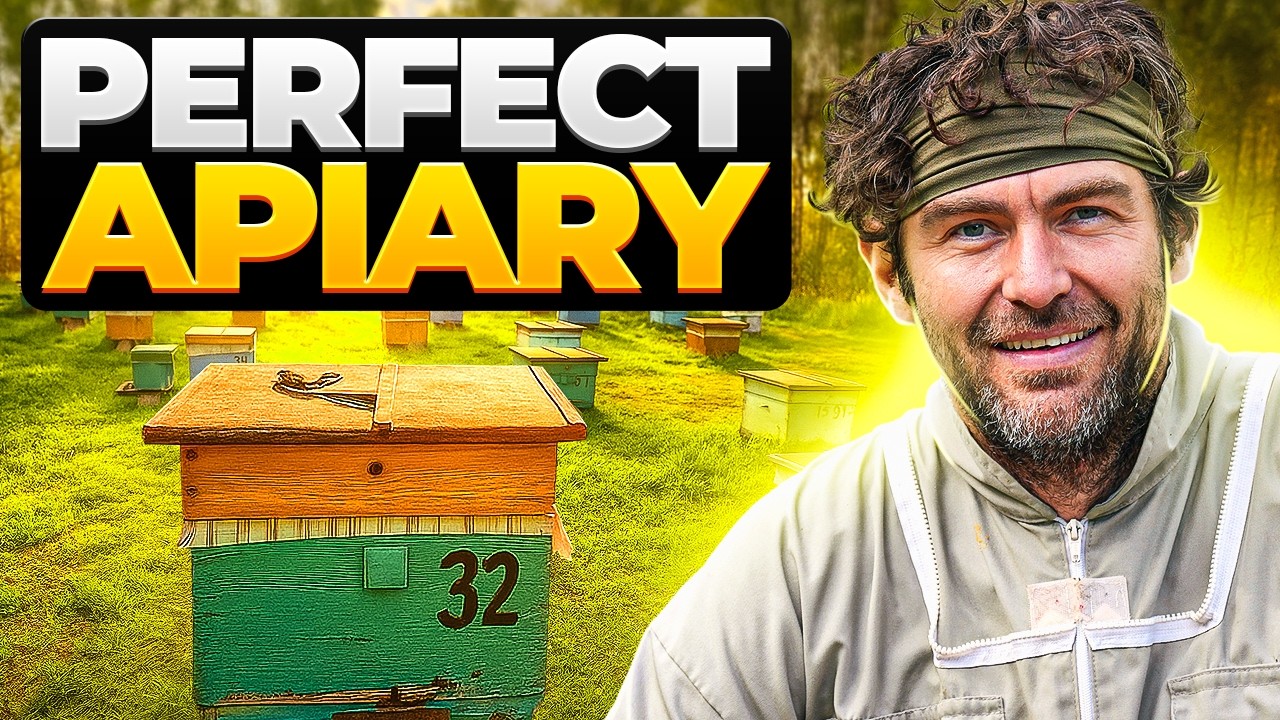
Laurence Edwards walks through ten criteria for choosing an apiary site, from nectar sources and wind protection to drainage and security. He shows how to use Google Earth to scout locations and pitch landowners with professional maps. The ideal site has concrete ground, windbreaks, abundant forage, water access, and calm bees.
Chapters
In this video, I'm gonna show you what the perfect out apiary looks like and give you some advice on how to find a really good out apiary. So I am in Italy with Melitta Bees doing a tour of all of the apiaries here, learning lots and lots about queen rearing and how they keep bees in Italy. But we have just come to the best apiary I have ever seen. It is incredibly good, and it reminded me that I needed to do this video to show you how to choose and select the best out apiary. So I'm gonna give you 10 tips here, my top 10 tips for finding an out apiary, and I'll show you just how good this one here looks. So my number one prerequisite for finding an apiary is to have good local nectar and forage sources for the bees. Now if you look around, this apiary here is crazy. There's wildflowers everywhere, big mature trees, huge amounts of local forage available. Now if you're in the UK, the best way I have found to go out and find these out apiaries that have good forage is to use Google Earth. You are looking for color, you're looking for oilseed rape, you're looking for borage, you're looking for field beans. You're looking for big mature trees that are going to yield huge amounts of nectar. Google Earth is very, very good for identifying these areas without actually having to kind of traipse around and find them yourself. However, an out apiary might look good on Google Earth and it might even look good when you get there and you think, yeah, this is really, really good, and then it doesn't produce any honey. So you have to be iterative with this process. You might try something one year, it doesn't work. You try it again the second year, it doesn't work. You need to be bold in your choices, and if something isn't working, don't be afraid to change it up. Assess how well the bees are doing, how much forage is coming in, how much honey they're producing and take it from there. For me, the biggest prerequisite is local forage. If there's not good local forage and the bees can't go out and kind of keep themselves alive through foraging and store a surplus of honey, then I'm gonna move them away. That is number one, I would say, for finding a route apiary. Number 2 on my list is protection from harsh winds. Now, gentle airflow through an apiary is good. It keeps brood disorders like chalkbrood down, but what you definitely don't want is harsh wind. So if you are like on the top of a moor and you've just got wind going into the beehive the whole day, You can rule out lots and lots of mating flights from any queens that you put up there. But also, even if the temperature is good, the bees won't fly as much, which reduces your honey yield. A good airflow, I would say, is sheltered from harsh winds, but access for light winds to come through. You can use Google Earth for this again. So you might see a big forest with a field next to it facing south, which means you get sun on the colony all day. And then you can select that site and it'll be really good for the bees. Google Earth is very, very good at helping you identify and a lot of the characteristics of a really good apiary. Let's call this one 2.1 because I didn't include it on my list originally, but I like to keep my bees in the UK, very specific here, in the UK, in full sun throughout the entire day. Number 3 on my list is sun and shade balance. Now depending on where you are in the world, you might want shade at certain times of the day and you might want sun at certain times of the day. You're trying to protect the bees from extremes but also trying to promote good foraging activity. For people in the UK, it's really, really simple. Find a nice apiary that's facing south, that gives the bees full sun for the entire day, and that will really help boost honey production. But it'll also help bring down disorders like chalkbrood because it means the bees are more active and it means they're able to go out and forage more. But it also promotes cleanliness within the beehive, so the bees will clear out any of these brood disorders. I used to keep bees in forests and I did have a bit of an issue with chalkbrood. And as soon as I moved all of my bees outside of the forests, no chalkbrood anymore. But also it really helped increase my honey yield. This is one of the most important aspects, I would say, of an out apiary. Full direct sun for all of the day. Now, if you're somewhere in the world where in the morning it's really nice and pleasant, and then between, say, 11 and 3 o'clock it's 45 degrees, maybe you'll find somewhere that shades them during that period because the bees won't want to go out and fly because it's too hot. So you need to adjust that advice to suit your climate. You want the sun shining on the hives when the bees naturally forage, and then you want the bees in shade when it's too hot for them to go out. Number 4 on the list is good drainage. Now this one is very difficult to see from Google Earth. You might have a look on Google Earth and find the perfect apiary, and then you get there and it's just mud all the way throughout the year, barring say a couple of months in the summer. Good drainage is very important for vehicular access in order to be able to get your truck or your car close up to your bees. It might seem like a good idea in the winter to place an apiary 300 or 400 meters away from where you can park your car, But believe me, from personal experience, you do not want to do that. You want to be able to park your car as close to the apiary as possible. It makes your life so much easier. Another reason for good drainage, though, is that you want the humidity in the apiary generally to be as low as possible. High humidity can lead to brood disorders like chalkbrood, and it's also very messy to kind of stand around. So I like to look for really good drainage, or even better than that, like we're in the perfect apiary today. I'll show you it all at the end. Hard standing. We're on concrete here today. So you have effectively perfect drainage. Even in some of my sites, I still get stuck in the worst time of the year in my truck, and then I have to rely on the farmers to pull me out with their tractor. It is very embarrassing doing that. So choose sites with good drainage, and hopefully you don't need to get recovered too much. Now, people might say that this is only really important in the hotter parts of the world. We're here in Italy today, so it's very important here in Italy. But I would say it's really important in the UK if you want to maximize your honey production. And what I'm talking about here is the proximity to an open water source. Bees need water throughout the They use it in the summer to cool the beehive down if it needs it. They use it in the winter to break down their stores in order to make them edible so that they can consume them. But for me, more important than all of that, the proximity to a really good water source like a river means that all of the forage that's close to your apiary has access to moisture in the soil. The water table is much higher. But especially if you have forests close to a water source, deep-rooted trees that have constant access to water, All you need to do is have sunshine and then your bees are going to have really, really good forage opportunities. My very best apiary sites are close to rivers, but also close to open woodland where you get access to sycamore and lime and trees like that. Real big heavy hitters for forage. But even trees need a good amount of water in order to yield some nectar. Now you can see how some of these bits of advice here are slightly conflicting, but not always. You will find occasionally the perfect site. But if you're closer to water, the chances are you're not going to have quite as good drainage. So if you find a site that is close to water, open woodland, in the sun, good airflow, and good drainage, get there very, very quickly. And make sure you keep the farmer on side because that is a site that you definitely want to keep. Now I mentioned this one before, but easy access for the beekeeper, especially if you're managing multiple colonies. It doesn't matter so much if you've got 1 or 2 colonies there, you can do the walk. But if you're in an apiary like this and you've got 20 or 30 colonies and you have to park a mile away or 500 meters away, when it comes to lugging those empty supers, you're going to be in trouble. But believe me, when it comes to transporting the heavy supers back, you are going to wish that you moved site. So for me, this one is a prerequisite and I do not take on any single sites unless I have this good vehicular access. The truck is there. I can literally touch the truck there. They've driven all the way in. Good hard standing, never going to get stuck. Means you can get your truck there when you need to. And sometimes some sites are really good in the summer for getting in, but terrible in the winter. But it's the winter when sometimes you need to lug lots of fondant in there or you need to put some syrup in and you do not want to be carrying it across fields. Good vehicular access is a prerequisite, but also it's one of the easiest ones to find if you look on Google Earth. So you look on Google Earth, you find your nice woodland that's facing south, good airflow. And then you look where the tracks are. If you find something that ticks all of those boxes, I will tell you at the end how to secure that site and make sure that no one else gets there first. Number 7 on the list is probably the most difficult one to understand before you actually get your bees there. And what I'm talking about here is keeping the bees away from chemicals and pesticides. Now, where I live in North Wales, there is very, very limited amount of pesticides or chemicals used and pretty much zero insecticides. That's the one that's going to kill your colony overnight. And I would say the further south you go, the more arable the land becomes, the higher the chances of finding somewhere where they use insecticides. Now, some farmers are really good and they'll tell you in advance that they're going to use insecticide and you can close your bees in overnight. But a lot of the time you don't realize until it's too late. So what I would say when you're trying to look for these and speaking to the farmers to secure your out apiary, maybe ask them, do you use any insecticides? And if they say yes, try and get a schedule of when they'd use it, but definitely get their number and ask them to text you in advance so you can close your bees in. A lot of time, the half-life of the insecticides is very, very short, which means that if you just close your bees in for a day, put a ventilated roof on, spray some water on them, keep them cool, keep them locked up for 24 hours while the half-life of that insecticide is used up, then once they're released, the damage is very, very limited. Luckily for me, I don't have to deal with much of that, but I know some people in the UK are very close to arable land that does use insecticide. And it's not unusual to get some losses. Number 8 on my list is safety and security. Bee theft unfortunately is rising across the world, and you want to ensure that your bees are in the safest location possible. So I like to keep all of my apiaries completely out of sight. You don't want to see them from a road. You don't want them near public footpaths. The best apiary is one that can never be seen by anybody else. But it's not just people that you need to protect your beehives from. There might be sheep, there might be horses, there might be cattle. If you're in one of those locations, you either need a wall going around it or a really good strong fence and maybe an electric fence that will stop those animals getting to your beehives. I had it once where a cow knocked over a fence and went into the apiary and they're just around sniffing everything, trampling on stuff, knocking stuff down. Animals can cause real issues in apiaries, so you need to make sure that it is fully secure from both humans and animals, out of sight from any passing people, and they are the very best apiary sites. Number 9 on the list is any legal procedures that you need to be aware of. Doesn't necessarily apply too much in the UK, this one, but some places across the world you might not be able to keep bees in certain areas, or you might be limited to numbers. Just double-check with your local associations to ensure that you can put your beehives where you want to put them. Number 10 on my list links closely to that access to good water source. Do not keep your bees in a floodplain. I've seen this a number of times. I've seen people up to their waist wading through rivers trying to get their bees out, and they post it on social media saying, oh, it's so terrible, all of my bees got washed away in the storm. And then you realize that it's the same apiary site that bees got washed away in the storm 3 years ago and they didn't move it. Keeping your bees in a floodplain is a crazy idea. You might get good honey yields, but do you really want to have to wade through a chest-high river to try and save your bees that are almost certainly going to be dead? It's much easier just to keep them well out of the floodplain. They'll fly to the water source. Don't keep your bees right next to the water. It is so stupid. So a couple of bonus ones for you there. Elevation and terrain. I have firsthand experience of this one. I've got an apiary. It's about 950 feet above sea level. I've also got an apiary that is about 100 feet above sea level. The forage is very different in those locations, but also the ability for the bees to fly is so much increased when you have lower altitude. There is a caveat to that. Obviously, when you're close to the sea, you're as low as you can possibly get to sea level, but then you increase the wind coming in. So I don't like to keep bees anywhere near the coast. You want to bring them in a good few miles. But if you've got a choice of, say, a 100-foot or a 1,000-foot apiary, unless you're going off and trying to get ling heather, I would always go for for the lower one, much more likely to have less wind, more sheltered, warmer, greater forage. The lower you can get it, but as far away from the sea, the better. The final bonus one that I'll add for you there is as simple as this. Do not keep bees in your garden if you have any other option. Now, I appreciate some people will not have any other option. If you're going to keep them in your garden, get super calm bees, face them away from people, and maybe put some screening up to stop them flying kind of where you socialize in your garden. I kept about 30 colonies in my garden in North Wales, and It was not fun watching the neighbors getting stung when they were strimming or using the petrol lawnmower. So I'm not a fan of garden apiaries, but I appreciate for some people that is the only option. Now to finish this video, I'm going to give you my top tips on actually how to secure those apiaries. So as I said, Google Earth is your friend. Go on Google Earth, identify where the forests are, where the water sources are, what the terrain looks like, what the altitude looks like. Is there good forage nearby? You can tick a lot of those boxes from Google Earth. Make sure you're finding something with good vehicular access. You're ticking off all of those boxes, but until you get permission from the landowner, it's nothing more than a pipe dream. So this is how I have found to get the best success when trying to get access to these apiary sites. Find them on Google Earth, print it off, identify where you want to keep your apiary down to the nearest meter. Don't just go to a farmer and say, can I keep bees on your land? You'll end up on the most rubbish part of the farm. Print off Google Earth, show them where you want to keep the sites, laminate it, and then and get in the car. You need to take these things with you. Take your bee suit. A really nice clean bee suit shows that you're professional. Any other information that you've got, maybe you've got some postcards made up, some information cards about your business, maybe you've got some business cards or something like that. Taking that along increases the chances of the farmer saying yes because it shows that you're a professional. Go to the farmer with a plan. Tell him how many bees you want to keep on the site. Why is it good for him to have bees on his site? What does he get out of it? Are you going to pay him for the site? Are you going to pay him with honey? Are you going to give him a pound of honey per hive? Are you going to give him 2 pounds of honey per hive? Is there going to be a honey exchange? Is he going to pay for the hives and you're going to manage them? Think about all of this upfront and go to him with a written plan. They're probably going to ask you lots of questions, and if you have a written plan that you can say to him, I want to keep the bees here, it's going to be 12 beehives, this is what the beehives are going to look like, they're going to be Abelo polyhives, they're going to be wooden hives, the roof's going to be gabled, These are the stands that I'm going to use. This is the position that I'm going to take up. This is what I need from you. I need stock fencing, but I'm going to provide it myself, so it's no cost to you. You want to think of absolutely everything to the nth degree, and then it shows that you are professional. Always take some honey, even if you have to go and buy some honey from another local beekeeper in unbranded jars. Take some honey with you, and if he says yes or if he says no, you give him the honey. It's a gift from me to you. Thank you for giving me the opportunity to talk to you about this Alte Apotheke. I really appreciate it. The next tip is, even if they say no, say to them, can I just take your number just in case you ever change your mind? If they say yes, put their number into your phone and say, I'm just going to flash call you. If you save my number and you change your mind, I'm always happy to come back. Or if you know of any other farmers who are interested in having bees on their land, feel free to give them my number. And that is a really good way of getting your name out in the local area with the farmers. And I've had that a couple of times where you give them the number, they say no because you've chosen an unsuitable part of their land. They say, oh, you can have that dark, dank bit in the woods over there. I politely decline because I say that's not suitable for bees. They generally understand that because they're used to managing livestock. But then 2 weeks later, you miraculously get a call from someone random 2 farms along, and they say, oh yeah, yeah, come to us, we'll have you here. Don't worry about any honey, you can have the pick of the land. We'll put you in some stock fencing, we'll do everything. We love bees, we want you to come. Really, really good tip, that one. My next tip there is don't give up. If you go to the first farmer and they say no, and you go to the second farmer and they say no, and the third farmer and the fourth and so on, don't be discouraged. Maybe change or tweak your approach a little bit, but you will eventually find someone who says yes. Keep on going. I have found that that face-to-face approach is the best way to do it. So you know where they live on Google Earth, you probably can identify where their farm is. You pull up outside when you know they're going to be kind of like traveling around, or you identify them in a tractor or something, and going and approaching them face to face Definitely works better than some of the other methods. However, it is worth trying some of the other methods as well. So posting on local Facebook groups like village Facebook groups can yield some very interesting results. But what I've found, say I go down to the local nurseries Facebook group and say, oh, I'm keeping some bees in the area, I'm looking for some land, I want to keep 6 hives there. This is what I'm ideally looking at. You generally get like a lot of messages from people saying, oh, I'd love to have a colony of bees in my garden, but I just want one colony of bees and I want half the honey. And you get some real interesting responses, but it can yield good results. So it's definitely worth doing, but you just have to kind of keep up with the admin of getting back to people and remaining professional. So before we finish up for this video, I am in the perfect apiary. So first up, here's the road. This is how you get access to the site. Good vehicular access up to the road. And down there, you can't see it because the plants are taking such good advantage, there is a brook. So a good access to water. This is how you access the site, and there is a gate there that is locked with a padlock, so you've got relatively good security. We've then got A gravel track that takes you up here. And then as we look up here, the apiary site is just beyond that van. Before we get up there though, you will see over in the distance there is a natural wind block. That way is north. The bees face that way. So the bees are facing south, means they're in the sun for all of the day. You can see here lots and lots and lots of natural forage, huge amounts of mature trees. Close to that water source. It's very arable, lots of crops being grown, and where we are, they're generally grown organically, so there's no issues with pesticides. But even take away the mature trees, look at all this forage here. Every single speck of ground has got a flower or a weed or some sort of nectar-yielding plant coming out of the ground. Oh, I wish I had a site like this. So again, another gravel track. You come all the way up to the gravel track But then look what we've got here, a really good windbreak to stop those harsh winds. Whether it was an old building or some sort of walled garden, I don't know, but you can get the truck here right up to the beehives. Now this is very, very rare to find. I was amazed here, a concrete ground, hard standing on an angle so the water drains away. This is probably going to be the easiest site you're ever going to have. You're not going to get muddy, you're not going to get messy. Really easy to set up all of your hive stands to keep the bees up off the ground and ensure that there is very good airflow. Walls all around ensure that there is no harsh winds, but because you've got the openings over there, you still get a nice light airflow, which is really, really important for the bees. You can see Tommaso and Gaia working the bees here, and what I've noticed about this site here is really interesting. The bees are the calmest I've seen since I've been here in Italy. They're really responding well to the conditions that they've got here, and the bees are just a pleasure to work. So you see Gaia here harvesting some bees for some mini mating nucs, shaking them in. A wonderful sight. So there we go, the perfect apiary site. Sorry this video took so long. Hopefully this helps you secure some really good apiaries within the UK and maybe across the world. And if I've missed anything out, stick it in the comments. I'm always up for learning more.










