This is why some colonies need a double box in Winter!
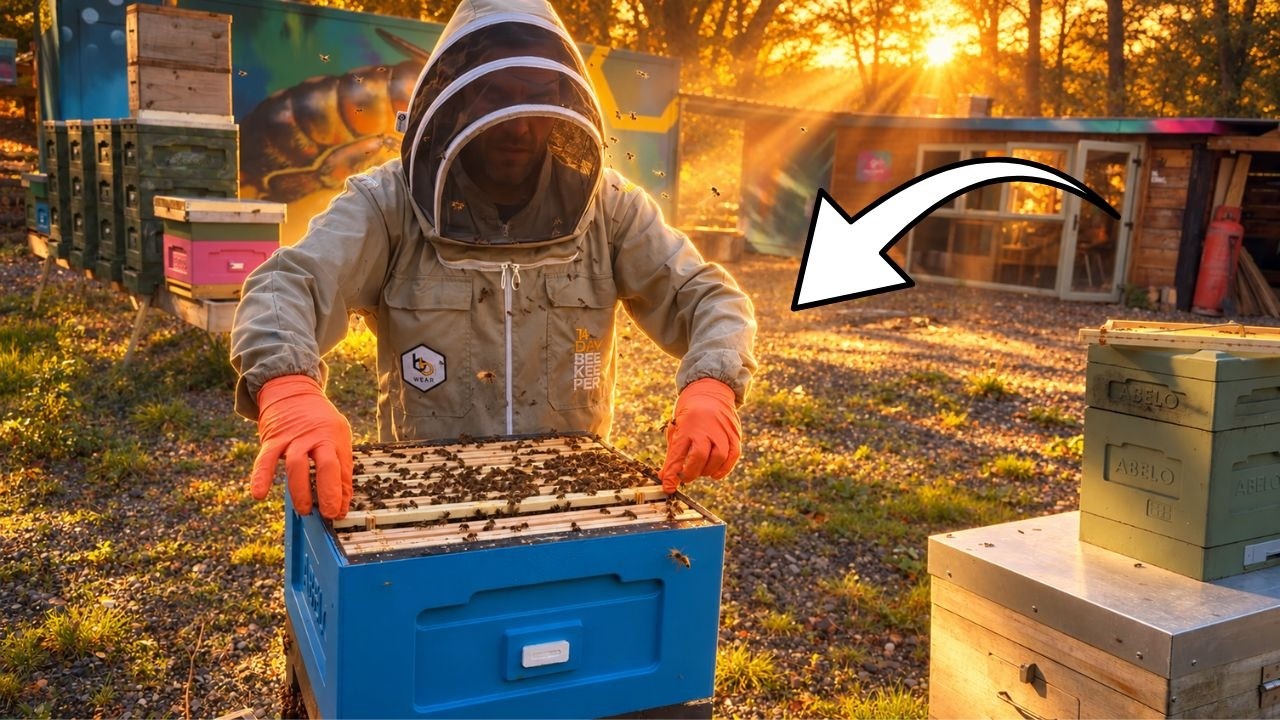
Zane inspects his nucleus colony in double-box setup heading into winter, showing brood, honey stores, and the queen. He's been feeding 1-3 liters of syrup weekly and using Apivar strips for varroa control. The double box helps the colony survive cold months after it recovered from losing its queen.
Chapters
Zane's first nuc, final episode. Let's get inside. So a few dead bees and a few empty feeding caps in there because I've been coming back every now and again and just giving the bees a little bit, not that much, 1 or 2 liters, maybe 3 liters every week. And they've been on this double brood configuration. I know it was touch and go whether we thought we were going to put them on double brood. Probably glad Glad. Yeah, because it's a really nice day now. What's the date today? It's like middle of September and it's very sunny, and the ivy flow is here, and they're going to have no problem filling all of this back up once I get them fed. And hopefully they would have grown though. That's what I'm worried about. I just hope they're not all down there and nothing up there. What I'm expecting though is to see like bees and brood and queen and all of that down there, and then probably going to be hopefully fully drawn out, hopefully loads of honey up there. You might see like in the middle there a little bit of brood, but we will see. Let's get inside and see how the bees are getting on. So bees on the underside of the feed is generally a good sign. You'd like to think that they're at least kind of filling half that box. You can see a decent amount of bees there. Definitely not my favorite when it comes to temperament though, like looking back through the videos, these have been a little bit grumpy all the way through. I'm not going to requeen them now because they're not terrible, but they're not, not my favorite bees, let's put it that way. I'm just spying down here. I can see that there's a few frames of like foundation, but I think over that side They've drawn quite a lot of it out. So you can see where the bees have started drawing all that out. All the propolis on that side there as well. But really, for me, that's a frame that they've done nothing with. But if you come and have a look from the top, this is a double brood box here, so There's no way that they've not drawn out all of those frames there. That looks pretty clustered up to me. So I'm hoping that as we go through those frames, we're going to see more and more drawn-out frames, probably a little bit of drawn-out brood, I would say, in that middle section there, looking at the way the bees are clustering up. But we'll carry on. They're definitely a little bit angry. You know, when I say angry, they're not terrible, not stinging me, but they're, they're not like the nice, normal, calm buckbees. So that frame there is very similar, like they're having a go. And this is what you get with double brood, you know. Double brood changes the game a little bit because I have fed these quite a lot, these bees, already, and they've barely drawn out these frames. Now the Iverflo's coming in and I'm going to feed them more, having actually gone in here today to do The final check on this colony. But this is nicer. This is what I wanted to see. I wanted to see every single frame like that. And okay, there's 3 frames that aren't like it, but the bees are drawing that out. There's a decent amount of weight in that frame as well. Okay, I'm getting a lot happier with this now because that is a very weighty frame that is mostly drawn out and almost Kind of, I would say, 20 or 30% capped on that side. So my feeding wasn't a million miles off, I have to say. And you think, this went on maybe like 3 or 4 weeks ago, this box completely full of foundation, and I fed them maybe like 1 or 2 liters of syrup a week. And some of these frames here, that is a super, super heavy frame. Apivar strips are in, they're doing their thing. I'll come back and get them at a later date. I just needed the assurance to see that the bees were taking down that feed, but more importantly than that, I need to finish off the series and show you the state of this colony as a double brooder going into winter. Another frame there capped over on that side, and then as we progress over there, it starts to kind of go back to drawn comb, but at least every single one Of those is being drawn. Like 50% drawn. And then the final one hasn't really got much going on, but you can definitely do like a little bit of checkerboarding at this time of the year. There's a flow going on, you know you're going to feed, so I'm going to put in the, the good chunky frames next to the frames of foundation like that. Pushing it all along. So a few people ask why, why do I bother putting the queen excluder back on here? You don't need to, but if you go and put it anywhere else, you've either got to clean it or identify it back to this hive, whereas it kind of doesn't do any harm there. Get rid of these bits. And then you've not got to clean it, which is kind of a nice option, I think. So I'm going to give them half a liter, I think, and this is just straight invert this time. Only reason I'm doing that is I want to keep them interested in it. I want them to keep going up and getting a feed, so then when I want to feed them really heavy at the end, if they need it, kind of middle of October when I come to do my final checks, at least they've been going up regularly and they'll know to go up there for their Their final feed. So there we go, we've reached the end of Zane's first nuc, and what a series. Literally everything that could have gone wrong has gone wrong, but I'm quite proud of the fact that we managed to get the colony back on track. There's a queen, there's brood, there's a healthy amount of bees for once, there's stores, the varroa treatments are in, the colony is set up ready to go again next year. And I would say that's probably the biggest mistake that beginners make. They give up when it gets too difficult because they don't understand how far they're pushing their bees in a direction where you cannot recover from. This one here, we saw the warning signs. We saw the queen die. We saw the emergency cells being created. We got them back on track. It failed. We did it again, but then we did manage to get them back on track. Now, had we not managed to get them back on track, we'd have been in trouble. We really would. That colony would have probably failed by now. Wasps would have come in and got it. But if not, it would have definitely failed over winter. Now, if you're watching this and thinking, maybe beekeeping is for me, it seems like a really nice, fun, challenging hobby, and I'd like to learn more, I'll stick a link at the bottom of this video for our free PDF guide that gives you everything you need to know if you're about starting beekeeping.










