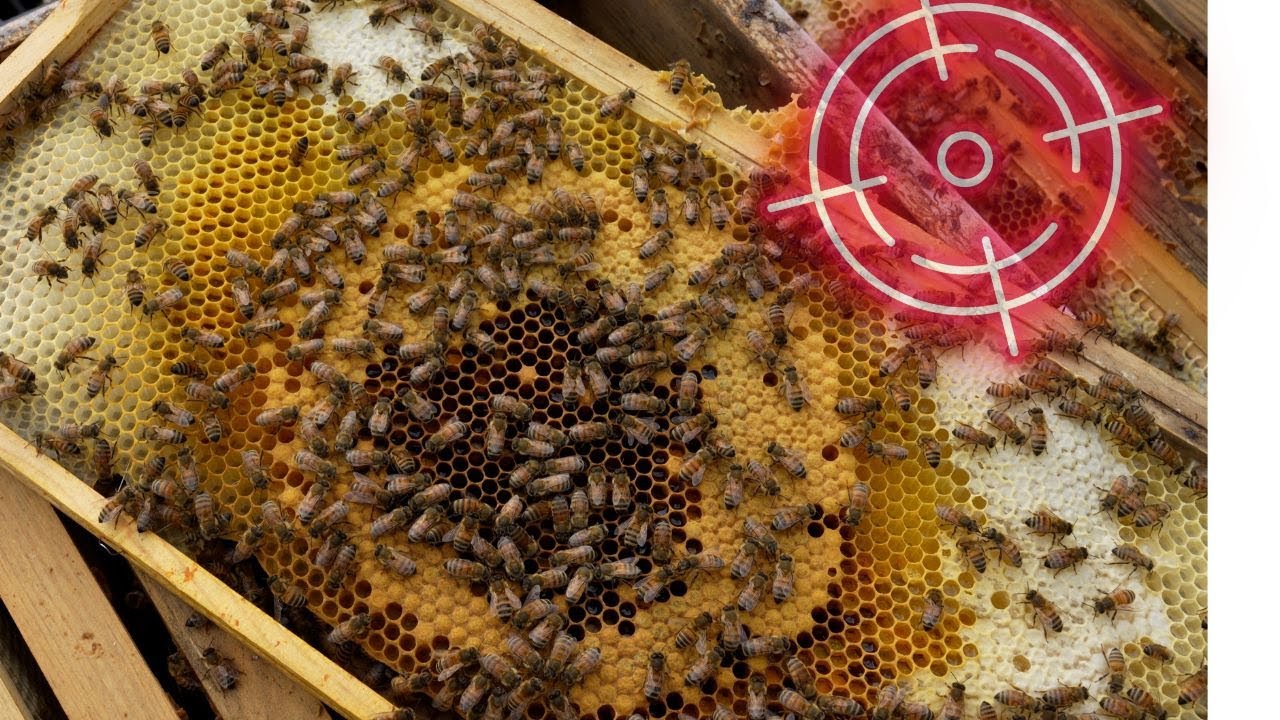
Laurence Edwards shows how to save a bee colony after mice chewed through comb and stores over winter. He found a healthy queen and brood pattern despite the damage, then switched the hive to liquid feed and installed a mouse guard. For next season, he recommends a proper floor with an under-floor entrance to keep mice out.
Chapters
In this video, I'm going to show you the damage a mouse can do over winter to a really expensive colony of bees. Let's get inside, take a look. So the dead giveaway, as soon as I opened up this colony, that I knew something had gone on, is that the size of the colony is nowhere near as big as the rest of the colonies in the apiary. I'm talking like a third of the size. And originally I was thinking, well, maybe the breeder queen's failed and she's not rearing the bees. But when I took a look inside, perfect brood pattern, nothing wrong with the queen. And then it became apparent what was going on. But if you Take a look at that box there. They're on like a 10-frame Langstroth and they are maybe covering 5 or 6 frames where all of the rest of the colonies in this apiary are filling up these boxes and already working into the extenders. So absolute classic mouse damage that is there. You can see where the mouse has come in and it's just chewed away all of that foundation, all of that wax. If you're opening up your colonies and you're seeing this, it's nothing else. There's definitely a mouse in there, or at least there has been a mouse in there. I've checked in this one. There's no mouse present in there at the moment. But look, that's not what you should be able to see. You shouldn't be able to see through your combs like that. Definite mouse damage. But you can see a bit on that frame there as well. Over on this side, you've got a big hole in it, and you should never have holes. The bees don't make big massive holes like that. They might create a tiny little hole in the corner like that there, but not big gaping holes. To me, that's where a mouse has come in, chewed away, eaten the stores, and really set this colony back. Now, looking inside the hive, This is the biggest giveaway. That isn't brood cappings that have been taken off. That's not store cappings that's been taken off. That is big flakes and even bits of honeycomb there. That is the telltale signs that you have a mouse or you've had a mouse in there having a really, really good chomp away. All the way on the back of that there, which is where the bees would've stored their stores, because at the front it's going to be colder, so they were clustering up towards the back. And the mouse has set them right back. However, these bees are determined to make a brilliant comeback, and look at that for an early season brood pattern. Lovely elliptical shape, and then in the middle you've got some eggs. They're backfilling with nectar a little bit as well, but then around the edges we've got a beautiful line of eggs, tons and tons of pollen. That there is exactly the kind of frame that I want to see in my breeder colonies. And these bees are really nice and calm as well. So quick shout out for the queen there. This really is a very, very good queen. Resilient to mice damage, I think I might label this one as, because I'm quite astounded that they've gotten through this. It's quite a lot of damage. Like, you look down there, to get through that and to kind of do without all of those stores, I'm really, really impressed. And even look, maybe a mouse has had a little nibble on her disc there, taken one of the numbers off. I'm pretty sure that's number 39. But there we go, another frame, really healthy frame. I'm going to put this colony back together again now because they have definitely got over the mice attack. So this colony here did need a little bit of an intervention to make sure that they got through. And tell you what, they didn't look that good 2 weeks ago. So what I had to do, they were shifted off over to one side and they weren't taking down the fondant that I was giving them. So what I've done is I've shifted them all over to the middle, directly underneath the feeding hole, and I've switched them over to liquid Feed over to 2:1 syrup. You can use 1:1 as well, use anything in the spring. And the bees have been taking that down. You can see the bees have been really working it. That turbocharges the queen. That means that there's more brood that's laid. That means that the colony can build up very, very quickly if they've got sufficient pollen, which this colony clearly has. The other thing that I've done, which I had to do, was to fix my mistake. I've made a bit of a makeshift mouse guard because what I don't want to do at this point in the year is I don't want to put a mouse guard on and knock all of the pollen off. But mice shouldn't really be a problem at this point in the year. The bees will just sting them away now. I won't make this problem again next year, and I will make sure that I've got a proper floor, either an underfloor entrance or a floor with a mouse guard, because this really was a close one.