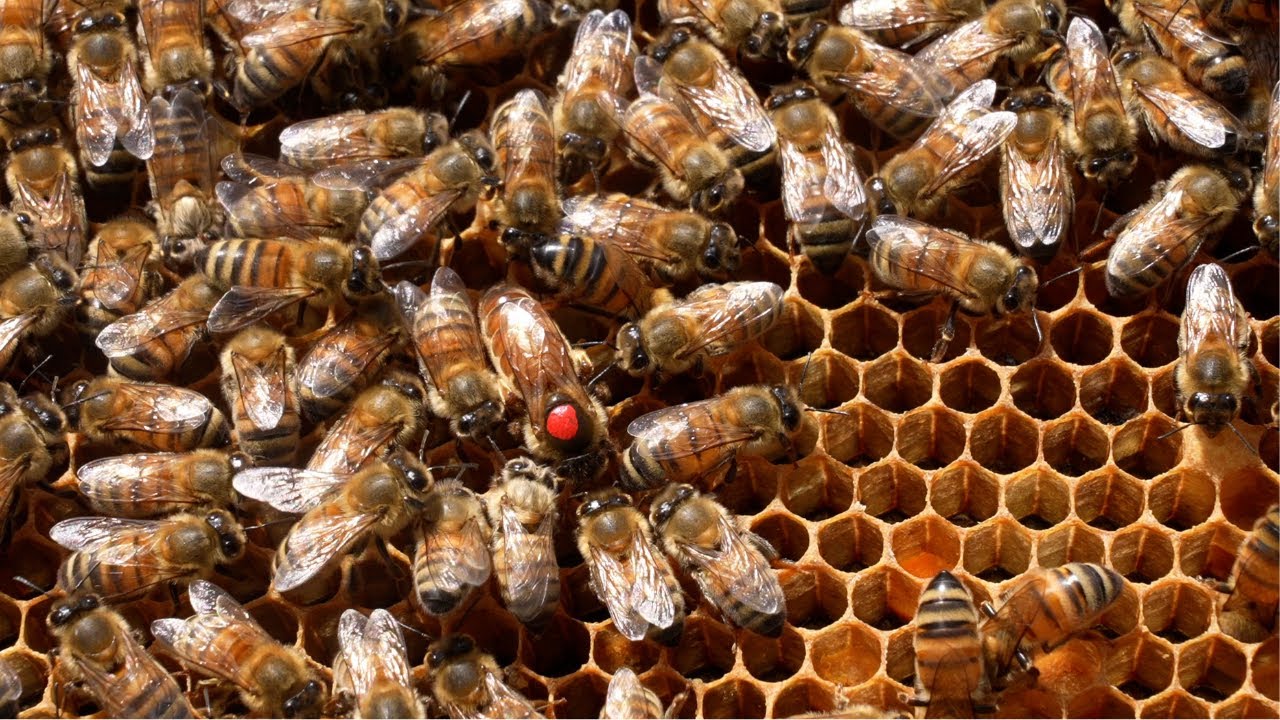
In this conversational hive inspection, Laurence Edwards and beekeeper Richard examine an F1 Kangaroo Line queen that Richard recently introduced from Carl Lockyer, about five weeks ago. They discuss the queen’s experimental background, the colony’s current temperament—initially feisty but now calmer as the bees hunker down for winter—and the impressive pollen stores observed on the frame. The dialogue covers their Apivar mite‑control strategy, noting that strips were placed at the start of September when the colony began retracting, and they consider the timing of treatment relative to brood stages. Both assess the colony’s readiness for winter, noting strong pollen reserves and sealed/open brood, and they look for the new queen on the upcoming frame, expressing optimism that she will be present and that the colony will thrive in the next season.
Chapters
In this video, we're going to look at an F1 Kangaroo Line queen, one of Richard's favourite queens in his apiary. So tell me about this queen, Richard. Where did it come from? When was it introduced? And why do you like it so much?
Well, this queen is very much an experimental queen into here. It is a bit of a trial and error. It's done its job. It's built out, it's ready for winter, and there's high hopes for next season.
So I know we try and breed the very calmest bees here, and sometimes you go in on a little bit of a grumpy day for the bees. These are the F1 Kangaroo line, so they've got a good mix of lagustica in them, but they're a little bit feisty today, Richard, do you think?
I think they're definitely ones to watch, whether that's in a good way or a bad way. I mean, there is, like we said before, a big wasp problem in this apiary. But if you've noticed already, that aggression has already turned the other way and they're not coming up to the top of the hive anymore.
Yeah, I think it's like the time of the year, isn't it? They're hunkering down, really. They've got their feed in and they're just thinking, let's just get through to winter now. Lots of bees in there and it's not too aggressive. So this is the queen that we got from Carl Lockyer. We brought down a few kangaroo queens, showed that on the previous video. Was introduced maybe, what, 5 weeks ago, something like that?
Yeah, at least, yeah. Very impressed with the pollen collection.
Lots of pollen, let's have a look.
I mean, it's just impressive.
Wow, yeah, copious amounts of pollen. That looks really nice.
That's just crazy.
Yeah, they've really calmed down after that, haven't they? It was just an initial buzz of them jumping out. So see, you got your Apivar strips in there. When do you normally go with the Apivar strips in the new capery?
So these were put in roughly, yeah, the start of September.
They've not been in long then?
No, no, no, but I don't, I prefer to put them in when the colony is retracting. Some people will go earlier. I mean, there's a good combination of sealed brood and open brood there, and that is a beautiful frame to see this time of year.
Really nice frame.
'Cause these are the bees you want for spring. We're going to try and find a queen if we can. I've got a feeling she's going to be on this next frame.
You see her?
No, I haven't seen her yet. I'm just judging by the, the bees that have hatched.
Okay.
So I'm correct. Very good.
I'd love to say that was a setup, it definitely wasn't.
There's the queen. So judging that, I'm just looking at the bees that had hatched, so they will be busy cleaning them and to lay again.
She's a beautiful queen, isn't she?
She is a beautiful queen, beautiful colour, and actually the young bees are beautiful as well.
So is this colony all set up and ready to go for winter then?
Yeah, it is, bar a couple of final feeds. I mean, I'm not going to go any further, but there is another frame of brood at least there, so we're into 3 frames of brood, and I think at this time of year, in a 6-frame new, that is about where we should be.