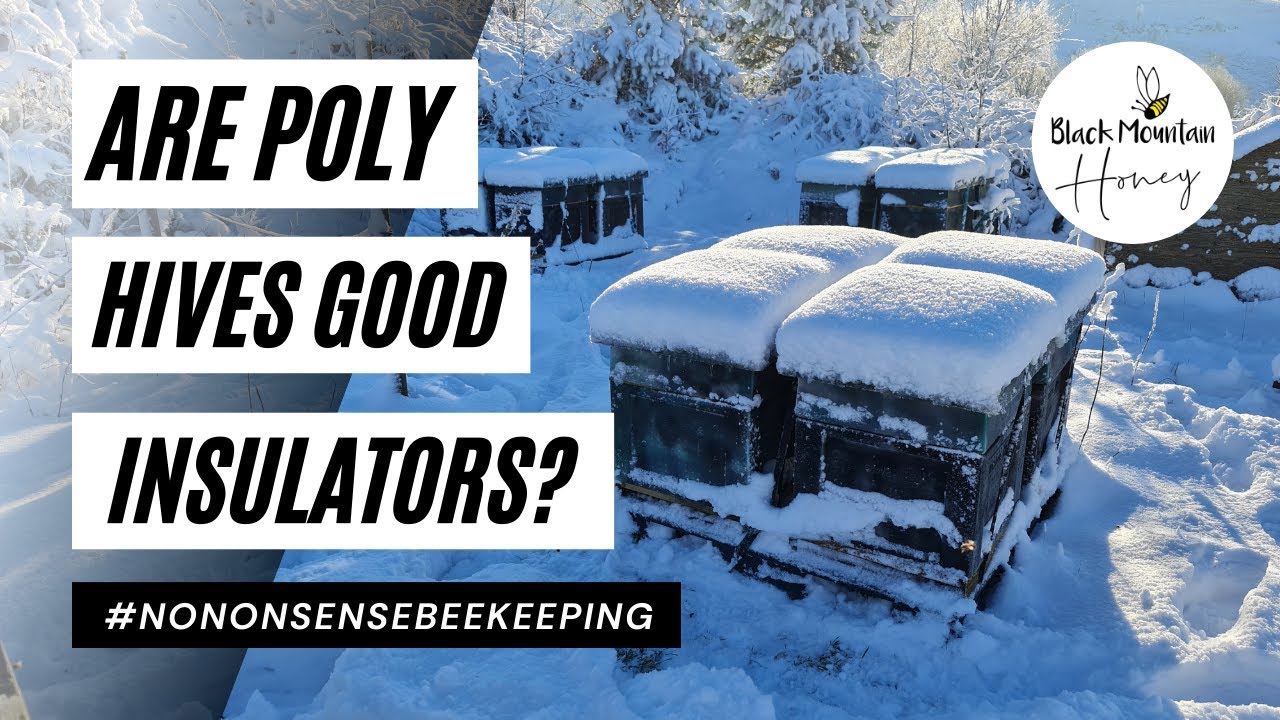
Laurence Edwards compares poly and wooden beehives in freezing weather, showing that polystyrene hives keep colonies warmer and more active even under snow. He feeds light colonies 2 kg slabs of fondant each to help them survive the cold spell, demonstrating why poly's insulation and water resistance outperform wood.
Chapters
Hi, I'm Lawrence Edwards from Black Mountain Honey. Welcome to a very snowy edition of No Nonsense Beekeeping. Today we're going to find out, are poly hives good insulators? So obviously poly hives have better insulation properties to wooden hives. We know that, we've been through that in previous videos. But what I wanted to show you today is what these hives look like inside. Now obviously you're probably going to think I'm mad. It's about 2 degrees here today. It's been down to -6, -8 degrees over the past few nights. We've had real heavy snow, but I've checked a couple of these colonies and you'll see a couple of bees flying around here because I've already gone into these ones and they are light. They're dangerously light, some of them, and they've obviously kept that brood rearing going for really long into the season. And I do find that the heather bees can do that sometimes. I'm in a bit of an emergency situation here and I need to Feed my bees, so I'm feeding them fondant. We've covered that in previous videos, but what I want to show you in this video is just how good a poly hive is at insulating against the cold. So as you can see here, these hives completely covered in snow. This snow is a good thing in terms of the insulation. It's going to increase that insulation above the colony, and then the poly hive is completely impervious to water. So where on a wooden hive you might get water. being sucked in through the wood and the bees having to combat that and drive it off to keep themselves nice and dry. The bees in the poly hive don't have to worry about that. All they need to worry about is temperature regulation, and the poly is helping them do that as well. So in this video, we're going to crack a couple of these hives open. I know it's crazy. I've hefted about 20% in this colony and they are light. They're too light to where they need to be, and I can't risk them dying over the next couple of weeks. So I'm going in, I'm cracking the seals, I'm putting fondant on, and I'm making sure I get my bees through. It's definitely not ideal. I wish I didn't have to do this, but I'm going to show you while I do it just how active the bees are in these polyhives. It might look nice and sunny here today. It's not warm at all. It's about 2 degrees absolute maximum. The snow's not melting around me. The bees should be clustered up. You'd expect to see tight clusters at around 2 degrees C. Wait till you see what these bees look like inside the poly hive. They are so active because it's nice and warm and insulated. So enough of me garbling on, we'll get inside and we'll take a look at these bees. So I'm getting these bees fed with the Honeybee Pro fondant that I bought, 2 kilogram portions, just striking it across like that and getting some nice easy access for the bees. I'm not going to bother weighing each of the hives. I know that this apiary is light, so I'm just going to treat all of them, give them 2 kilograms of fondant. Nice big slab should at least keep them going for a good few weeks. Right, so I've gone around all my colonies and this is the last colony to show you. I reckon it's going to be an absolute belter inside, but like I said, what we're trying to show here is how well that poly insulates. So my wooden colonies, colonies that are in wooden hives, you see them in a nice tight cluster. It's about 2 degrees here today. Take a look how broad, how big, and how vibrant and active this colony is. They come up and fly, as you can see. They're just acting as if it's a completely normal day in there. They don't realize that it's 2°C outside because it's so warm and Toasty on the inside, and that snow really helps them. Now I'm going to close these guys up now because I don't want to keep them open for any longer than I need to. I'm just going to pop some fondant in there as well, strap them back up, and they'll be absolutely fine. But just goes to show what an incredible insulating material polystyrene is. So that's it for today's video. I just wanted to show you how incredibly insulating the Polyhide material can be. It's 2 degrees here today, it's been -6, -8 degrees overnight, And the bees are like that in, I'd say, 80% of these colonies. It's the bigger ones where they can maintain the heat a little bit better, where they're so active. The smaller ones do cluster down and don't move anywhere near as much because they're concentrating on creating the heat that they need to survive. The big ones, they have excess heat and they can be really active and move around within the colony because the polystyrene is such a good insulator. So as always, thanks for watching. Please hit the subscribe button. Please hit the bell so you're notified of every video, and I'll see you next time. Bye.