What To Look For On Your First Inspection - Beginner Hive Inspection Guide
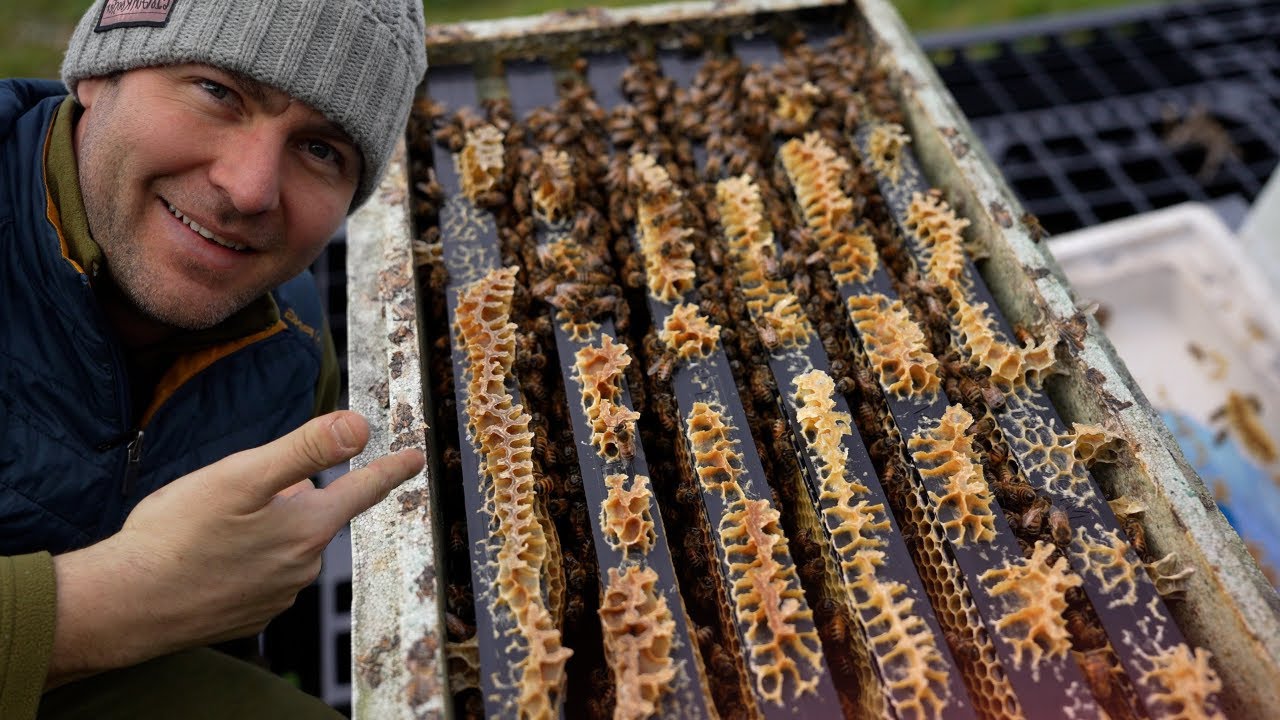
Laurence Edwards walks through your first spring hive inspection. Check for swarm risk, confirm your queen is alive, assess brood and stores with a quick heft, and inspect only when it's mid-April and at least 13-14°C outside. Have a backup queen ready because early inspections risk killing her.
Chapters
In this video, I'm going to talk about the first inspection of the year, when to do it, and what to look out for. So I'm filming this video a little bit earlier than when I would start doing my normal inspections, but obviously I need to film the video, edit the video, and get it out to people on YouTube. The first thing you need to think about when it comes to inspecting bees is what are you inspecting your bees for? If you can't come up with a good reason for why you're inspecting your bees, then you do not need to inspect your bees. It's as simple as that. So in the middle of winter, you wouldn't go in and start pulling frames apart and looking to see if there's swarm cells because you know your bees aren't going to swarm in the middle of winter. The first inspection of the year, all it comes down to is do you think the bees are going to swarm? It's as simple as that. There's nothing really else that you need to look out for there. Don't go and inspect them just because you're curious and you want to see that your queen's got through winter. Don't go and inspect them because you want to see that if they've got food inside, because all you need to do is kind of do a heft and you can see that, or you can feel that. The only reason you should be inspecting your bees is to see if the colony is swarming. And from my personal experience, I have never ever lost a swarm in March. Never. It's never happened in North Wales, and when I see posts on social media like further down south, it is incredibly rare to see a colony swarm in March. So if you're watching this video in March, you do not need to inspect your bees due to the risk of swarming. Now as we get through to April, that risk is going to start to increase depending on where you are in the UK. Now across the world there's going to be different dates and different parameters for this, but this advice is strictly for people in the UK. Now we just use a general rule of thumb in that for us the middle of April is about right, and if I lose like 1% of colonies due to swarming before the middle of April, that's offset by the saving that I make by not having to inspect them. The huge risk that you have early on in the year, and I will get into this colony in a bit and do the first full inspection, The biggest risk that you have in the UK from inspecting your bees too early is that you make a mistake and that you kill your queen. So if you go in in the middle of February and kill your queen, that colony is wiped out. There is no chance of it recovering because all of the bees will die and there's no brood to recover them. Now if you go in in the beginning of April and you kill your queen by accident, you've got a little bit of a backup plan. blackmountainhoney.co.uk. We have queens from the first week of April, and that generally for me is the trigger, and that is the trigger that you can use across the world, good quality mated queens are available and you can replace your queen, that is when you can start doing your inspections. It doesn't necessarily mean that's when you should start doing your inspections, but it means that if the absolute worst happens and you kill your queen, then you have a backup plan available. But in terms of the first inspection, what am I looking for? First thing I'm looking for, I'm always looking for throughout winter, is to assess the feed situation. If you don't assess the feed situation, what can happen is what happened to the colony next door, which is they starve or come very close to starving, and it sets them right back. Always assess the feed situation all the way throughout the spring and the winter, but especially on the first few inspections. Make sure they've got enough feed to get them through to the next inspection. Now, what I always like to see on the first inspection is I like to see the queen. I like to see the queen for 2 reasons. One, to make sure that I have got a queen. I've got a mated queen in the colony. But 2, to make sure that she's the same queen that went into winter. If I see like an unmarked queen and I had a marked queen going into winter, I'm thinking I'm not 100% confident on this. Has the marking rubbed off, or is it a different queen? Have they superseded? Is there more than one queen in the colony? I start asking more questions. Generally though, it's the same queen that's in there that is the queen that was there at the end of the season. The next thing that I really do like to see, especially as you're getting into April, I like to see a really nice pattern of eggs. Eggs, brood in all stages, nice capped brood. If I open up a colony, they've got good stores, I see the queen, and I see brood in all stages in a nice pattern with no sign of any drone brood, for me that colony is completely good to go. And then the next step of that is to ensure that they have sufficient space. Now adding space early on in the season is a real double-edged sword. They can't grow if you don't give them enough space, but if you give them too much space they can't grow. It's a real, real balancing act. I like to err on the side of cramming them in a little bit, waiting and waiting and waiting, and then giving them space when I know they're going to be able to expand. If you're doing this on like a standard beehive and you want to ensure that they've got additional space and you want to double brood, I've done a separate video on this, but what you can do is lift the brood box up, slide another brood box underneath, continue feeding at the top. Now feeding in the spring isn't for everyone, and what I would say is as long as your bees are weighing correctly and hefting correctly, there's no need to feed your bees in the spring unless you're looking to build up colonies, rapid expansion for making further splits. I don't feed in the spring unless I need to, and this year has been a very kind of long Warmish winter, which means that they've burnt through their stores very, very quickly, so I am feeding a lot of my colonies. Let's get inside this colony here, take a look, see how they're getting on for stores, see if we can find the queen, see if we've got any brood, check if they've got enough space. So you can see from the top of the colony here, I've been feeding these bees fondant, and that was a huge, huge slab of fondant they've had, and they've probably got through 75% of it there. Feeding them through that crown board, and as you can see These bees are booming inside. Now it's worth mentioning at this point, again I'm doing this a little bit early, you want to be looking for daytime temperatures of at least 13 to 14 degrees Celsius. If it's not 13 or 14 degrees Celsius, you don't need to do an inspection, unless you're getting to the point where it's like the back end of April, you do need to get in at that point and just go in and do an inspection regardless of the weather. You'll see today it's about 11 or 12 degrees here, the bees are fine and they'll be fine for this like mini inspection, But they're not flying today because it's generally still quite cold. They've got food inside, so they're quite happy just going at that. Now what you'll notice in the first inspection of the year is that everything's really well stuck down. Always check the bottom of the crown board there, make sure the queen's not there. But you can see here we've got a really nice full colony of bees, framers and feeders frames, and these ones here are weighing really, really nice. They've taken down that fondant, they've gone out, they've foraged some water, And they have turned that into stores, as I'm sure we'll see in the frames. So first inspection of the year, everything is going to be really, really stuck together. Be super careful and take your time when you're breaking the seals from the frames next to each other and the frames where they're connecting into the hive. You do not want to squish your queen at all costs at this point of the year. Do not squish your queen, just take your time. As soon as you get the first frame out, the second one and the third one become loads easier because you've got a little more space. In terms of the frame, the first frame to take out, I don't like taking the end frames out because I find if the bees have built any burr comb on the wall, when I pick it out, I can roll the queen, which means you kind of like squish her against the wall. Obviously we don't want to do that. So I like to take kind of frame 2 or frame 5 out, one in from the edge of the wall. Just a quick note at this point as well, you might be wondering why I'm not wearing my TrueView veil. I love my TrueView veil, but I just didn't think about a real technicality of filming videos, which is The sun! And I put it on and you just can't see my face through the reflection from the sun, so, ah, really, really annoying. Obviously when I'm doing my own inspections, I wear the TrueView because it is loads, loads better. So work your hive tool, or if you can just ease the frames out, you want to do it super, super gently. And you can see what we've got here is a lovely calm frame of Buckfast bees. So just doing a little inspection on there, looking to see what I'm seeing. What I'm seeing is lots of brood, brood in all stages, nice healthy brood. Can't see the queen, but I'm just going to pop this frame down here because the first thing that I want to do is just find the queen and make sure that she's somewhere safe. You'll see the next frame, really, really easy to get out there. And there we go, we found the queen. So let me give you a close-up of that queen now. So there's my queen, artificially inseminated pure Buckfast breeder queen number 34. She's just hiding away there, but she is a beauty. So first part of the list there is ticked off. I found the queen, it's the same queen that went into winter, and all I'm going to do now is I'm just going to pop that back in and make sure that I don't go anywhere near that side again. Queen is safe and she's safe over this side. Now what I'm noticing here is the bees are really, really light here, dangerously light again, and I don't actually have a syrup feeder for this colony, which is a little bit of a frustration. Because these could really do with some incoming syrup. However, this frame here feels a lot healthier. Let me give you a close-up of this frame here to show you exactly what I mean. So hopefully you can see it there, you've got open uncapped stores all in that frame up there, and this frame feels considerably heavier than the rest. What you're seeing there in terms of cappings, that is capped over honey, that's not brood, and then what you're seeing as well is a tiny little bit of pollen, and I do mean a tiny bit. We'd like to see a lot more pollen in this colony at this point in the year, but it is cold and the bees haven't been flying, so that explains the lack of pollen. So next frame on the end there as well, we've got plenty of stores on that side there, so I'm not too fussed about the amount of stores that are in the colony. Hopefully when it warms up, the bees will be able to get some more. And then I want to be super quick with this frame there, but what you can see is you've got capped brood that the bees are trying to keep warm. And then, always difficult to show this on camera, but what you've got all the way around there is a nice ring of eggs in all of those cells there. Got a ring of stores around that one as well. So for me, everything is good. So for me, this colony is looking in a pretty good state. We've seen the queen, it's the same queen as before. We've got good eggs, we've got good brood, we've got an okay amount of stores, and the bees have got plenty of space. These bees are not swarming for at least 6 weeks in here. Absolutely no way. There's not enough brood to turn into the bees that will facilitate a swarm event. What I'm not happy about though is the amount of stores that are in there. So what I'm going to do is I'm just going to cut a new slab of fondant and I'm going to replace this small slab here. Make sure that the bees have got sufficient food to get them through to the next inspection, which for me is going to be about 3 weeks' time. These bees do not need weekly inspections just yet. So there we go, that's my first inspection of the year tutorial. Things for you to look out for, some reasons to not go in too early, but also some reasons to make sure that you don't leave it too late. Do you have a specific time of the year when you go into your colonies? Stick it in the comments, I'd love to know.










