Why Buckfast Bees - A Visit To Adam's Apiary and What Makes Them So Consistent
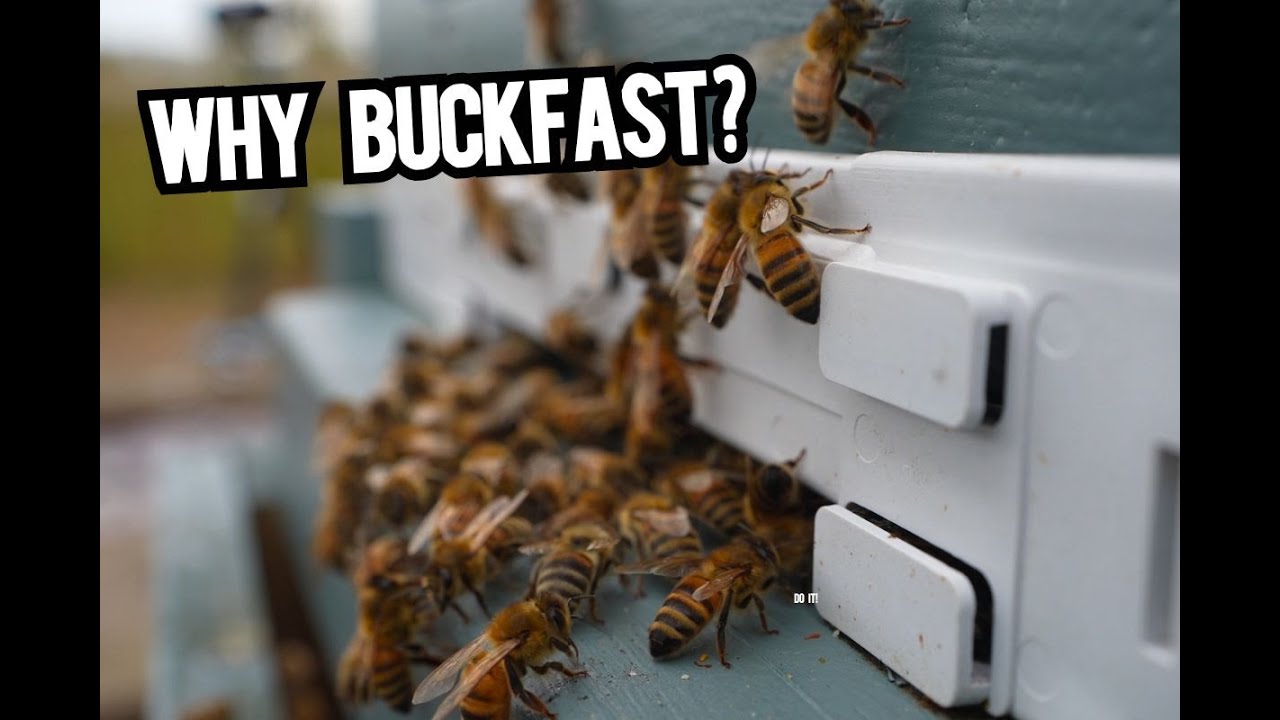
Laurence Edwards visits Adam's apiary to inspect a Black Mountain Honey Buckfast colony. Adam switched to Buckfast queens for their calm temperament and high acceptance rates, and uses diluted sugar syrup instead of a smoker to calm bees. He requeened with pure Buckfast stock after chalkbrood appeared during wet weather.
Chapters
We're in Adam's apiary and we're going to take a look inside a colony with some Black Mountain Honey Buckfast bees. Now this colony here has had its supers open for about half an hour now, so sorry bees, we've definitely kept it open a little bit too long and we noticed some robbing bees diving in, so it has triggered them a little bit. But in this video we're going to talk about why Adam uses the Black Mountain Honey Buckfast queens, how they work for his operation, amount of honey that they get, and whether they're a good bee to work with. So I'll get my veil up and let's get inside. Right, so Adam, you've bought loads of queens off me over the years, like regular, regular face at our house coming and collecting queens. Why did you start getting the Black Mountain Honey queens, and how do you find the colonies with them?
As you can see here, I mean, we've had these open half an hour, and I wouldn't say they're aggressive. You know, you can get bees that are a bit flighty, but it doesn't mean they are out to sting you. So, yeah, for how long we've opened these up for, they are a nice, calm genetic. But, yeah, with the Buckfast, for me, and especially from yourself, the introduction has been very easy, and I'd say there's a high percentage of acceptance. And then the brood pattern speaks for itself. I've not really had one, I would say, in all the years that I would question the laying pattern or anything like that. So I'm really excited to see the laying pattern once we get inside here.
You're going to go down there, be like a spot Prettiest brood in the world, we're going to choose that one.
And there's no queen.
No queen, yeah. It's good to hear though, and that, you know, that's what we pride ourselves on. We want people to have nice calm bees, prolific, so you get decent amounts of honey, but yeah, good brood pattern as well. So you said you've made like a few splits on this one and changed like a few frames around. Should we take this super off here and take a look in the brood box and see how the bees are getting on? Cool, right, so tell me first about this queen excluder. I really like the green queen excluders. Where did you get it from?
This is Simon the Beekeeper. I bought, I think, 20 maybe, and he does a deal on 20.
So when did you put the queen in here? Is this one of this year's queens?
Yeah, it'd be in my diary if I track back, but 2 or 3 months ago. And I will have done some splits from it, as I said before, maybe taken a good frame of capped brood to stick in a split as well, or even just boosted a A weaker nuc, something like that. So these aren't— don't think that they've produced sort of 3 boxes of honey and, you know, they're diluted.
So really good to see, like, a small split like that is built up so quickly. Like, pretty much every single frame that Adam's pulling out there now has either got brood in all stages, a really nice brood pattern that we'll do a close-up in a little bit, or brood or eggs. And you can see from this colony here, it's, it's probably a couple of weeks away from Filling those boxes, I would say. I've seen the queen from all the way over here. She's a nice-looking queen. So you can see there, clipped queen, marked green, F1 Buckfast, very nice long abdomen. And did she, you know, she wasn't that big when she came, was she? Did you notice her kind of grow over the time that she's been in here?
Yeah, a lot of them, they will shrink down before they start to lay again. Yeah, that's quite normal. And then they grow into— give them a week or two, they start to lay again, their abdomen extends out again.
So it is a regular thing that does happen with queens like that. They come, they look a little bit small in the cage, but as soon as they get back to laying, you can see there, that queen, she is huge. Really nice big queen, big abdomen. And this colony is taking off very, very well. So I'm just going to quickly run through, grab a couple of these frames and bring them up to the cameras to show you what they're looking like, but they are, they're pretty chilled out, aren't they? I'm surprised how chilled they've got since we've been in the brood box and the fact that they've been kind of open so long. Lovely frame of brood there, brood in all stages on both sides, but it is, it's just a lovely, lovely pattern of brood, isn't it? And you said that you had like some black bees before. How did you find the black bees?
Yeah, the black bees I found They need a smaller cluster over winter, so less food. So all the positives really of a buckfast. I just found this year, and whether that tied in with the wet we've been having, chalkbrood became a bit of a problem with them.
Yeah.
So I decided to requeen and go for solely buckfast just to see if I could get rid of that chalkbrood.
Did it work?
Yeah. I mean, at one point it was really quite bad. Still got some chalkbrood. Yeah, I'm not going to lie about that, but I think that's to be expected. I think if a lot of people would, to be honest, they would say the wet has increased the chalkbrood in the hives. But now it's dried up, we've had some good sunshine. There's not much at all, to be honest.
Yeah, I'd 100% agree with that. Like, I've had some Buckfast colonies that have had a bit of chalkbrood this year. The conditions have just been Perfect for getting colonies with chalkbrood. And I'd say if it doesn't clear up, maybe need to look at a shook swarm, but I've not seen any signs of requiring to do that yet. There's not a single cell in here I would say that needs any attention. They're looking pretty good, nice and healthy. And you said you had the bee inspector here recently. Were they happy with everything?
Yeah, I suppose for a lot of people it's a bit worrying when you've got someone inspecting your bees and You wonder if they're going to find something you haven't seen, but very, very—
Is it just a regular inspection? Was it just like—
Yeah, just, um, I hadn't, I hadn't had one before, so, um, he, um, yeah, I'd registered probably a bit later than I should. He came out and he was very impressed, very, very helpful, knowledgeable, um, pointed out quite a few, uh, helpful pointers to look for, uh, varroa as such, and on the frames and things like that, that would, you know, benefit yourself. So I would encourage that.
Definitely double down on that. Get signed up to Beebase, get the bee inspectors involved. They're really good and they are there to help you keep nice healthy bees. Right, so I think we've seen enough of these. They're really, really good condition. Let's put them all back together again now and we'll finish the video. So you see Adam's little trick there? We did a separate video on it. Adam doesn't use a Smoker, he uses a really super diluted sugar syrup, basically at 0.2 to 1 ratio, just when the bees are up in the air like that. And it means that they get feeding on the frames just to kind of pick up the minute traces of sugar. It calms the bees down and it means that they go back down into the nest. And then he hasn't got the bees running around on the rebates of the frames, which stops the bees getting squished. But it's just a really nice instant tactic to try and calm the bees down if they're going a little bit up in the air.
Yeah.
So as Adam packs that hive up ready to go, and we're going to move on to the next video now. If you're interested in buying Black Mountain Honey queens, you can get them from blackmountainhoney.co.uk. Wide variety of queens, but my personal favourite, the F1 Buckfast, they're the ones that Adam uses. They're calm, placid, prolific, and really, really good to have in your apiary.










