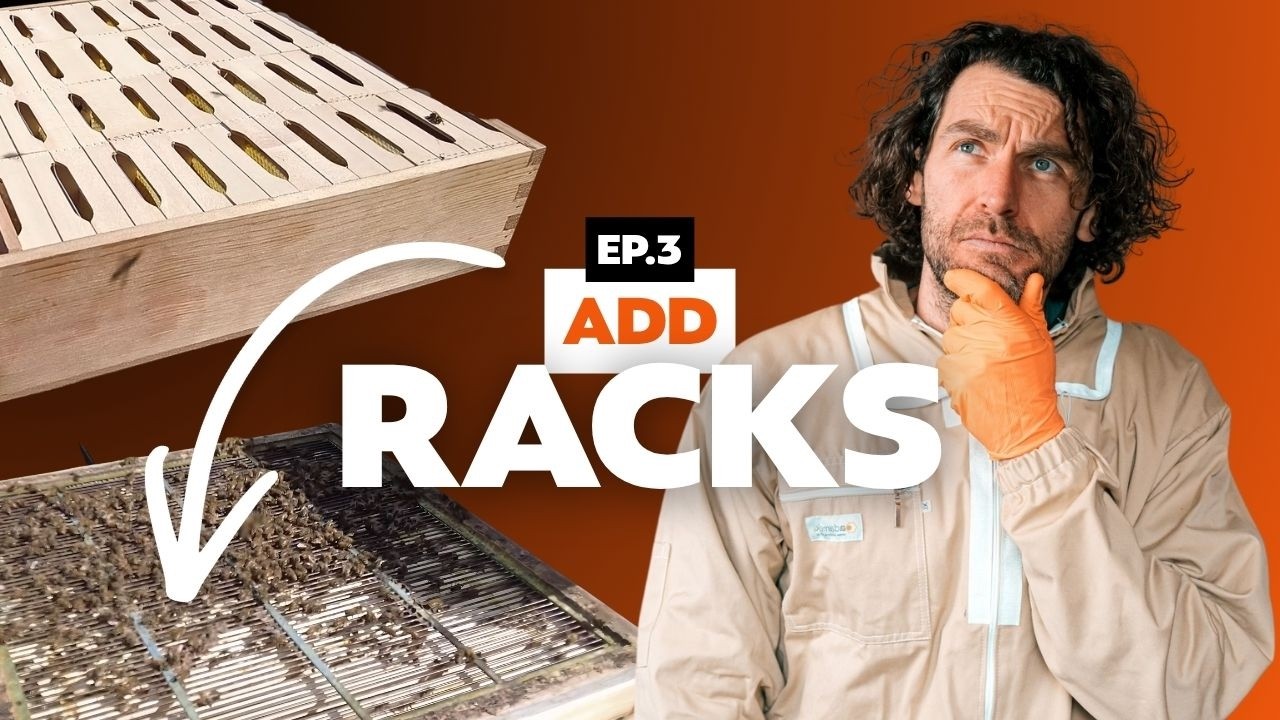
In this instructional video, Laurence Edwards demonstrates how to install wooden section racks on strong beehives in early April, despite cold weather. He explains the hive setup—double brood boxes, a quality queen excluder, the section rack, a crown board/feeder, and the roof—mirroring the configuration used for Ross Round sections to enable direct comparison. Laurence discusses the timing of brood emergence to coincide with an anticipated strong nectar flow forecasted at 15‑17 °C over the next two weeks, emphasizing the importance of a properly sized queen excluder to prevent the queen from entering the sections. He expresses enthusiasm for the upcoming flow, outlines the steps of opening the colony, placing the queen excluder, and positioning the wooden sections, and notes plans to film interim and final results to assess how well the wooden sections are drawn out, filled, and capped compared with the Ross Round sections.
Chapters
The time is finally here. We're going to put our wooden section racks onto our strong beehives. Hopefully the bees are going to move up straight away and get them drawn out. So it's very cold here today. I've been putting this one off for a while because the weather just isn't very good at the moment. It's still early April, but in this apiary here we have no issues with early setting honey, and there is a very strong flow that happens when the weather turns good here. The forecast over the next 2 weeks is very, very nice. 15 or 16 degrees, very dry, very still. I know from previous experience in this apiary there is going to be a very, very strong flow on, and I've got the colonies in the position where they're still relatively small, as in there's not stacks and stacks of supers on them. So I really do want to make the most of this flow that's coming up. I'm going to get inside the colonies now. I'm going to show you just what they're looking like at this time of the year, and then we're going to get our wooden section racks and put them on. So I'll get my bee suit on. I'll show you exactly how to do it. This is the colony here that I'm going to use for my wooden section rack. I've got it set up right next to the one with the Ross Round sections. Going to be great to be able to compare and contrast between the 2 different styles of section rack. I'll open the colony up. Going to be set up in exactly the same way that we did the Ross Rounds. Double brood configuration, queen excluder, section rack on the top, feeder on the top of that, but we're not feeding through it, we're just using it as a crown board, and then the roof to keep everything secure. So the bees are covering about half of the top brood box that I added a few weeks ago now. They're drawing brood in that one as well, and the weather is forecast to be so good over the next couple of weeks. Got a few days of showers and then we've got constant 15, 16, 17 degrees, going to coincide with a really big nectar flow. The idea is that all of these boxes here, they're going to be full of brood, they're going to emerge to coincide with that flow. We'll put the queen excluder on the top there and then we'll put the section wrap directly on top of that. Really important when you're doing section racks, make sure firstly your queen excluder is on and make sure it's a good quality queen excluder with the correct size holes as well. Don't want your queen getting upstairs. She'll cause absolute havoc up in a section rack. So there we go. Simple as that. I've got my section rack up at the top, then I've got my queen excluder, then I'm on a double brood configuration. Just going to time it nicely, hopefully for really good brood emergence, and then it's going to force them to go up there and work in that section rack. I'm so excited by these 2 hives here. Got my wooden sections here, my Ross Round sections here. Going to stick them on a couple of other hives in this apiary as well because I just know they're going to do so well. Next part of the video we'll come back, hopefully going to do a little bit of an interim video just showing how they're starting to work on it before hopefully coming back at the end and seeing completely drawn out, filled and capped wooden sections.