"Fearlessness" Paraliminal, Session A, with Dr. Paul Scheele
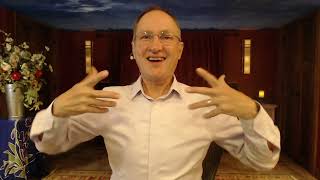
Dr. Paul Scheele guides a Paraliminal session on fearlessness, mapping three core fears to different brain systems: safety to the brainstem, belonging to the limbic system, and worthiness to the neocortex. He teaches present-moment awareness and alignment across physical, emotional, mental, and spiritual layers to pursue goals without fear.
Chapters
You.
It's time. Thanks for joining. We are talking about for today as well as our next session is going to be about a paralliminal, fairly recent one called Fearlessness. Today is session A. So I'm going to give you a little neuroanatomy and I want to help you understand that much of the work that I do is what I would call neurocognitive and psychospiritual. So what that means is neuro and cognitive is the brain and your thinking processes. And then the psychospirituality has to do with your identity and your possibilities. So today we're really focusing on the neurophysiology. So there is a physical makeup of your brain and body. And a teacher many years ago that we worked with on a program called Euphoria named D. Trinidad Hunt, and she talked about living in a spacesuit that what we have is a human physiology. Neurophysiology is a very complex spacesuit so that who you are as a consciousness can locomotive and operate in three dimensional space. And you're actually a fourth dimensional human being because you operate in timespace. So this spacesuit that we're living in has a central processor. We often think of it as the brain. There's multiple brain centers within the body. But certainly we talk about the brain inside of your cranium. And the ancient, the most ancient part of your brain is called the reptilian complex. It's the brain stem and the cerebellum. It doesn't really have a whole lot to do with the thinking part of your brain, but it really does a lot of control of what we would call the autonomic nervous system. So even if you were brain dead, your physiology would continue to operate and work with your consciousness offline. It's a wonderful thing because if you notice, you don't have to think about your breathing or your heartbeat. It, it's all handled for you. The reptilian complex is that first most ancient part that we share with all the critters that crawl around on the planet. So that reptilian complex, you could think about that as being the brain stem and the spinal cord is probably the thing that we most often identify with that most ancient part of us. And if it's ever under threat, that reptilian response is a freeze response and then try to escape, right? It's a freeze response. So if you ever get that deer in the headlights look, that's your reptilian complex responding to fear. Now surrounding that is called the limbic system, the mammalian brain. So we got the reptilian brain and more evolutionarily advanced mammalian brain. And that's where we have our emotions. And that's why when you have a strong emotion, it oftentimes has an immediate physiological effect. You feel it all over yourself. That's because these two are so closely linked together. Very important in terms of evolving into the sophisticated human beings that we are, because our emotions and our ability to respond to threat are very closely linked together. Now, the mammalian brain is in charge of fight or flight. So we've got the freeze response in the reptile and fight or flight response in the mammalian brain. And think about that. As the mammalian brain is more associated with our interaction with others. It's our tribal nature. It's that part of us that needs to feel that it belongs, that it's loved, that it's supported. And so if you imagine now that those two parts of the brain are surrounded by something else, it's a much bigger, gelatinous group, gray thing called the new brain, or neocortex. And that's what we think about as the thinking part of the brain. We've got the left and right hemispheres. Left brain more associated with rational thought, the right brain more associated with creative and intuitive thought. And this neocortex, this thinking brain, is the part of us that helps us develop capacities necessary to support ourselves, to get around in the world, to operate in society, and achieve a certain set of goals that we might have for ourselves. And so we can think and we can feel and we can act. And if you imagine this construction of the brain at the top part of this spacesuit of ours, I would like you to also think about the three bodies that we have. So we've got the physical body, that's the most dense part of us, right? The physical part of us. That's when somebody says me, you know, we'll point to ourselves and we'll say, this is me.
And we often will have an identity with our physicality. If we say, I am sick, I am.
Feeling ill, I am happy. We will often identify our physicality and our emotionality as who we are, but it's not. Our physical body is what we have. So you think about that spinal cord and the spinal column being the most dense part of us, right? We could also think about it, the reptilian, as being in the gut. And what it's worried about most is feeling safe. So the first of the three big fears is, I'm not safe.
Very often, if we have a goal and we're Hesitating to achieve the goal. It's because we're imagining I won't be safe if I take the next couple of steps.
So what I ask you to do is recognize that right now you're okay, you're safe. And that's why we relax the shoulders a little bit and we realize, yeah, I'm okay. Right now I'm okay. Might have been tough yesterday, I'm a little bit worried about later today. But right now, how are you? You're okay, you're safe. And we need to keep coming back to that and reassuring the physical part of us that that fear that we might have behind our bellies, that gut feeling of nervousness about anticipating the future, it's unwarranted because right now you're okay. You've survived your history, you've made it to here. Woohoo. So you're okay. So that's the first body, the physical body. The second body is a more subtle field of energy that's called the emotional body. Now if you study neurophysiology, there are seven patches of nerve ganglion that operate from the bottom of the torso to the crown of the head. Some ancient traditions call those the chakras. Other traditions talk about the siddhi or the nadi channels within us. Nadi. We also talk about the Meridian lines, the 12 meridian lines through the body. But when we feel our feelings, generally we're feeling them on the midline of our torso.
So when we're feeling down, our energy is literally more down. When we're feeling up, our energy is higher, we're registering it higher within us. When you're feeling open hearted, you're feeling joy, possibility, right. You tend to feel more up. So that subtler field of energy we'll call the emotional body. You have to understand that it's your feelings aren't who you are, your emotions aren't who you are. It's energy in motion. It just happens to be what you have. It's a way, it's a GPS that helps you orient to what you should or shouldn't be doing on an ongoing basis, moment by moment. That internal GPS registers feelings within your physical body. Very helpful. Right? And could be unhelpful. If you've got a lot of stored memories of being unsafe in certain situations, you may need to be able to override those early histories to realize, well wait, yeah, that was years ago, I could do this now. And that's where the neocortex comes in. This is what we would call the mental body. It's a subtler field of energy. So we've got the dense physical, the subtler emotional, and then we have the mental body, the thinking body. It's very interesting that research has come to recognize that thoughts aren't just in our head. When we have a memory or a thought that comes to us, and we might even say, it just seem to come from out of the blue. If you study 360 degrees around you, some thoughts will come from here, some thoughts will come from here, some thoughts will come like this. Thoughts will come from this energy field 360 degrees around you. It's very cool. And when you remember something, you're not going to a hard drive and pulling up the complete memory. You're literally reconstructing the memory in an area known as a convergence zone within your brain. You're pulling all of that thought field together to represent a memory that you had at one time. So complex stuff. You don't need to know exactly how the spacesuit works, but I can tell you that the neocortex and the mental body is really oriented toward the third big fear, and that is worthiness.
That you are capable, you are worthy of accomplishing the important goals that you set before you. Some people call it deserving.
Forget about the idea. Deserving. You deserve whatever it is you choose to create.
Worthiness lets you know it's the belief that you can do this. Now, if you're afraid that you could do something, that gut level fear says, I'm never going to be able to do that. It's not likely you're going to get started. But if you say, okay, I've got the confidence to go ahead and take a step, but I don't know what people will think. Will I be accepted if I do this? Well, that's the second level big fear, right? That concept of tribe, love, support.
And if your heart's not in it to do it, not likely that you're going to proceed. But let's say your guts in it, your heart's in it, but you don't believe it's possible. Your head's not in the game.
Will you even try? You see, if you don't believe it's possible for you, why would you even try? Doesn't make any sense. So what our goal is, is to have a relentless knowing that we are safe, that we are loved, and that we are worthy to proceed in the direction of our goal. You see, thinking isn't who you are. Your mind isn't who you are.
Mind is what you have. Thoughts are what you have. You think thoughts, thoughts occur to you even without thinking consciously about it, they just occur to you. It's not who you are. Who you are is an even subtler field of energy. And that's your spiritual body. It's the consciousness that you are. It's consciousness that came into this human form to live this life and contribute your gifts and talents into the world. It's a powerful idea, might be revolutionary for some, but when you think about it, it's evolutionary. We've come to understand that this is how neurophysiology works. This is the design of the human that we're here to live. You are a spiritual being, here on this planet, inhabiting this spacesuit.
In order to bring your gifts into the world, to have your contribution in the world. So fearlessness session A, which is the one we're talking about, is about lining up all of those energy bodies, all of that neurophysiology, all of that neurocognitive and psycho spiritual energy, to be able to live into this day wholeheartedly, to live fearlessly. And when you can truly understand that you're here for a purpose.
You'Re here for a reason.
Death has no power.
And that there is nothing in this world that can harm you. All the fears you've ever had up until now, you've survived, you've gotten to this point. So as you look now to a future possibility of what it is you would like to commit yourself to, any goal that you choose to achieve, any good that you would choose to manifest in the world, it's yours to do. And you couldn't have had the goal in mind if you weren't already equipped to accomplish what you desire. I love the music on this program. It's amazing to me. Every time I hear it, I vibrate with a wonderful energy to it. And the idea is, as you establish.
This sense of relentless knowing, you can come back to that awareness throughout your day. And this is how I like to think of it. How are you right now?
You're okay, right? Well, when we started this session 15 minutes ago.
You'Re okay. You're okay now. And I'll bet five minutes from now you'll be okay too. No matter how much anxiety or worry you might have about a future situation.
Right now you're okay. And when you keep coming back to this present awareness, then you begin to recognize that you can trust that the universe that brought you here, brought you here for a reason.
And you can surrender your fears for the greater good, that you're here to bring into the world. Trust and surrender. And this is an interesting one. With an open mind, an open heart, and an open will, we have an open connection to that great source of power and energy.
That created the universe. And it is flowing through you as you.
So open mind, open heart, open will, open connection to source. So when you're worthy, when you're loved, when you're safe, you can trust and surrender to that higher energy, higher wisdom, higher intelligence moving through you as you to accomplish what you set your mind upon. And guess when you can start doing that. Woohoo. Right now. Let's make this day a great one. Thanks very much for joining me. And in the next session, I'm going to talk about Session B of fearlessness. Hope you have it and can listen to it. Peace and blessings. Have a fabulous day.










