Hale Dwoskin - The Nature of Being
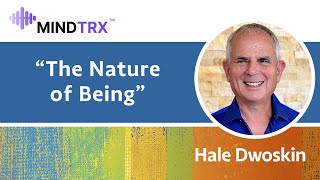
This content was created by Your Success Coach. This content was uploaded by Your Success Coach. This is a YouTube video titled "Hale Dwoskin - The Nature of Being" created on July 3, 2023. It features a conversation between Paul Shealy and Hale Dwoskin discussing the Sedona Method, meditation, and the nature of being. They explore topics such as releasing attachments, the natural state of euphoria, and living in the flow of life. The video also includes a follow-up session where Paul Shealy discusses how to apply these concepts using paraliminal audio sessions.
Chapters
Most of what we do to try to get what we want is sabotage without us realizing it. And not just about the goal. It's disturbing, that boundless peace that is natural and it's not right or wrong or good or bad. Because I want to make that really clear. Because most people listening to something like.
That will go on.
He's saying I shouldn't have goals. No, I'm not saying that at all. You either will or won't. I'll even give you a written guarantee about that.
But when we pursue a goal, there has to be a separate me to pursue it. There has to be this sense of a volitional entity that's apart from the whole to pursue a goal. The whole is the fruition of all goals, yet it doesn't have any.
Welcome to the mindtracks podcast with breakthrough ideas to live your best life possible and how to make it happen. I'm Paul Shealy, and today we'll be talking with Hale Dwoskin. Hale is a New York Times bestselling author of the Sedona Method and a featured teacher in the Letting Go movie and the Secret movie and book. Hale has dedicated his life's work to sharing the Sedona Method, a simple process for releasing painful or unwanted emotions on the spot. This scientifically proven technique enables a whole new way of being naturally happy and at peace every day. It serves as the foundation for the Letting Go paralyminal that Hale created with me, which you can find on the Mindtrax, apparently.
Hello, Hail. So good to be with you. Thanks for being a part of this podcast.
Oh, well, thanks for having me. It's always a pleasure hanging out with you in any form.
Well, I'm looking at your background. I'm seeing that beautiful mandala behind you, and I'm. I'd like to talk with you about the practice of meditation because.
Sure, sure.
You know, the science is in. Everybody knows we should be meditating. Not everybody creates a time in their life to do it, but I'd like to talk with you about your history with it. When did you first get into meditation?
In my teenage years. I don't know exactly when, but I was pretty young when I first was introduced to meditation. I think the first meditation ever did was in a yoga class. It was at the end of the yoga class and I closed my eyes and I don't even know if there was a mantra involved, but as soon as I closed my eyes, my body's sense of being embodied disappeared.
So that was my first experience of meditation.
And did you think, I want lots more of that?
Of course. Of course. That's what most of us do when we have a little taste or glimpse of something beyond. We go, I need more of that now, please.
So at the time, I liked it. And.
And it came kind of a touchstone as I started meditating. It didn't happen that often. It happened occasionally.
And. And I went through various meditations. I went through.
See if I can remember. I did TM for a short period of time, and it didn't resonate. That was after that experience.
Being Transcendental Meditation.
Yeah, Transcendental meditation, yeah.
When I first got started in meditation, I was in my late teens, 18 years old, was super conscious. Meditation was a class, but it was through Raja Yoga was the eight rungs. And I learned.
Yes, yes.
Meditation through that. And I became a Hatha yoga instructor. But what I. I understood that you really got into it. You even traveled to India at some point, didn't you?
Yeah, later in life I did.
But it wasn't based on meditation. My wife and I met a man who did.
Panchakamma and things like that, and he was. So we went for a regiment of healing where there was intensive massages and herbs and all that other kind of stuff that was actually, incidentally, it was right before 9 11. Wow. And we were actually in India when 911 happened.
Wow.
So that was a very interesting experience. And especially getting back. It took a while to get back because at first everything was closed down. And on the way back.
We flew into lax and it was like a ghost town.
There. We flew. I can't remember what airline we flew, but it was a nice airline.
Almost like after the pandemic, everything was ghosting in as well.
Yes, yes, yes. I think it was even more extreme. I mean, I think I was on a southwest flight with 12 people on it.
Oh, my goodness.
And there was also piles of going through all of a sudden on the way out. You know, there wasn't any big deal about security on the way out. There were piles of little scissors and nail clippers and all these weird things by the. Where you went through the checks and stuff.
All of those dangerous weapons.
All those dangerous weapons. That's right. That's right.
Well, now, getting back to your practice of meditation, what kind of discipline did you maintain in those early days?
You know, it's hard to remember because I was only 22, so I started as a teenager, and I experimented with various forms of meditation and also things like rebirthing and yoga. I did a lot of yoga. I Did Tai chi, I did actualisms. I did a bunch of different things to shift consciousness, but besides just sitting quietly with eyes closed so it was all mixed in together. And then I learned the Sedona method at age 22.
And that became.
I stopped meditating at that point because life became a meditation.
Good.
Everything in life.
Supported that, that peaceful centeredness that I used to think I had to meditate to get. So I just started using the Sedona Method. And it was something that I did in a disciplined way for decades, most of the day.
So let's, let's talk about this kind of a shift. What was it about.
The releasing method? And. And I guess also you're meeting with Lester Levinson, learning it. What was it about that experience that caused you to turn toward this releasing process?
Well, the results, yeah.
I remember in 1977, I was walking through.
Times Square and this is before it was gentrified. There weren't all the big billboards. It was kind of a pit. I don't even know why I was there. I think I was coming after a Broadway show or something like that. And ordinarily in the past, before I learned releasing, I would have been really kind of uptight being there because it was dark peep show places and pimps on the street, and it was a mess. Homeless. And in the past, when I'd been in an environment like that, I was always in a very contracted state and was in a hurry to get through the that. But what happened is the sense of me disappeared and this. There was just walking and a sense of profound, unshakable peace. I don't remember how long it lasted, but it really. I can still remember it to this day. It really caught my attention.
And so the combination of having a personal relationship with Lester and all the support I got from him, because anytime I did anything with Lester, there was just this energetic.
Inner opening and lift that was quite profound. And then the practice itself, no matter what was going on in life, I found that I got quieter and calmer and more focused. And I felt all the same benefits as meditation, except that I wasn't technically meditating or I wasn't doing the typical meditation practice.
And. And the results were rapid and accumulative and haven't left to this day.
And the now I don't really have a regular practice. Life is just live basically living itself.
Very cool.
Yeah.
So I want to. I want to get at that idea.
There's something about releasing, which I came to understand in meditation that when a thought occurs or in your case, as a feeling occurs and a thought occurs that there is a watching it, there's an observance of it, and there's a letting it come to pass that you don't attach to it.
And.
Is this what the practice enabled you to do more easily?
Oh, yes. Yes. There was really early on, there was more and more of a sense of witnessing that was.
Not just while releasing, but in life. There was a sense of life unfolding and there was an inner sense of just sitting back and with a sense of welcoming or allowing or just simply watching. And this again went on for decades. The witnessing has only recently fallen away to more of a sense of just.
Nothing and everything. Yeah.
All right. Well, I want to then try to show the contrast between living a life of allowing or welcoming. Whatever emerges compared to what I encountered when I first got going in self improvement, self development, where we were really being taught to visualize and see a goal and affirm our capacity to get to that goal and work towards it and be all in and all of that sort of thing. What is the, the difference for you is what. When is that kind of a practice actually obstructive compared to really enhancing one's journey through life?
Well, it's really depends on what it is that someone wants. If you want more money, then focusing on manifesting more money can be a useful endeavor.
But if you're wanting to. And it's not an if because you can have both, it's not an either or, it's an and.
At the same time, this sense of beingness or this beingness that always doesn't require us to help it live life, it is already living through everything. You, me.
The digital device that you're listening through. The, the. It's living through your thoughts, your feelings, your experiences. It is life itself. And it's not personal, it's just universal. And that has no goals. It's never had a goal. Yet as a person in life, it's natural for that to arise. And as long as.
You'Re pursuing it in an integrous way where instead of just simply trying to manipulate life, but you're, you're opening and surrendering and allowing, then goal achievement can be a natural part of life's unfoldment, just like anything else.
Yeah. So let's take a moment with that, because use the word want or desire.
Yeah.
And goal.
Yes.
And there's also the idea of attachment.
Yes.
When we become attached to our desire ring or our desire to.
Something that we don't currently have, there seems to be a bit of a twist in the energy that I'm getting, at least by implication of what you're saying might not be all that helpful to creating what it is you're actually desiring.
Absolutely. Most of what we do to try to get what we want is sabotage without us realizing it. And not just about the goal.
It's disturbing, that boundless peace that is natural.
And it's not right or wrong or good or bad. Because I want to make that really clear. Because most people listening to something like that will go, oh, he's saying I shouldn't have goals. No, I'm not saying that at all. You either will.
I'll even give you a written guarantee about that.
But when we pursue a goal.
There has to be a separate me to pursue it. There has to be this sense of a volitional entity that's apart from the whole to pursue a goal. Because the whole is the fruition of all goals, yet it doesn't have any.
So there can be this feeling of being contracted or out of harmony, pursuing a goal that may arise, but that also can be transcended. And in that the goal itself may disappear or not, the goal itself may happen or not. But either way there is a sense of well being, there's a sense of openness, there's a Spencer, a sense of expansion and ease.
That can become unshakable.
And it gets shaken.
When we have thoughts about, wait, I had this goal, it didn't happen. What's wrong with me? Why can't I seem to get what I want? You know, I've got this extra weight, I've got this bad bank debt, I've got this, that, this, that. I want to get rid of it, I want to stop it.
Yes, yes, absolutely.
And in all of these.
Mental machinations, what happens is we end up getting ground up in the gears of all of that. Yes.
So that's how it feels.
So the releasing starts with a release of the attachment of the outcome or where does it, where does it start? Does it start in just looking at those thoughts or where?
Well, actually releasing starts wherever.
There'S a sense of your finger in the gear or your foot or your head. Most of us have our head got in the gears.
And so what releasing is really is just a sense of opening, a sense of allowing, a sense of.
Non clinging that can happen. Spontaneous. It does happen spontaneous in life, spontaneously in life. However, with the Sedona method, what happens is you're trained through, you learn several processes that help make it easier and easier to do so. The goal of the process is not so that you're doing a process your whole life. The goal is to just get re in touch with that natural openness and exuberance that we come in with. Young children don't need to be trained to be exuberant and to be open and to be alive.
We actually train it out of them big time. And so the Sedona method helps you.
Dissolve that excess programming or training. And what also can happen as you release is.
There could be this sense of boundlessness or ease. Even if there are thoughts, even if there are feelings. At first you feel like you're freeing yourself from your mind and from your attachments and aversions. And that can feel amazingly liberating. But it doesn't stop there. The sense of a you who's being freed starts to thin and dissolve. And then there is just. And there already is freedom or boundlessness or beingness. And that needs no maintenance, needs nothing.
That's nice.
Everything.
And I. I always saw that the practice of meditation, many people would elevate their consciousness to this high and holy place and then descend back into the world big time.
Yeah, yeah, yeah.
With a thud. Yeah. And one of my teachers said the goal of meditation isn't to raise your life up to this high spot and then, you know, go deal with the world, is to raise everything about living to that high place where you recognize it wherever you are. So it sounds like there's that ability to let go of the expectation that it should be some way other than it is. Brings in a lot of things like appreciation, gratefulness and love and contentment and joy and peace, all of those other delightful experiences that are natural to us on an ongoing basis.
Absolutely. At first it feels like the act of releasing or letting go is bringing that forward or uncovering it. And then it can be discovered that it is just what is naturally.
With or without anything. It just is.
Whether we're there trying to make it or not.
Yes. The less we're there trying to bring life up or bring it down or open or the west, there is that sense of.
Having to do anything with gears, even get your finger out of them. The gears themselves dissolve.
And there's just life living itself.
And a lot of times people hear things like that and they think, oh, my God, how am I going to take care of my wife if I'm not there to manipulate and control it and all that stuff. Well, you're not there already. It's just an appearance. Life is already living itself beautifully, even when it seems to us from our limited perspective that it's not going the way we want it to, but it's still life living itself. And that includes everything that's happening, at least.
But only everything.
Only everything. Exactly. Just everything.
There's.
There's this phrase that Bill Levesy uses, a Sanskrit phrase, intention, attention, no tension. And our friend Marcy Scheimoff really picked up on that. And if we could establish an intention and bring our attention to it and then go about our day with no tension within us.
Yes.
Life tends to follow the form that we've establish for it to fill in. Does that make sense?
Is that it makes total sense from the perspective of being a person? Absolutely. And it also appears to work within the dream of me. It definitely does, except that the absence of tension is really the only. The only really important part.
Intention will happen or it won't. Attention will happen or it won't. Often we try to maintain attention, and in doing so we get really tense because, oh, no, I wasn't. I wasn't paying attention just now. I was just living. Oh, my God, I got to pay attention.
But yes, those three things are. Can be incredibly helpful. If we feel like a person in a life that needs to be manipulated and controlled by us, then absolutely, that is an incredibly helpful and powerful tool. Incredibly helpful and powerful.
And there are so many tools, both. I know you teach a lot of them, and they're amazing. They're incredible. And meditation itself is taught in so many places. And for quieting the mind and calming the body and allowing for the space to reveal itself to itself. It's amazing. Absolutely amazing.
Well, it seems like the workshops that you do continue to just roll on and continue to grow. And.
Is it more relevant today than it has been in the past? What's happening with humanity that makes the concept of the. The Sedona method being able to release and be present, what's emerging.
So key for humanity at this point, at this moment?
Well, I don't have to tell anyone listening to this that there's just a touch of tension in the planet, just a tiny bit.
And it's not just happening in the United States. It's happening all over the world. There's a polarization and almost an energetic tearing apart that's happening.
Both to the planet and to us as human beings. And I think it's just part of the natural evolution of.
Systems growing and decaying.
Yes, absolutely. But also with that, there is an openness that's happening, a willingness to not just cling to to the old ways, not just in life, but internally.
Most of us, by the time we're young adults, we've established most of the patterns we're going to, internal patterns we're going to live with the rest of our lives and we never question them. It's just the way it is. And what's happening now is I think there's more and more of an openness.
To questioning all of that, to being open to the possibility it doesn't always have to be the way it was. And so what the Sedona method does is it helps support you in that exploration and you can start to see where there's still contraction within the body mind system, where you're still holding yourself back, where you're denying yourself, where you're staying in a state of hyper vigilance or in opposition to things that don't agree with the way you want it to be. And it's a very uncomfortable position to live in. And as that drops away within you, as you let go.
Life, even if it's not going the way you would want it to.
Takes on this openness and this sweetness and even joy at times and at transparency. So it's not all in all consuming and it makes everything easier.
And it's so needed now. It's so needed.
Well, and I've been describing this great turning in human history. It does seem to be, in terms of general systems theory, a critical moment in the human family. So it, it does make a lot of sense. I, we had our grandchildren sleeping over a couple of weekends ago and the little three year old at the time woke up middle of the night, quite agitated and Libby gave me a little nudge to go handle it.
It was your turn. Right?
I, and I, and I simply.
Laid down with her and put my hand on her and said, it's okay, it's okay. She was gone instantly gone.
Right.
And very often it's what we say in hospice when it's time for someone to pass.
Yes, yes, yes, it's okay.
And for me the Sedona method is it's going to be okay. Whether you're busily trying to make it okay or not. Everything's going to be okay. Yeah, it's okay. Just let it go. It's okay.
Yeah.
And when we do, I, I love the, this idea that the, the wellspring of life that's always trying to emerge.
And continue to expand is no longer held back by my efforting in saying that it's not okay.
Right.
The way it is.
It's Interesting. It was never really held back by that, but it makes it much less fun.
Life is.
Life is infinite.
Yeah. My experience of it, I'll say. Oh, yeah, absolutely.
The experience. Yeah. Experience can be very different.
Yes.
Then what is actually happening? Very different.
So of all of the techniques, you know that one of my favorite in the Sedona method has been the triple welcoming.
Yes.
You and I did a paraliminal based on that. And I'm wondering if you could explain to our listener what is triple welcoming and why it works the way it does.
Oh, sure, sure. I'd be happy to do that. So triple welcoming is basically the. The whole Sedona method. Well, most of the Sedona method. When I. In early 90s, Lester Levinson passed all the copyrights to me and he said to me that as you work with this, it's going to get simpler and a lot more powerful. And I didn't believe him, honestly. But what happened is through being in front of a room, working with people.
The process continued to evolve and unfold. And I discovered that.
Trying to drop something, sometimes even that's too much. And just welcoming or allowing or being present with whatever was arising was incredibly helpful.
So that's one of the tools that we teach experientially. And.
I also discovered that there are certain places that we get stuck. And again, this happened just in working with people. I didn't think about it. It was just presented. Oh, I see. Here's a pattern. And if you repeat this pattern, it really helps people. And so the three places we get stuck, we either get stuck in the story of what. What's happening in that there's a certain event we're sure it's not going to. It's not the way. It isn't the way we want it to be, or even more neutral than that. It's something is happening that may or may not be something we like. So the first thing that is welcomed is just whatever is apparently happening and then the nature of the person. When we feel separate, we think we need to fix it, change it, control it, understand it, do something with or without or about it. And that's about everything. What our body is doing, what the news is saying, what politics is doing, how much money we have in the bank, our relationships, our health, everything. And it's from the moment we wake up in the morning until when we go to sleep at night, there is this constant thinking that something needs to happen, something needs to change. This is this. Whatever is apparently happening isn't right. And so if you welcome this tendency to feel like you need to do something with or about it, that also starts to dissolve. And then lastly, all of that is hooked to just one misconception that it's all happening to me. This sense of ownership, this sense of I'm the knower, I'm the doer.
It'S all about me. Basically, we think that the whole universe revolves around what we want or don't want. And when you welcome that, that also starts to dissolve. And when you welcome the three of those together, it has this very profound unraveling effect on whatever apparent limitation you're dealing with. And so that's triple welcoming. That. That's that. And then it evolved just simply through working with people and seeing what really helped.
So let me just get a final bit of clarification on it. It's very clear that there is some resistance happening when we're not welcoming it. And if we're resisting it, then it's going to persist in our experience.
Yes.
And if you welcome it, the resistance goes away. But you, as you say, it dissolves or it unravels.
Yes.
To what? Back to life as it is.
It was always just an appearance, the appearance of. Of the resistance and the contraction melts.
So any. Any attachment I have, any story I have about it, any energy I put toward it, if I welcome it, none of that's there.
Well, it dissolves.
It becomes no more substantial than a ripple in a stream or a wave in the ocean. In this analogy, the stream is the stream of life, the ocean of life. The ocean that the ocean doesn't resist the waves.
The waves are just part of the ocean. It's just ocean waving. Well.
As there's a sense of welcoming.
And also, if that sense of.
As that sense of being a separate person dissolves, there is just what's apparently happening. And there. There's no points of the life is just an unfolding.
Defies description, actually.
Right. So I'm lost in an image of myself being in the Gallatin Valley in.
Montana, standing knee deep in a trout stream and just so overwhelmed by the beauty of it all and the water going past me.
I have.
I have no attachment to anything in that stream. I have a flight rod in my hand.
Yes.
And I can fly fish. If someone asked me, did you catch anything? I would think, does it matter that I got anything or not?
That's really inconsequential. And participating in it as an activity. But whether I get to an outcome of it, of a fish for the fry pan, for lunch, for Libby and me. Or not. Completely unnecessary. I'm just.
Right, right.
Absolutely absorbed in. And the distinction between where I stop or start and where the universe that's so gorgeous all around and within me begins and ends is inconsequential and just part of all of it.
Absolutely, absolutely. And everyone listening, I'm sure, has their own trout stream.
Yeah, I think. I think a lot of our activities are often geared toward getting us to that place. For example, Libby is an artist, gets into her painting in a way in which she's there. Someone who plays golf.
Releases themselves so completely. So they're participating in this magnificent experience. They're somehow overcoming mind. We call it flow, I think, is a description of it.
Yes, yes. So that. And that's what's natural. What I was. What I was going to add to that is the.
People don't really don't pay attention to the flow because it's natural. You pay attention to the rocks in the stream.
To whether or not we've caught a fish, to how pretty the artwork is.
You can't really create.
If you're judging the art as you're making it. The art makes itself.
But people experience that throughout life, all the time. They're just. Life is living.
And it's even in simple things, like even. You can even disappear the sense of stress, depending on what you're looking at. But even looking at your phone, if you're stressing over something or the news or a post, then maybe not. But if you just kind of really engage with the phone, time disappears and there is just.
The phone. And there's no boundaries to that. And there really actually aren't boundaries. There just appear to be. And this boundlessness that is already.
Is. Part of the reason is what we usually are looking for when we do any process, including the Sedona method or meditation or. Or listening to paraliminals. Paraliminals also help.
Allow there to be.
A taste of this boundlessness. And it's just important for all of us to remember or not. It really doesn't matter if you remember, but.
That is what's already natural. The Paralympicals, the releasing, the meditation, is just a pointer towards that which is ready. And it's not dependent on that. Nothing is. Yet. At the same time, all those things can be really helpful and really fun.
Exactly. And why not pick the thing that's most fun for you to participate in it, whether it is this, that or the other thing. Yes. So to wrap it up.
Yes.
Knowing that all good things must end, at least from our experience.
Right, Exactly.
It all continues whether we're participating in it or not. Right, Right. How would you like to leave our listener.
With.
Kind of the moral of the story? From your own life, from the arc of where you started seeking this level of peace to where you are today? What would you give to our listener? And encouragement?
So first off, trust the process.
Allow yourself to just love and honor and nurture yourself wherever you are or wherever you appear to be, and allow yourself to.
Explore the nature of being.
Beingness is what we're experiencing all the time and what is even when we're not experiencing it. And it is already boundlessness, it is already limitless. And just being open to that as a possibility tends to invite you into that more consciously.
And also just know that the bumps, the setbacks, the apparent failures.
The apparent problems that we deal with every day, some big, some small, all of those are like waves in the ocean. They come, they go. And they don't have to limit you in any way, shape and form, because what you are is what all is.
This boundless being. And it, it is already wholeness. It is already perfection.
And life is just waving at us.
Yeah. It's a great image.
That's great.
Thank you so much, Hale. Always a pleasure for.
Oh, likewise. Thank you.
Peace and blessings. Bye for now.
Bye. Bye. Thanks.
I hope you enjoyed our conversation with Hale Dwoskin. You can learn more about hail@sedona.com that's s e d o n a dot com and now in the second part of the podcast, it's just you and me. I'll tell you how to use the parallel sessions in the MindTrax app to easily handle obstacles and move toward the success you want. Especially as it relates to our discussion with Hale. If you're new to the relaxing paralyminal audio sessions, they use breakthrough technologies to activate your whole mind in only 20 minutes minutes to help improve any area of your life. Let's get going.
Hi and welcome to the follow on session of my conversation with Hale Dwaskin. As we were exploring the Sedona method, the concept of releasing as way of meditating and being in the flow of life itself. Fascinating stuff. His spiritual awareness is tremendous. His ease and his sense of joy with the way everything is exactly as it is is refreshing. I hope you agree. And when I'm thinking about putting his ideas into practice, there are really three major topics that came up. One is the idea of releasing. Second is about being able to allow and experience more of what life is actually trying to bring us to Remind us that we have. And the final is how can we actually go about creating the life that we choose to live while being in the flow of life.
When I think about the paraliminals that could assist us in each of these three areas, there are quite a few that came up. Certainly foremost, the triple welcoming process that Hale Dwaskin and I recorded in the paraliminal titled Letting Go.
Must Do. It's really a remarkable experience and it's something that once you play it and practice it on an ongoing basis and you recognize that whatever is happening just by allowing it, whatever feeling you're feeling, just allow it. And what it does is it dissolves any of the tension or contraction that might be present around the way you are interacting with it.
So really is a lovely experience. I encourage you to use it, become familiar with it, be able to practice it on your own, whether you're listening to the para liminal or not.
The second area of focus for me is that idea of allowing and really experiencing more of life. Years ago I created a home study program called Euphoria in which I contacted a number of people. Hale Dwaskin was one of them. And I asked them, if you were to help someone realize more euphoria in their life, what would you teach them? And every single one of those authors that I contact said the same first line. They said, well, euphoria is our natural state.
And if someone's not experiencing them, this is what I would teach them. And Hale taught the Sedona method and I created a paralliminal same thing. How do we get in touch with that natural state of euphoria, which is our essential nature, the way in which we were born to live into this world that, as Hale mentioned, gets trained out of us early on in life. So that's one parallel. And then there's a couple of others that talk about the essential emotions that are a part of life. Gratitude, paralleliminal and joy, para liminal are both perfect for this. And then there's a parallel called five Elements healing. And that takes you through five of the essential emotions that are associated with the various organ systems in the body and with colors and with the emotions then establishing greater harmony and health and well being. And it does take you through those five emotions. Happiness, joy, peace and groundedness.
Contentment and gratitude. And those five emotions associated with these five organ systems keep us in that flow of life, allows us to have a high level of well being on an ongoing basis. So these, each one of those paralyminals is really intended to put you into the experience of what's more natural to us, this natural expansive nature that is the nature of life itself.
Now Hale talked about humanity getting itself into kind of a pickle these days. Therefore, a lot of these technologies are very helpful to help us see our way through some of the gnarly problems that we have to address.
But it is essential to remember that you can't do in order to be. You can't do things in order to be at peace. You can't do in order to be joyful. Joy and peace are natural states. So they are states of being. And so you be that and then all of you're doing will be elevated, more easy, more in the flow. You'll find greater sense of self expression and a real.
A real alignment with that natural flow and current that life brings us into, the true nature of who we are. And I would encourage you certainly to pick any one of those emotions that you feel you may be lacking in. Listening to a para liminal is going to help you remember that that is one of the natural states within you.
The next area of the three areas we're talking about is creating while being in that flow of life. And in that regard, I've picked three Paralympicals, one which I feel is excellent around understanding the great fullness of life. That is, and this is a key message that Hale was teaching. It's also a key message that Lynn Twist teaches in the soul of money. And Lynn and I did Paralympical called Soul of Money. Really puts you in that flow. Now a big fan of Lynn Twists and a very successful entrepreneur who lives very abundantly in Japan is a man named Ken Honda. And he and I did a parallel called Happy Money. It's this idea that here is this wellspring, this bubbling fountain of abundance and prosperity and we can align with that, allow our, our financial reservoirs to fill. And what flows out once our reservoir is full, we can give and keep in the flow of life for all those that we might serve. So Soul of Money and Happy Money are a great combination, kind of a 1, 2 parallel that can be very effective in helping us create our lives as we desire, while being in the true flow, not stagnant, not as, as Hale called contracted, really feeling a sense of expansiveness, the abundant nature of the universe itself. It is expansiveness. The final parallel is self actualizations.
It's based on Abraham Maslow's concept of being self actualized, which is a five level pyramid and self actualization is the top. But the essential message of this parallel is that actually Abraham Maslow was talking about a next level beyond being self actualized and that's being self transcendent. Now if you listen, if you go back and listen to the podcast with Hale, you'll hear this.
Living into a much more transcendent experience of life. It's really transcended the human form, the human identity and transcended to this more transcendent nature of life itself which is infinite, expansive, abundant and is filled with joy and peace and grace and, and love. And that is.
Really the highest expression of who we are as human beings is to come to that self transcendent state. That's exactly what that para liminal self actualizations focuses you on, is how to enter into and live into that transcendent nature that you are. Well, enjoy the paraliminals. Thanks again for being a part of this podcast. It's always a pleasure to be with you. Thanks so much and we'll see you again next time.
Thank you for joining me today. I applaud your willingness to maximize your potential. You can easily use the paralyminal audio sessions in the MindTrax app to stimulate your non conscious mind, I.e. your inner mind, to reduce any resistance in your life and to propel you toward the success you want. Go to www.mindtracks.com.
Go.
That's www.m I n d t r x.com.
G o these amazing audio tools have helped millions and I encourage you to bring them into your world today. Be sure to be back for more episodes of the mindtrax podcast. You'll find insightful conversations with authors, experts and thought leaders all devoted to improving your life's experience. Thank you again for being here on our mindtracks podcast.
Sam.










