Ken Honda – Wealth Creation
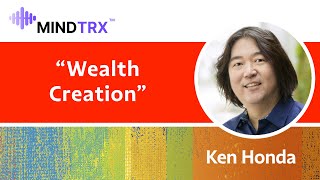
Ken Honda explains his Zen approach to money: appreciate what you have, give generously, and recognize that people have different natural capacities for wealth. He uses the Japanese concept of harihachi bu, eating only 80% full, as a practical way to build prosperity consciousness.
Questions this video answers
August 21, 2023
29
Almost 9 million copies
Chapters
Foreign.
So if you are, I'd say 5% more kind, 5% more generous to yourself, to your family members, your husband and wife. I'm sure we live lives right, so it's, it's sometimes us, we, you get upset with your wife or husband or kids or your business partners. But then you can be 5% more generous, 5% cooler, 5% more fun to be with that person. Look what happens. Usually it's a law of reflection. So he or she will respond to you 5% more kind and generous. So if we can start doing, doing it and just imagine all of us start doing it worldwide, there will be no war.
Welcome to the mindtrax podcast with breakthrough ideas to live your best life possible and how to make it happen. I'm Paul Shealy and today we'll be talking with Ken Honda, considered Japanese best selling Zen millionaire. Ken Honda has authored more than 60 best selling books on work, life, balance, wealth and happiness. His book Happy the Japanese art of making peace with your Money serves as the foundation for the happy money paraliminal Ken created with me, which you can find in the MindTrax app. Since his retirement as a multimillionaire at the ripe young age of 29 a quarter century ago, Ken has been helping other people create a healthier and happier relationship with money through his mentoring programs, healing workshops, business seminars and courses.
Foreign.
So good to be with you again. Nice to have you here on the podcast.
Thank you so much for inviting me, Paul, and this is such a great honor and I'm so super excited to be here.
Well, you're naturally super excited. That's one of the things I've known about you since I first met you, and it's no surprise to me that people call you the Happy millionaire. But I would like to know, how did you get that name, the Happy.
Millionaire or AKA Happy Panda? Because wherever I go, people will show up. And I have been fairly happy.
All my life because.
I don't know, of course I have so many, you know, unfortunate things happen to my life, but after healing many of Those in my 20s, I think I find happiness wherever I go. So. And I'm so happy to share what I know, what I have and who I am.
That's, that's excellent. Now also, not just happy, but Happy Millionaire, you became quite famous in Japan for all of your books on financial prosperity.
Right.
When did you start in that you were in, you were in the accounting business prior to that, weren't you?
Right, Right. So I started very young after meeting my Jewish millionaire, which I wrote about him and became a million seller when I was 20. So I started very young. I started my business when I was 21 and I could retire at the age 29 for four years. And during the four years of semi retirement, I came up with this book ideas and I started writing booklets. And that booklet.
Was just. It developed into a book and then it became a national bestseller, which is about 21 years ago. And the rest is a history. So I've been writing, producing books on happiness and entrepreneurship and financial independence for the past 21 years and sold almost 9 million copies by now.
Wow. And the other thing that's really interesting to me about the way you went about writing is you seem to have a great way to let it flow from you. Last time we chatted, you had five books and process at the same time. What is your strategy for being so prolific as a writer? How many books now is it?
Yeah, I lost count. And.
I'm not interested in how many books I sold or how many books I've written because to me the numbers are a little bit irrelevant, but it just keeps flowing. So it's almost like brushing my teeth. I feel weird if I don't brush my teeth before I go to sleep. And I have a desk in the back of my car. I have a special minivan. It's catered for writing, so. And Japanese words are pretty smooth. So I can write in my book in my car. And I have three notebooks.
And I have a few offices. So like wherever I go, when I open my notebook, I can start writing anytime, anywhere.
That's so cool. Now, one of the things that I loved about your concept in the book, now I haven't read all of your books. I. I really did dive into the happy money. And you talk about a mentor of yours who was an African man who created candy. And he had a philosophy. Would you share that idea?
Right.
The mentor I got to learn with a lot is a Japanese mentor. And I think I mentioned a few times about Africa mentor. But this Japanese mentor is called Waheta Keda, who used to be called Warren Buffett of Japan. He was once a major shareholder of more than 100 public companies in Japan, which is a big deal. And then he built his fortune by selling cookies for babies. And the way he built his fortune is so sweet. And he was so interested in giving back to society. So he built a castle, a sweet castle. So for the kids who cannot go to Disneyland, he invited a lot of local kids to the castle. And in the castle, all the Kids make sweets. Some kids make cookies, special cakes and candies. And it's such a paradise for kids. So that was his. That was my mentor. And his life really changed my life.
So what did you think, the big message that you learned from him that created such a change? You know, my. My doctoral work was in studying transformation. So I'm quite interested in what do you think that transformational learning was for you?
His teaching was very simple.
It's more like a chatting. So his teaching is very Zen. So when I had that opportunity to speak with him for the first time, I had like 15 seconds. There are like hundred people waiting in my back. So I had, hello, my name is Ken Honda. And I said I could say, what is the secret of money? And he said, arigato your money with a big smile. And then I got pushed back, pushed out from the line, and that kept haunting me. Arigato your money. That means appreciate your money. And is that it? And I just started thinking deeper and deeper into this philosophy of appreciating your money. And about a few months later, I got another chance to have a chat with him for a few hours privately, which is incredible. And I could ask deeper questions like, what is the meaning of appreciation? And he later explained that appreciating your money opens a new door.
For you, because by appreciating what you have on, what you're welcoming, you can appreciate so many great things in life because appreciation appreciates. And so by appreciating money coming in, also, you can.
Appreciate money for going out. So by appreciating, you can start the cycle of beautiful energy, and that will make you very attractive. So people want to hire you, people want to work with you, and all the good fortune will come to you is his simple philosophy.
That's. And you said that he has a Zen philosophy. And Zen is notably simple. It's to keep things simple. If you were to characterize a Zen approach to financial abundance or prosperity compared to the kind of approach that most Westerners take on when they're trying to become rich, wealthy, what would you say the biggest difference is?
I think I can just put it into a question that I often get from Japanese people in the west, in. In North America and Europe, a lot of people ask me questions like, hey, Ken, how can I become more wealthy? And how can I grow my mining container? Because I often talk about money container, which is, we are born with a certain size money container. You know, Bill Gates and Elon Musk has. They have bigger ones. And most of us, like, we have a smaller money container. And so they ask me questions like how can I make my money container bigger? And instead Zen approach or Japanese approach would be how can I satisfy myself with what I got? So it's a totally different approach because when you think of happiness, happiness has two components. One is going after what you want and the other part is satisfying what what you got. So a Zen approach is more of satisfying. Satisfying yourself with what you already have. So why his approach is that way?
So I've heard the idea that success is getting what you want and happiness is wanting what you get. So it seems to me that there's a little bit of a blend of that is, is whatever you do get, you feel very satisfied with it. And if you appreciate that what you appreciate appreciates or grows. And so you, you, you naturally are going to become more abundant if you get a paycheck and you say is that all I got? Then what you're doing is you're putting a very negative charge as opposed to really blessing it. Is it an energy thing for you like that?
Yes, exactly. And thank you for studying my material so well. I respect you in so many ways, but the way you studied my material was so impressive and I so appreciate you for understanding the depth of what I teach and also what my mentor respected. So I once again, I really want to appreciate you. So the, the essence of what, what I have shared in my career is you don't. I'm not teaching people to become minimalist. I want you to be satisfied with who you are, what you have. It may grow, it may not grow, but you don't care anymore because you are just a happy person. In English, I'm learning new expression. You are a happy camper no matter where you go. So I think that's a very important and basic thing. And then your money container may grow.
Well, the other thing that you've done which I really appreciate is you describe that whatever money container you have, create a fountain of wealth that will allow it to bubble up and flow over and then give from that overflow. And you're a role model for that. Could you say a little bit more about what that means for you?
Thank you. I asked wahe one time, what is the secret of creating wealth and why can you be so generous in giving and sharing what you have? Because one time I got a package from Wahei. I sent him a beautiful orchid flower to say thank you for all the time he had. He shared with me. And I got a small package and it was very heavy. Guess what's? Inside, It's a gold coin inside. And you know, it's amazing that Japanese postal service is so good. On the back of the envelope, it says gold coin inside and people didn't bother. So but anyway, so Huahei is so generous in giving out when something good happens. Wahei kept sending me gold coins. So I have a huge collection of Wahei's gold coins in my safe and in my bookcase. And so he's so generous about giving. So.
Once you focus on giving and sharing, it'll grow. So the more generous you are, the more I think a God of abundance will smile. So even though, for example, Waheg failed in businesses one time, he lost fortune with his business because the sales was not good. So he had to shut down one factory in the countryside. But guess what happened? You know, he. He was losing like five to US$10 million.
Because of the not doing well in business. But the highway was going through the area very close by. So all the land got appreciated like 20 times. So because it's in the middle of nowhere and then the highway goes through. So even though he lost a lot of money by business, but he gained so much. He bought a piece of land for half a million dollars and now it appreciated to like $30 million. So whatever he did.
Became like wealth in his life.
Now you also talked about the candyman.
So could you describe that story?
So I don't know what you're referring to, but I think one, one piece.
Of candy for every child in Africa was that idea.
Right? Right. So a fortune is made by repeat business. So I think I read somewhere that one of the most wealthy person in Africa sold candy for like $0.02 or $0.03, you know, very, very minimum. But since everybody eats it every day, he built entire fortune empire. So my mentor Wahe is like that. His, his. He sold a bag of.
Cookies, baby cookies for babies for like 20 cents. And then he, he didn't believe in raising prices, so he kept the prices for like decades. But because everybody loved it, everybody, every Japanese baby eats it. And then he used a lot of great materials. Even though you cannot tell from the surface of the package, he used the best material for babies. And also he played arigato thank you songs a million times in the process of baking cookies from the flower. So but it takes about like 24 hours from the flower to the product. He played arigato arigato arigato arigato arigato in a huge factory. So candies listen to thank you million times by the time they get shipped. So he believed in energy of appreciation and love.
Well, I, you know, you talked about the God of prosperity. When we're giving an offering at my church, we hold our offering in our hands and we say, the Lord blesses and multiplies all that I give, all that I receive, and all that I am. And we say it out loud, we say it silently in our minds. And one of the things that I did in my business when I first started Learning Strategies Corporation is where I signed my name. I had a little printing that was made on the check and it, and it was a quotation from Akio Morito, who was the chairman of Sony at that time. And when I would sign my name, I would read that little line and it said, the only and everlasting source of prayer, profit, is the creation of value. And so every time I would give money, I would think about the value that's going out and multiplying. And I was happy to write a check for $495,000 for taxes. That was a good thing, you know, and you hear most people saying taxes, I had to write a big check. But if you bless it, you appreciate it. I love the word in Japanese. Arigato. It's so perfect. And I'm also thinking about a blessing that we say in Japan at a meal, harihachi bu. Is that.
Yes? Yes.
So could you explain what that means?
So that means 80% stomach. That means you don't binge, you don't feel it, feel yourself too much food. So like when you eat enough, so your stomach is 80% filled, that is good for health. That's why Japanese people are very skinny.
Well, it's also wonderful to think about that as a blessing because you also refer to that in terms of being happy with what you have. If you can be happy with less than 100% success or perfection, with everything you do, you can see that you're always making progress toward health, toward well being. And what an interesting blessing to offer to somebody when you're prepared to eat. May you be satisfied when you have eaten 80% of your food. It's such a cool idea.
That's a concept. So yeah. But the funny cultural war. I brought my Japanese friends to China and in China, the host are going to offer so much food, more than you eat. And then Japanese people are supposed to finish the plate. So we just realized after the 10 minutes of battle of my Chinese friends ordering more food, we're supposed to finish the food. So, you know, when, when two different cultures meet, we had such a Funny comedy.
So it's a clash right there.
Yes, it's a fun crash.
Well, when you talk about arigato, you also ref to something called maro. Maro up. Would you explain that concept?
Thank you. Wahei created this word. It's an abbreviation from magokoro, which means sincerity or true heart. So when people have a true heart, you are sincere, you are generous, you are kind to other people. So he believed in people's raising consciousness. That's why he started giving his gold coins whenever he found a beautiful smile. Definitely you got one of his coins. Paul. When somebody is blessing the world, like a guy playing on the street without anybody noticing him, he just comes up and say, congratulations, you're doing great work.
So.
He gave out this solid gold coin, which is like a thousand dollars. And then he pulls it out from the pocket and then congratulations. And then the person who receives a gold coin feels so heavy. You know, if you have a, if you ever have gold coin in your hand, it's so heavy. So you know, this is something unusual. And they usually cry or they're so moved by his gesture. So whenever I ask him later, why do you give it to a stranger? You know, he didn't do anything for you, but he said, no, no, no, that was a shopping for me. Just imagine if you receive a gold coin by somebody, say you have a beautiful smile, what would he or she do? And I said, probably he will smile more. That's exactly what I wanted. So imagine this. I bought a lifetime value of smiling for only a thousand dollar coin. Don't you think it's a great bargain is his idea?
And what a great story that will be told by the person who received. It would be such a treasure to that person.
So how does this apply to when he's. He says, if you want to achieve prosperity, arigato and motto up. What? How would you characterize that for our listener right now?
Yeah. So if you say 5% more kind, 5% more generous to yourself, to your family members, your husband and wife, I'm sure we live lives right. So it's, it's. Sometimes you get upset with your wife or husband or kids or your business partners, but then you can be 505% more generous, 5% cooler, 5%.
More fun to be with that person. Look what happens. Usually it's a law of reflection. So he or she will respond to you 5% more kind and generous. So if we can start doing it, and just imagine all of us start doing it worldwide, there will be no war.
Right? This Idea. Your friend and my friend, a colleague, Masanori Kanda, talks about this in our future mapping program, where the Zen no principle, where you imagine another person becoming 120% happy.
Yes.
And what that does is it changes everything inside of you. So this idea of loving kindness, of gratitude, of giving, is an amazing way to put energy into the world, or as why said, elevate consciousness of humanity. And wouldn't that be an important way to actually shift how our human family lives together?
Yes, exactly. So you don't have. We don't have to be enlightened, but we can be 5% more generous and without working so hard. And if each one of us is more kind, becomes more kind and generous, I think we'll have more beautiful interactions among our friends and family members. By just doing it every day, billions of people, I think we can achieve world peace. That was Wahe's idea. So don't try to jump into world peace in two seconds. You know, we need to build it every day. Yes, that's what he believed in and he passed the baton. And it's in my hands. So it's in, in your hands or the viewers.
Excellent. Well, well, I'm imagining this peace reservoir that's continuing to fill bit by bit with every act of kindness. I had a colleague who said, no, we probably don't have one life purpose. We probably have thousands of life purposes. Every little interaction that shifts another person's life for the better is a life purpose that we have served in that moment. And that's a beautiful way of thinking. In the indigenous cultures of North America believe that each decision we make, we should consider the impact of that seven generations forward.
Yes.
Again, giving with the intent of creating a more prosperous, harmonious and appreciative world. I. It gets back to the idea of compassion, which is a very Zen Buddhist philosophy as well.
So the idea of compassion, do you find that in the studying of prosperity you run into that idea?
Yes, definitely. Because I think prosperity is something that you feel other people. I think it's Dalai Lama who said compassion is something like this. When you have a thorn stuck in your left thumb of your foot, you don't say, it's not my problem.
You pick it up with your right hand.
And then with fingers you'll pick, pull out the thorn from your thumb, from your left foot. That's what compassion is. But unfortunately, we feel so separated. We feel so separate from what's going on in the other side of the planet. And then, oh, that's a problem. And even in our own country or own community, we feel, oh, that's a problem because they don't work hard. But is that true? So if somebody is hungry, if somebody has a hard time dealing with life, you can show compassion. You don't have to just donate all the money you have. It just could be your kind words saying hello, or are you all right? Or just a nice, kind, short text message to your parents and your friends, and that really counts. And so that's. I think in the modern world, a simple, kind text message is what compassion could be.
Excellent. And you and I both have a very dear colleague, Lynn Twist, who wrote the Soul of Money. And I know she was a big influence. You referred to her work in your. In your book Happy Money.
Yes.
And her idea of gratitude or appreciation is certainly in there. She is someone who is very compassionate. She does a lot of work raising money. I think last time I spoke with her, she had raised over $250 million for, you know, other causes, ending world hunger and changing global climate change.
Tell me how in your life you were influenced by the philosophy that Lynn Twist talks about in Soul of Money.
I love her book and work. We invited her Tokyo, and then everybody was in tears when she spoke. So she is my dear friend and a great mentor. And what I love about her is she mentions about scarcity mindset. We feel like there is not enough in the world, and so we feel scared. And also we feel scared too, you know, because it's not much. So in English, it sounds like, to me, scarcity, like, is a scare city. You know, it's a fearful city in. In my ears. I don't know if it sounds to something else in Portuguese, English speakers, but Scary city is not a place I want to live in. I want to live in a generous, fun.
Kind city. But unfortunately.
It'S like most of us choose to live. But good news is that what Lynn tells is that we can have a choice. We can have a conscious choice of living which city you live in an abundant city where you can share, you can. You can help people, or you live in a scarcity. This is mine, you know, I don't want to give it to anybody else. You have a choice. So I really love her book. And if you haven't read her book, the title of the book is Soul of Money by Lynn Twist.
And she learned so much from cultures all over the world that there is enough. And if today my family has enough, if I have extra, I give it to someone else who might not have enough. And as a Result of that kind of sharing. Everybody in the village, everybody in the community has this shared sense of support, compassion, gratefulness, abundance. And they see they really live as if there is enough. And yet in the west, it seems like it certainly she sees that, that no matter how much a person has, they never think it's enough. There is a study done that they asked people who were below the poverty line and who were multimillionaires, how much more money would you need in order to feel happy, like you had enough. And everyone said the same amount. It was 20% more of what they now have. Don't you find that odd? And the other thing about that is that, Hari Hachibu, if you could be satisfied at 80%, you would not need that extra 20%. What, what is that about nature?
I think it's greed and also the fear of the survival issues. You know, if we cannot eat, we should eat now and then. And that's like, if I can spend, I should spend and then worry about it later. You know, I saw a very fun tagline at the Japanese shopping mall and it says buy now and regret later at home. And I thought, it's so funny. But that's how we live, you know, we want to, we want to buy or enjoy it now and then worry about it later. That is a mentality that puts us all in danger.
Okay, so talk to me a little bit about what you think the biggest obstacle is for any individual who's trying to achieve a greater level of, of financial prosperity.
So I think you have to do give yourself a reality check. Like in this lifetime, I don't think I'll be become a billionaire. It's not my path. And I, and I think I will have enough for my family members and all the people that I care about. So I think I'll be abundant on that, to that level. So more than enough. But not super rich. But that's my path. So you have to know how much is enough. And I don't think I'm going to need a private jet this life because it's not my lifestyle. So you have to know what is enough for you and how big your money container is. And unless you know this is the right size for you, you always feel like, oh, that container is bigger. And then one of my.
Acquaintances had a private jet, but he was complaining that his private jet is too small. He sits only six people, so he feels so small whenever he pulls over to the special terminal because all the other planes are so big. His is like a tiny little car so if you are in comparison with other people, you just feel very small or you are just nothing, you feel like just a garbage. So you really have to know what is enough, how much is enough, when is enough. Otherwise we tend to forget life is to, to be enjoyed, not to be suffering or going after more money.
Beautiful.
This, this idea of comparing oneself to another.
When I was studying the concept of self esteem, the Bill McGrain who created the Self Esteem Institute talked about that. That's self image when we compare. And what we should do is we should try to get rid of our self image and really come to a place of self appreciation, love for ourselves. Because there's always going to be someone who's a little faster, a little more handsome, a little more beautiful, a little more wealthy, in a little bigger plane, a little bigger, but you know, a little more of that. And that comparison doesn't lead to a sense of peace. So this what I'm hearing from you in such a beautiful way that you have about you, you have experienced tremendous success and you do support people with your wealth. You take what you need for your happy family and you're able to give from the abundant overflow from that. The philosophies and philosophy of compassion, appreciation, gratefulness, support of others is just. You seem to wear that. You seem to espouse that you, you are a great role model for that. As we finish our podcast, what would you invite our listener to carry from your life's experience of creating a happy, abundant life?
Thank you for very kind words. I'm so happy to share what I know because sharing who you are brings you happiness and abundance. So you have to find your gifts in order to be more prosperous. So you may be good at selling, you may be good at speaking, creating something or cooking. You have to do what you love and we are here to do what we love. So if you are not satisfied with your life, you have to start evaluate, evaluate, evaluating your life. And then by sharing who you are, by sharing what you know, by sharing what you're good at, people will appreciate you. So people will bring in more opportunities, more financial abundance through your light work. So I strongly recommend focusing on your strength and then start sharing what you have that as a, as a result will bring financial abundance and a peace and satisfaction all in one package.
That's so gorgeous. I can think of many people were very dissatisfied, they're doing well, but they were dissatisfied because they weren't pursuing their passion and they thought about, well, I have to leave this in order to start that But I don't hear that in what you're saying. You can practice all of those principles right where you are and continue to grow your possibilities going forward. Have you found that that's true?
Yes. So true. So you don't have to be a millionaire, a billionaire. You can just do what you love and that brings you enough money and a beautiful deeper level of satisfaction and that will expand. So like it or not, whatever you do will grow to a certain extent and then oftentimes it brings financial independence too. So I hope you enjoy both what you what you love to do and also enjoy financial abundance as a result, and then it appreciates. So I hope your life will be filled with so much love and generosity because what who you are will reflect the world and the world will give exactly what you give up.
Ken, that's so gorgeous. Thank you. It was a blessing. If anybody listens to this over and over again, they'll hear that beautiful testimony from someone who's living it, and we can all receive it with an open heart. Thank you so much for being a part of this.
Thank you so much. I so enjoy chatting with you. You're one of the most remarkable human being I know. So please keep blessing the world. You're doing incredible work and I truly admire of what you do and who you are. Thank you so much.
Bye Bye.
Foreign.
I hope you enjoyed our conversation with Ken Honda. You can learn more about ken@kenhonda.com that's K-E N H O N D A dot com.
And now in the second part of the podcast, it's just you and me. I'll tell you how to use the Paraliminal sessions and the Mindtracks app to easily handle obstacles and move toward the success you want, especially as it relates to Ken's message. If you're new to the relaxing Paralympical audio sessions, they use breakthrough technologies to activate your whole mind in only 20 minutes to help improve any area of your life. Let's get going.
Welcome to the follow up to my conversation with Ken Honda, the author of Happy Money and the person known in Japan as the Happy Millionaire. What a joy to be with him. He's. He's got such a great philosophy, such a wonderful demeanor about him, and he is so willing to share ideas that are going to help bring greater peace, financial prosperity, abundance to anyone. And I'm really glad that I had the opportunity to create a paralyminal with him. And as part of the Paralimal library that's devoted to financial abundance, I think that a Number of key ideas were spoken about my conversation with Ken that would suggest other Paralympicals that could be great help for you. So the three areas that I saw emerge from my conversation with Ken. Number one is creating financial abundance. Secondly is building a prosperity consciousness. And the third is overcoming wealth blockages. Remember I talked about what's the biggest difference between an eastern philosophy that he takes and people in the West. And there are some important stories that we tell ourselves about our wealth or abundance may be getting in the way. Let's start at the top, which is creating financial abundance. First and foremost.
The happy money parallel that Ken and I have recorded, it's great because it really breaks down particular ideas that are necessary to build and you can work on any one of a number of different things is about how you. It's what talks about the know how and also the emotional intelligence around money. And you can pick when you listen to that paralympical, an idea to develop within yourself today and over the next several weeks listen to it for different reasons and each time working on another dimension about yourself and your relationship to money and financial abundance.
The second in this area of creating abundance is the wealth motivation paralimal and wealth having a wealth motivator. And in essence is to see that one of the things that we're always working on is a way in which we can create more value in the world. Remember in the conversation I talked about the line I had printed on my checks, the only and everlasting source of profit is the creation of value. And so wealth motivation is really about bringing your value, your gifts, your talents, which Ken talked a lot about to the world passionately. And at first you might not be able to do it as well as you like. When I started in the human potential field, I needed to learn a lot about public speaking, about writing, creating seminars, everything. But I was pursuing something I was absolutely passionate about and the more I did it, the better I got. And so you think about wealth motivation as being how do I grow or build.
My ability to deliver the goods to the world. Very cool and a lot to play with. And with that parallel.
Now, in the area of building a prosperity consciousness, we start with the prosperity parallel. Now I refer to this one in a lot of the presentations, the podcast, because prosperity is creating abundance in any area of your life. It could be emotional well being, it could be in relationships, it could be abundance of time or energy or money. So prosperity is a great one. You get to set what it is you would like to experience more abundance. Where would you like to experience it in your life. I claim that the universe is inherently abundant. It's got everything, we're sufficiently provided for. Prosperity consciousness is the degree to which you feel, believe you have access to that universal abundance. Powerful. Probably one of the most important in terms of creating success in my business life.
The next one in the area of building prosperity consciousness is financial security. It's about the decisions we make on a day to day basis about what we save and what we spend. It was one of the big differences that Ken brought up in our conversation. So a lot of people don't find satisfaction with where they are and there's a need to have immediate gratification. And if you, if you pursue that path, it's difficult to build long lasting financial abundance because your money reservoir or your money container is always being dumped out right away. But if you could fill that container and let it overflow, then you're really experiencing much more financial security on an ongoing basis. The third one, third parallel I'd recommend in this area is the one that Ken and I spoke about, the soul of money. The Paralympical that I did with Lynn Twist based on her book the Soul of Money. Now in this she really talks about not only gratefulness and appreciation but, but the idea of eliminating a scarcity mindset. How can you begin to recognize the sufficiency, the great fullness? So she talks about finding gratefulness or gratitude or in the vernacular of the Japanese, arigato, the appreciation. And you begin to experience viscerally in all areas of your life this natural.
Sufficiency, this sense that there's enough, there is enough. And at any moment in time you can pause during your day and ask yourself right now, am I okay? Right now.
Now could I worry about the bills that I have to pay at the end of the month and things? Sure you can. But right now how are you, if you experience that sense that you're okay, that life is sufficient, you are provided for right now from that place, greater abundance can be created. And every little bit that comes in and out of your life, the expression of appreciation for that causes your abundance to grow. Very cool principle. And both Ken and I adore Lynn Twist. So I would very highly recommend that Paralympical get it in the rotation of paraliminals you listen to. Now the third and final area that I referred to is the idea of overcoming wealth blockages. The mu. The stories we tell ourselves about money are going to be our self fulfilling prophecy. So we have a past money story, we have a present money story and we have a future money story, a story that we tell ourselves about our financial future. How are those? Are they stories that are supportive? Are they stories that are creating greater abundance for you? When you get together with friends, if you talk about money, what do you talk about? You talk about abundance, appreciation, flow. Are you talking about the bad news in the economy and the taxes you have to pay and whatever it might be.
The stories you tell put energy into the money that's flowing in your life. Getting back to the idea of the soul of money. Money is flow like blood in our body. It has to flow. If it doesn't flow, it could become toxic. Water needs flow movement. If it stagnates, it can become toxic. Same thing with money. Keep it in flow, keep it in circulation, keep the economy moving. Keep yourself recognizing the in and the out. Everything flow and abundance lifts us all. Recognize that who you are is naturally abundant. What is your financial future going to look like? What is the story you're telling? And so abundant money mindset is the parallel that will help you become very clear about that and begin to send that energy, happy money energy into your financial life. Thanks for being a part of this. Great to be with you. Peace and blessings.
Foreign.
Thank you for joining me today. I applaud your willingness to maximize your potential. You can easily use the Paralympical audio sessions in the Mind Tracks app to stimulate your non conscious mind, that is your inner mind, to reduce any resistance in your life and to propel you toward the success you want. Go to www.mindtracks.com go that's www.mindtrx.com.
Go.
These amazing audio tools have helped millions and I encourage you to to bring them into your world today. Be sure to be back for more episodes of the mindtrax podcast. You'll find insightful conversations with authors, experts and thought leaders all devoted to improving your life's experience. Thank you again for being here on our MindTrax podcast.
Sa.
Sam.










