Kian Gohar – Radical Adaptability
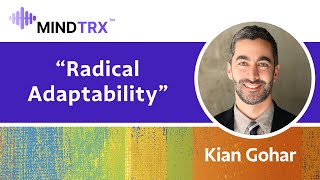
A recorded interview (MindTrax podcast) with futurist and author Kian Gohar about his book Competing in the New World of Work and the concept of "Radical Adaptability." Gohar argues the pandemic accelerated adoption of collaboration technologies and changed worker expectations, creating a new era of work. He and the host discuss seven characteristics teams need (co-elevation, agility, team resilience, foresight, constant reinvention, Lego-block workforce, purpose-driven), generational differences (Gen Z needs role models and in-person mentoring), the importance of foresight and storytelling to communicate early signals, and practical methods for shifting behaviors and leadership mindsets.
Chapters
One of the reasons that we think about the future in very fantastic ways is because we have wonderful writers who they use science fiction to dream about distant futures. Science fiction authors aren't concerned with reality. They're concerned with mapping impossible to know future worlds and how humans live in them. And so they use science fiction to tell stories, to help us visualize and feel what it would be like to live in this far off future. Maybe not that far off future, actually, maybe just around the corner. And so for somebody who has an insight and somebody who believes they're able to identify an early signal of change, the next step is really to learn how to communicate that in a way that others on the team can be on that same journey and so that they feel what the human element is like, what the human story is like, by living in a world that this change encapsulates.
Welcome to the Mindtracks podcast with breakthrough ideas to live your best life possible and how to make it happen. I'm Paul Shealy and today we will be talking with Kian Gohar. Kian Gohar is a best selling author, keynote speaker and futurist and inspires organizations to build exponential teams to thrive in a new world of work. He is the founder of Geo Lab, an innovation, research and and leadership development firm. His latest book is Competing in the New World of Work.
Hello, Kian, great to see you. Thanks for being a part of this podcast.
Great to see you again, Paul. Thank you for having me.
Yeah, you know, I just loved your new book. I really felt that this was timely. It's an amazing piece of research and as a researcher myself, I really fell into how wonderful it is for businesses to recognize that there are new opportunities. You talk about, you position this in a post pandemic world. So I'm wondering if you could define what you've come to know is a post pandemic world of work.
Well, that's a great question and thank you for that. I think we are at a new era of how we will be working going forward. And there are definite periods in human history where we have defined ending periods. And the pandemic was one where we had been developing a whole slew of new technologies that allow us to collaborate more effectively together over the last 10 years. But it was still being used just by a minority of people. And when the pandemic forced everybody to go into lockdown, managers and companies and organizations really were forced to adopt some of these new technologies because that's the only way that they could manage their teams remotely. And so when we first started doing our research, we wanted to better understand how were teams and leaders thinking about managing in a radically different kind of world, fully virtual world. And so we hosted a series of town halls over the course of several months with CFOs and CHROs and CEOs and CIOs and really trying to crowdsource in real time best practices of what they were doing for their own communities so that we can help others learn what works and what doesn't work. And so, you know, we thought very early on that this would only be like a two month project, but obviously, as we all know, this went on for two years and it went on for so long that people's habits changed and people started having different expectations of what work is and how they wanted to collaborate and how they wanted to live. And ultimately, while the health crisis has abated over the last couple years because of vaccines and general immunity, what we realize is that people don't want to go back to how they lived in the past. They don't want to go back to working the way they did. Rather, they are looking for workplaces and workflows and work rhythms that match their expectations of how they want to live and how they want to work. Because ultimately, the pandemic made us reassess all of our assumptions of how we want to live. I want to work, how we want to collaborate, how we want to communicate. And so we've come into really a new era of how people want to work. And oftentimes new eras are not clean and clearly definable for many years until we look backwards in history. But I'm a historian by training and I can very clearly pinpoint that this era has transformed how we think about human history and human collaboration and human communication. And that's why we call this the, the post pandemic era. And it is, it is very different of how people, their expectations are for, for the future.
I love the way that somebody at 3M characterized becoming more agile as teams. He said it's like doing rehab and we have to realize we can't go back to the way things are. And it was one of the key refrains in your book. It's not about going back to work, it's about going forward to work. And so the Going Forward to Work Institute really captured that essence. I think it was brilliant. I'm wondering how you saw the difference between older folks coming back to work and younger folks, say Gen Z, going forward into a workplace which was more dispersed, more diverse, more mobile, more virtual. What's the difference and how did the various groups respond?
Yeah, so, you know, I think the pandemic went on for so long and this way of working remotely and working virtually that it changed our habits. And we know from our research that it takes about six months to for individuals to develop new habits and really stick with them. We were working virtually in hybrid for two years. So people's expectations really developed new muscle memory of how we want to work. And so, for example, if you want to be an Olympic gymnast, you don't become a gymnast overnight or Olympic champion overnight. You keep practicing. And what we learned is that over two years of practicing these behaviors, some people got really good at them and some others didn't get as good at them. And when we had the opportunity to meet in person again as a result of the health crisis of eating, some types of demographics were much more prone to wanting to get together and some were more comfortable working in a remote environment. And ultimately, what we found in the pandemic is that collaboration isn't about where you work, but it's about how you work and how you show up to work and the kinds of tools and communication channels that you use to really become better at really getting to know your teammates in an effective situation. In terms of the challenges for some demographics versus others, it was actually a bit surprising. We found that actually, yes, you can assume that older workers who have 20, 30, 40 years of muscle memory of working a particular way wanted to go back to the office, if not full time, but on a mostly in person collaboration kind of way. And that's to be expected. But we also found that there were surprising reasons of why some younger Generation Z workers wanted to go back to the office. Across the entire demographic of ages, we found that millennials and Gen X, they had very comfortable attitudes with new digital tools and working collaboratively in a virtual environment. Whereas Gen Z, they were really the first generation that are completely digitally native. They were similarly transformed by the pandemic, like every generation, but they had a very different perspective on what they were looking for in terms of going forward to work. These are young adults who are under the age of 25, 26 roughly, so they only have a couple years of work experience. And most of them came into the workforce during the pandemic. And what was challenging for them was that they did not have the relationships in the office. They did not have the career network to really thrive in a world of fully virtual work. So for a lot of the younger generations of the workers, the common theme, or the common assumption is that they all want to work virtually and they don't want to go into the office. And while that is true, there's also a surprising factor in that they actually wanted to go into the office to be able to see role models of behavior in a work setting because they did not have a long history of how they thought work should be done. They didn't know what to expect. And so they were unencumbered by some of our assumptions of how we used to work. And so in this new era, while a lot of them are very digitally savvy and can do the work in a hybrid or virtual environment, they don't have the role models that they need in order to succeed in their career. So they actually want to go into the office to be able to see that kind of leadership. The second thing is that a lot of these younger Generation Z folks, they have physical environments at home where they work from home, where they might be living with, with family or they might be living with roommates. And so there's always a lot of distraction and noise. They don't really have a, a private space or private studio at home or office at home to be able to be focused. And so they actually want to go into the office to focus, to get away from the distractions that they have at the house. And so while they are very digitally native and very comfortable with this kind of remote and hybrid work, they still want to go into a physical space to collaborate, to see each other, to have peer to peer learning. And we found that research to be very surprising.
Yeah, I love this. It never really occurred to me how vital it is not just for an individual coming into work, to have good mentorship, to do well and succeed, but also for the mentors or the elders within an organization to be able to help to groom the next level of leadership. And we were seeing a cliff years ago of leadership that where are we going to be attracting our next level of leaders? So I'm wondering if the vacuum of leadership suddenly began sucking a lot harder in terms of the research that you did, and are we seeing ways to bridge some of those potential gaps?
Yeah, I think we have different expectations of what leadership should be. And obviously management is a science and an art that we've been studying for decades or even close to a century now. And there are different practices and there are different ways of really inspiring and retaining and leading people. I think one of the things that's very unique right now is that the pandemic really made us reassess our assumptions about what is important in life. And one of the things that we discovered in our research was people want to work for purposeful organizations and it's really important to them. Now that doesn't mean that every organization is a nonprofit or has a clear social good mission, but they want to connect the work that they do with a bigger mission, a bigger reason to go to the office or to do their work. I'll give you an example. There's a company called Indeed.com, which is a, a job search board. And they have a very clear purpose. And their purpose is we help people get jobs. And everybody at the company, from the CEO down all the way to the most junior individual, can recite to you this, this purpose that we help people get jobs. And so for people who are doing the work there, they're able to connect the bigger picture of why they do what they do with this mission. And I bring this up as an example because I younger generation, especially Gen Z folks, are incredibly purpose driven. And our research found that the vast majority of them are looking for workplaces that allow them to connect to higher purpose in some way. So for example, there was a research that came out from McKinsey earlier on that said that this generation, the vast majority of of them, 90% of them, said that having a culture of authenticity was the most important component for them in the workplace. And so what does that mean for them to be authentically themselves at work, to be able to express who they are, to be able to be fully included in the conversations, to be able to be allowed to share ideas and really thrive in ways that were different than, for example, previous generations when we thought that, well, you have to work your way up the ladder, you have to essentially put in your time. And the younger generation of Z folks really have a different perspective of that. And so when you think about leadership, people who are in positions of leadership, you know, typically I would say are, let's say in their mid-30s and higher. They have a particular mindset and assumptions of what leadership was. And that was very valid for a long time. But we've entered this new era of how people expect their bosses and their leaders to work. And so we need to similarly rethink how we do that. One of the things that was fascinating in our research was that.
Younger generation Z folks, they are not looking for a boss, they're looking for a coach. How do you think about if you are a manager, how you communicate, how you present yourself, how do you to come across as a coach rather than just a hierarchical boss? And so the research has also found that 70% of the employee engagement depends on your immediate supervisor. So it's not just the leadership of an organization like the CEO that sets a tone. Absolutely, that sets a tone, but it also all the way down the line for people who are direct line managers. How do you think about helping them develop the skills and also the communication perspectives to encourage them to understand why their employees want to work, that they want to work. And this is something that takes time that we're still getting better at.
Yeah. And the idea of making learning a central piece to what any manager leaders role is, I think is key. Remember an important line that you had from the book about putting that front and center.
To, to make sure that we're always really helping people become evangelists for learning, growing and adapting together. To me that was brilliant.
Because there is so much about human interaction. I'm sure you've seen this as your work as an historian of how in the workplace historically it has been a culture of journeymans and apprenticeships and so on. And while a lot of that guild kind of workplace has gone away, there's still a culture or a system in place that could allow for that to occur. So I would like to come off of this idea of being purpose driven because I really did see that as a key part of your, your book. But I also saw that as number seven in the list of the seven key elements. So I would like to just quickly highlight what those seven elements of radical adaptability is really about. Because to me the biggest message in the book was this, that this is the key to being able to be successful in forward thinking work environment organizations, being able to respond to whatever the next tsunami of change may be that's going to hit us. And I've often used that term, okay, here's a pandemic, that's just one tsunami. There's going to be more. And the description that you gave was that when we have.
These key ways of thinking, radical adaptability, then we're able to float above the turbulent waters and win the race. So very quickly. Co elevation, agility, team resilience, foresees change, seeks constant reinvention, Lego block workforce, and then finally purpose driven. I really love that we started there, but let's explore a couple of these if we could. Of of those seven, is there one of those that you tended to resonate most with in terms of the work that you had done coming into the research that you did?
Yeah, definitely. So we, and we interviewed over 2,000 executives from 300 companies across the world in our research. And we were able to pattern match the best behaviors and the practices which we whittled down to these seven characteristics. The first four, around team behaviors, and the last three are really around how do you optimize your organization to be radically adaptable? Of the first four, which are collaboration, agility, resilience, and foresight, the one that really resonated to me prior to coming into this research was foresight. So I'm simultaneously a trained historian and a trained futurist. I used to be an executive director at the XPRIZE and at Singularity University, where we would help organizations think about the future. And I think, you know, in order to be really successful in the present world work you're doing, you have to be able to look into the future to be better prepared for it. The whole concept of being radically adaptable means that instead of your. Instead of being reactive, you're being predictive and more proactive about planning for the future. And this idea of foresight, how do you learn to look around corners, to be able to see the early signals of change, is one that is really critical. And we found that a lot of organizations don't have this capability. They don't look for it in a methodical framework, whereas the ones that have really thrived have a consistent practice of foresight. And so for me, prior to this research, that was the area that I was really focused on to help organizations think about what's coming down the technology labs in the next two to five years, how that's going to impact culture, how that's going to impact society, how that's going to impact the industry, so that teams can be better prepared for it. And we found in our research that there are some companies who are really good at it. And we believe that every team can become better at foresight by identifying the initial variables that impact their immediate work and then having a consistent pattern for detecting changes in those variables and then assessing together as a team on a consistent basis. Well, is this variable something that has high impact and high likelihood in our work? And if so, then we should do something about it. So for me, foresight was an area that was really critical to planning for the future. But not a lot of teams were good at it, which is why one of the chapters of the book is how do you learn to foresee the future? Now, as a futurist, I can tell you that no one can perfectly predict the future, but we can better prepare for it. We can develop a muscle memory for being able to pattern match better and Seeing what might happen so that we can be better prepared.
Well, it's interesting to me that advocates of global climate change were ringing the bell decades ago, and they were lone voices in the woods. It's like people would deny it. Even to this day, there are people denying climate science. I had the opportunity to work with somebody at the Princeton Engineering Anomalies Research Laboratory, and one of the big parts of the work that they were doing there was the idea of technical remote viewing. Being able to see something at a distance, to be able to go into the future and bring technology from the future. There seemed to be some people through human history that had a particular gift for that kind of thing. But let's look at some of the ways that any individual right here and right now, could become a little bit better at seeing around the corner, seeing into the future. One of the great lines from C. Otto Sharmer's book on Theory U. It's the idea of being present to and leading from an emerging future. There's a part of us that has the ability to move beyond time and space. Obviously physically, emotionally and mentally. We really are locked into three, four dimensions. Three dimensions. Certainly the fourth dimension of time is an intriguing one because the human imagination can go into the past and it can go into the future. But very often what happens is.
When somebody has an intuitive hit about what may be, they start talking about it. It's difficult for them to get much traction with the idea because if somebody says, well, where do you get that? They don't want to say, well, I had a dream about it, I envisioned it in my mind. And yet very often these strong intuitive hits are early warning signals that can help us move forward. Good example. Ivan Meisner, colleague of yours and mine at bni, who was beating the drum to go virtual two years in advance of the pandemic. So when the pandemic hit, the pivot was almost instantaneous for him. We had been doing that at Learning Strategies for a number of years as well. So I finished my class in Amsterdam, came home two weeks later. I'm supposed to be teaching a class for a couple hundred people coming in from all over the world. Yeah, when I left Amsterdam, all the world airports slammed their doors shut. That was the end of it. So the pivot for us was pretty easy because we were already ready to deliver webinars, Web based training and development had one of the biggest attendance ever as a result of that. But you get the idea. What do you do when there is a lone voice that is seeing the future? How do you get teams and buy in for some of these early warning signals that may be getting perception?
Great question, Paul. And I would say that humans are psychological beings and being able to see something is not the same thing as believing it. And so those individuals who have the intuition and have the insight to understand or identify early signals of change, that is one skill set. The second skill set that is required is to communicate that effectively and to take people on a journey so that people believe and feel that this change is possible rather than. Than just thinking about it in their head. That is possible. One of the reasons that we think about the future in very fantastic ways is because we have wonderful writers like Margaret Atwood and others who are science fiction authors and who they use science fiction to dream about distant futures. Science fiction authors aren't concerned with reality. They're concerned with mapping impossible to know future worlds and how humans live in them. And so they use science fiction to tell stories and to draw us in, to, to help us visualize and, and feel what it would be like to live in this far off future, maybe not that far off future, actually maybe just around the corner. And so for somebody who has an insight and somebody who believe they're able to identify an early signal of change, the next step is really to learn how to communicate that in a way that others on the team can be on that same journey and so that they feel what the human element is like, what the human story is like, by living in a world that this change encapsulates. So, for example, if you had insights prior to the pandemic like Ivan did about going to a world that's fully virtual, the next step would be to have a team meeting and really think through what are the ramifications of that and how will people operate day to day, what would their feeling be like and being able to present themselves in a future world so that we can really start tapping into what that human story is like and using human centered design as a way of using a use case of an individual. For example, what would Ivan's work day be like if he's working fully, virtually and then describing that and then sharing that? And that is one way of helping people on a team to better understand how these changes may impact their daily lives. So the intuition and the identification, the detection of the change is important, and that's the first necessary ingredient, but it's not sufficient. The second part really is being able to tell a story and take your colleagues on this experience to better understand, well, how would, how would humans live in this future state, how would that impact us? And making that a very story driven component so that people can then identify with it in their heart and as opposed to just intellectually in their head.
I remember talking with Ivan Meisner about his vision for BNI and what everybody kept doing is folding their arms, shaking their head no. The BNI experience, business networking experience is a face to face experience. You know, it's the, the definition.
Of what it was was not the purpose of the organization. And so we have habits of expectation, ways of thinking and seeing leadership. For example, do you lead from in front, do you lead from behind? You know, are you the heroic leader or are you the servant leader? Or as our colleague Mark McCurgo talks about, are you a host leader which is bringing people together and then sometimes you're in front, sometimes you're behind. Or like the Gen Z that really want a, a coach. Well coaching is one part of the leadership model, right? At first you have to direct, then you coach, then you support, then you delegate. And so there are, there are situations, situational leadership that's required, that isn't just a one way, once and done, this is how you do it and it's going to remain that way for all time. So the essence of radical adaptability covers I think a lot of that kind of necessary flexibility in mind, flexibility of communication, getting teams together to break down barriers of siloed organizations. One of those high purpose steps that you talk about is teaming out, being able to reach out. And in this post pandemic world I've talked with some folks who are really pretty upset that they've, they've seen actually more siloing taking place than real collaboration as a result of the political nature of the organization. So I'm saying all this to lead into a question.
How you know, if somebody brings you in Kian into their organization to help them out, the people that are bringing you in are already thinking this way.
But then when you go in there are people that you're going to encounter that aren't thinking this way. And to a large extent it's about bringing them on board into a new way of being.
What do you do when someone's got their arms folded and they're shaking their head and they're holding on to images of the past in order to bring people into or, or go forward into work with these new mindsets, these new ways of being in teams and these new ways of being in an organization?
Yeah, that's a great question and I would say that again people are human Are, are psychology driven. And when you want to help people to change their behavior, you can't just speak to them intellectually about it. Obviously that is one way, based on research, to show how things change. But you can change behavior just by telling them that the behavior needs to change. And so the work we do at my company Geolab, we sit at the intersection of innovation and human capital and problem solving. And so we help leadership teams better understand how this future world of work looks like. We show them what that component is. And then what we do is actually we help them solve specific business problems for them through a framework that allows them to learn these new behaviors underneath the guise of solving a bigger business problem that they have. And so by doing so, people can start learning the new behaviors without it being spoon fed to them. And so they're trying to solve this business problem that they have, but in a different collaborative framework by working more asynchronously rather than being in person. So what does that mean, asynchronous work? It means doing some pre work or doing thinking in advance of a meeting, or doing it if you're not in the same physical room or if you're not even at the same physical or time zone. So how do you start engaging in collaborative documentation and workflows in an asynchronous manner? And so we, we lead teams through solving specific problems that they already have and using these new tools. And by doing so, they start learning the practice and the behavior. They start having these ahas internally saying, oh, I can do this more effectively this way. And so we, you know, you can't take a horse to the water and force them to drink it, but you can take him to the water and show them where the water is. And that's the kind of work that we do, is that we help teams understand what are the tools that they can use. We show them the different ways and the best practices and then we try to solve a particular problem with them. And by doing so, we sneak in these behavioral changes. And over the course of series of engagement, typically behavior change takes about six months. That's the kind of work that we do to really help thinking about how do you change that kind of behavior? And so there's always going to be resistors to change. This is how we are wired. Our amygdala is wired to resist change. And so we have to hack into that. We have to hack into a resistance to that by developing workflows and processes that circumnavigate and jiu jitsu, the Reflections of Change.
Nice. I love that.
I had the opportunity to look at the idea of how do we shift our mindsets globally to be able to transform the humanity so that we can have a sustainable future. I worked with Pachamama alliance with Lynn Twist's program called Awaken the Dream Change, Awaken the Dream or Change a Dream Symposium. And I studied a group that went through that. And a key piece of what transformation is isn't that they had a strong or profound experience in an event, but that they were able to do critical reflection and a lot of affective learning, emotional changing, questioning the assumptions that they had prior and realizing that now that they've seen they can't unsee it, they have to be able to integrate it somehow into their life. And that's. It's really a challenging bit of work that an individual does have to do. And if you have a supportive environment in which it can be done, I can easily see how your work could make a significant difference. I'd like to move to.
Wrapping up our session. There was a quotation I'd like to read. It said, we believe Radical Adaptability best describes what every company can and must do in the next 18 months to leap forward five years. Otherwise you'll be left behind in the dust by your competitors. In 2020, we accelerated change that was years in the planning, even though the pandemic was exhausting going forward, we believe you can thrive and win in the future if you use the research methodology offered by Radical Adaptability and do it in ways that strengthen your organization and not wear it out. The urgency of change is real. The challenge is how to maintain your energy and passion through change and not crumble from its strain and pace. I love this notion, Kian, that we are in a critical time of human history. We have ended an era where things have been easy to have a workplace in big siloed organizations and things are a bit more challenging. The practices that you have offered within the book I think are brilliant. There's a lot of support for anybody who's interested in making changes within their organizations that are right there and available. Beautiful recipes, processes, very powerful work. So thank you. Congratulations and thank you for the effort it took to write. I know that doing research and being able to produce a work like this is an easy. What would you leave for any individual to encourage or inspire us to really stay with it, to step up our work in the face of the urgent need that humanity has, that our organizations face, that are cultures are going through right now so that we can have the transformation that's being called for.
Yeah, that's a beautiful question. Thank you for that, Paul. I think because we've been able to assess, reassess every assumption we had during a very turbulent time in human history over the last couple of years of the pandemic that allowed us to see innovation in new ways and see where we might do things better from a business model perspective, from a team model perspective. And ultimately that's what spurred the inspiration to do this research and understand how the world was evolving and help communicate that so readers and other leaders can take these best practices and accelerate and amplify that in their work. And I think the opportunity really is for us to take some of these reinventions from the last couple of years. And our opportunity and our responsibility is to continue that reassessment on a consistent basis and not fall into a level of stasis and just comfort and progress really is another way of pushing yourself out of your comfort zone. And so what I would say to the, the, the listener, in terms of thinking about the future is that I think those who, who double down on getting rid of the myths and the assumptions that we had about how things work and radically reassess what new assumptions we need to create are the ones that are going to win in this future of work. And for leaders who are thinking about how to do that, I believe deeply that becoming radically adaptable the only way to thrive in the world of uncertainty. Because like you said, we're going to have a whole lot of other crises in the future that we don't just yet know about, but we still need to get prepared for.
Awesome. This idea that moving forward is to move away from a model of trying to predict and control the way things go. Here comes a tsunami. You can't really predict what the wave is going to do. You really can't control the wave. What we have to do is we have to sense and respond. And that gives us the ability to adapt, to gain feedback, and to do that as rapidly as possible is going to help us move forward. I just love this idea of being able to look around a corner, see into the future.
Begin to communicate that. In the dissertation that I wrote, once we have a glimpse of the future, the next thing we need to do is to be able to articulate what that is. So I believe that your book has done a nice job of articulating the best practices because you have glimpsed one final thought of.
Your best wish for humanity at this point, what would you wish for the human family going forward.
My best human wish for how we continue to live together is for us to put down our guard of what we assume about each other and actually listen and have conversations and try to understand different perspectives. Because I think we're living in the world in an era that's very polarizing and people have set assumptions about how others operate and how others live. And my wish is that I'll be able to transcend these assumptions of others so that we can really create new things and better understand that we're all on this human journey together and not in separate tribes.
Awesome. Thank you so much, Ken. What a treat for me to be able to be with you. Thank you so much.
Thank you so much, Paul, for having me. It's been my pleasure and honor.
I hope you enjoyed our conversation with Kian Gohar. You can learn more about Kian at Kian is that's K I A n dot I S and now in the second part of the podcast, it's just you and me. I'll tell you how to use the parallel sessions in the Mindtracks app to easily handle obstacles and move toward the success you want, especially as it relates to Kian's message. If you're new to the relaxing paralympical audio sessions, they use breakthrough technologies to activate your whole mind and in only 20 minutes, to help you improve in any area of your life. Let's get going.
Hello. Thanks for joining me. This is the follow on to my conversation with Kian Gohar, who published through Harvard Business Review Press. The New Work with Keith Frazzi, Competing in the New World of Work, How Radical Adaptability Separates the Best from the Rest. In the conversation, there are a number of key ideas that I loved. He said human beings are psychological beings. So I want to talk to you about how we can use our psychology to facilitate the process of change so that we can be radically adaptable whenever a tsunami of change comes into our lives, whatever it might be. And there are a number of things that could occur around career, around family, around health. There's so many different things. And then when you look at what's happening globally, yeah, we have to be able to not just cling to the past and hope we're going to get back to it, but to prepare ourselves for merging into a new future that's emerging in the moment. So I, I thought about our conversation and I really looked at four areas that seem to be relevant around our psychology as not only agents of change, but also as humans going through the process of change. There's dealing with the overwhelming Nature of change. There's developing a powerful mindset to be able to facilitate change. There's the ability to communicate and collaborate to enhance problem solving. As Kian and I discussed. Very often we're in settings where we have insight to a change that needs to take place, but we need to be able to communicate it effectively with others. And then finally the ability to envision the future as he described it, seeing around the corner of what's coming. So let's look at how you could use paraliminal technology to facilitate your life in the area of dealing with the overwhelming nature of change that.
From time to time we'll catch a soft guard. Certainly when a powerful shift has occurred, recover and re energize is excellent because it does require adaption energy from our bodies to deal with a significant amount of shift that may have just occurred. Second is self love, where you can take your past self and you can take your future self and get them together to with your present self to really look at, hey, this is what's happening. It's happening for my best interest. In other words, it's not happening to me, it's happening for me. How can I be most effective in dealing with it? Self love, paralympical, super powerful, Overcoming overwhelm and fearlessness. Anxiety free. All three of those are very helpful in dealing with as we look at what may be coming, in dealing with change that's occurred or it's been foisted upon us. All very helpful. Anxiety free is neat because what it does, it helps us go to the future, see that we are going to be resourced sufficiently to handle it. So let's go into it with a sense of peace, knowing that we have access to the resources within us to handle whatever may be coming. And the final one in this area is youthful vitality. It's the ability to maintain a mindset that's going to help me adapt to whatever is happening. And that leads me into this next issue which is developing a powerful mindset to facilitate change. When we look at my internal world, youthful vitality is going to be particularly helpful because I'm looking at the characteristics within me that are going to help me adapt or grow with into whatever is emerging.
In addition, what's going to be quite powerful is, as Kian described, that being able to change our mental model or our images of how the world is supposed to be and start to adapt to the new world that's emerging in the moment. And that's where the belief paralliminal is quite helpful because we look at A belief that's now going on in our lives that's holding us back and how we can adopt a new belief that's going to help us move forward in that Also the idea of breaking the habit parallel when we I mentioned that someone in 3M looked at being an agile organization requires that we're doing rehab, rehabilitating ourselves and our mindsets from an old way of doing things to a new way where we don't get to go back. We need to go forward. And that's what going forward to work was messaging in the book.
So that's break the habit is a very powerful way to think. Also miracle mindset. Being able to actually create miracles going forward, knowing that no matter how dark and foreboding the current circumstances may be, we can choose how we're going to live into tomorrow. Miracle mindset. And then I have four what I call the Generator series. Paralyminals, New Behavior Generator, New History Generator, New Action Generator and New Option Generator. And each one of these are going to help you develop what's necessary to move into the change that you're heading into. Very powerful stuff.
Also the paralympical called finding yourself because it deals with you finding your true purpose going forward. And one of the things that Kian had so aptly described is this idea that many of us are purpose driven. We want to work for companies that have a strong purpose. I want to wake up each day with a purpose for how today is going to go. And that purpose driven mindset is one of the key components to being a radically adaptive individual.
Looking at this next area of communicating and collaborating to enhance our problem solving, especially once we've gotten some kind of insight or once we're gathered with the team and we're facing a significant need to shift and to shift now. Active listening quite powerful because we're going to be able to not try to run over a good idea that somebody else is presenting, but we're going to be able to patiently be there, focused and listening to what's emerging in the lives of others so that we can then merge with them into what's trying to emerge for our organizations and our teams. Creativity supercharger. Very helpful when we've got to face a difficult challenge ahead, knowing that there's always an option way around, way under, way over something. We're going to find a way, even when it seems to be no way. Personal genius. When you have to learn.
How to live into this next iteration, this new era of how life is going to go forward. We can't Go back. So this personal genius is self esteem as a learner. Knowing that there is genius within you and access and gaining access to those genius level beyond genius level capabilities are helpful anytime that we're initiating a significant shift in our own lives or in the lives of our teammates.
Another one is in area of communication is positive relations. There's two parts to positive relationships. Part one, Session A is really about dealing with interpersonal conflict and session B is really how to attract to us. A supportive and loving relationships are going to help us move things. Teamwork is a key piece of this. Kian mentioned the idea that many going into work aren't, aren't looking just to have a boss to tell them what to do, but a coach that will allow a person to learn what's necessary to be able to adapt and grow forward in the work that they're doing. Positive relationships is a great one because you're going to attract those supportive relationships that will help you do that. And the final one in this area is talking to win. When you do need to make a presentation and be effective in representing an idea for others to be able to grasp. Talking to win super super powerful. And the final of the four areas is the idea of envisioning the future. As I mentioned during my dialogue with Kian, there are ways for us to use our inner mind to transcend time and space. To be able to see into a future that's attempting to emerge. Auto Sharma referred to it as something called presencing. Making our lives a landing strip for the emerging future to show up in and to be able to not only receive the information but then to be able to act upon it. To be able to prototype a future that's trying to emerge. So a number of paralimals can help us do that. Intuition amplifier is a great one. Self actualization. We're really transcending the limitations of the past. Fresh start. Which is to say that this day is a new day in which something else can emerge that's going to be beneficial. Finding treasures to be able to locate resources that are all around us. But we might be blind to them because of the way that we've been operating. Finding treasure super super strong and success built to last. Which is to say whatever it is that we're prototyping and as a new future to head forward. Success built to last says we're going to get very good at doing what it is that's needed at this moment. And another one that really helps us understand the big picture of the way the flow of things as old systems pass and new systems come into being. Soul of Money with Lynn Twist Very powerful Paralympical to really get you connected to what it is that's trying to emerge and flow through you as you so those are the four areas. That's a group of paralyminals that could really help in each of these areas. I hope you get a chance to read Kian's book.
Bestseller on the Wall street business. And you know, it's it's great research. I always love reading people who have created laboratories to really get best practices and then to be skilled writers to be able to communicate that. I think the book is very much worth reading. If you enjoyed my conversation with Kian, recommend that you check it out and do even more with it. That's it for now. Peace and blessings.
Thank you for joining me today. I applaud your willingness to maximize your potential. You can easily use the parallel audio sessions in the Mind Tracks app to stimulate your non conscious mind, that is Your inner mind, to reduce any resistance in your life and to propel you toward the success you want. Visit mindtrax.com to learn more. These amazing audio tools have helped millions and I encourage you to bring them into your world today. Be sure to be back for more episodes of the mindtrax podcast. You'll find insightful conversations with authors, experts and thought leaders all devoted to improving your life's experience. Thank you again for being here on our MindTrax podcast.
Sa.










