Murtaza Hameer – Learning How to Learn
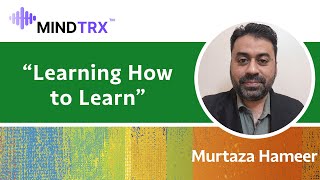
Dr. Murtaza Hameer describes his journey from struggling in math to topping his national exams in Tanzania in 1997, crediting a tutor named Mr. Jacob. He shares practical study methods like the Feynman technique and mind maps, plus how sleep, nutrition, and meditation shape learning.
Questions this video answers
1997
Arusha
Amazon.com
About 45 pages
About 8–9 hours at a stretch
Chapters
The other thing that I find very helpful is I remember remind myself of the things that I was able to accomplish. So everybody at one time must have had moments of successes. So even if they consider or they deem to be small, and those moments are the ones that will give you confidence that you know, yes, you may, okay, you are struggling with this particular thing, but you can do that. You did do this, you did do that. And just moment of also gratefulness. I've realized and these are also spiritual teachings. I always tell you to be grateful. I've experienced that when I'm, when I'm grateful of my blessings and I focus on that just mentally or when I'm meditating. I also talk about meditation in the book and its importance then that that allows me to appreciate what I already do have and then work forward to what I want to achieve.
Welcome to the mindtrax podcast with breakthrough ideas to live your best life possible and how to make it happen. I'm Paul Shealy and today we'll be talking with Murtaza Hamir. Dr. Murtaza Hemere is a medical doctor turned teacher and now author of Learning how to Learn, Doing well in School, College and Beyond. Murtaza attended medical school in India and completed licensing exams in the United States. He further pursued a postgraduate diploma in education and has taught both at the high school and college levels. Murtaza is passionate about teaching a subject certainly near and dear to my heart.
Doctor Hamir, thank you so much for being a part of this podcast.
Thank you, Dr. Shili. It's truly an honor to be here.
Well, it's exciting for me that you've written a book on learning how to learn that's near and dear to my heart. It's something that I've been interested in and have taught around the world. So your book, I think, is very relevant. I'm really glad that you put it out and I would like to have you tell your story a little bit about. It was a great story at the beginning of your book of how you were failing at mathematics, but there was a teacher that lit a spark within you. Would you share that with our listener?
Sure, sure. I would love to do that. So as I narrated in the first chapter of the book, I recall up till first third grade, things were going pretty nice. And then I started struggling in mathematics and also in other subjects. So by the time I finished primary school or middle school, I truly thought that I did not have it in me to go further in education in terms of being successful. But as Providence or Coincidence would have it, my late father was able to afford me a tutor. And this gentleman by the name of. I abbreviate him as JN his name is Jacob. I have not met him in decades. I don't know where he is right now. But Mr. Jacob really, really made me understand math. And he was just a phenomenal teacher, extremely patient. And those aha moments just kept on coming and my confidence kept on building. And so as I narrated in the book, during my period before I started high school, I basically, he had me fill in all the knowledge gaps that I needed to have filled. And as a result of that, my first test in high school, first year was my first ever aid in mathematics. And that just made me realize that I did have brains after all. And that was the beginning of my journey.
Well, I want to emphasize something. It's very important what you're saying. Murtaza. It's this idea that people discount themselves because of failures. And our past really doesn't determine our future. But many people won't step into the future because of their past. Could you say something about this idea of don't count yourself out? Like, how can you say, yeah, I can do it if you've never had success of doing something?
Yeah, it can be quite hard. I mean, if I had not had that experience with, with the teacher Mr. Jacob, I. We don't know what would have happened. But as I gained my confidence, I still did even struggle in the sense that, like, you know, for example, I was good in math and physics. I still found chemistry and biology a little bit more difficult. I scored Bs in biology and A's in math and physics. And I learned that as I went along, there were still hurdles that I needed to overcome, things I needed to learn. By that time, again, I had not really conceptualized that, you know, that there's a whole different. Those are all various domains of learning, hence the title of my book, Learning how to Learn. I was. The journey of learning how to learn was, was, was in its early stages. And that's why, you know, but, but the confidence, I believe, comes gradually. So I think when you, when you, when you gain a little bit of success and we can, you know, to focus on that, then that pushes you forward a little bit more further. So it's, it is a gradual process.
Yeah, I think there's a good distinction here in what you're saying. It's this idea that we don't have competence yet, so why should we be confident? But our confidence to at least give it a Try to at least believe that it's possible. Sometimes we need to rely on someone like Mr. Jacob to say, you know, be patient with yourself. You can do this. Just give it a try. And it's these small steps that then build confidence that you could take a slightly bigger step.
Exactly, sir, exactly.
Now, I talked with Dr. Rita Schmilkstein, who had written a book called Natural Learning. And she said, for anything we're trying to learn, there are six stages that we have to go through. And, and if you extend into the next stage but fail at that, it's okay, go back a step.
Rebuild your confidence and your competence at that stage, and then take this next step. Now, this really is the essence of learning how to learn. Most people think, well, here's a subject, go learn it. But what you and I both know is, yeah, you've got to learn how to learn. And a subject like history is different than chemistry, is different than math. And the problem that most people have is when they fail at something, they just say, well, I'm no good at math. I just don't get history, or I'm lousy at English, I'm no good at. And that discounting then prevents further trials. How do you recommend that a person gets enough confidence to at least give another try?
So one of the things that I, when I wrote my book and I talked about my own story was I really believe in case studies and stories that are proofs in themselves that things are possible. So that's why I decided to close my story. Let me elaborate a bit on my math journey. Because after I started doing well in math and not only did I keep on getting A's, I and I finished high school with, with very good grades. And I, I think, I believe just before the end of the, the national exams of the country in Tanzania, that was in 1997, I, I, I topped math in my school and then I went on to university to do advanced calculus, differential equations, and, you know, again getting A's and B's. So till today, though, I need to rekindle my math again. But I love the subject. And so a story like mine.
Says that it's possible because after I went into medical school, it was a different set of learning skills that I had yet to develop. So, for example, I was very good in solving mathematics and equations, but I didn't know how to read textbooks. And that's when after first two years of medical school, that was quite challenging for me because I didn't know how to read textbooks. And I came, I was Looking for resources online and I came across a book known as Photo Reading by Paul Shealy. And I asked my late father at the time to buy me. And he was a wonderful man. He always supported us in whatever we wanted to do, God bless his soul. And he got me the book and that book, literally, literally. It sounded too to be true at first. And I said, you know, let me just give it a shot. And I finished medical school with first class grades and I became a doctor.
Okay, that's so cool. I just wanted to say how wonderful for us to meet after all these years, knowing that way back then a resource like photo reading could make such a difference. Thank you for sharing that.
Thank you, sir.
It's wonderful. And you know, it's an interesting thing. We're handed a textbook and we're told, here, read this and learn the subject. But they don't teach us how to read the textbook. I noticed when I was in biological sciences, I had to do organic chemistry, and it's not my favorite subject. And I would read for hours and finally get through the chapter and then I'd do the problems. And when I started doing them, I was all into it. I was excited, I was working at figuring it out. I loved it, but the reading was a drudgery. If I had only had food reading back at that time, it would have made a world of difference because I didn't actually have to memorize every word in every chapter. Working on the problems are actually, as you know, an activation of the material. But this gets us back to an important idea. It's a concept that we love to learn. We're born natural learners. But as Einstein said, the biggest challenge to learning was going to school, right? It's rigid, it's competitive, it forces you to do it on your own, and so on. And from my understanding of medical training and I've worked with a lot of medical students, medical school is the worst of the worst. How did you survive?
You mean medical school? Yeah, it was, it was. In medical school, you have to know yourself and you have to know how much time you need to put into the studying. And for the most part, you need to be studying every day. And here's the thing, though, when you learn how to learn. So again, there's a huge term, it involves several aspects, but when I learned how to read textbooks, they were a joy, they were fun. I started enjoying them. So the steps that you describe in photo reading, you know.
Just, I, I used to love doing it, and so that, that propelled me forward. So. And as as, as my grades, you know, kept on improving, improving and doing all that was further positive reinforcement. I need to keep on doing, and this thing is working. And they said that the, the, the, the, the, the proof is in eating the pudding. And so I ate the pudding, and that was enough for me.
That's great. And you talked about the importance of mind mapping. I remember going to university and I would get out these sheets of paper and I would start my mind maps, and maybe by the end of the lecture, I would have four, five pages of mind maps, and I would condense all of those into one. So I had a perfect review of everything that was considered important by the professor. It was an instant way for me to study when it came time for the test. Now, those sorts of techniques, yes, they're taught in photo reading, but the other thing that's really important about that, Tony Bazan, who developed it, was also an expert in accelerated learning. We met, and he invited me to share mind mapping in the photo reading book. And people all over the world are using that as an important breakthrough technology. The idea behind it is learning to use the whole mind. And these are some of the important principles that you talk about in your book. That's learning as a whole person, and your sleep, your nutrition, and all of that makes a difference. Would you talk a little bit about some of the key things that people need to know about themselves when they head into a new subject that's important for them to study?
So basically, when, again, when they're encountering a new subject, they, they should, you know, that's why I listed those about 16 or 17 principles or methodologies. And the first things you do is basically that sense of wonder and curiosity and, you know, things like activating your mind, you know, trying to, before you read something, see what you know about it. Because, you know, I think it was Socrates who said that education is not the filling of a vessel, but the. But the kindling of a flame or of the mind, you know, so basically, I think, well, one of the first things is the sense of. I think he also said the sense of wonder is the beginning of all philosophy, to paraphrase his words. So that curiosity, that interest, that sense of wonder is a good first step to start as you're studying anything. At the same time, this is when you need the tools. So basically, one of the things I mentioned in the book is the Feynman technique, named after the late Richard Feynman, the American physicist, who is known as a genius basically, among the physicists, but he's remembered as an educator. And basically Feynman's technique was all about being able to understand things and simplifying them that you could explain to an 8 year old. And if you can't do that, then you need to go back and learn it some more until you can do that. And those are one of the things that is very important. Another thing which I included in the book, and I didn't know this until I did my postgraduate in education because I did go for medicine for medical school and then ultimately I went into education to my prosecutor in education is what's known as Bloom's Taxonomy. And I wish that if I think if more students knew about Bloom's Taxonomy, it'll help guide them in their learning. Because as you know, in Bloom's Taxonomy you have the remembering and then you have understanding and then you have applying and then you have, you know, analyzing and then evaluating and synthesizing. And usually most curriculum people think learning is just remembering, but then the next step is to understand and then to apply. And there was again, there was one of the things that I encountered when I after I finished medical school and I went to the United States and I did start preparing for the United States medical licensing examinations.
There was a whole new set of challenges that I encountered. Even though I was already a doctor, I know medicine, and yet when it came to doing those practice exams, I wasn't performing. And I was like, where am I going wrong? And it took me some time until I figured it out that it's not just remembering, it's understanding and it's now applying. Now the American medical examination is all about application in different scenarios, in different clinical settings. So there was that element that did now it was another aha moment for me though there were difficult moments, you know, was hard work, but I did it. Eventually I did it. And there's also the aspect of the stamina. You know, in medical school, in India, in most exams, even in Tanzania, you can have paper for about two to three hours and a clinical examination. But in the United states in the USMLE's, you would sit in front of a computer for eight to nine hours at a stretch doing clinical case questions. It's all about applying. So those mental endurance, stamina. And again through that process of difficulty that I went through, there was refinement and there was self understanding. And so my journey in learning how to learn was a process. And, and then that's why once I became a teacher and I went into teaching A level biology and A level meaning the it's a British system of advanced high school level, which is like the American level of first year of college and also high schoolers in biology. I realized that it was time for me to write a book. And I always wanted to write a book. And so I was. I am very passionate about learning. My own journey and experiences shaped me. And I put pen to paper, I should rather say my fingers on the keyboard or I think I use my smartphone. Believe it or not, I wrote my book. I used to travel two hours to work and I wrote my book on my smartphone on Microsoft Word and then transferred it on the computer. So I had the skeleton for about two weeks done and then I let it go. And then about a year's time I said, I have to do this. It got finalized and it was first published on Amazon. So it's been a journey. And I've realized also in Tanzania, where I'm from.
A lot of students. Because when I did my dissertation in my postgraduate diploma in education, it was about my work or my research was on the study methods by high performing students. It was a qualitative study to see what methods they used. So I interviewed a bunch of them and I analyzed what methods they used. And in that process I learned those they knew a lot of different methods. One of them knew was learning by teaching others, for example. So the whole process has been very, very personal to me. And I realized that many students who struggle, it's not because they're not smart. It's because they don't know how to study, they don't know how to learn, they don't know the different techniques that perhaps in western countries like mind maps. I mean, I remember asking my students in Zanzibar in college how many of her had heard of mind maps. There are probably about 50 students in the hall, if I remember, maybe even more. And only one, the only one wants to raise their hand. While if you go to university in the United States, pretty much everybody knows what a mind map is.
So by me publishing the book on Amazon, I then after a few months decided to publish it in Tanzania and to make it extremely affordable, extremely affordable, so I can reach out to as many students as possible. So I'm trying to get the word out there. It is my hope that if it even helps a few students, which I'm confident it will, it will have served this purpose.
Good. And congratulations on your many accomplishments in the publishing of your book. It's wonderful. I would like to talk a little bit about what I will call the wounded learner. Because what I Notice is a lot of the teachers who go into teaching alternative forms of education like, like accelerated learning, Waldorf schools, the Steiner method, and others, they're trying to prevent the kinds of negative experiences that they might have had in their lives as students. But there's something else going on as well. There's a healing work that needs to occur within us. And so as we're speaking to adults who are interested in perhaps advancing themselves in their careers, they're not going in the classrooms necessarily, but they're interested in professional and personal growth and development. And they reach plateaus or thresholds where they've never gone before. When they think about the unknown ahead, they reference the past.
But I failed at this sort of.
Thing in the past. I'm just no good at this sort of thing.
What do you offer as a way of helping to heal some of those early traumas that people tend to have around learning in a traditional educational setting?
Yeah. Yeah. That definitely can be quite challenging to overcome. One of the things in my own journey that I learned, I read a book by the clinical psychologist Jordan Peterson, 12 Rules for Life. And in one of the rules he mentions, compare yourself to who you are yesterday and not who somebody else is today. I really love that rule because everybody is different. Everybody has their own experiences. Everybody has their own potential. And your experiences are different from mine. They're different from the guy next door. And so when you compare your progress with yourself, who you are yesterday, and you see that you're making incremental steps and improvement, then that's enough confidence to allow you to go further even more. The other thing that I find very helpful is I remind myself of the things that I was able to accomplish. So everybody at one time must have had moments of successes. So even if they considered or they deemed small to be small, and those moments are the ones that will give you confidence that you know, yes, you may, okay, you are struggling with this particular thing, but you can do that. You did do this, you did do that. And just moment of also gratefulness, I've realized. And these are also spiritual teachings that always tell you to be grateful. I've experienced that when I'm. When I'm grateful of my blessings and I focus on that.
Just mentally or when I'm. When I'm meditating. I also talk about meditation in the book and its importance, then that. That allows me to appreciate what I already do have and then work forward to what I. What I want to achieve. What's important, though, and the message in my book is, is by by showing those different strategies that can be tested out. I made my book very small, about 45 pages, because it's, it's a how to book. And I want somebody to read it in the afternoon and then start applying. And once they, presumably college and university students and high school students, but technically that book is for anybody who wants to improve their, their learning. And, and so basically, it's something that once you have the tools and you test them out, then you see what works for you, what doesn't, and you tailor it according, according to that. And I do believe that once the confidence keeps on coming, then it becomes just a continuous positive feedback loop that pushes you further and further and further into what you want to achieve. There will be moments, for example, whereby you will ever stop, you know, so, for example, I love learning languages. And so, you know, growing up, I, I, I, I learned speaking English, Gujarati, and Kiswahili, and then I learned Hindi from, from, from the movies. But I, I love Arabic and Spanish, so I speak basic Arabic and basic Spanish, but sometimes I play too. So even in my studies, I'm like, okay, I'm not getting anywhere. So then, you know, you take a break. And then, you know, the passion comes again and you meet somebody and I make grammatical errors, but I still keep on going. And while I haven't perfected basic Spanish and basic Arabic, Arabic and Spanish, I do speak them at a basic level. If you throw me in the deserts of Arabia, I should be able to survive.
That's wonderful. I've met a lawyer in Mexico City, where I was doing some business with him, and he spoke seven languages fluently. And he actually is originally a Spanish speaker. He learned English. He did his doctorate in France at the University of Paris. And he said, now that I'm turning 50 years old, I'm going to go give myself a challenge. It's either going to be Chinese or Russian. So a completely different Alphabet than anything else he learned. I really want to support what you're saying, especially to our listener, because it's good for your neural development. Whether you learn music or whether you learn a language. It's important to be able to challenge yourself to the point of frustration or tears, because that's when you're building your neural network.
So back to this idea of the wounded learner. I'd like to share a quick story. There was a doctor of psychology that came to see me. She was sitting for her exams at the state boards and she had failed twice. And so she sought me out to see if I could help her Pass the exams. I asked her, now, have you done all the studying? And she said, yes, but when I go into a test, I just choke. I don't know what's going on. So I asked her, when you read a question, what happens in your mind when you read one that you know.
And when you read one that you don't know the answer to? Well, turned out, she said, when she reads it and she knows what the.
Answer is, she hears a voice in.
Her head that says, oh, you know that. And she proceeds in a very relaxed way. And when she reads something that she doesn't know, she immediately begins to castigate herself. Oh, you should know that. You studied that. What's wrong with you? So what I did, I was face to face with her. I said, what color is your sweater? She said, mauve. I said, what color is your hair?
It's a brunette brown. She literally couldn't speak. It was very interesting that just the change of the tone of my voice, or in her case, the change of her internal dialogue was what put her in a state of total unresourcefulness. So I asked her, when you hear that voice that causes you to become unresourceful, whose voice is that? She said, oh, it's my mother's voice, who was really tough on her, but also helped her to succeed. Right. I feel there is an idea inherent in your work. It's about being patient and kind. When you try something that doesn't work, it's okay. Would you say that that's the kind of encouragement that you're trying to give?
Yes, yes, indeed, indeed. And that it's. It's a process. And see the, the methodologies that I, that I described are. Again, these are not. I not come up with them. These have been accumulated with data and research and personal experiences. And basically they work. And once people test them out, they will work. They just have to be patient with themselves. And, you know, as you talk about, you know, brain, you know, the neuronal wiring occurring, you know, all concept of neuroplasticity and learning occurs, even at the level of the brain and the level of the mind. It's a process as the confidence as they get those aha moments and they'll start performing. Yes, definitely. They just be patient with themselves and kind and take care of themselves. I also mentioned something about being relaxed when you are learning. And you did mention this in your photo reading book about. I love the term you had used, relaxed alertness, if I recall correct, that you want to be relaxed. And it's Also got to do with the brain waves. Yeah, that you're relaxed and you're calm and therefore you. You can focus and then you can study. And that makes learning also, also quite fun. Yes. We all need a little bit of stress to push us so we don't become complacent. But there has to be still under the umbrella of being calm and composed. And so my approach to learning has been through my own journey is a holistic one. And therefore you need to take care of your mind, your body and your soul. And the three go together.
Yeah, it's impossible to divorce any one of those. And there is an ideal state for the brain that's between boredom and anxiety. Being in a state of relaxed alertness with increasing levels of demand is an important part of growth. And that is what we want to produce in order to help ourselves grow effectively. In the photo reading book, I describe cycles. One of them is called the stuck state and the other is called the growth cycle. It starts with whatever you're now doing isn't working and whatever you try doesn't seem to make a difference. Now when that's occurring, there's one of two ways that you can go. One is to go to certainty that this should work, I should be able to do this. What's wrong with me? And that leads to frustration, it leads to helplessness, and eventually a person has to quit.
The other cycle is being able to go into confusion. It's being willing to go into the sense of not knowing, to be in a beginner's mind that it's okay to not know yet. That's why I'm learning it. And so as a result of that, we engage in positive learning behaviors. And it's that, as you said, it's curiosity driving positive learning behaviors. That's what's going to lead us to excellence. If whatever you're learning or trying to learn right now isn't working, be willing to be confused, be willing to not know, willing to get curious. That is such a powerful state that that moves us into the positive learning behaviors and any one of those that you offer in your book. Positive behaviors could be the difference that would help someone make a significant shift. When you talk about achieving excellence, what do you think the real goal is of learning? And you say, why school? It's a chapter in your book. But what is the real purpose of being a lifelong learner?
I think.
For me at least, I mean, it's, it's, it's ultimately it's, it's a journey of self discovery and of, of bringing what's within into reality. I, I believe we're all here for a purpose and we're all here to fulfill our destinies. And it, it doesn't matter what one's religion is or if they have no religion or they're just spiritual. But I, I, I, I, or not, I, I believe we all, we all have a calling. And so the whole concept of lifelong learning is about what is it that you can do? Are there any limits? You know, I mean, what are you capable of? I mean, if you look at your own life.
We have those developmental milestones as babies and we, we learn how to cross turn and then sit and then crawl and then walk. And if we reflect on our own individual as we see our growth, if we can observe our growth, we see we have come so far, what else is possible and so is our potential. Limitless, like the movie Limitless in which Bradley Cooper acted in it. And I believe there's a book by Jim Quick called Limitless which I haven't read, but I've, I've seen synopsis of the book on YouTube. Is the brain Limitless? I mean, the number of neural combinations is mind boggling. And who knows? So the whole purpose of lifelong learning for me is to see what I can become and it makes life meaningful and beautiful. And in the chapter of my book of why School? While people I did mention make a case for schooling, not the kind of schooling that Einstein went through, but the kind of schooling that we have evolved at present. And I, while I believe there are other alternatives, ways to learning, I still, still do believe that the, the schooling system that we do have can allow, it should allow people or children in young minds to discover their creativity and their potentiality and ultimately actualize them into reality.
Excellent, excellent. I, I love that. And there's a philosopher, Karl Popper, who said the mind isn't an empty vessel that's intended to be filled up by knowledge of the world. We come preloaded with genius and what mind is. It's a searchlight to help reveal that true genius. And I think that's what learning does. I also agree with you in the Socratic method. It's about drawing forth, not stuffing into. And very often people get it wrong after having an experience at school. They think that success as a learner is being able to regurgitate what's been stuffed into them. And it doesn't work for everybody. There are a lot of people who don't succeed in school.
I spoke with a participant in one of my courses and he said, paul, you know, I was failing high school. I was either going to quit or I was going to punch a teacher out. And a counselor came up to me and said, you should go to college. He looked at the counselor and said, college? I haven't passed a single course in high school, why would I go to college? And he said, high school isn't for everybody, but when you go to college, tell them you must be tested orally, not paper and pencil. Well, he went to college, went to university, he went to medical school, he went to postgraduate courses, and in every one of them, he graduated either at the top one or two of his class and ended up working for 20 years with a World Health Organization, traveling all over the world. He said, had that counselor not seen the potential in me, would have been a very different story for my life. Now you and I can look at anybody here and say, you have the potential. We know, we know that through our own life experience. What do you recommend to someone who doesn't see that potential to become more in touch with their true purpose and, and the real potential that is within them.
But I believe that, well, a couple of ways. One is, obviously, I truly believe in calming the mind and going inwards. So self reflection.
Meditation, being present along coupled with experimentation, going with what you love. The Persian poet, mystic Jalaluddin Rumi said, is quoted to have said that, saying, let the beauty of what you love be what you do. There are a thousand ways to kneel and kiss the earth and find what you love. When you find what you love, you will excel in it. Yes, there will be challenges, there will be difficult moments, but because you love doing it, it will push you forward. And through that process, you will fulfill your destiny. I like what Einstein said. Einstein, I believe it was him who said that everyone is a genius, but if you ask a fish to ride a bicycle, that's an impossibility. And so while I do believe that you need to, for example, if you want to be a doctor, you need to go to medical school, you need to get the right training. But then again also, as we know, and as you well know, sir, is that there are different levels of intelligence, different types of intelligences, the different kinds of intelligences. So I think once we are open to discovering ourselves of what our passion, where our passion lies, I believe that will set forth the fuel and the energy that's needed and we will find out what we are supposed to do. And so you're right. Yes, there are people who, they may not do well in school, but they will do very well outside. They may become excellent business people or entrepreneurs or artists. And I do believe schooling should nurture that, and good schools tend to do that. In addition to the academics, you also have extracurricular activities, whether it's painting, drawing, music, public speaking.
Currently, I'm a head of a high school in Arusha, and I, you know, we, we have our students working on business plans and their ideas. And I, you know, and we, we're going to be presenting that sometime next week. And basically we had over 100 students who were taking part in about 17 groups. And I heard their ideas and these were like, you would see some students otherwise in class, they're, you know, not really paying attention, but as they're speaking, you're like, wow, these are very smart boys and girls here, you know, so and so. So intelligence is very multifaceted, multidimensional. We just have to figure it out.
Wonderful. If you want to know how to fix a school, ask the students, because they do know. It's really wonderful. I have a friend, a colleague, who created me university. So when someone is going to university, by the time they finish their four years, they will have a business that will employ them. They have created a business that will employ them when they leave school. I mean, it's just beautiful. So many innovations and to the point of the idea of nurturing or encouraging the true genius that's within us. That's what you and I are here for us, is why we're sharing this podcast. Thank you so much for being a part of this. And Dr. Hemer, if you could give one final word of encouragement as we finish, what would that be?
Don't give up. Enjoy the learning process. And learning should always be fun. If it's not fun, you're not learning. Remember that. Just learning should be fun.
All fun is learning and all learning is fun. That's beautiful.
Amen to that.
Thank you so much.
Thank you. Dr. Shili was honor being here. Thank you, sir.
For me as well. Bye for now.
I hope you enjoyed our conversation with Murtaza Hamir. You can find Murtaza's book Learning how to learn on Amazon.com and now in the second part of the podcast, it's just you and me. I'll tell you how to use the paralyminal sessions in the MindTrax app to easily handle obstacles and move toward the success you want, especially as it relates to our discussion with Murtaza. If you're new to the relaxing paralympical audio sessions, they use breakthrough technologies to Activate your whole mind in only 20 minutes to help improve any area of your life. Let's get going.
Welcome to the Follow on to my conversation with Dr. Murtazah Amir in his book Learning to Learn. Learning how to Learn. I love this subject and obviously I could have gone on with lots of stories. I believe that helping teachers learn these kinds of principles that have made such a difference in Dr. Amir's life would be great for everybody on the planet. I loved his story about feeling like in third grade he was done as a learner and ending up getting A level grades in mathematics, becoming a physicist, studying medicine, becoming a PhD in education. I mean, it's. It's a great story of a tremendous arc of one human being's life and his absolute knowing that anyone can do what he did. So I do hope that you're able to take to heart some of the important ideas that he shared.
To help you consider breaking through in any areas that you might have identified as difficult as areas for you. I have some suggestions for areas to think about in terms of the use of paralimal technology and developing greater capability and expression of your true potential. Within the four areas that I'm looking at is, number one, maintaining ideal states of learning so that whatever it is you're up against you, you can enter a state and be most effective. Secondly is overcoming any perceived limitations that you might have about yourself as a learner. In a way, I talked about this as healing the wounded learner within.
I don't think you can get through the education system without having some kind of emotional or physical. Physical abuse that occurred. Mental for sure, but stresses, humiliations, embarrassments, and possibly some significant judgments that you leveled against yourself of what you can or can't do in the future. And that leads to the third area, which is about believing in yourself, believing that you can achieve what it is you set your mind on. And finally, how do we enhance lifelong learning skills? So let's look at this first area. The idea of maintaining ideal states of learning.
From the get go. When I presented or produced the first paralyminal.
We were already teaching the photo reading class. Photo reading came about as a consulting job for IDS American Express in 1985. We launched it to the general public in 1986. When we brought out paraliminals in 1988. Very often people going through photo reading would ask what paraliminals would help me and the two that are always recommended. Number one is personal genius. That's a way of recognizing that there is genius potential within You. The other is Memory Supercharger. Now it's the combination of these two that are very helpful. So you're heading into a learning situation. Personal genius is the one to start with. Now you go in, you're learning, getting whatever you can. At the end, you listen to Memory Supercharger to really help your inner mind not only categorize and store the information you need, but make it retrievable for a later time. It's the combination of those two that can make a big difference front and back end of your learning experiences. But also it does something else for you. It really trusts, helps you develop a deeper trust in those resources within you. Many people have a negative opinion about their memory. They, they talk about, oh, I'm having a senior moment. Stop it. Senior moment just means you've got more going on in your mind and you can't sort for what some trivial fact that you would like to get to. So we've got a lot of negative input that we give ourselves and as a result really limit the potential of a magnificent resource that's there power of your subconscious memory bank.
In the front end. This personal genius. It's really kind of a feeling that you can esteem yourself as a learner, but placing yourself in an ideal state of relaxed alertness, as Dr. Hamir and I talked about, is ideal. So as you enter that state between boredom and anxiety, you're able to be in a position to maximize the moments that you're inputting new information. It's not just about remembering, remember, it's about associating learning, communicating, understanding, and so on. The next area is about overcoming those perceived limits. For example, I know people say, oh, I'm just terrible at learning languages because they had a bad time. And you middle school or high school when they tried to learn was embarrassing. It's really what it was about. No child is embarrassed about learning the language that is spoken in their home. It's a wonderful thing. All of us naturally want to learn language. If we struggle, it's because of the teaching method that's being used. It's not about your brain or your ability. Some people have difficulty with math, with science, with music, with art. And as a result of having some early educational humiliation, they say, I'm just no good at it. Because it's safer and easier to proclaim a disability at it than to do the hard work necessary to build the new neural structures to be able to get to the end result you want. But the brain naturally is doing that. It's naturally building new neural Structures give it a context, a situation, which it.
Can do that most effectively, and it will do it.
You're born a genius learner, but we get de genius by our traditional educational system. Don't let that reflect on what's possible for you in the future. So to overcome those perceived limitations, I recommend two Paralympicals. One is called the self esteem Supercharger. So esteem yourself, believe in yourself, think about yourself as someone who is capable. And when you engage in those little put downs inside of yourself, you'll learn to dismiss those negative messages and stay focused on enhancing or encouraging who you are and what you can do. The second is the new History generator, where if you really have had a significant setback or failure, you're able to shift your history, become more present and create a future that you like, future that you truly want to live into. The new History generator is really wonderful for this. And even if we've had significant trauma and our past, it puts you on a wonderful trajectory to creating a future that you desire.
The third area is about believing in yourself. So, for example, in music, I like playing the guitar, but I never wanted to sing because I was embarrassed about my singing. My wife, who's always sung in a choir since she was a little girl at her father's church, she loves singing. She says it's a tool, it's a set of muscles, they need workout. If you try to sing once, but don't ever sing, of course your voice isn't going to do what it is you want. You've got to train it, you got to build the strength, you got to do what's necessary. So I'll never be able to do that if I keep backing away by proclaiming, oh, I'm no good at singing. Step up to it, try it out, work on it. Art, it's a progression. Any skill, it's a progression. So we want to practice that art, practice that skill and stay on the plateau of learning, learning, learning. And there'll be a little blip up to a higher level of performance. Knowledge acquisition goes like this, but skill acquisition goes like this. Little blips up after long practice. Because there are two different types of neural circuitry. One is knowledge, the other is know how. And you've got to train your whole body to be able to do those sorts of things. So.
The way to do that is really going to be in two parallel. I think number one is you deserve it. Whatever success you want to be able to accomplish, you deserve to do it. This is a recording I did with Lisa Nichols and Her point is that you have to be able to recognize that it's okay for you to want this. And the fact that you're not good at it to begin with makes no difference because you're engaging in something you're passionate about. You'll get better. Whether it's languages, whether it's music, whether it's singing, whatever it is, put your mind to it, believe in yourself, you deserve it, it's going to help a lot. And the other is belief. And the belief paralyminal is cool because it looks at negative beliefs that you now have in place and starts to rewrite those and then installing a positive belief that will carry you into the future. So the belief paralympics, super good. Helping believe in yourself as a lifelong learner in this area that you want to get better at. And for some it might be going back to school, for others it might be becoming a skilled trader or investor with their money. There's so many different things that you might choose to do. You deserve it. Believe in yourself. You're going to be able to make it happen. The final area is about lifelong learning skills. I created a paralliminal with Stuart Emery called Success Built to Last. And in it there's this phrase, whatever it is you want to do.
Be.
Really good at it.
And getting to be really good at it means you're going to start out being really bad at it. But it's something you love to do and want to do. As Dr. Amir said, find your passion, do the thing that brings you joy, and you'll be a success. That's where success built to last really happens. The second area is self actualization. And self actualization looks at the hierarchy of needs and getting to that high level called the self actualized person. Self esteem is one of those high level, like the fourth level. And self actualization is the fifth level. There's actually a level beyond that and it's called self transcendence. So whatever you've accomplished up until now, you can transcend that to truly live your life's purpose. And I love that. Dr. Hemere came to that at the end of our dialogue, basically is asking, and what else? And he said, follow your passion. You've got a purpose here in the world. You can locate that and you can live into it. So very cool. And the self actualization paralleliminal is going to help. And the final one, again, a Lisa Nichols recording with me called no matter what and you will succeed no matter what. The way you do that is by giving yourself a second chance. You try it and you fail. Give yourself a second chance, try it and fail again. Don't worry, you get a thousand second chances. And she says if you get to 999 second chances that you've given yourself, you get another thousand.
So it's beautiful. It's about keeping on. Keeping on and persistence is an important part of overcoming any learning barrier and getting to the end result that you want to achieve. Have fun with it. It was really good to be with you. Thanks so much.
Foreign.
Thank you for joining me today. I applaud your willingness to maximize your potential. You can easily use the paraliminal audio sessions in the Mind Tracks app to stimulate your non conscious mind, that is your inner mind, to reduce any resistance in your life and to to propel you toward the success you want. Go to www.mindtracks.com go that's www.mindtrx.com go.
These amazing audio tools have helped millions.
And I encourage you to bring them into your world today. Be sure to be back for more episodes of the mindtrax podcast. You'll find insightful conversations with authors, experts.
And thought leaders all devoted to improving your life's experience.
Thank you again for being here on our MindTrax podcast.
Sam.










