"Personal Genius" Paraliminal with Dr. Paul Scheele
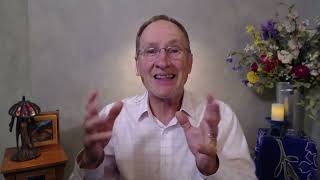
Dr. Paul Scheele guides listeners into flow state to unlock learning capacity dulled by traditional education. He draws on Buckminster Fuller's idea of innate genius and Csikszentmihalyi's flow research, arguing that curiosity and whole-body learning beat the fixed mindsets schools instill.
Chapters
Hello and welcome aboard. It's time to get our session started. Today we're going to be playing with the personal genius paralimal.
Couple of really important things I want to share with you. This is absolutely at the heart of all of my work. So if you have the time, let's spend about four days together right now. Okay? Just clear your schedule, let's get into it because there's so much cool information to understand know about this. First of all, Dr. Buckminster Fuller, who is a brilliant inventor and writer, wrote a foreword to Mario Montessori's book, the grandson of Maria Montessori. And one of the things that he said was were all born genius. But out of 10,000 children born in the world, 9,999 of them will be systematically de genius by the time they reach the fifth grade in school. Now, he said that this happens because of well intentioned, well meaning adults who prevent the child from exploring their natural world. And if they could freely explore their natural world, that natural genius that's within the child would be drawn forth, it would be brought forward.
Now, that said, having raised three children, now have three grandchildren, I've been able to notice that certainly in my own children that about the time of going into the fifth grade, they were defaulting to the social norm. So what does a social norm say? You're not genius. You got to prove it, we've got to instruct you, we've got to put into you. It's not about drawing it forth, it's about stuffing it in. And so the idea that we are all wounded by our traditional education systems mean that many of us have been disenfranchised from our natural genius capacities. Now, Dr. Carol Dweck wrote a book called Mindsets, in which she said she studied children in school and she noticed that there were two types of mindsets. What she did is she looked at the kids who did very well in math and science and said, how do you do this? And they said, well, we work really hard at it. And they asked the kids who didn't do very well in math and science, why do those kids do so well in math and science and their determination? What they reported was, well, those kids are just smart.
And so what happens in our own experience is anytime we encounter a situation where we don't get to the learning that we want, when we're not able to achieve what it is that we desire, and we will have a tendency to default to a fixed mindset rather than a growth mindset. Growth mindset says, wow, I did really terribly at that. I must be able to get better. I'll have to figure out how I can get better at it. A fixed mindset says, you know, this is just the way I am. This is just not my thing. I'm no good at it. And rather than face additional humiliation and embarrassment, the social norm says we'll just default to giving it up. So as a result of this difference between growth mindset and fixed mindset, what happens is that many of us default to far less than our full potential. Now, my claim is, my proclamation is that the purpose of education is the liberation human genius. And that presupposition that human genius is within us and our job as educators is to liberate that puts a completely different spin on why it is we go to school. So I've spent my life studying ideal methods for essentially helping people to do that. Now, Jerome Bruner suggested, he was a Harvard educational psychologist, suggested that we have. Is it Harvard? Well, Jerome Bruner, he said, we have 167 intelligences. And one of his grad students picked up Bruner's work and continued with it. His name is Howard Gardner. And he said, well, let's. Let's codify what is legitimately an intelligence. And he created a matrix to determine what constitutes a bona fide intelligence. And he started with seven. There are seven intelligences that we have. It was called the theory of multiple intelligences. So we have the linguistic and we have the mathematical logical intelligence, and we have the intrapersonal and the interpersonal, the visual, spatial and the musical. So there are many intelligences within us that we have access to. It's a matter of being able to use them when we face a learning situation or a problem solving situation. And this is where the personal genius paraliminal comes in. Now, the personal genius paraliminal also talks about a zone of optimal performance. Dr. Csikszentmihalyi talks about it as flow state. And there's something called the Flow Collective, a book recently out by Steven Kotler, talks about studies that have been going on for the last couple of decades on being able to find this flow state. Well, when I first encountered Csikszentmihalyi's work from the University of Chicago, I said, this is it. I mean, this is what we really have to know and codify and be able to get to reproduce whenever we want or need it so that we can be in the flow of that natural brilliance that's within us and bring it to bear on whatever situation we may find ourselves in so in Personal Genius, I talk about the zone of that's ideal. And the ideal zone, also known as, as the zone of proximal development, also known as the optimal performance state, is between boredom and anxiety. So what that means is if you're bored, you're disconnected, you're really not fully engaged, and if you're anxious, you're disconnected because you're too overwhelmed. So the ideal state between boredom and anxiety is that flow state that we want to be able to achieve and maintain anytime we're in a learning situation. So that the front end of the paralyminal, I give you the option. So do you want to just have access to this flow state for a situation that's coming up, or is there some specific learning or problem solving situation that you're going to be engaging in and you're going to apply it to that so you determine it. And I've always suggested to students that there are two Paralympicals that you use at the front end of learning. Listen to Personal Genius because it'll get you in the ideal state for acquiring new information, being able to be in the right state for the work being demanded. The other one is Memory supercharger at the back end of having learned something. So we're making sure that we're delivering it to the non conscious mind, our memory bank, and having access to it. So these two paralyminals bookending our learning, we listen to Personal Genius. For example, if we're going to school, as we're studying, and then prior to taking the test, we listen to the memory supercharger. Now this is another way to think about overall where it, what it is you're going after and.
Being able to maintain an ideal state while you're going through it. And when it's time to perform, you have access to all those resources. So what do you want to learn?
Einstein picked up the violin later years of his life. Churchill picked up painting at the end of his life. Anything, if it's languages, if it's music, if it's some endeavor that you like, get better at, if it's golf or tennis or what's going around now is called pickleball. Here, if you want to get better at your pickleball game, you know, the idea is whatever you want to get better at, Personal Genius is going to make sure you've got access to the resources necessary to get where you want to go. Now, I also talk about this idea of using your whole brain because learning is something that takes place not just between your ears, but with Your whole brain, your whole mind, your whole body.
Buckminster Fuller talked about having access.
To your neural network in a way that it is holistic. So, for example, the, the demonstration I like to do is I say in the air, could you draw your name in cursive writing.
With the hand that you normally do it? Now, could you do it with the opposite elbow?
Could you do it with your left toe.
Or your right knee.
Or your left hip? And the answer is yes. Now, even if you've never done that before ever in your life, why is it possible that you could do that right now?
And the idea is that when you have multiple entry points for the learning that you're engaging in, then you have a whole body integrated learning, your whole body, your whole mind, your whole brain being involved in it. Now, I do want to say that one of the biggest shut offs to our access to these optimal learning states is something that was written about by a Dr. Martin Seligman years ago, in 1980's yeah, kind of early 70s. He wrote a book called Learned Helplessness on development, depression and death.
Very interesting that when a person is continually frustrated at a task, they have a tendency to go into a state called learned helplessness. And the physiological response to that looks like the clinical indicators of depression. It's fascinating. So he tested this with college students and dogs and cats and rats and mazes and all kinds of stuff. He studied people who were very healthy and then their kids put them into a nursing home because they didn't want to worry about them. Like their mother, who was still mowing her Lawn at age 91, but everybody was so worried about her, they put her in a. An extended care facility. Six months later she was dead, Perfectly healthy. What was the deal? And so he talked about this idea of when you know that you cannot succeed, you cannot fail, or you cannot win at this, then it leads to this clinical depression and literally and figuratively, death. I've got to leave this. I can't do this. This is not going to work for me. Well, there's an alternative to that. And I wrote about this in chapter 12 of my book, Photo Reading.
It's the idea, the difference between the growth cycle and the stuck state. So what it says is when you're in a situation where nothing that you do seems to work to get you where you want to go, you could either move to the stuck state, frustration, learned helplessness, and then exit, or you could move to a growth cycle. And the difference that makes a difference is very interesting. 1.
See, when you encounter a Situation that you can't seem to make progress in. Do you get certain this should work? What's wrong with this? It was working before I was able to do this. Now it can't. What's going on? And this was written about in a book called who Moved My Cheese? A rat in a maze can't find the cheese. It keeps looking. A person comes the same place where the cheese was and says, where's my cheese? Who was supposed to. I was here yesterday. What's going on? And so that certainty leads to frustration. Now the other way is to be confused. In other words, be willing to not know. To go, huh, this was working before. What's going on now? So confusion, if you're willing to embrace it, moves upward to curiosity. Curiosity moves to positive learning behaviors. Exploration and sorting and talking to people and trying to figure it out and doing other ways. Guess what the name of the company is? Learning Strategies Corporation. Right. You engage in positive learning behaviors to get to what? Excellence. And excellence isn't a static state. It's. It's a spiral dynamic. Right? It's always leading us to higher states of capability, competence, and so we're always building our competence. If you can maintain an ideal learning state. So this is a real key distinction that's built into the personal genius. Paralympical is this distinction, this willingness to embrace whatever situation that you're engaged in, whether you're good at or not, and to avoid the fixed mindset and stay in that growth mindset that says, I can't figure this out. I'm at the beginner's mind. I have never seen this before. I wonder what's going on. And that confusion, moving to curiosity.
You're golden. Maintaining that ideal state.
You get on it, you get with it. You make it happen. So that's.
Just a brief glance at this deep, rich capacity of genius that's within you, and hopefully enough of an opening to say that on an ongoing basis, every single day, you can access that brilliance that's within you. So enjoy it. Use your genius to get you where you want to go. Thanks for joining me in this. It's great to see you. Peace and blessings.










