"Power Thinking" Paraliminal with Dr. Paul Scheele and Bob Proctor
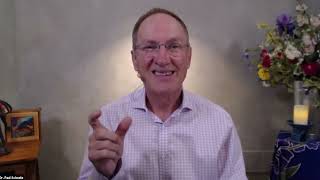
Dr. Paul Scheele explains how subconscious habits shape your life results and introduces power thinking as a way to shift them. He uses simple examples like moving your watch to a different wrist to show how awareness rewires behavior, then walks you through identifying your goals and the hidden commitments that block them.
Chapters
You.
It's time to begin. Welcome aboard. Today we get to play with a para liminal called power thinking that I produce with one of the true masters, one of the great master teachers of the human development.
Industry, if. If we could call it that. Bob Proctor is known worldwide for the way he talks about positive thinking and the way your thinking changes the results that you get in your life. He really has spent most of his life talking about how thinking in the subconscious mind can guide us to create what it is we truly desire. So when he and I got together to create power thinking, the key idea that we were going for is to help you understand how thinking actually becomes a bit of a barrier as well as an opportunity to get where you want to go. You see, one of the things the human mind does very readily is, is it produces habits. Habits allow us to do much of what we do without having to think about it. You see, the brain is a great conservator of energy. So it has a tendency to habituate to whatever is going on. And as we grow, we learn, and as we learn, we nest those capabilities. So when we operate in the world and that works for us, we nest it and it becomes more automatic for us. From then on, that's what habits help us do. Makes our lives more efficient and effective. But from time to time, we'll find ourselves in circumstances of our own creation that we don't like. And we'll recognize that there's something going on. There's consistent ways in which we're behaving that aren't getting us where we want to go. Our thinking creates our reality. When we think, we have a tendency to have feelings about our thoughts. We then behave according to those thoughts and feelings. And the results we produce.
Create the circumstances of our lives. So when we're in a situation where we recognize this is not what I really want, in essence, what we're going to have to do is confront those habits of thinking, those habits of feeling, those habits of behaving that are creating the ongoing results of our lives. So how do we shift all of that? That's what this paralliminal power thinking is all about. I've often talked about habits of expectation. Something happens in our lives and we just expect this is the way it's going to go. And you may know people who are quite negative or cynical and you don't really like to be around them. In fact, we try to negate negative thinking.
Really what we have to do is recognize it as a pattern of thinking and behaving so, for example, when I hire someone to help me with the operations of my business or the management of my money, I want someone to be able to do what I call downside planning, or what's called black hat thinking. Want to look at all the negative possibilities and that could emerge in the future. I don't want that person to set my goals for me. I want to use that kind of thinking to help guide my decisions as I go forward. But I want my thinking, once I'm on course, to hold an optimistic view of the future, that whatever I set my mind and intention on, whatever direction I choose to go in, I can create the end result that I desire. That or something even better. So the idea of power thinking is to get the treasure in mind that you're interested in and then create a map that may have different territory on it than what we're used to. The mind has a tendency to habituate to our present circumstances. But that doesn't mean that you have to. If you always do what you've always done, you'll always get what you've always gotten. You may have heard that idea, and that's absolutely true, unless it's not because the circumstances of surrounding, the general.
Atmosphere of things that are going on around you have changed. Your thinking may still be the same, but everything else around you is shifted. This is a pattern of the most successful organisms that have been studied by biologists and psychologists. They have a pattern where if they win, they then shift and try another way of winning. When they win that way, they shift again and try another way of winning. If they shift again and lose, they have a number of other ways of going back through and shifting, going back to other strategies that were successful. So the wind shift pattern is really encapsulated in this particular paralliminal. If you want to really see the power of habit, it's pretty easy to do. So if you wear a wristwatch, all you have to do is put it on the opposite arm for a few days. What you're going to notice is even though you consciously move that wristwatch throughout the day, you're going to look at the wrong wrist in order to find out what time it is. Every time you do, you go, oh, yeah, I moved it here.
You want to try another? Take a garbage can that you're used to throwing things away in, bathroom, kitchen, move it to a new spot, and even though you consciously moved it, I guarantee you're going to look in the old spot.
Why?
Because unconsciously you have programmed your mind to just do that efficiently, effectively. So to challenge some of our habits of thinking, habits of feeling, habits of behaving.
To shift our habits of expectation requires a conscious intention. Then with the paraliminal, you begin to access those interior resources that will help move you in the direction of the new circumstances that you're choosing to create. Now, Bob Proctor is a big fan of the Law of Attraction. And when we raise our vibrational level through our thinking or feeling or behaving, when we raise our.
Energetic level to match that which we're going for, we're going to have all kinds of positive synchronicities, coincidences happen, resources from around us that begin flooding in to match the vibration that we're headed toward. So we get raised up when we set a goal and when we have a clear intention for where we're going. My invitation for you as you play with power thinking is to try to identify behaviors, decisions that you make that aren't serving you. So if you could think about what's a goal that you have.
And what's a commitment you have for the actions you're going to take.
The note, what is it that you're doing or not doing on an ongoing basis that conflicts with that goal, that you've established, that intention that you've made, that commitment you've made? And what you're going to identify is what are called competing commitments. Those competing commitments are held in place by your non conscious mind. So every time you confront one of those competing decisions, one of those decision points where you could either go in the direction of your goal or go back to the old way of being, at that moment, you can apply the concept of power thinking to establish a new trajectory, a new way of doing things right there and right then.
So if you're ready to confront some of those habits that aren't serving you, this is going to be a great one. Have a wonderful time applying these principles. Go get the goals that you're choosing and create the success that you desire. Peace and blessings. We'll see you again real soon. Bye for now.










