Raymond Aaron – Doing What You Love
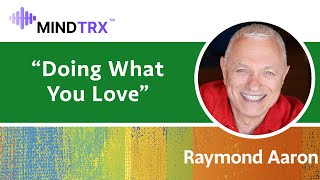
Raymond Aaron shares practical habits for living by what you love: a short choose-to-do list, a stop-doing list, and his MTO goal-setting model that replaces binary goals with Minimum, Target, and Outrageous tiers. He warns against relying on willpower alone.
Questions this video answers
Minimum, Target, Outrageous.
A 350-mile foot race to the Magnetic North Pole.
September 19, 2023.
raymond@aaron.com (aaron.com).
Mensa.
Chapters
Typically when people write a goal, they write what I call the dreaded binary goal. Binary means on or off, in or out, up or down, 1 or 0. And so it sounds like this, I'm going to earn a million dollars this calendar year. If they achieve it, they say, yay. If they fail, they say, oh gosh, I'm a loser, I shouldn't write goals. That's the conclusion they come to. And so people who lose decide to stop writing goals. And why do they lose? This is really interesting because people write goals about what they're not good at. Like, I understand you meditate every morning. You would never write a goal this month. I'm going to meditate 30 mornings this month. Well, you would never do it because you do it anyways. You only write goals about what you're not good at. And so you have a high possibility of failure. If you have a high possibility of failure, you'll feel bad about yourself and that will even hurt you even more to achieve future goals.
Welcome to the mindtrax podcast with breakthrough ideas to live your best life possible and how to make it happen. I'm Paul Shealy and today we'll be talking with Raymond Aaron. Raymond Aaron is one of the world's leading authorities on success and goal achievement. He's committed his life to teaching others how to dramatically transform their lives by helping them tap into their own potential. His eight best selling books include Branding small businesses for dummies, double your income, doing what you love, and two titles in the chicken Soup for the soul series. An avid adventure, Raymond completed one of the world's Toughest races, a 350mile foot race to the magnetic North Pole. The polar race inspired his newest book, how you can get rich without getting cold.
Hello, Raymond. It's so good to be with you again. It seems like forever. Thanks for being a part of the podcast.
Oh, Dr. Paul, I'm so honored to be on your show.
It's so nice to hear you say Dr. Paul, because you were with me all the way. I was earning that PhD.
I was there when you were just an ordinary Paul.
Exactly right. Hey, you know what I love about you? I've always loved about you. Wherever you show up, you've always exuded so much energy, enthusiasm, you've always got a smile, you're always engaging people in a great way. And the statistics show that a lot of people go to work every day and they're not engaged, they're actually disengaged. They don't love their lives, they're just putting in Another day. What do you do to help people really get that inner spark of energy that you seem to come by so naturally?
Well, one of the things that I teach is that you have to do what you love, and I do only what I love. And I don't mean a big umbrella term like professional speaker or author. I mean every little detail of it. If there's a specific task or even a tiny duty that I don't love, I just don't do it. So, for example, the reason that other people have very long to do lists which upset them because at the end of the day, they've got almost none of their to do list items checked off. I don't have that because I do only what I love. And so I'm eager to do everything that I have to do that day, and everything gets done. Lots of other people have long to do lists which laugh at them and appear to be bigger than them. But I am bigger than my to do list because A, I don't have a to do list and B, I just eagerly do everything because of that one secret. I notice what I don't love and I don't do it. I delegate it, or an outside contractor does it, or a cleaning lady does it, or my spouse does it, or heaven forbid, it doesn't get done. And people always say to me, what do you mean it doesn't get done? Things have to get done. I say, yeah, you got lots of items on your to do list that have never gotten done. And so isn't it true?
And it's so interesting is that some of those things you pick up the to do list, a year later it's not done, and you finally just ball up that thing you were supposed to do and you throw it away, right? A bunch of them just fade into the background. Anyway, now I want to take you to task on that one. I love the idea. And when I started out in business, basically I had to do everything, which always included some of the things I didn't necessarily like to do. For example, I didn't like doing the accounting. I was really happy when I was able to hire. And again, I didn't like to be the chief financial officer. I love being able to have a controller and a chief financial officer. All that's good. And, and all of the stuff that I learned along the way by doing the things that I knew weren't in my sweet spot, in my wheelhouse, but were a part of playing a bigger game. I did it. I did it, and I was glad that I did so at what point can you say, yeah, I ain't doing that because I don't want to. I mean, I have a, I have a six year old grandson that, that knows really well that no, I'm not going to do, I'm not going to help pick up all the toys because I don't want to. So, you know, there's a little bit of a caveat empty in there, isn't there?
Yes. Yes. When you start a business, not only do you have to do everything because you don't have any funds to hire other people, but you have to do everything as you said, because you have to learn everything. You can't be in charge of a division unless you've done it, unless you understand it, otherwise you'll get tricked even.
If you don't like it. And so, you know, let me talk a little bit about this kind of hierarchy of our neurological levels or the way in which our brain organizes. So we've got our environment and we've got our behaviors, and then we've got our capabilities, and then we have our values and our beliefs, and then we have our identity. And as we go through these levels, you know, I might not love the situation I'm in, but one of the things that I can do is I can learn to love it exactly the way it is. I might have to perform some behaviors. I don't love performing those behaviors, but I can learn to love those behaviors just the way they are because there's a higher capability, like you just said, that I'm learning. And I might not love building that capability of going to the gym and working out, but I do it because there's a higher value to it that's going to help me live a healthy life. Do you get what I mean? It's like I'm always trumping the lower level dislike in favor of a higher level outcome. Can you speak to that? Because that really talks about one's long arc of growth towards what they really are choosing to create.
That's true. However, anything that you have to exert willpower to accomplish, you will fail. Because willpower is automatically something that you don't feel good about. That's a struggle for you to do. And anytime your willpower is not at its peak, you will fail. And so I love this long arc concept that you have because yes, you do have to exercise, even if you don't want to. However, let me add something that I think you and your listeners have never thought of. I don't have a to do list, but I Do have a stop doing list. And I work on one item of the stop doing list. Just one item. I might work on it for a month or several months. And then when I achieve it, it's delegated or it's joint ventured out and it's gone. And then I don't have to exert giant willpower. So here's a huge insight for you. A stop doing list.
I love it. And I want to see if I can tweak this idea a little bit.
Generally, what's happening when we have to exert willpower is we. We have the will. We are literally claiming the will that I am going to create this thing. The next thing I have to do is I have to step into it wholeheartedly. So I've got the will, that's the gut, the heart. I gotta have my heart in it. Then I have to believe that I can do it. And that means I have to have an open mind. And when I have an open mind, an open heart and open will, this triumvirate gives me open access.
To a next level power of creation. Now I really can overcome what would initially be a resistance that stops most people from even ever getting started. Yes. So I really, I really love the way you're positioning this because resistance is inevitable. You know, there's a Star Trek, the Borg are coming, and this resistance is futile. Right. Assimilation is inevitable. What I say is resistance is inevitable. Right. And assimilation, being able to fully embody what I want is a choice. It's a choice that we're making to create the life that we want to live into.
Yes, but if, but it's not worth it to me to exert so much force against my natural instinct to not want to do it.
I love that. And there's a difference between force and will. So I can have the will to do something without having to create this intense motivation to get something done that I hate doing. No, I'm really with you on that. Why not create flow? So there's this beautiful idea. If we had two images in front of us, the image of our life as we're living it right now, in the image of our life as we choose to have it and hold both of those simultaneously mind, this magnificent thing that we possess to help us create in this world, looks at both of those senses and says, wow, life would be a lot easier living this way than the way I'm living right now. In other words, if I had none of these things I hate to do. And I really got rid of all of those right I would be living. My energy would flow more naturally. And this is called the path of least resistance. And anytime we can show the mind, hey, living this way, stepping across the threshold into living this way is living a path with way less resistance going on. And isn't that what we want? Flow.
I want to talk to you about bandwidth. You have talked about creating great energy and gut in order to muscle through something. But I want to remind you that even if you succeed, you're using up a vast amount of your bandwidth, which prevents you from doing other things that you might like much more. So if you are forcing yourself to do something, then you don't have the bandwidth to just sit quietly, maybe in front of a fire, and come up with an amazing idea that you'd never thought of before because you were forcing yourself to do something. And so, in my home, I'll use my home as an example. There are certain things in my home I love doing. I actually, for some reason, I love recycling. I love taking the recycling bins out to the curb on recycling day. And I love making the bed and I love cleaning the kitchen. I love. I love cleaning the kitchen. But I have no interest in the bathroom. The bathroom can go to heck. It doesn't bother me. And so I clean, I make the bed and I clean the kitchen, and I don't bother cleaning the bathroom. And every so often my wife complains that she has to clean the bathroom. And I say, I get it, but I do other things and I will not do those things that I don't like. Even tiny little chores around the home. This is what I love doing, and I do it. And therefore my mind is free. And someone who supports me is Steve Jobs. Steve Jobs wore the same black sweater, the same one belt, the same blue jeans, and the same sneakers all his life. And the reason he gave is so he doesn't have to decide every morning what to wear. And when the interviewer on this YouTube interview that I saw said, how much time could it take? And he said, well, when you take into account that I earn about $6 billion a year, that is like half a million dollars of decision time just to decide what to wear. And so he says, I take every possible decision and put it into a pre decision. And so my entire wardrobe is black sweaters. That's it. If I want a sweater, I grab it and it's a black sweater that I don't have any other choice. So I do the same thing.
Now, do you have to smell the armpits to know if it's clean.
I think he's got someone who takes care of that. This is an important point, Paul. You can muscle through, but then you waste or you use up bandwidth.
All right, I love it. I can't argue with that. I love it. What I do is I, as a result of the schedule that I've placed on the time that I get to live into this day what I would call the best average day of my life right now, then what I do is I place in that.
Some of that bandwidth time, some of that writing time, some of that thinking time, some of that walk in nature time, some of that. And I know, I absolutely know that I'm going to do my yoga practice, I'm going to do my meditation, my prayer work. I am going to do that. I was talking with you this morning in anticipation of this during my meditation because Source was speaking to me about some of the important things that I really wanted to draw forth in our dialogue today. So, yeah, I absolutely get it Now. I do want to say one thing. I don't have a to do list. I have a Ta da list. So everything that I write on there when I go ta da, ta da, and it's based on David Allen's work of getting things done, is that if we're taking mental bandwidth to hold an idea of that incomplete task that I really do want to do, I want to get to that. And if I'm running my mental cpu, right, central processing unit to hang on to that until it gets done, or my wife and I like to say, I'm not letting go of these fingers until I remember to tell you what I was going to tell you. Right. Just clear the cpu, capture it, put it somewhere, do not occupy any mental space in that or another group. Priority managers, they say the mind traffic, so many people have so much noise.
Yes.
Because of all that mental traffic that's going on. So I really admire your path.
To getting to that point. And it's about doing what you love. And super sweet way of thinking of it.
I have to confess, I do have kind of a to do list, but it's short, it might have two or three items on it. And just like you have a special name like a Ta da list, mine is called a choose to do list or an eager to do list. And it has minor things on it that will get easily done today. I just don't want to forget. So my wife say, when you come back from the office, pick up bananas. Okay, I don't want to come home. And she'll say, where the banana. And I say, oh, no, I forgot. So I'll have a piece of. Write one or two things on it. But it's things I'm actually going to do that day I just don't want to forget.
Why is it always bananas?
It's like it's either milk or it's bananas. Anybody gives this example. Well, I want to. I want to talk to you about entrepreneurism. You know.
The idea of you being a serial entrepreneur, creating, selling, I would assume, numerous business, and continuing to expand your life in all kinds of really interesting direction. Seems like every time I meet you, you've got the next great thing that you're playing with. So I really love that. And I want to ask you, how did you find that entrepreneurism was the way you wanted to go?
I didn't actually find entrepreneurism. It came a different way. I am really bright. My IQ is in the top 2% of IQ in the entire world's population. I was admitted to Mensa. I graduated as a physicist. I'm rated as a genius in mathematics. And yet, 20 years after graduation, my life was a complete mess. I was 50 pounds overweight. My wife had just divorced me. My boss had just fired me. I was $100,000 in debt. It was just a complete mess. With all my brain power, I'd produced garbage.
So you're saying it's the burden of genius.
Well, I wish that genius would have helped me, but it didn't at all. And one day my parents invited me to come to Mexico with them, which I accepted because they were paying and sitting on top of a Mayan ruin in the Yucatan peninsula of Mexico. It's called Chichen Itza. It's a pyramid sitting there.
Love it. There was a day when we could actually climb it. You can't anymore.
That's right.
But. But sitting up there, I had a vision as well. So cool. So keep telling the story.
So here's this little Jewish guy sitting on top of a Mayan ruin, wondering what the heck I was doing here. And I got a voice in my head that said, raymond, you're a teacher. And I rebelled against it. I said no, because I thought teacher meant a high school math teacher earning maybe $50,000 a year. And I wanted to earn $50,000 a week, even though I had no evidence that I could do it. And I railed against it for a year and finally gave in. Accepted a teaching job.
At an adult school, teaching marketing. And somebody said, tell us about one of your successes. Because all the marketing stories I told were my failures. I failed in every business I was in. But one business was a success. That was the business run by my wife. We bought some properties, we fixed them up, we rented them out, and then at the next boom, we became multimillionaires. And they said, well, tell us more about that.
And I launched my professional speaking career teaching real estate and became world famous and helped millions of people with direct speeches and also books. Millions of people around the world increase their wealth and increase their self esteem. And it all started from that message in my head from a spiritual guidance that I should be a teacher, which I didn't understand and didn't think was correct. So I'm sorry, I wish I had a very neat bundle of wisdom to tell you, but it's not reproducible. I just got a message in my head, raymond, you're a teacher.
Well, honestly, I do believe that most of us will get a tap on our shoulder at some time and we either attend to it or we resisted for as you did a year, or as one of my clients did for three years before really getting it going. And that's okay. It's all right that the timing is right for us to do what it is that we need to do when we do it.
All right.
Also like to ask you about when someone sees that the career that they're in and actually the job they're at is good for them, they like it, it's stable, they've got it's work that they love, they've got great benefits, the income is not where they would like it to be. What would you offer to someone who wants to increase their income? Planted where they are, right?
So I remember delivering a speech called bloom where you're planted in which I asked people in the audience how happy they were with their marriage, with their weight, with their fitness, with their job, with their hobbies, with their church. How happy are you? And they were, I want to say miserable, but they were living at a low level of vibration. And then I asked an interesting question. I said, what's your favorite quotation? And people gave mediocre quotations, Just mediocre. And then one guy said, yeah, smarty pants, what's your favorite quotation? I said, it's from Crocodile Dundee. Bite off more than you can chew, then chew like crazy.
And why you see me so upbeat and happy and positive and glowing each time? First of all, I love you. When I meet you, I'm always happy in anticipation of a big hug. But nevertheless, normally I'm happy and upbeat and excited. Because I live into that amazing expression. If I get an idea, hey, I'm giving a speech in two days and I've got an idea for completely different speech that I've never given before. And I say, great, let's go for it. And so I think about it and I meditate on it and I deliver it to my parts of it to my wife. And suddenly, two days later, I'm delivering a brand new speech that I never gave before. And that's who I am. And I love who I am. And most people don't love who they are. So I can't impose on them that they should quit their job and start a business or they should just quit their marriage and branch out and do something else because they don't have the oomph, they don't have the inside will. They have decided to kind of give up on life. And that sounds harsh, but you know what, Paul? Most people are failing. Most people are failing horribly. Like the percent of people who can pay off their credit card in full every single month is like 10, 20%. The percent of people who die broke is like 70, 80%. The percent of people who are going to get cancer this lifetime is one third. And if they don't get cancer, they'll get diabetes. One third will get diabetes. These are gigantic statistics. 70% of people are overweight and 30% are obesely overweight. And you walk around, if you're a guy, you see a woman, you fall in love with her, you marry her as like the top woman of the universe for you, and five years later you're in divorce court beating each other over the head with lawyers. Like most people are failing in every single way you can think of. And I want to explain to you what 50% divorce rate is. That means that as a comparison, every other time you got into a car, you crashed at a high speed into a brick wall. Every other time, wouldn't you stop getting into cars? And yet people eagerly get into marriage. Somebody will say to me, oh, we're, we're getting married. And I say, great, the divorce rates 50%. How are you going to avoid that? Like, what is your secret?
What are you, Joe Black? What is this?
No, but they've never thought of it, Paul. They know the divorce rates 50%, but they think they're immune. They say, love. And I said, what percent of people who get married say they're in love? And they say, oh, I guess everybody. So what are you doing about it? How are you going to prevent 50%? I won't get into a car, if 50% of the time I crash into.
A brick wall, well, you might get there unharmed.
That's what everybody hopes.
Yeah. Well, this. Yeah, this is a very cool thing. And I started my relationship with Libby, who you know quite well. We're at the time of this interview right now. We're 46 years of marriage together. And the. The thing is, well, we're married when we're three and a half, so that's why I've maintained this youthful appearance. But the idea is that when I started my relationship with her, I said, if I'm going to be in a relationship with this woman, it's going to be a personal growth experience.
Because I'm going to commit myself to this. And what I notice is that every relationship I had been in up until then, there was always something wrong with the other person. And I came to this realization that the only thing that was common between all those women was me.
Right?
And so I had to bend the source of whatever problem there was. So I realized at our 30th wedding anniversary, we spent 30 days in Europe traveling like a couple of college students with a backpack and a little rollerboard. We had a marvelous time. And I captured 30 significant memories from our 30 years together. And when I wrote them out, I realized we haven't been married one time. We had reinvented our marriage eight times.
Wow.
Like, the first year, first three years, the first seven years, when kids came on board, when kids went to school, when my business took off, when I went to graduate school, you know, all of these were completely different reinventions. At points where we were diverging, I said, stop. Let's face each other. Are we going those ways, or do we want to figure out how to grow together? So it became.
A lifestyle choice to confront problems, to be able to do the difficult work of the. Dealing with our angers and our fears and healing our own wounds together was really a good decision at the front end.
Wow.
And I love the recognition that you've made that, hey, you're stepping into something good on you. And have you considered. And this is where I'd like to go with the next question about entrepreneurism. When someone is starting a business of their own, what is the one thing that you say to them or would recommend to them? Think of all the seminars you ever gave.
What is the one thing that is the distinguishing characteristic that you've seen in all of the most successful entrepreneurs that you have been with, met with, taught?
The one characteristic is willingness. Willingness. Most people start A business, or even worse, they get into network marketing half assed, or like a little bit of interest. Well, I joined it because my sister told me to, or whatever. They start a business without really fully engaging themselves. And when you're in a business, or as you just really wonderfully stated, when you're. When you get into a marriage, whatever, whatever you're plowing yourself into, you have to be completely willing. You. If I remember, I started a soft drink business in order to compete with Coke. By the way, spoiler alert, Coke won. I did not win, but. I know. But I did launch a soft drink manufacturing company. And I phoned a television station and told them that this young kid, I was 20 years old, was going to compete with Coke. And they said, wow, we're sending a videographer and a reporter down. They'll be there in half an hour. I said, oh, my gosh, the place is a mess. And so I was the cleaning lady for 29 minutes and then I put my suit back on. You have to do whatever you have to do when you start a business. Well, actually, as you're deciding whether to start the business or get married or whatever, ask yourself how willing you are to do anything, no matter what. Anything.
Yep. I say, Gary, I say it. Every threshold of transformation. There's a guardian at the gate, and the guardian is saying, stop. You shall not pass. But they're not trying to send you home. What the guardian's trying to do is say, look, there's going to be dragons in there. Don't step over this threshold unless you're all in. Beautiful. That's. That's why I say open mind, open heart, open will. That willingness will get you in the game. You got to go into it wholeheartedly. And you also have to feel that you're worthy. You have to believe you've got a chance to really make this thing happen. So we're spot on with each other on that.
Yeah, I want. When you were telling me about your eight marriages in one, it reminded me of Werner Earhart, who once said, and it was amazing, he said, if you really, really want to grow. And so I'm like, fully attentive. Yeah, yeah, I want to grow. He says, if you're a guy, find a woman you can't stand, marry her, and as soon as you love her, divorce her and find another woman you can't stand. He says, there's personal growth for you for sure.
For sure. Well, I want to kind of move in the direction of an idea that you shared with me years ago. You know, I've been on a couple of your stages. You've come to Minneapolis. We shared a stage for our clients here in Minneapolis as well. And I really love you as a presenter. You're amazing. You're remarkable. You're absolutely lit up and you engage everybody so beautifully. And you told a story and gave these three letters. M, T, O. That's Mike, Tango, Oscar. Okay. Mto. And it was a game changer for me and all of my clients ever since. So would you tell the story about the Olympics and mto?
Okay. So.
Typically when people write a goal, they write what I call the dreaded binary goal. Binary means on or off, in or out, up or down, 1 or 0. And so it sounds like this. I'm going to earn a million dollars this calendar year. If they achieve it, they say, yay. If they fail, they say, oh, gosh, I'm a loser. I shouldn't write goals. That's the conclusion they come to. And so people who lose decide to stop writing goals. And why did they lose? This is really interesting because people write goals about what they're not good at. Like, I understand you meditate every morning. You would never write a goal this month. I'm going to meditate 30 mornings this month. Well, you would never do it because you do it anyways. You only write goals about what you're not good at.
And to add to that, the only goal we will ever set is a goal for what we don't exactly at this moment, already have. So the moment you write it, there's a gap between where you are and where you want to be.
Downer. That's right. So you write a goal about what you don't have or what you're not good at doing, and so you have a high possibility of failure. If you have a high possibility of failure, you'll feel bad about yourself, and that will even hurt you even more to achieve future goals.
Brilliant. Yep. Makes. Makes total sense. And so everybody is running away from goal setting now like their hair's on fire.
Exactly. Exactly. And so I set out to create a technique that will always succeed, that you will always be successful, called mto. And it stands for Minimum Target Outrageous. Minimum definition is what you can be counted on to do based on your past performance. So let's use weight loss. So somebody would say, I'm going to lose ten pounds this month. That's the binary method. And if they don't, they feel terrible. So minimum is what you can be counted on to do. So I would say to somebody, my Minimum weight loss is that I'll gain no more than two pounds because that's what they can be counted on to do. I know it sounds ridiculous, but some people gain weight during their, quote, diet and then the target is the stretch. Target is what most people think of as the goal. And so I would say a target would be something that you think you can do but you're not sure. So it might be lose two pounds and then outrageous is what you're quite sure you can't get done. So it might be ten pounds. So there you go, gain two pounds, lose one pound, lose ten pounds. So let's say you actually end up staying the same. Well, that means you have achieved your minimum and you feel fabulous. Let's say you lost two pounds, then you have achieved your minimum in the target and you feel incredible. But here's the funny thing. As humans, we can't see the future. And many, many times, my clients and I many times have achieved the outrageous and not the minimum because they're not necessarily nested. The example I gave, they're nested. If you achieve one level, you've achieved the previous levels. But let's say that I've done something wrong. I'm embarrassed, and I say minimum. I'm going to confess to my daughter target. I'm going to confess to my wife and outrageous. I'm going to confess to Paul. Oh, no, not Paul. He'll feel horrible. He thinks of me so highly and then he's going to think I'm terrible. Oh, no, not Paul. And then at the end of the month, I might have apologized to Paul, but not my wife or my daughter. So there's an example where you achieve the outrageous but not the previous two. And many, many times people achieve their outrageous and they can't figure it out.
That's gorgeous. Now I have to tell you that I've changed outrageous to outstanding. I didn't ask permission for this, but when I think of the word outrage, I just was creating the wrong energy, so I just say outstanding. So tell me about the flash of insight that you got that gave you mto to me, that was brilliant.
Yes. I wish I could claim that I created it. I was speaking to a friend almost 40 years ago and he told me that he'd read this or he heard of it or he had created it, I don't know. And just in passing, it was just. Just made an offhand comment. I said, oh, no, man, that's genius. That's gigantic. He says, no, it's just some minor thing I thought of, I said, no way. It solves the binary way of creating goals. It's amazing. It eliminates the problem that you write goals about what you're not good at. It's amazing. And he thought I was nuts. He thought I was exaggerating. And it's changed my life and the lives of millions of my clients. For how long? For how long, Paul? Forever. I was on Stage May of 1983. Over 40 years I've been on stage and a lot of what I've been teaching is mto.
That's so cool. So I'm going to force you to speak to. Going to the Olympics in Canada and looking at the first place team. Super excited.
Oh my gosh. Thank you for reminding me about that story. That's amazing story.
Yeah.
I went to the Olympics in Montreal and I noticed that the gold medal team was ecstatic and happy. And the bronze medal team, like the lowest, the one who came third, they were just as happy and high fiving the gold team, but the silver team that had, that was, did a better job, got a higher medal than the bronze team, the silver team, they were dejected. What the heck happened? And I. And I realized that the gold medal team got their gold by winning. The silver medal team got their silver by losing. Because in the playoffs, the gold, silver, playoffs, the silver lost. But the third place team, the third and fourth place teams were playing and one of them won. And so the third place team won by winning, the first place team won by winning, and the second place team won by losing. And I realized, wow, I want my clients to win by winning. And that was part of my initiative of mto.
Yes. You see to me that it brings such. It brings us back to that opening idea about energy, how important.
Our successes, how reliant our successes on the excitement, the enthusiasm, the energy that we bring to what we do. Because when people see you on stage, they say, I don't know who this guy is, but I really want what he's got because, man, you're just lit up from within. And the gold team and the bronze team, they were lit up from within. And I really, really love that. I remember doing a speech contest one time, humorous speech. So it's Toastmasters International. I go through all the levels, went at the club, go to the area, win at the area, go to the division, go to the division, get to the big. Here it is. So I am now presenting my humorous speech to this armory. It's like 1000 people from Minnesota and Canada, all over.
Whole region, like five States in the US and they're all in here and I give a speech and nobody laughs. Well, one person left. It was my mother on the front row laughing at the wrong time. It total bomb. It was because it was all really close up funny stuff. And I was in a room where people could see the speck on the stage, but they couldn't see any of the gestures that were making it funny. So I thought, okay, everybody clears out, it's over. I got to drive home for a couple of hours. I go back up to the stage, I go back up to that platform, I look at that whole room. I said, next time I'm at this level, I'm winning it. I didn't feel dejected. I recognized the error that I made so I could correct it for the next one. The next one was the serious speech contest, and I won at that division level. It was one of those things where, okay, if I fail and your system of NT mto, there's always a win. It's so wonderful. And keeping someone in that energy that they can, they can do it, they're worthy of this higher level of expression in their lives. That's so important.
I want to tell you another benefit of mto. Yeah, that's at the end of the month. Let's say you've achieved something. Well, the reason you achieved it is because you came, you became a person who could achieve it. You changed physically, you changed psychologically, whatever. And because you're at the higher level, that's your new normal. And so you think it's nothing. But if you have done your mto, you can't. Let's say the O was outrageous and you achieved that, then you can't say, oh, it was nothing, because at the beginning of the month, 30 days ago, you thought it was like wild, impossible. And so the beautiful thing about MTO is that you actually can't deny your success. If you achieved what you call outstanding, then you can't say it was nothing, because at the beginning of the month, it was gigantically something.
And so key to success is recognizing what we call those small increments, small concrete indicators of success. Earl Nightingale zillion years ago said, success is the progressive realization of a worthy ideal. And so, yeah, kind of back to that idea of the long arc. Sometimes the goals we have, like Martin Luther King said, the moral arc bends toward justice. Right. It's a long way to go, but it does get us there if we stay on the track, stay on track to it. So even the highest level goal, somebody may set, as long as they're all in, as long as they're ready to go. I think the tools that you're suggesting here in our session today are really going to help people move in the direction of what matters most to them. Thank you so much. Do you have a parting idea that you would like to leave for everyone? I know that you've talked about doing what you love. There's something else that I hear you say often. It's making a difference. Would you take us out on that idea?
Yeah. When I. I'm just using myself as an example, when I use all my energy and all my flair, when I go into a day saying, let's say I'm teaching day two of a three day course, I get up in the morning, I say, you know what? This is going to be the best day two of this course that I've ever taught. Like, when I go into it with that thought, then it steals up all my excitement, my enthusiasm. It increases my willingness to take risks or to be loving and happy, to be patient. And it just makes me bigger, just bigger than life. And I noticed that most people, they get up, they brush their teeth, they go to the office, they do the best job they can, they come home, they watch a beer over tv and they do the same thing the next day. They don't make any day special. And that's why men will say, my daughter's getting married. She was just born yesterday. Where did the 20 years go? If you don't make each day special, the decades slip by and my decades don't slip by. I've got incredible. I've got tens of thousands of wonderful memories where most people just have a few. Because I make each day special. I go into each day saying, this is going to be superb. And Paul getting ready. You said you got ready to interview me. I got ready to be interviewed. I said, I get to see Paul today. He's going to be devoting his entire intentionality just to me. We're going to have fun. This is going to be the best podcast I ever was interviewed for. And then when I create it, I'm forced to live into it. And that's how I lead my life. And I wish more people would.
Be outrageous. More people would be crazy. More people would make mistakes, more people would eat beans. More. More people would walk barefoot. More like, I remember I was giving a speech in Texas and the actual fulfillment seminar was going to be in nearby Florida. It's like a 20 minute flight. And one guy said, I live in Texas. Yeah, he says, I never left Texas, never planned to leave Texas. And that's fine. If you don't want to leave Texas, that's fine. But his box is Texas, and that means he has other boxes. I eat these foods. I don't eat those foods. I wear these kinds of clothes. I don't wear those kinds of clothes. And so, you know, lots of people are just boxing themselves in. I don't watch those kinds of movies. I like this actress. I don't like that actress. And they just make decisions that close themselves down, and I want them to open up. I wrote a book, Double youe Income, Doing what yout Love, because I want people to get it.
Well, I think you did not only give it to us, but I think we all got it as well. So live big, live wholeheartedly. Gorgeous. Thank you so much, Raymond. So fun to be with you. Peace and blessings.
Wow. Thank you, Paul.
I hope you enjoyed our conversation with Raymond Aaron. You can learn more about raymond@aaron.com that's a a r o n.com and now in the second part of the podcast, it's just you and me. I'll tell you how to use the paralyminal sessions in the Mindtracks app to easily handle obstacles and move toward the success you want, especially as it relates to our discussion with Raymond. If you're new to the relaxing paralyminal audio sessions, they use breakthrough technologies to activate your whole mind in only 20 minutes to help improve any area of your life. Let's get going.
Welcome to the Follow on to my conversation with Raymond Aaron, where we're talking about doing what you love and making a difference in the world. I'd like to talk to you about how to use Paralympical technology in any of the major areas that Raymond and I got into. And we made some really fun, very nuanced distinctions that can really help you live a life of purpose and passion, doing what you love and making a significant difference. So I broke down the conversation into four areas. There's the idea of doing what you love, the idea of finding purpose and passion, confronting difficult issues and fears that may pop up, and really discovering the true abundance that's not only within you, but all around you to create the life that you choose. So the paraliminals, that could be really helpful. I mean, the first one that came to mind is one that I did with Stuart Emery called Success Built to Last, in which he's saying, whatever you do in life.
Do it really well.
It was a phrase from Abraham Lincoln. Doesn't Matter what you do, just whatever you do, do it really well. And at first we might not do it very well. We're building skills, competencies and capabilities. And even if you do something that you really want to do badly at first, you're doing something you love, so it doesn't really matter that much, and you're getting better every single day that you do it. So success built to last is a great parallel to help you really do what it is you love. The other thing is to confront from time to time, if you have to do something that you know is on the way to what you love, you don't necessarily love it, but you have to get to it. It was a point that I was making with Raymond where as a businessman, yeah, there was a lot of stuff that I had to do I didn't really love doing, but I'm training myself, I'm getting better at it, so that eventually I can hand it off to someone else. And in that one, the Paralympical that's ideal is a new option generator. Basically what you're doing is putting a part of that equation in each hand where you're saying, well, part of me would really like to, but the other part of me doesn't want to because. And you're getting those two parts to communicate with each other, so it is okay to proceed and make progress to where you want to go. Second area was the area of finding purpose and passion. And a parallel that I did with Jack Canfield is called Living the Law of Attraction. And it's all based on how we are responding to an in. An inspired purpose that occurs to us. And all of our actions flow from that inspired purpose. And along with that paraliminal, there are a number of aspects to the manual that comes with it that really get you into exactly that. How do you find that deeper purpose for which you are moving in the direction of a dream? And another parallel that might help quite a lot is called finding yourself. And that that Paralympical takes you on a journey through the various stages of your life, kind of starting now, but now backtracking through your life so you can. It's called finding your you. It's where you see that through line of reasoning or the thread that seems to connect your life together is very often the thing that ends up being our passion for what it is we're choosing to do is something of our heart, virtue. One thing that you really stand for and one thing that you really stand against, coming together as the thing that makes the biggest difference for you in life. And Oftentimes it grows out of times of hurt, trauma or.
Wounding that may have occurred in our younger years. And we say, I'm never going to allow that to happen again. Another part of us is, this is what I really love. So I find, I found in examining that for myself, that I'm really opposed to the de genius saying of anybody through schools or institutions that tell us who we are and who we're, how we're supposed to behave. That's de genius thing. And I stand for that true genius that's within you. I see it in you, and I create products to help you recognize it. So finding you is a cool one to help with that. The third area is in confronting difficult issues and fears. Oftentimes it's the fears that create a sense of hesitation or doubt in ourselves and our capability. And we need to be able to confront those. Oftentimes are a result of faulty conclusions.
Decisions that we made about who we are at a younger time. And so.
There is a parallel called self love, which really helps you recognize the real strength and capability within you by communicating with an inner elder as well as an inner child and getting the three of you, your present self, future self and past self together to communicate.
And recognize that at any moment in time, you're on the threshold of a new way of living. The Fresh Start by Bill Harris. That. That Bill Harris and I did is a great one, but I'm not even going to include that, so I won't even mention.
Self love is such a great one. The other one is gratitude. Very often we have such abundant resources available to us, but we neglect to see them because we're so focused on the difficult situation or circumstance that we might find ourselves in. You really do have tremendous resources. Right now. There's an exercise from a book a friend of mine, Paul Jackson, Mark McCurgu McCurgo wrote called the Solutions Focus. And in it we. We find that at any moment in time, in this present state, you're on a scale from 1 to 10, and 1 is having thought of your goal, and 10 is that you've already arrived at your goal and where you place yourself right now, let's say you place yourself at a 2. It's easy for someone to say only a 2, why so low? In which case you're gonna all the obstacles, limitations, all the barriers that exist for you. But if you say, oh, a two, why so high and not lower? You begin sorting for all the resources that got you this far. Right? And that's what we want your brain to Constantly sort for is all the resources that are available to you right now where you are to be able to take a next step. And that's the gratitude paralleliminal is going to help a lot in that. And the final area that I felt that Raymond and I got into and I like that we're able to tussle a little bit on a couple of things because it helps tease out some of the subtler distinctions that can really help us get to where we want to go to really do what we love and create a life of meaning, make a significant, meaningful contribution to the world. So in addition to the gratitude parallel which I just mentioned, the prosperity parallel, which I use almost in every one of might follow on descriptions. But prosperity really shows us not only that the universe is abundant, but we have access to that abundance. That's our prosperity consciousness. And the final is the soul of money, which is really about the great fullness and a sense of sufficiency. One of the things that I felt Raymond exemplifies as a very successful person.
He saw that his life wasn't and he made a significant shift, got a vision, got an inspiration, saw himself as a teacher and started making half a million dollar income at a time. Made millions of dollars here, millions of dollars. I mean, he's very successful financially, but he's also living a life of meaning, purpose, passion. He only does what he chooses to do, which is. Yeah, it's a lovely thing. Difficult to get there. Having arrived at this level of seeing his life, he can see that had he only focused on what he was most passionate about, he probably would have saved himself 20 years of angst and failure and misery. And what we have the ability to do is avail ourselves of other people's genius. Right. So that we don't have to go through the same mistakes ourselves. So is if I review that experience with him.
We'Re really hearing from someone who's got a perspective, a broad perspective of the arc of his life and sharing from there what really matters to help us live this day to the fullest of our ability. And didn't you love the idea that he shared he doesn't have a to do list. He has and I choose to do list.
Really Excellent. See that yourself. See yourself as a person who has agency. You have the power to decide how this day will go. And when you do, it's as if everything opens up and supports you in showing up at your very best. Good fun. Thanks for being with me.
Thank you for joining me today. I applaud your willingness to maximize your potential. You can easily use the paralyminal audio sessions in the MindTrax app to stimulate your non conscious mind, I.e. your inner mind, to reduce any resistance in your life and to propel you toward the success you want. Go to www.mindtracks.com go. That's www.m I n d t r x.com.
Go. These amazing audio tools have helped millions, and I encourage you to bring them into your world today. Be sure to be back for more episodes of the mindtracks podcast. You'll find insightful conversations with authors, experts, and thought leaders, all devoted to improving your life's experience. Thank you again for being here on our MindTrax podcast.
Sa.










