"Self-Discipline" Paraliminal with Dr. Paul Scheele
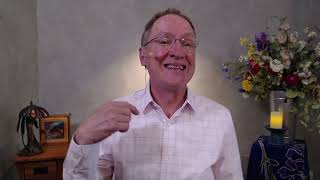
Dr. Paul Scheele reframes self-discipline as training your inclinations toward your highest purpose, not punishment. He uses a bell experiment with realtors and Benjamin Franklin's 13-virtue cycle to show how praise and intentional practice reshape behavior and attention.
Questions this video answers
January 3, 2024
Approximately 450 realtors
About 45 seconds
13 virtues
One virtue for two weeks; the full list in 26 weeks; the set twice per year (52 weeks)
Chapters
Hello, hello, hello. Good to be with you. And it's wonderful to have this session where we get to get into the self discipline Paralympical. Welcome aboard. I'm delighted to get this month started and go through these sessions with you, but. So let's talk about self discipline. First of all, one of my favorite stories about really coming to understand the whole concept of discipline was that I always thought that discipline was punishment. And I met an individual who was a very dedicated meditator, and I talked to him about his disciplines. He said, discipline, I'm not disciplined. In fact, if you write the word discipline on a piece of paper, I'll run out of the room. I. I'm not disciplined at all. But what I am is capable of training my inclination. So I'm inclined to do the things that I set my mind upon to do each day. And that idea of training one's inclination, the idea is if you're a little child learning to brush your teeth, you're not inclined to brush your teeth, but it's something that you train your inclination to do. So that's what you do every day before you go to bed, when you wake up, whatever it might be, there's discipline that you have. But that word discipline actually comes from the root disciple, which means follower of. So what does self discipline as a paralympical really mean?
Self discipline is being a follower of the greater purpose that you've established for yourself, the purpose that you have that your higher self is trying to guide you toward the highest expression of your life, the expression of your full potential, the realization of the goals that you set. And so what we're finding when we talk about discipline is do we have full alignment? Do we have an inclusion of everything that you are? Do you have the experience that every part of you is on board and following the way.
To the goals that you have, to the fullest expression of your life. So when you listen to this particular Paralympical, it's really different than any other that I've created. This one, instead of giving you positive suggestions about doing something or taking some particular action, it asks a number of questions. You hear questions in each ear, and what questions do is they have a tendency to put our mind into.
Sorting for the information around us. So one of the things that we know about the way our beliefs work, about the way a particular type of thinking may have with us, is that the brain is always working to gather evidence, to prove that what you believe is true.
So it's this idea that the brain is constantly sorting for examples that verify what it is you're holding in consciousness. Have you ever heard that a pessimist is never disappointed.
Because pessimist is always sorting for evidence that whatever it is that that they believe isn't going to happen is getting proven all of the time. An optimist is always sorting for, looking for the best possible ways and means to realize his or her objectives. And so when we think about self discipline, we're also thinking about getting our thinking, getting our feelings, getting who we are personally and who we are socially, getting our intention and getting our behavior behaviors all to be fully congruent. And what that does is it allows us access to the full range of resources that are within us. So my invitation to you is to think about what is it that you're attempting to create in your life?
What is it that would, in terms of habits, behaviors, actions would assist you in creating that? For example, let's say you're in a relationship with someone and you have a tendency to look at their behaviors that are negative. It's easy to sort for evidence of those negative behaviors. Give you an example. In a romantic relationship, in the early stages of it, what happens is we only see the good that's within someone. Oh, I really love this part of this person. Oh, what they do, it's just so great. Oh yeah, there are those quirks, but I don't notice any of them.
What happens as the relationship goes on is that the positives that we early sorted for start to reduce because we just come to expect them. The negative things, those little quirky behaviors that that person engages in that are not so pleasant for you tend to loom bigger in our attention. We tend to sort for it. Perhaps you have noticed that a lot of people use the word, the words, it's like, you know, it's like, it's like, it's like, it's like, well, if what you do is you start sorting for it, you'll hear it pervasively all throughout our language, in our dialogues, in our conversations. Is it helpful for you to sort for those sorts of things? And if you want to maintain a really good relationship with someone, would it be better to sort for the positives or sort for the negatives?
The person presents all of the behaviors that they normally present. This is how they operate, this is the way they are. And if you think that you're going to be able to change them by sorting on the negative, that's the idea of disciplining someone by punishing what it is that they're doing that you're trying to extinguish.
But when you think about discipline in terms of.
Being fully aligned and fully congruent in every way with where it is you're going, then what is it that you want in the relationship? Well, I want to experience peace. We'll focus on all those aspects that are peace producing. I want to focus on happiness, what brings you joy, what brings you happiness, and start to focus on and sort for those small little things that make a difference. I'll give you an example.
Years ago, I had the opportunity to give a presentation in front of a group of realtors 450. And we were in a large auditorium, and I was talking about the importance of supportive language that helps guide the mind to where it's trying to get to. And so I had two people leave the room.
Not able to hear anything that we talked about in the room. And I said, we're going to decide on two tasks that we want them to be able to perform. One person will do one task. What will it be? Well, they'll walk up on stage and they'll turn the flip chart page and put a mark on it. Okay, what's another one? They'll go up on stage and pour a glass of water from the water service you have on stage there. Okay, sounds good. The group decided, we agreed, brought the first person in, and I said, now, before you move at all, just stand there. I have this bell. I'm going to ring a bell. Every time you do something wrong.
You have a task to perform in this room. You don't know what it is, but we've all agreed on it. Begin. And if they took a turn to the right, instead of going toward the stage, ring the bell, took a left, ring the bell, they walk toward the stage, no bell. Walk up to the stage, turn, ring the bell, turn. Ring the bell, walk up on stage, no bell. Walk past the water, walk past the flip chart, ring the bell, walk back the other way past the flip chart, ring the bell, stand in front of the flip chart, pick up a marker, ring the bell, pick up another marker, ring the bell. Wrong, wrong, wrong, wrong, wrong, wrong, wrong, wrong, wrong. Pretty soon, that person just stood there, absolutely immobilized, not knowing what to do. He knew if they moved off that spot, they'd get the bell. But they didn't know what to do, so they just froze. I thanked them, had them seat, take a seat, told them that I would give them what the task was. A little later, brought the second person up. They came to the back door. I said, wait right there. I'M going to ring this bell. Every time you do something, right? You have a task to perform. Go for it. Walked toward the stage, rang the bell, Walked up on the stage, rang the bell, Walked up to the water service, rang the bell, Picked up the pitcher, rang the bell, Poured the pitcher of water into a glass, rang the bell, done. I mean, it was that fast. Took about 45 seconds, and they accomplished it. Nobody in the room believed it. They thought it was some kind of setup. No, no, no, no. That's a difference.
So when we think about self discipline, what we want to do in any area of our lives, whether it's health, success, relationships, growth and development, any area of your life, what we're interested in doing is having an idea of what the purpose is, what behaviors will get us there, and then ring the bell in the correct direction. So on the way to that goal, Ben franklin had this idea that there were 13 virtues that he would like to develop in his life. So he'd wake up in the morning, think about how he might live this day with that particular virtue.
Throughout the day, he would behave in a way to exhibit that virtue. At the end of the day, he'd review and ask himself, how did I do? Praise what worked, reappraise whatever didn't work, and decide what it is that would be different on the following day.
He could get through one virtue for two weeks. He could get through the entire list of 13 virtues in 26 weeks. He could do that entire set twice a year, 52 weeks in the year. He said that was the most important personal development activity he ever engaged in. So when you think about self discipline, think about.
Creating the inclination to perform in the direction of the goal that you have. That means the way you think, the way you feel, and the way you behave.
It's a powerful thing to become a disciple of your highest self, to become a follower of the highest expression of your life. Enjoy this day, have a spectacular one, and I'll see you in our next session. Peace and blessings. Bye for now.










