"Success Built To Last" Paraliminal with Dr. Paul Scheele and Stewart Emery
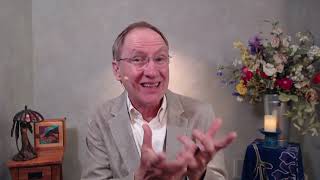
Dr. Paul Scheele guides a paraliminal session on passion-driven success, drawing from Stuart Emery and Jerry Porras's research. The core idea: pursue what matters to you first, rewards follow. You'll hear about tolerating ambiguity, embracing paradox, and practicing through early failure.
Chapters
It is time. Welcome aboard. Today we're playing with a paralliminal called Success Built to Last. Now, this is based on a book that Stuart Emery wrote with Jerry Porras, based on the previous book to that about Built to Last. Companies that created enduring success by pursuing their passions. Well, creating a Life Built to Last is also about pursuing your passions to be able to live a life of meaning and success means that what you're doing is you're attending to what matters most to you. Now, the big point of the concept behind this is that if you're passionate about it, if it's something that you truly want to do that's going to matter to you, it's going to make a difference in the world. You pursuing your passions is going to make a positive difference to everyone else in the world. And I take a bit of a spiritual perspective on this. I believe that we come into this world to deliver our purpose in life, to deliver our passions, our gifts and our talents. But when we feel motivated to give our gifts into the world, we don't always start out doing it very well, very effectively.
You see, when I started as a public speaker, I actually wasn't very good at it. When I started as an author, I wasn't very good at it. But because it was a passion of mine and because it was something I was highly motivated to do, it didn't matter how good I was at first. Whatever's worth doing is worth doing badly at first. Many people don't prefer pursue what it is that they're most passionate about, because when they start out doing it, it's really hard and they're not very good at it. And so the way in which someone breaks through is to understand a couple of simple principles that are built into the structure of this Paralympical. One is that even if you do something really badly, it's something that you love to do. So doing something that you love to do badly is okay because you get better every time you do it. And this is the idea I referred to, and perhaps you've heard me talk about it many times, that learning is often two steps forward, one step back. And this allows the brain and mind to create strength as well as flexibility. There's a pattern of the most successful living organisms that when they win, they shift and try other ways of winning. Win, shift, win, shift, win, shift. Unsuccessful people have a tendency, when they win, to reproduce it and get another win and reproduce it and get another win and reproduce it and fail. When they fail, they blame the outside world. Well, it was Here before somebody even wrote a book about it called who moved my cheese? The rat gets to the end of the tunnel, doesn't find the cheese, the rat keeps looking. A human being gets the end of the tunnel, doesn't find the cheese, and said, who moved my cheese? It was here yesterday. So this idea of being able to continually and flexibly shift in your perspective, in your behaviors means you're going to continue to pursue what it is that's really important. Think of any sporting activity.
You're always going to start out pretty bad at it. Think about driving a car. You have to develop the skills, you have to develop the neurology. And there's two types of learning curves. One is the knowledge or know zero, the knowledge curve. That is a growth curve like this. The other is a know how. And that curve is long plateaus, little blips up. Long plateaus, little blips up. And so we have to do a certain amount of practice and this paralympical helps us to do that because what it does, it helps us tolerate the ambiguity of wanting something and not having it.
Pursuing something that really matters to you and being really bad at it at first, it's okay. And to tolerate that ambiguity means you stay in the game. You continue to pursue what's most meaningful to you. And again, what's meaningful to you. What you're most passionate about, if you get really good at.
Makes a difference to all of us because you're delivering your gifts into the world. So think about what it is that you would be most passionate about in your life. And you can create a life of enduring success with this para liminal success built to last. What I also love about it is this was written with Stuart Emery. And his voice there brings a rich history of experience, not only as a consultant to business and industry, also a successful entrepreneur who built and sold many businesses himself, but he was also the head of an organization that helped develop people in the human potential field for decades. So he's bringing a rich communication and understanding to your non conscious mind. So you'll hear him in the right ear, me in the left ear. And it's the combination of our wealth of experience and helping people grow into the fullest expression of who they are that is brought to you in this particular listening session. Now.
There'S actually two things that I think are most important when we're, when I work with adult learners.
One is the tolerance of ambiguity. The other is the ability to embrace paradox. You see, it makes sense that if we're going to.
Be employed, have A job we should pursue, something that people would pay us for. Well, it turns out that the biggest rewards.
Historically have come to those who didn't pursue the rewards, the extrinsic rewards of doing what it is they're passionate of doing. They didn't go into it for the money. They went into it for the purpose. They went into it for their meaning that they get from it. And all of the accolades, all of the rewards, all of the financial gains came as a byproduct of pursuing their passion. That seems paradoxical in nature. So your ability to embrace that paradox.
As well as tolerating ambiguity is going to make you into one of the most successful learners ever.
I was with an entrepreneur in the Twin Cities here of Minneapolis and St. Paul. He was speaking to an organization of entrepreneurs, and he said, success.
As business person is.
Staying in business long enough to get lucky.
And, you know, I've always heard the idea that luck is when preparedness meets opportunity. So we prepare ourselves all of our lives to have that fortunate opportunity, to be rewarded for what it is we're passionately pursuing. So think about what it is that you're most passionate about and get started on it. Pursue it whether the rewards, external rewards, are there or not. Because when you're lit up, when you're lit from within by a passion that you have, the world wants what you've got. They say, I want what she's got. I want what what he's having. Whatever that is, whatever's getting that person up in the morning and getting them that excited and passionate about the world, I'm interested. So have a spectacular day. Live into the full expression of your purpose. Build a life of enduring success. We'll see you in the next session.
Bye for now. Thanks for being here. It.










