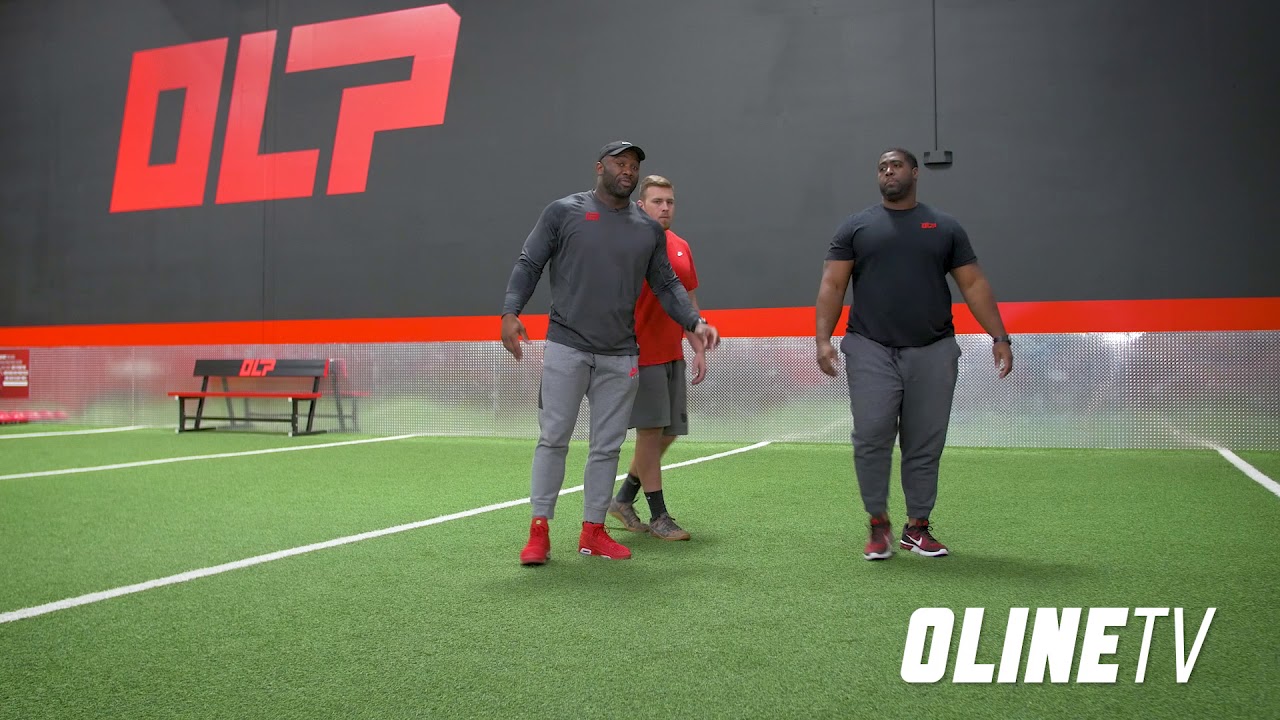
In this O-Line TV episode, LeCharles Bentley, joined by Josh Hansen and CJ Davis, critiques the common coaching cue “strike the numbers” used during pass‑set footwork for offensive linemen. He outlines three detrimental effects of this cue: players tend to strike the numbers too late, they stop their feet, and they lose the crucial edge needed to maintain balance and power. Bentley explains that elite pass rushers deliberately hide their numbers until the last moment, so relying on them forces linemen to react rather than act strategically. To remedy this, he proposes shifting the visual target from the defender’s numbers to the defender’s inside (near) shoulder, which is visible immediately as the defender moves. A brief reenactment with CJ as the defender and Josh as the lineman demonstrates how targeting the shoulder provides a reliable landing zone for the eyes, helping linemen keep their feet moving and preserve edge. Bentley concludes that coaches should adopt this shoulder‑targeting approach to improve linemen’s pass‑set performance.
Chapters
Welcome to O-Line TV. I'm LeCharles Bentley. I'm joined by part of our crew here at OLP, Mr. Josh Hansen and Mr. CJ Davis. Today's topic, we're gonna discuss the coaching point of striking the numbers or targeting the numbers in a strike while taking a pass set. I know that's a common cue that we hear thrown around with players at every level, but there's a potential or potential downsides to this particular coaching cue. Here are 3 reasons that this could be problematic for your players. Number 1, the fact is your players are probably going to strike late, which then leads to the players stopping their feet. And then thirdly, they now lose that all beloved edge that every offensive line athlete is trying to maintain. Why is that? Why are these 3 issues so prevalent when we're targeting the numbers while striking? It's because every single good pass rusher is going to show you the numbers late in the rush. Good rushers do not show you their numbers, which means by the time you're able to actually see the target, it's now too late. The defender has now committed to their move, be it inside, outside, or now through you. And what we end up putting our players in position to do is become reactionary versus being strategic in how they go about their pass set. So CJ is going to be our defensive line athlete. Josh is going to be the awesome, really cool, exciting O-line athlete. And we're going to kind of just give you a visual of what we're talking about. Obviously, this isn't going to be a great visual, but you will see it. CJ, here we go. On my hit— hit— what ends up happening here, as you can see, until Josh could actually see the numbers, things were good. But then finally, when the numbers flashed, the move was already en route, which is not what we want. But here's something that could help your players. Just simply switch the target. Give them something they can see right now. We know for sure that the nearest element is going to be this shoulder in regards to something that the— offensive line athlete can actually touch and get to. So we're going to give you a visual here. By now targeting the defender's inside shoulder with the hips being behind the shoulders, we now know that when the hips move, the shoulders are going to move. This now gives you as the offensive line athlete a bit of an advantage But if I'm looking here, I have nothing to see until CJ does this. By the time he does that, it's too late. But that near shoulder gives you an appropriate target to kind of give your eyes a landing zone. Here we go. Set, hit. Boom. Good. Beautiful job. Now, as I said, this reenactment isn't exactly perfect, but for the sake of demonstration, You get the idea what we're trying to refer to. But the problem— or the problem still remains the problem— when we're now coaching our players to target the numbers of the defensive line athlete versus giving them something they can see right now. If your players are struggling with striking late, stopping their feet, and losing their edge, it could be because of this respective coaching point. If we want to change that to give them more of an advantage, maybe moving that target to something they can see right now will help alleviate this problem. I hope this helps you.