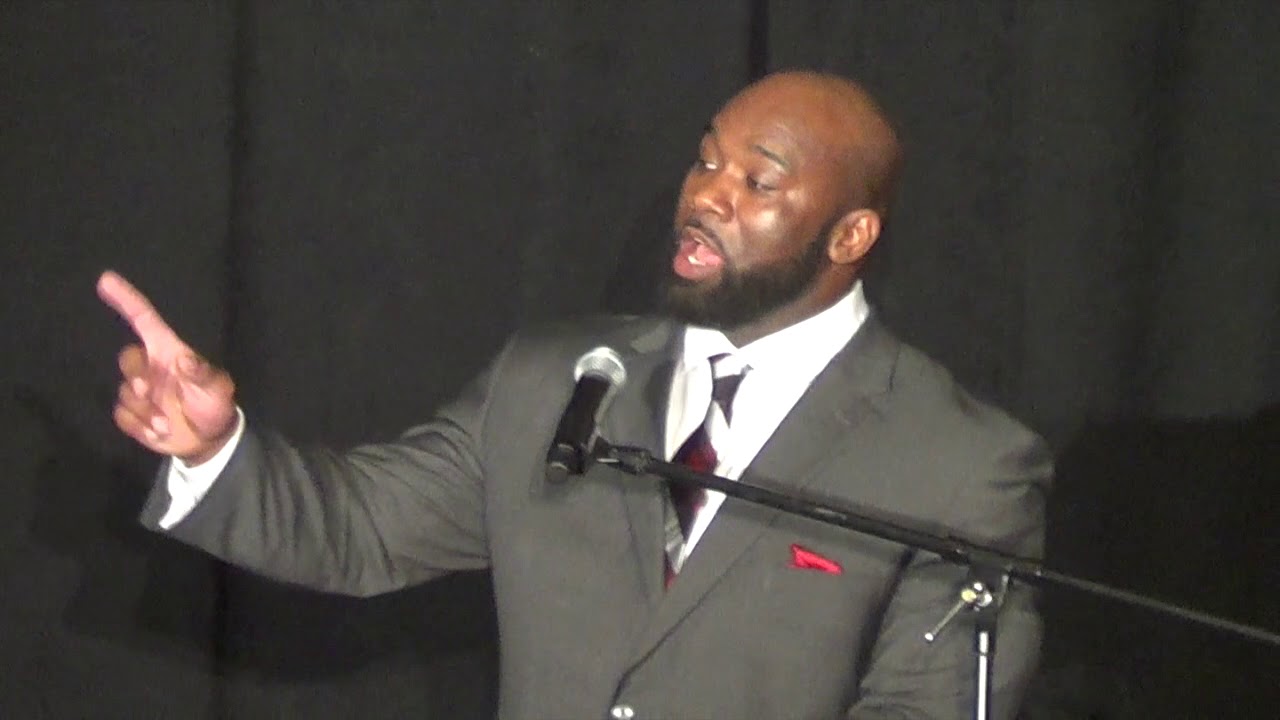
In this Hall of Fame acceptance speech, LeCharles Bentley recounts his journey from a 17‑year‑old visitor at Ohio State’s Woody Hayes facility, where he dreamed of seeing his name on the wall, to confronting a coach who told him he would never play for the program. He describes the tension between youthful, blind faith and harsh external doubt, and how his mother’s unwavering belief helped him persist. Bentley shares the core lesson he has learned: prioritize earning respect over worrying about who likes you, especially in an age of constant social‑media scrutiny. He thanks key figures who shaped his path – his mother Renita Bentley for constant reinforcement, his high‑school offensive line coach Marty for teaching an “appreciation for the process,” teammate Brian Bassett for mental toughness, his wife for being a guiding beacon, and Arnold Coleman for imparting anatomical and movement knowledge that rescued him during dark periods. Throughout, he emphasizes gratitude, the importance of disciplined daily habits, and the value of working hard to gain respect, offering advice to young athletes and entrepreneurs alike.
Chapters
I remember back to my visit here at Ohio State. My mother was with me, and I walked through the Woody Hayes facility, 17-year-old Kevin Freeman. I remember walking down the hallway. The facility was a bit different than it is now. So all the All-Americans and all the Championship trophies and individual trophies were all lined up down the hallway. And I remember being in complete awe. I had gone to a couple other campuses and visited with some other coaches and whatnot, but when I walked through those doors at the Woody Hayes facility, I was in awe. And I remember looking to my mother at the time and I said, Ma, Before I leave this school, they're going to remember my name. I'm going to be on this wall someday. In typical motherly fashion, okay baby, you right. But she said, you can do it. And that's all I needed. Flash forward to my first week on campus. With the program. I had a coach that was a very prominent coach at the time tell me that I would never play at Ohio State. I didn't meet the qualifications, the standards of the other great players that have walked those same hallways and trained in the same facilities and laid the foundation of what this program is all about. As a 17-year-old kid, you're always dealing with two polar opposite realities. One, when you have this blind, naive faith that you can accomplish anything. On the other hand, You have the ugly, bitter reality of the world where people will tell you that you're not good enough. And it was a bit difficult for me to process at that time. I spent a lot of time on the phone with Mama. I wanted to go home, but she wouldn't let me leave. Although I wanted to leave. But she said to me, "You remember what you told me? You told me you were going to be on that wall someday." Yeah. You look different now though. You don't seem to like me. But instead of adopting a "woe is me" mentality, allowed me to sulk in that reality, although it was temporary. I had to figure out as a 17-year-old kid how the hell I was gonna get through this. And I have 5 of my young boys here. I want to just tell them something, and I want to say my thank yous, and I'm gonna go away. But what I realized LeCharles, Antonio, Vernon, Charles, and Andre, who's not paying attention, of course. I realized something very simple. The less time you spend worrying about who likes you, the better off you'll be. The more time you spend and invest in working towards getting people to respect you, the better off you'll be. And those are two different realities. In the world that we live in today, where everyone's so connected, be it through social media, websites, internet, whatever it may be, you're not gonna just have one person telling you that you can't do it. You're going to have potentially hundreds, thousands, millions of people telling you you're not good enough. But in the words of wisdom from Renita Bentley, you can do it. Whatever it is you want to do, whatever it is you want to do, you can do it. And don't worry about who likes you, you worry about who respects you. And the only way that you can ever accomplish that is through working for it. And so with that being said, I want to say thank you first and foremost to my mother. Obviously I wouldn't be here without her today, but outside of the biology aspect of it, it was her constant reinforcement and belief in me that allowed me to believe in myself. Secondarily, my offensive line coach from high school who's here with me today, Marty I couldn't stand that man in high school. But I'll tell you what, what he imparted in me at a young age was an appreciation for the process. And I'm gonna say that again, an appreciation for the process. He didn't care if you were good on Friday night or Saturday night. He didn't care. It wasn't about that. It was about the process. Were you gonna be good on Monday? Were you gonna be good on Tuesday? Were you going to be good on Wednesday? How are you gonna train? How are you gonna eat? How are you going to sleep? All of those elements allowed me to understand the bigger picture as an athlete, but also more importantly, in life. My high school teammate, Brian Bassett, who is here with us today as well, He pushed me in high school. He was someone that maybe didn't have all the physical tools that you would want to be a great football player, but from the neck up, he had everything you wanted in spades. And I was jealous of that because I don't know where the hell he got it from. But I learned from him, and that's why he's here today. And he's actually with me today every day. We work together. He continues to push me, so I thank him as well. This is a bit surreal. This is very surreal. Bella. Last but not least, I want to thank my wife. Although she was not with me through this process, as a former athlete, I've always had a vision and a goal. And in life, we all need that proverbial beacon to navigate us. And this chapter of my life is dead and gone. It's over with. Thank God. But thank God she's in my life because she's now that beacon. She's the person I look to every morning, and I understand that it's not about you. Meaning me. And everyone here that's a former athlete or entrepreneur, whatever it may be, we get very caught up in our own personal worlds. We focus on ourselves and our goals and things we want to accomplish. But I have something in life now that is bigger than myself, and I thank her for that. And last but not least, last but not least, there's another gentleman here by the name of Arnold Coleman. I know my wife, she probably should have came last. But I'm going to talk about Arnold here briefly. I worked with Arnold, I trained with Arnold all throughout my college career. I would go over to the Woody Hayes and do what I had to do there. And I would seek out Arnold, I would train with him, I would do double duty. That's what I thought I needed to do to be the best that I could be. I learned from that man every day, every single day. I learned how to think. I learned how to appreciate the human body. I learned how to appreciate anatomy. I learned how to appreciate movement, and that translated to my performance as an athlete. And in the darkest stages of my life, That man is who I turned to and said I needed help. And you know what he did? He said, "Great." He put me in a squat rack and put a bar on my back. He said, "Let's go." And I thank you for that because I wouldn't be here today without you, outside of my mother, obviously. But I want to thank you for that from the bottom of my heart, Arnold. You did something for me that nobody could have done for me in a very dark period of my life. So thank you. And thank each and every one of you. I'm out of here. Thank you.