Jon and Missy Butcher on Love and Relationship with Lee Richter
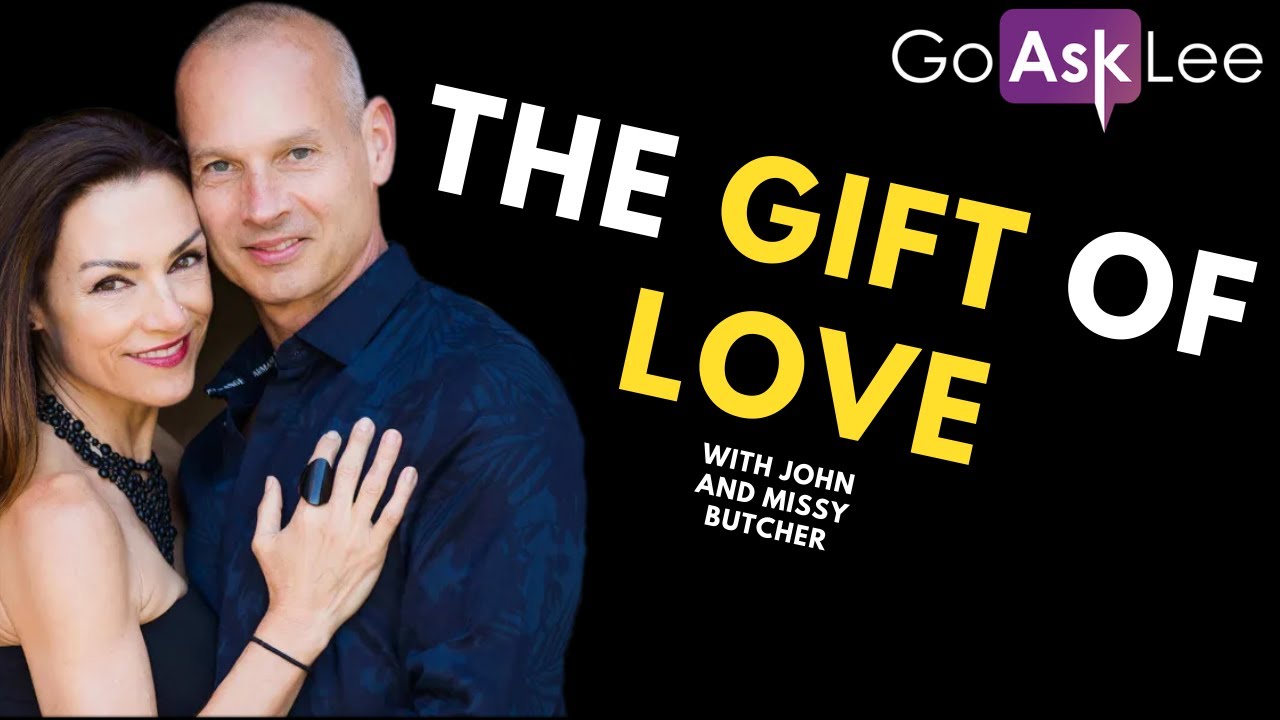
Jon and Missy Butcher discuss how they built an extraordinary long-term relationship through daily and weekly rituals. They walk through their Lifebook 12-category framework and propose a 13th category for sex and passion, plus practical strategies for parenting, belief work, and maintaining connection.
Chapters
So we are so lucky today because we get to spend time with 2 of my friends that are just 2 of the most amazing people on the planet. They're madly in love. They show each other every day, and all of us around them get addicted to love when we're with them. So I'd like to introduce you to John and Missy Butcher.
Hello, Lee. Hi, everybody.
And welcome. Thank you for being with us today.
Pleasure.
And what we're doing is we're focusing on the gifts that people bring to the planet. And naturally, you guys have many, many gifts you bring to the planet. I mean, parents with 4 children, 3 grandchildren, which still blows my mind that you have 3 grandchildren. But also, you make so much time So what I would love to talk to you about today is you guys sharing your gift of love.
Okay.
And love for one another and love for your life and love for the life that you've created. So how would you like to start?
Well, you want to hear some strategies that we use to kind of keep our love dialed in? Because, you know, it was never— I don't think it was ever a goal of ours to be some sort of love example. We wanted to create an extraordinary love relationship. So we were kind of selfishly thinking about this beautiful thing that we wanted to create together. And it ended up being so awesome that it inspires people, which is great, but that was like a bonus. You know what I mean? That wasn't like what we set out to do. But we did set out early on in our relationship, we made a conscious decision, we're going to create an extraordinary love affair out of this. And so how do you do that? And that's what we kind of focused on for a lot of years. What are the strategies that we need to do? What are, what are the fundamentals of an extraordinary love affair that will last for decades, where the fire goes out very quickly for a lot of couples?
Right.
So one of the things that we discovered early on is that what extraordinary love is about is At the deepest layer is it's about connection. It's about 2 people connecting as deeply as you can connect mentally, physically, spiritually, emotionally, right? So we set up connection rituals, very, very clear structured connection rituals early on in our relationship that have a few different rhythms. So we have our daily connection ritual that we do. Why don't you talk about that, sweetie?
So our daily connection ritual is— it's a few different ones, but normally we, after the day is done of work—
5 o'clock, 5:30.
Yeah, we'll meet by the front door in the kitchen, and sometimes we'll grab a beer, sometimes we'll just go without anything, and we take a walk around our beautiful garden and we connect, and I hear about John's day, and then he tells me Or I tell him about my day and we share and we just catch up. And since we work together, it's really important that we do that on top of everything else because, you know, we have to see what happened that day.
Just us, no kids. That's our special time, half hour to an hour to just reconnect at the end of the day. So that's an important one. But our most important one is our weekly dates. And Lee, we have had— we've had a weekly overnight date Just about every week for the last 27 years, no matter where in the world we are, and you know, we go to— we live in different parts of the world every year for a couple months with our kids.
Right.
So, I mean, we're in South Africa, we're in Bali, we're in Nicaragua, we figure it out. We figure out childcare, and it's hard sometimes, but we're committed to it.
Right.
So these overnight dates of ours, we call this our number one love strategy. The reason that the fire goes out so quickly for a lot of couples is because they just stop spending intimate time together. It was hot for the first couple years, right? And it was awesome. And then the kids came and the career heated up and we don't spend as much time together anymore. We don't take time to look good for each other anymore. We've got so many demands on us that we just don't end up— We always end up taking last place. Well, we decided we weren't running that program. And so this weekly overnight date, overnight when possible, it's not always overnight, but overnight's great because there's nothing to break the magic at the end of the night. You don't, you know, come, you go out to a movie, you go out to dinner, you come back to the kids, the magic is broken versus going all the way through.
All the way through the reality, the chores, the— The real life enters back in. Actually, I remember recently I was visiting in Chicago, and that was one of the things you said. Oh, sorry, we're headed on our overnight on the way out. I'm sorry we're gonna miss you this trip. And I love that you're fully committed to that.
It's our number one. It's our biggest love strategy, and we take it really seriously.
And it's great. And you've inspired a lot of people to actually add that to them.
That's a big one. That's a big one. And those dates are about intimate connection. They're about sex. They're hot, romantic dates. And we've done it every week for the last almost 30 years. And that's one of the most important things that we've done that's really kept our love relationship hot and on track.
For sure. And it also, it also really cultivates the other categories of your life, like our parenting is better. We're just, we're just better all the way around. When we're totally connected and humming and in tune, everything goes smoothly in our empire.
And then the love factor becomes contagious for everyone around you.
That's right.
And they want to be happy and in the love boat, as it were, just experiencing that as well, which it is contagious because I've been in the room with you two and everyone in the room is like, I want what they're having. And so I love that you break it down to those. And those are really important points. And also you have Lifebook that you've brought out and you've been sharing around the world. You just got back from being in Spain and sharing it with people. That were there from every corner of the world. I mean, it's just amazing. And you broke it down into categories, and do you want to tell us a little bit about that?
Yeah, I will. And I will say that this tool that we invented for ourselves, we used this for 15 years before we ever showed it to anybody. This was, this was the tool that we created to make our own extraordinary life, right? And but what it ended up being is the best possible tool that a couple can use To get on the same page in every area of their life.
Mm-hmm.
So over a period of a long time, it took us to figure this out. It evolved, right? But what it ended up turning into, we, we took a look at our lives and we said, what are the most important areas of our lives that we have to master if we want to have a really extraordinary life? And over, over the years, we came up with 12 areas. The ones that you are familiar with that you would automatically think about are your health and fitness, Your financial life, your career, parenting, you know. But there are other categories that people don't give much thought to at all: your intellectual life, your emotional life, your character, your spiritual life. So we identified these 12 categories, and then over the years we just went really deep studying them, learning about them, learning best practices, practicing. experimenting. And over a period of 25 years, we pretty much mastered these areas that are the most important areas of life. Here's what that did for our love, which is really interesting. Well, let me just say one more thing about the 12 categories. In each of the 12 categories, we ask the same 4 questions. What are my beliefs about this category? Because your beliefs control your behavior. So what do you believe health and fitness is? What do you believe is proper to a man and woman in a love relationship? Your beliefs are incredibly important and sometimes you can realize you've got some lousy beliefs that were installed in you at childhood or came from somewhere else that aren't serving you anymore and you can do things to get rid of those beliefs and install new, better, more empowering beliefs. So number 1, what do I believe about this area of my life? Number 2, what exactly do I want For my love relationship, for my parenting, for my financial life, for my health and fitness. With clarity, what is my vision? Third, why do I want that? And fourth, what do I need to do to get it? So this is what we've been doing for 25 years, asking ourselves those 4 questions in the 12 most important areas of our life. And what that has done for us is it's literally gotten us on the same page in every area of human endeavor. 90% of the problems that a couple will experience in their marriage will be because they're not on the same page in one or more of these 12 categories. He's a saver, she's a spender. He's a disciplinarian, she's lenient with the kids. They haven't dialed in their strategies, and so they fight over the same things over and over and over and over.
It's true. They haven't even thought about What they want and why they want it. And that is such a core principle that you bring up. Not only what you want, which you can ask people what they want and so many times they don't have a clear answer, but the clear why do you want it. I think when you dive into that piece, it actually can change what you want. It really can.
That's very true.
And that'll also be the fuel, the fuel to whether or not you're gonna get what you want. You've gotta really crank up that purpose and make it compelling. The reasons you want something will literally determine how aggressively you're going to go after those goals. So that is a very important one. So over the years, we just got on the same page in every area of our lives. We know exactly the kind of a life we want to build. We know the kind of love relationship we want to have. We know the kind of physical shape we want to be in. We know how we're going to— why? Because we talked about it and talked about it and talked about it until we dialed it in. And so now it's like There's nothing to fight about that's important. If we're gonna, if we're gonna have a little bicker every now and then because one of us woke up on the wrong side of the bed or something, everyone does that. But anytime we have any tension or friction, it's because of stupid little stuff. It's not because of the big stuff because we've worked all that out. So Lifebook is a really, really great tool for a couple.
Honestly, I cannot believe how many people you are inspiring even just in the last 12 months. In every area that you're talking about. I did Lifebook about, just about 2 years ago now, and I was surprised about the character. Yeah, dialing into my character.
Yeah, something, right?
It was so relevant. I have visited it 3 or 4 times since then. That's part of the reason this series has come up of sharing people's gifts is one of the things I love to do is help people share their story. But it came out by doing that exercise around my character. So it was a nice little gift for myself.
That's great.
And such a surprise. And so now that you've been teaching so many people, what are some of the things that are showing up, especially when it comes to loving themselves and loving their family, that either is a challenge or a surprise that you guys have learned about?
Since we've been sort of sharing some of this stuff?
Yes, since you launched it, your— just your whole series of Lifebook where people come out to Chicago or you've shared the Lifebook with other people.
Well, it's interesting, and you know this, this is kind of a cliché, they say if you want to master something, start to teach it, right?
That's very true.
And so when we, we had our LifeBook as our tool to navigate through this life and to create an extraordinary, extraordinary life, and we used it for 10 or 15 years before we showed it to anyone. Once we decided to actually turn it into a program and share it with the world, and by the way, that was a hard decision for us to make because we're private people. And we don't like being in the spotlight. We don't, you know, we're not super social. We've got big families and we really had to think about whether or not we wanted to open up ourselves like this. But at the end of the day, we shared this with a few of our friends and the results were so extraordinary that we felt like we were given this gift and we had to share it. We didn't have a choice. So we decided to do it.
Mm-hmm.
And, but going in, that was kind of funny, Lee, because our LifeBook would be missing a premise here and it would be missing a vision there. It was our tool, so it was a little loose. When you're going to teach something, you got to dial it in, right? So it caused a tremendous amount of growth in our lives just doing that part of it. And then working with couples and having them come through our doors and seeing where their challenges were and seeing the breakthroughs and the transformations. It's been amazing. It's really been amazing.
And it's been 10 years this year. Yeah, we started, we opened the doors of Lifebook 10 years ago, actually this month.
Congratulations.
Thank you.
That is quite the accomplishment. And stuck with it. See, the perseverance. Not only did you do it, and you're right, sometimes you didn't have to do it and it's still hard work to do it, but you persevered and you continued to do it. And it is making such a positive impact. In the circle that I did it, there were about 20 of us that did LifeBook together. We were in Arizona with Joe Polish. and the Genius Network group. And it was amazing because the 20 of us that were in that group, when we see each other, we realize how connected we are because we went through it together. But we're already noticing how much we're interested in each other's success at a higher level.
That's awesome.
Because we did take it to the basics and then build off of that foundation, we're very curious and supportive of each other about, you know, what's your success and how's it going and are you going online and Because it's beautiful to go online and update it and make it fresh for right now. I also love that you split it in the 12 categories so each month you can choose one and deep dive in it.
So I'll just explain that a little bit. In our membership program, after you've gone through LifeBook, we have 12 months, 12 categories. And so in January we do a deep dive in health and fitness. We curate the best cutting-edge content in the world. We have awesome interviews and discussions, and you just spend the whole month Studying health and fitness. February is intellectual life. We go deep into all the best practices, you know, and we do that 12 months, 12 categories. Going through 5 cycles of that, 5 cycles, like, it's nuts. I mean, you literally master these important areas of life. So that has been extraordinary for us as well.
Excellent. So should we talk about the 13th chapter that didn't make it into the book, which I think is very interesting and what makes the world go around, and it's definitely on the Yes, it is.
Yeah, for sure.
Yeah, okay, now this is something that, just for a little backstory, Missy and I have, we've been in this 12-category methodology for 25 years, but all the way through that we had kind of a little secret, a little under-the-hood secret. We called it Category 13, and Category 13 is basically sex, passion, and intimacy.
Mmm.
So love we explore deeply in Lifebook. We go all the way with love. Category 13 is definitely love-oriented, but it's got a different flavor. It's about lust and passion and sex, and specifically how to use the energy that a couple can create from sexual vibration, sexual energy, and how to take that energy and point it at other areas of your life to create success. So we've been studying this for— well, we made a commitment to each other the first year of our relationship that we just were very interested in sensuality and sexuality and eroticism, and we took it seriously, and we decided to go deep and study it worldwide. We amassed a huge erotic library, and this was before the internet where you had to actually do stuff manually. You had to go out and it didn't come into your living room like it does now, right? The old-fashioned way. Sleep in the car. So we've always had sensuality and eroticism as a big, big passion of ours. But over the last 5 or 6 years, we've been specifically studying how to use this sexual energy and leverage it to get what we want in other areas of our life. We thought that we had come up with this all on our own because we had no role models. We had nobody that had carved this territory before us. We thought this was just our little secret. And then we discovered or remembered— this is so crazy, Lee. I'm wondering if you're going to even know about this, but Napoleon Hill in his book Think and Grow Rich, which arguably launched the personal development industry and completely changed the course of the human race, right?
For sure.
There's a chapter in that book that almost nobody remembers. It's chapter 11. I didn't remember it. I read that book 3 times. It's called The Mystery of Sexual Transmutation, and it's about this exact issue. It's brilliant. It's about how to take sexual energy and leverage it to turn mediocrity into genius. He does a great job of explaining what it is and And kind of how it works, but he doesn't do a good job explaining how to actually do it, right? Well, it was the '30s. It was the '30s. For God's sake, it's taboo now. Can you imagine what it was like back then?
Yeah.
But we've been experimenting with that for 5 or 6 years, so we've really dialed in some strategies on how to literally use this, and that's the next thing we're going to be exploring. So We went to Spain last month and we were like, we made a video with Akira that's extraordinary, that talks about, introduces the concept of Category 13. And we said, all right, we're gonna show this to an audience. These are our people, you know these are our people, right?
There were 300 people there.
Young, open, intelligent, just the really cutting-edge personal development people. If it ain't gonna work on these people, it ain't gonna work, right? So we went and we said, we want to test a few things. We want to test how will this crowd respond? How will it land with them, number one? But number two, and most importantly, how will we feel about talking about this in public? So that was the big test.
So this was the big unveiling.
This was the big test. So we went and we presented it, and it just simply brought the house down. It brought the house down and it was fun for us.
Yeah.
And one thing that we know from working with so many couples that have come through our door is this is so needed. This is so needed. If you don't dial in your sex life as a couple, you're missing such an incredibly important doorway into that deep intimate connection that we're talking about, which is the core of a love relationship. And we've seen so many people struggle with this. To make a long story short, it looks like we're positioned for something really, really special here. So more on that later.
I look forward to it. It really does light people up, but it also lights you up, which is really great that you get to share that. And now it's not a secret anymore, so it'll be fun to see where this develops over the next 5, 10, 20 years. So that's great. Thank you for sharing that with us.
You're so welcome.
So when we talk about love and your family, you spend so much time with your family, and you've really molded a life where your family is first, how the kids are learning, their love of learning, how they love themselves, how you guys love yourselves. What are some of the hot tips that you just, you know, the basic things for people to think about that would be good to share?
I will lend to my mentor and teacher Nathaniel Brandon, who talks about self-esteem. But you needed to say this because you're far more better spoken than I am. So will you share just the concept of self-esteem?
The concept of self-esteem.
Yeah, because that is really self-love.
It is. And self-esteem Self-esteem is basically— Nathaniel said, there will never be a judgment that you pass in your life more important than the judgment you pass on yourself. There you go. Right? Self-esteem is so incredibly important, how you feel about yourself, how you trust yourself. Do you trust yourself? Do you have the ability to make good decisions? Do you admire yourself, the way you handle situations? You know, this is such an incredibly critical part of life.
You know, it's interesting. Our 13-year-old son is going through our online course, Lifebook Online. And we were doing the intellectual category yesterday. And he— we were talking about beliefs. And oftentimes problems like that, when you don't have a good relationship with yourself, come down to the beliefs that you have about yourself. And so Justin was having— he's been in a lot of trouble lately because he's 16— or 13. And, you know, that's what it is. And I was sharing some of my premises with him to get him started. And he said, one of mine was I always, I consistently make good choices. That was my premise. It's a belief I hold. I always make good choices. Even though sometimes I don't, that's what I want to believe in. And he said, well, I don't think I do that, Mom. I can't do that. And I was like, yes, you can. You haven't lately, but you definitely can. So John came in and worked with him and helped him turn that belief around.
I had a talk with him. It was beautiful. And I said, Just, here's the thing. You're mischievous.
Yeah.
You're a 13-year-old boy. 13-year-old boys are mischievous. He was born in the year of the monkey, so he's especially mischievous. His day in the birthday book is the day of the mischievous maverick. And I said, so you do stuff like yesterday he dyed the milk blue. Dyed the milk blue.
We had—
And dyed the cream pink. So I mean—
We had cream potatoes and blue chicken.
It's not like he's going out and blowing up schools. He dyed the milk blue. So I said, just these are mischievous little things that you do. You sneak a screen, right? I said, you're a kid, this is natural. They're not bad things. And so it would be a big, big mistake for you to start— because he gets yelled at a lot because he does shit like dye the milk blue.
But now we're laughing more.
But it's like, but it's like, Justin, it would be a big, big mistake for you to start thinking that you do bad things because you don't do bad things. You never hurt anybody. You've got a heart of gold. You just do mischievous things. The most important thing is for these kids not to develop negative beliefs surrounding themselves. That's what you've got to be careful of.
Right.
School is another thing. School isn't meant for some kids. School is like jail for me. And our daughter is dyslexic, so, you know, she had a hard time in 2nd and 3rd grade too. And you don't want to develop a belief that you're stupid because you don't learn the same way as other people, or You've got to be very careful with the beliefs you develop around yourself. And Nathaniel was widely regarded as the pioneer and the world's leading expert in the subject of self-esteem. He wrote 20 books that are very, very much worth reading if you want to really, really learn a lot about self-love and how important it is.
It definitely is important. It is the foundation for everything.
Yeah, it is.
I love that it brings us back to LifeBook again too, because That is why you look at the beliefs first, because we see what's serving us now. And if it's not, let's change that belief. And so you're teaching your son in real time that same philosophy, which is great. And that helps the entire planet if we can catch it in the moment and say, let's investigate this. Is this working for us now? And if it's not, let's improve it. So it sounds so basic, but in the moment, it's not always.
I mean, that was probably a life-changing conversation for him. He got it. That landed. He got that. And so that's a good distinction. I don't want him feeling, just because he gets in trouble all the time because he dyes the milk blue, I don't want him thinking that he's a bad kid. I got to cut that in the bud. He's an awesome kid who occasionally dyes the milk blue.
I think all the self-love problems we have come back, can come back to your beliefs. A belief that was installed by your parent or a teacher or someone in your life.
I'm not enough.
Yes, somewhere in your emotional body when you were younger or just through genetic or something.
But it's also our perspective when we first put the belief in there when we're 10 or 13, our perspective is different than now. So revisiting it, which is why it's such a blessing to revisit it.
And sometimes you can just let them go. They got caught in there. Sometimes just bringing consciousness to, oh, I was taught that the love of money was the root of all evil. When I was 9, and I never let that go. And now I know that I can let that belief go. Right?
Let's hope we learn that early on, to just let those go. That is a true gift though, so thank you for sharing that. And you two are just such lovely people. Thank you.
You are absolutely lovely. You're an angel. I tell you that every time I see you.
Thank you. I feel so blessed to have you in my life and that I get to spend time with you.
Thank you.
And I'm so inspired by the way you parent your children and how you care for one another and how you care for the planet and how you fly all the way to Spain to share information with people because your heart says this is information worth sharing. And you're right, you're set up. You don't have to leave your cushy, beautiful house, but to do that is a really big gift. It really is. And I want to thank all of us, all from everybody that I know, We want to thank you for sharing those things.
Oh yes, thank you, Lee.
And is there anything else you'd like to add before we go on the topic of love?
Got anything, sweetie?
No, just thank you for asking us to do this. We love you. We love doing this, so thank you.
Thanks.
I adore you guys too.
Thanks, Lee.
And it is such a pleasure to know people like you even exist. It really is great.
Thank you.
Thank you so much.
Awesome. That was great.
More from Lee


Do You Actually Own AI Content? The Copyright Truth Every Entrepreneur Needs to Know (2025)