Lee Richter and Eric discuss how to launch and market NFT projects, covering Discord and Twitter tactics, community building, and valuation. They reference GaryVee, Stoner Cats, and Bored Apes as examples, and address security, regulation, and use cases from metaverse to real estate.
Chapters
What I love about this conversation is any business, small business, medium-sized business, big business, they can all apply these ideas right now. So one of the things I was thinking about is we should talk about some of the ideas that we can put into play, but also some of the pitfalls we might have to pay attention to. So when we're thinking about who might have opportunities and pitfalls, let's talk about the sellers first. What would the sellers be thinking when they look at opportunities and they look at pitfalls? What should they be aware of?
Well, I just think as a seller, you want to know when you're timing the market because, you know, if you look at equities, timing the market historically is a really difficult thing to do. So I know holders of Gary Vee who they bought and then they sold very quickly and they doubled their money. But gosh, if they had held right now, the appreciation has been staggering and it's the same that has played out on a number of different projects. So Really think about why you're exiting a project or why you're looking to bring it to the market, what you own. So that would be the biggest thing is I would get counsel. And there's actually some really good organizations out there now that are starting to be able to provide color and actually value your NFTs, which I think, you know, you've had values and appraisals on so many different things. It's just like any other, you know, asset that you're able to get an appraisal on. So if I had a large collection, that would probably the first thing that I do, because you don't know what you don't know.
So even having a crypto manager or someone that's helping you develop it, but creating the strategy and the tactics.
So, exactly that. So there have been crypto funds for some time, and you're actually starting to see NFT DAOs come into the realm. And so this is a collective that is investing and sometimes even uh, endowing or sponsoring an artist to be able to create projects. And so look at those, look at what they're doing. But also there are now appraisers in the space. And so really, if you have a large collection and you've done well on it, the markets give you a lot of clarity on that. But then there are outliers. And so if you feel like you have an outlier asset, you definitely want to get a professional opinion and some color on it because you don't want to go out and put a fixed price price of 50 ETH on something and the market value was really 500.
That's true. Yeah, the second person with their smart contracts is going to be even smarter that way. But also with the seller's thing is if you have a campaign and say you're selling 10,000 NFTs, now you have to have a marketing strategy. So one of the pitfalls is not putting a marketing strategy in play early on. When we talked to Gary Vee, one of the things he said is he wished he did it auction style at Christie's. One of the things he said is He wished he started his Discord earlier. He said, oh, I wish I just started it one month earlier and got it in momentum. So what are some of the pitfalls or opportunities that you see when you're launching a whole entire campaign as a seller?
Sure. So when you're looking at a project launch as a seller, that's a whole different beast. You absolutely want to do what we've talked about already several times. You want to engage and build a community, and so you need to get people excited. Excited about wanting to be a part of this. And like any good marketer, you want to create FOMO. You want to create that fear that if I'm not in this right place, or I don't know the secret password at that particular time, I'm not going to be a part of— and conversely, you want them to feel like they want to be like— they want to be like this community. They want to be a part of this community, or an extension, or an ambassador of the community. And so you can do that through Discord. You can do it through Telegram. You can do it through Twitter. You can do it through videos like this. I don't care how you do it, but do it and do it everywhere. Our dear friend Dan Fleischman always talks about being omnipresent. Yes, that is what you want to do. If you're dropping a project out there to the community, you want to be everywhere that you can possibly be because you don't know where your ideal customers are. Because when you're putting a project out there, you can have a good idea of what you think it will be and what it will represent, but then it can go left when you thought it was going to go right. And so all sudden you could end up with, you know, a cohort group that's completely different than what you would have said. Oh, my ideal customer is, you know, X, Y, or Zed. And it turns out that it's, you know, K-pop fans under 18.
And you weren't prepared.
Exactly, exactly. So be everywhere when you're dropping a project. And then also support it. Like, that's the biggest thing. Like, do what you say you're going to do. I think the most successful projects right now Show clarity, they show a roadmap, both short and long term. And mistakes happen, things happen. And so they're also very, very transparent when they pivot, when, hey, we're changing or we're doing something different.
Or change the timeline. I mean, Gary Vee changed his timeline because of ways that were showing up for him. Either things didn't work out right or not enough people opened their wallets yet. There were different reasons, but he was transparent. And he let people know that that was changing.
And do you know the crap that I heard at the time that he was getting about that? Like, oh, he wasn't ready for primetime, he wasn't this, he wasn't that. Look who's laughing now. He's done phenomenally well. And more importantly, he already had this raving fan culture that he's created. Now he's got like this top tier of like evangelists. They really are just that, like They identify with this VeeFriends collection in a way that I think every entity, personality, you name it on Earth, would thirst for people who were that excited about them.
And it was just a fun, easy project for him at first, but he took it seriously. He put a team on it. He paid attention to everything he needed to. He adjusted the timeline as needed. Even though he got flack, he did what was right for the campaign. And he's still learning. The other thing that I know that he divulged to us on that Zoom call Is that he had 5 million people on the list, but only 50,000 open wallets. So you can also see, like, it's still so new that it was only a small percentage of people that actually took action. But it's that small percentage that have the gains right now.
It's true. And I think as we see maturation in the space, you're going to see an easier on-ramp and off-ramp between fiat and crypto, and then crypto into NFTs. And so That adoption curve will go up, up and up.
Yes.
Because right now when you say, oh, open a MetaMask, or you have to do this, or it's confusing for people, it can be, and it's not that difficult. But anytime you go into the unknown, people are scared. And so the easier we can create platforms and remove the friction, I think you're going to see the plurality of people over a course of time get involved.
Right.
And that's when it's gonna get really, really interesting for me. It's like, how do you go from the 1%— and now I'm not talking about like wealth 1%, but—
Participants.
Participants right now is less than 1%. Um, so when we go to 5 or 10, or, you know, we get up to that 50 tipping point, I think it's going to be a global shift in the way that we all do business. And I probably sound like a madman when I say that right now, but it's just because I've had so many meaningful conversations and I've been shown so many companies and projects that are out there right now. I believe it. I believe it to the core of my being. And I am all in right now on NFTs.
I love it. I've watched you transform your entire life to be an expert in this field. So I'm grateful that we're doing this together and we're learning together and every day adding more and more knowledge, but more and more curiosity. more and more experts to our repertoire. So it's super fun being on this journey with you.
Oh, well, thank you. And I couldn't think of anybody better to be on this journey with.
I love it. And you and I are talking about bringing NFTs to the medical community. So that's a really serious community. And yeah, pets are nice. And I have it for the vet hospitals and real estate is great. But when we talk about medicine, that is a game changer for all of us. So I'm super excited. Stay tuned. We'll tell you more about that later. So right now, I wanted to ask you, we just talked about opportunities and pitfalls for sellers. I'm wondering, can you think of some opportunities and pitfalls you'd like to share on the buyer side?
Know your projects, know what you're investing in, know why you're investing in it. Don't just go out and buy the hot thing. Or maybe you do that. But I like to know who I'm doing business with. And believe it or not, you're actually doing business with them, and you're becoming part of their community, and honestly part of their business in a way that most transactions in business aren't. And so I really like to know any project, the origin story, why they're doing it, Who's behind it? Who's promoting it? Who's getting paid from it? All of those things are vitally important, and that may sound like a laundry list of things that I just talked about, 5 or 6 things. It's really not, and with a rudimentary amount of research, you can find out who the players are and what the real origin story of it is.
I love that. I mean, the GaryVee Friends, a lot of people got involved because they're fans of GaryVee, or they're interested in him, or they trust him. One of the things I got involved in not too long ago was Stoner Cats, right? Why? Because Seth MacFarlane and Chris Rock, they came together, they created a project, but they also created a way that they were going to share, but you had to be an owner in order to see and have access. So I'm like, wait, if Seth MacFarlane is coming out with new content and it's NFT related, I want to make sure I'm in that cool kids club and I get to see. So I did purchase some Stoner Cats and I have been going in there and seeing it. But as a buyer, I did exactly what you said. I paid attention to who I want to follow. Do I trust them? Do I believe that what they're doing, they're going to actually execute? And is there value there for me? So you hit all of those touchpoints. Is there something that they should beware? Like, I know in crypto people have lost Bitcoin because of wallets and different things have happened they might not have anticipated upfront. But as a buyer, is there something that I should be aware of as buyer beware if this is happening in your NFT transaction?
Uh, not anything that like screams out at me other than just protect your assets. You know, this is crypto, it's weird. You know, uh, you will often meet people in the crypto sphere and they're 2-phone important or maybe even 3-phone important. It's just because everyone is hypersensitive to their privacy.
Wait, we have 2 phones right now? Oh my God, that's just becoming a norm, right?
I know, I know.
One for our crypto life and one for our real life.
It's true, it's true. I'm waiting for a device that really could merge ecosystems. That would be phenomenal for me because I get, I get dad butt because I keep my phones there.
But you have to because it is separate conversations right now when we're in the crypto world. We have to have our mindset of the future with us.
No, absolutely. I was just at this conference, the Mainnet that I was talking about in New York, and so many people, even though they're wearing badges with their name and their company, They were very, oh, this is my Telegram. And like, it's just, it's kind of a funny, you know, ecosystem that's developed around it. And I think that's actually going away over time because it's getting pushed into the corporate norm. And so that's probably—
It'll get normalized.
I think it really will. And I think that as we, you know, start to see adoption scale go up, as we start to see the awful R-word regulation come and rear its ugly head, I believe that we'll see kind of a shift in, in the dialogue and the way that people, you know, look at this asset class. Um, and that's a whole other rabbit hole.
Mm-hmm.
That's a whole other episode we could talk about because, quite frankly, the SEC has put themselves in a really interesting and difficult position, um, to be an authority at a national level of a global decentralized asset. I personally think the genie's out of that bottle, so that's going to be a difficult thing. And then—
How do you regulate after it's already in the ethos, right?
Well, and then like, okay, they're already talking about and struggling with cryptocurrencies, never mind NFTs, right? Like the contracting and enforcement around that, like it's going to be a very arduous road that they're going to have to travel. And if they don't, I think it's going to slip away from them.
It's going to be hard to come back and make things happen after the fact.
Yeah.
So yeah, and there's going to be—
I am not a lawyer. That was not securities advice.
But it's just our observation being in the industry and also hearing the talk at the water coolers.
Absolutely.
Because we're hearing from these attorneys and other collectors and people that are creators on what they think. But also leaders in other countries have come in and talked about this too. And they're like, the United States needs to do this and China needs to do that. And all of them are paying attention. And I think there's a lot going on behind the scenes that we just don't know yet.
Oh, absolutely. And I mean, let's be real, the idea that we're going to hold— I'll go off camera for a minute— this stuff 20 years from now, it's just probably not going to be true. And so if you believe that, it's time to reevaluate how we look at everything. So if that's no longer going to be part of our day-to-day life, why on earth would I be Signing contracts to memorialize a business relationship. Why should I have to wait 30, 60, or 90 days for title to clear on a house? If you had an immediate NFT, that could be instantaneous, right?
Yeah, I know. That's where the world is going. So one of the things I've noticed is you have been a part of several literally global campaigns around NFTs, and you've learned a lot along the way. I know that. And what I want to know right now is, based on the things you know, What would you do different in some of those campaigns?
Well, I wish I had that time machine. That would be phenomenal. It would have to start with what I've already preached. It's community. I believe that we don't spend enough time, and it's not project-specific, even the ones that have done a phenomenal job at it. It's about building community. It's about getting people engaged beforehand, and it's almost creating the ecosystem before you deliver the product. And so already socializing it, already maybe even delivering some teaser content to get people just frothing. So when it's released, you get projects that— you see these, like our dear friend Sean. Sean Kelly had a project called Dino Chibos. He had a sellout of his presale in 40 seconds.
40 seconds.
His main sale sold out in 18 minutes.
And it's because even he did not predict that.
No, no, no, it was a phenomenal success. But the reason it was, I believe, is because he had socialized it so well. He had put it into the hands of the right people, but he had really created that idea that, man, if I'm not a part of this, if I don't act now, if I don't pounce, it's going to be gone and I'm never going to have another chance at it.
It's that ultimate FOMO.
Absolutely.
And we all have that with, um, CryptoPunks. I know because we were there from the beginning, and you know, the FOMO is not fun when you watch other people people go ahead with your idea, right?
You know, $7 million later for an individual NFT, that gets your attention.
It does. And everyone's like, I don't get it. Well, guess what? Whether you get it or not, it's still happening.
Yeah. And the thing is that so many people have made so much money in the crypto sphere and they want to continue to support the community. And so they don't look at this— we've already used this as a point of reference— they don't look at that as an asset anymore because they live in a digital realm. They live in a realm where the metaverse is the next big thing. You know, people laughed when Spielberg a couple of years ago put out a movie called Ready Player One. That looks a lot like what we're marching to. And I can personally speak that I'm invested in some technology companies that are forwarding that level of agenda. And so I don't think that we're that long from where a lot of our day-to-day life is spent in the digital space, not in this little small screen, but in an immersive environment. And I see NFTs in the metaverse playing a vital role in that. And you're already seeing that in a bunch of different games and communities and ecosystems where they're utilizing aspects of that, where you're able to buy different avatars or different outfits or different functionality.
Or skins. I mean, you just can change your eye color, you can change anything you want. Right, in real time. I love the idea though of everyone building those communities, right, and being online, and everyone is included. It doesn't matter which country, there's, there's no barriers. Everyone is on the— has the opportunity to be on the inside.
Absolutely. And there are projects out there right now that are doing not only phenomenal numbers and making investors or people who hold it money, but on day-to-day, this is now the livelihood There are in Decentraland or some of these other metaverses, there are casinos that employ people and people are showing up to work just like you would a regular job. And casinos, just because we're filming in Las Vegas, was the first thing top of mind. But I'll tell you, any other sort of commerce is being done in these ecosystems. And so there are real dollars being transacted and there are real lives being affected because people are making money and they're taking it offline. And feeding their families and doing good in their community and changing lives.
What I love too is there are 16, 17, and 18-year-old billionaires already because they did not have to unlearn our banking system. They did not have to unlearn things. All they did was go full charge with what is. They didn't tell their brain, oh, I can't do this and I don't understand it. They just said, I'm participating. And now millionaires, multimillionaires, and billionaires are made out of teenagers around the globe. They are leaders already, and they're just getting started.
I just talked about that magical time machine I wish I had. I will tell you, that is the absolute truth. I meet with so many founders in this space, and they're 22, 23, 19, and it's just like, wow, like they got curious at a really early age. And so they'll have this curve of learning and growing that I could never possibly imagine. I look back at when I was 22, I was lucky that I could balance my checkbook, and spoiler alert, half the time I couldn't.
Yeah, and they are out of the gate not only taking action, becoming successful, but they're building empires based on this. So as we're talking about building empires, and we were talking about Floyd Mayweather before, and that's one of the campaigns that you brought forward from the beginning, which Was very pioneering, and what a great team you had working with you as well. And I was in those Clubhouse rooms and part of that launch with you, which I love. What I'm wondering is, what are some of the tactics that you use to launch that other than just his fame?
Well, again, you're gonna hear common tactics at this point. It's Twitter, it's Discord, it's Telegram. Um, these are just the places these conversations are taking place. You're starting to see a lot more activity on Instagram as well, um, but it's all of the regular channels that you would think you'd normally want to promote something on. And then it's the engagement that you can create. It's not just the likes, but it's taking the likes online to a different ecosystem. So it's maybe going to a metaverse where you have a gallery and you're displaying your NFTs beforehand, or you're taking them to the marketplace that you're going to do the drop on. It's just getting creative and it's finding as many lines that point back to the project. And so for me, I think about like all roads lead to Rome. And so how can I create this little map of all of these ancillary communities? And they may be slightly divergent, but when you look at them in total, it's this massive movement that you're creating. And if you do that right, you get— I shared this with you, but I'm still— it resonates with me months and months later. I was in a room celebrating the Bored Apes Yacht Club, and I heard this gentleman share for like 5 minutes that he so personally identified with his ape, and he felt like his ape represented who he was in the real world. It was like mind-blowing to me at the time, but right, I can get it.
He's like, I am the ape. And we're like, we don't get it at first, but now we're like, yes, you are the ape. You were smart enough to say yes from the beginning.
Absolutely. And who's being rewarded? Look at what that's going for now. Look at what that community has, uh, you know, seen from an adoption standpoint. When you start getting personalities, you know, sports stars like Seth— Seth Curry, not Seth Curry. When you get sports stars like Steph Curry buying a Bored Ape, that's when you know, like, hey, I've entered popular culture. And you brought up earlier in our conversation about, you know, Saturday Night Live. You're hearing about this. Not— it's not just CNBC talking about this anymore.
It's not just Bloomberg News saying pay attention or not pay attention. It's our culture. Yeah, it has infiltrated in every little bit.
And you're seeing events, you're seeing events pop up all over the place, mainstream events where they're starting to talk about it, or you're even seeing some very innovative events already do their ticketing that way, which we already talked about.
I love it. And also hybrid accounts. I've had clients where they have digital art, but they actually use a studio with TVs to show their digital art. So it's an actual, you know, showing, just like you would go to an art showing or an art launch. It's all digital art in there, and it's a physical place. They've done it in Oakland that I know, and also in LA that I've attended, where it was all digital art but on display for you to see all in one place. So they've, they've put the 2 concepts together because some people want the experience in person and some people want it just online. But here is a way for you to get both and still build the community.
Absolutely. And one of the hottest new galleries in LA is an NFT-exclusive gallery, like, and I think that could probably be the norm. And you could have this amazing traveling exhibit that can go from one day to the next and be in a different location, but still keep that exclusivity that art has had in its kind of aura or ethos forever.
One of the places you were mentioning, Instagram earlier, which seemed a little unlikely for me to see it there, but I am seeing a lot of NFTs listed on Instagram now. Clubhouse has a lot of people that not only are part of the Clubhouse community, but then in the link to their Instagram, you can go see their art. So one of the ones I want to tell people to see is NFT Art. I love that artist. Every day he's posting different things, but also showing you how to use it in stagnant art, how to use it with music, how to use NFTs with motion or digital art or video. So that's one place to look. Another place is go in Clubhouse, look in the rooms. There's a lot of NFT rooms. You'll see the experts in there. You'll see some Bored Apes as their emojis that they use or their—
Avatar.
Their avatar that they use. Yeah, you'll see the Bored Apes as the avatar they use that in the beginning we thought was confusing, and now it just shows they were early adopters in the game and actually took action at the right time. So what are some of the places that you go to for information? I know NFT Tips, and what kind of things do you like when you're going and gathering your information?
Well, um, I know Scott at NFT Now, and so he obviously is a trusted resource. Um, Jason and Aaron at NFT, which is NFT Genius, um, Mark Cuban invested with them, so they might know a little bit about what they're doing. So those are a couple of the resources that I use, but then also just socializing and talking like this, because that's where I get a lot of the best tidbits. It's like, oh, what are you doing and who are you doing it with? And even off camera here, we did that little break And I'll tell you, we have a really small but intimate, like, amazing world that's being developed around this, and I'm just waiting for it to explode. And so I'm hearing like, oh, they're doing that, and wait, they're doing that, and it's just like starting to bubble up. And you're starting— I, I talked about—
It's like those initial websites, right? In the beginning, it was just a few people that had websites, and corporations had websites, but then all of a sudden, little mom-and-pop shops, and then The people who didn't even have a mom-and-pop shop, just had an idea, and as it builds, the internet grew, right? But in the beginning, we had to type in HTTP.
Yes.
Now we don't. It's the same thing as NFTs. Right now it's an NFT. What will it be later?
I actually think NFT personally is an awful name, so I think we'll probably land on something else. But, um, you obviously have heard the passion that I have around this, around the idea of what it can be. I believe that this can be the answer to a lot of the things that ail us as a community, not only from a business standpoint, but also a life standpoint. Like, you can do things in a transparent way that it's just— that's not how the world transacts right now.
Yeah.
And so, for me, that's one of the most exciting things. And it doesn't always get talked about, but in conversations that I am in, it gets talked about because I think it's so vitally important.
Yeah, I do too. So you were talking about community before, and we were talking about the Floyd Mayweather launch and other launches. When you look back, is it building the community that is the most important piece to you right now? Because as you're doing the second Floyd Mayweather launch, and you did presale, and I know you had like 70% sales out of the gate before you even launched, is it because the community was already there and they were taking action with you?
Yes. And also, I mean, there needs to be some standards. You need good art, you need good utility, you need a great Why? And that's what I talk about in business all the time. What is your why? You need to start your project with that same reason. What are you doing it for? And it can't be for the almighty dollar. It really has to do something larger than that. And so—
So you're saying impact is one of the biggest drivers?
Well, speaking of that project specifically, we were able to donate over 150,000 meals as a result of that project. And so that was Okay, we're doing something, but we're doing something for a purpose. And so it felt really, really good when we were able to, you know, make that announcement that we made that sort of an impact.
That's incredible. And actually, that was a big point for everyone in the audience is, and we're feeding people. So it was including people that sometimes would be left out. So I love that. It's brilliant. This conversation has been amazing. It inspires me to even go out and buy more NFTs and to get more involved. So what I'm wondering for our last and final question is, since you're so involved in this, is there something that I should have asked you that I didn't that you would like to share with everyone right now? Something that's important to you about this marketplace?
Well, I, I said it to start and I'll say it to finish: get curious. Go out there, find projects that resonate with you, find reasons that it works in your life, or more importantly, find reasons that you could adopt it in your life or in your business. And then also, there are so many communities and so many events that are popping up around this. Spend some money, go attend these things, go get into the ecosystem, because you'll get blown away just like I was. I didn't start this way. I didn't start as this like raving evangelist for the space. But once I saw what was possible, once I saw the success that people were having, but more importantly, Fun, because you always talk about this— easy, lucrative, and fun.
That's a Joe Polish saying I will attribute to him. It is the ELF mentality. It must be easy, lucrative, and fun. This falls into that category.
Absolutely, on all levels. And so that's why I'm doing everything I can to promote it. Um, I'm very fortunate that I'm involved with some high-level events. I've been speaking about it. I've been interviewed for documentaries. I can't believe I'm actually saying this because this is the first time I'm publicly announcing it. So we're doing an NFT week in Miami between the Ultra Music Festival next year and the Bitcoin conference. It is going to be world-class. It is going to bring the luminaries of the space together to talk and forward and celebrate all things NFT. And I'm just— I'm so humbled that the city asked me and my partners to actually put that on. I don't know how that happened, but—
Because you're curious, because you're interested, because you're a leader, because you're there, because you know the mayor of Miami, and he wants to be a leader on the planet in this space. And so him looking for help from someone like you is exactly what we're telling you guys to do. Look for the people in your ecosystem that can help pull you along as well and help you be more curious and help you take action.
Oh, I love that, Lee, and I love you, and I'm so, so humbled to share this stage and this time with you. It's been a phenomenal conversation. I cannot believe how long it's been. Um, so, uh, if you've stuck with us this entire time, I'm eternally thankful. Um, but more importantly, I am challenging you to go from here and do something. Take the next step, take action, go buy an NFT, go get registered for something. Yes. Go to a website that you've never gone to before and just read up on it. Because I'm guessing that if you do that, if you take that one step, you're gonna be me, you're gonna be her before you know it, and you're gonna be like, NFTs are the best thing ever.
Well, it's interesting. I'm gonna wrap up with a little story that happened to me just this week. I was a speaker at— actually, I led the meeting at Genius Network for Joe Polish, and we had people in the room and we had people online. And we had a segment about NFTs, and it was so electric in that room. People were on their feet, they couldn't wait to talk about it. We couldn't shut anyone up on the break to get back in the room because all they were doing was chatting about how NFTs will affect their business. Well, what happened later that day is one of the participants, who's BJ Fogg, who wrote the book Tiny Habits, he went and took action that day. He set up his first wallet, he went and bought cryptos. The next morning he wrote me a note, he texted me and said, Thank you for inspiring me to action. So here it is, one of the best writers ever on our planet. His book won number one business book on all of Amazon last year, and it's called Tiny Habits. And what he did is he took his first tiny habit to get involved in this space because he doesn't want to be left behind. He wants to be included. And I hope that we've done the same thing as inspire you to take action and be included too. So thank you, Eric. I know this is just the beginning of our trek together. You and I have a lot of plans on what to do in the pet industry, what you're going to do in real estate, what we're doing even to just enrich people's lives. So, we're bringing the entrepreneurs with us especially the ones that, you know, might seem a little older for this conversation. What we want to do is say is everyone's included. Now, I have a 17-year-old daughter. I know in a year or 2 she's going to be teaching me a lot more than I'm teaching her. What Darrell did was he invited his 24-year-old daughter into playing with him in this space so that not only would she learn Not only would he learn, but they'd be collaborating together. And that's one of the things I think is genius, is people including their generations with them. You don't have to do it alone. Include your friends, include your family, include your community, and build an even bigger and more meaningful community together. So, as we're signing off right now, I want to make it easy for you to find both of us. You're going to find our Instagram and all of the notes and everything in the show notes Now, our team will go in and update things on a regular basis. So not only see it today, but make sure you come back and see the updates as well. Things are changing every day. We have to keep people informed. But be curious, stop here, and make sure you keep yourself informed as well.
More from Lee
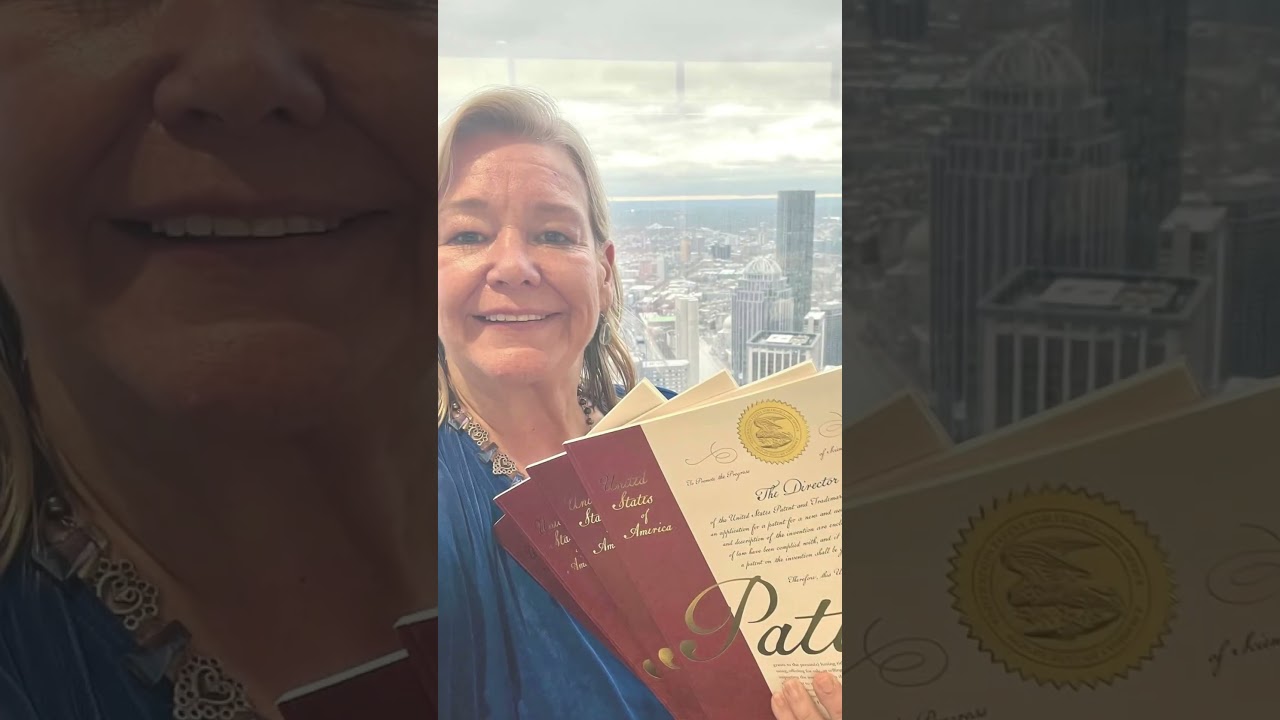

Do You Actually Own AI Content? The Copyright Truth Every Entrepreneur Needs to Know (2025)