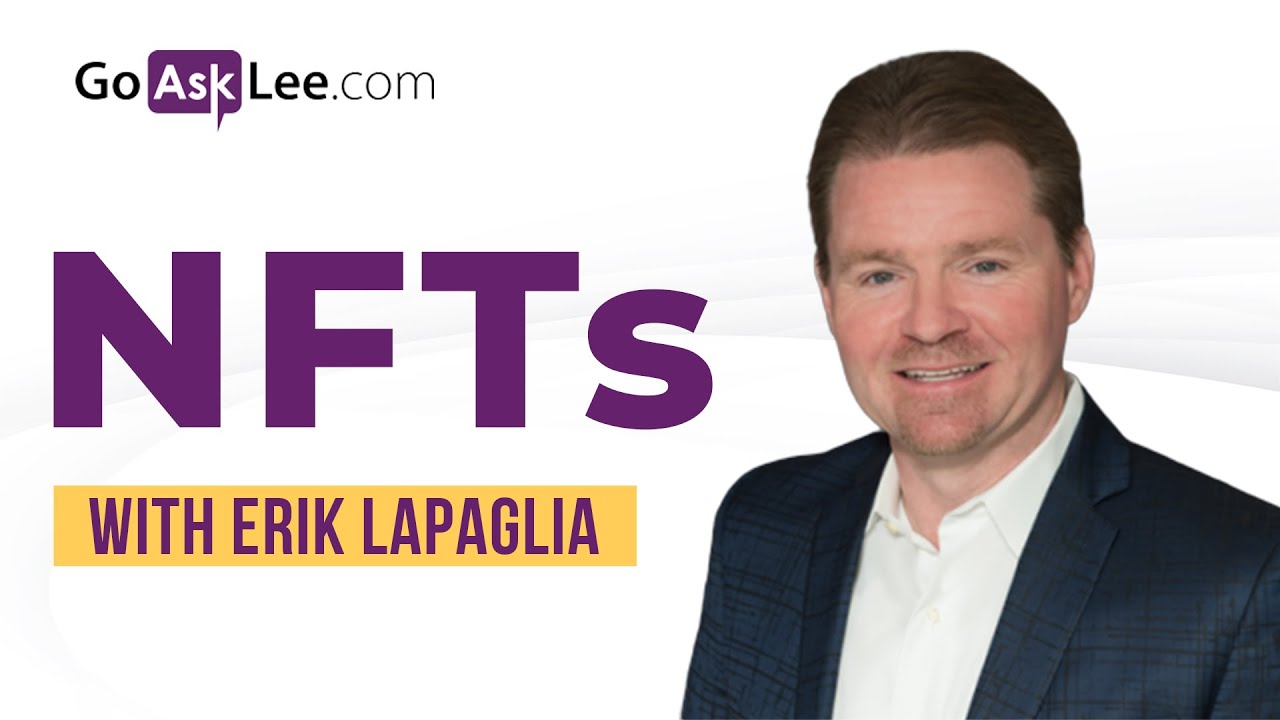
Erik LaPaglia, an angel investor, explains why NFTs are the next major shift after crypto, comparing them to how the internet led to websites. He's launched celebrity drops like Floyd Mayweather's and sees real use cases in real estate, ticketing, and luxury goods where smart contracts enable perpetual royalties.
Chapters
Today I want to introduce you to the very special Eric Lapagna, who is an angel investor, an entrepreneur, and a founder of successful companies in real estate, in advertising, film production, consulting, and retail. He's got his hands in a lot of things for a reason. That's the place to be. He excels in helping companies maximize profitability and market potential. Now, as an award-winning marketing sales expert, Eric is brilliant at influencing high-ranking individuals and key decision makers to implement new strategies and tactics to improve their business. Now, Eric pairs his passion for business with the commitment to his ever-growing learning. He is a lifelong learner like me. So please welcome my friend, Eric.
Oh, well, that is about the sweetest introduction I have ever heard. So thank you so much, Lee. I'm so just over the moon about spending this time with you and the fact that we connected this way and we have the shared passion about this space of NFTs, this amazing new sandbox that we all get to play in. I just could not be more excited about spending this time with you.
Thank you. And, you know, we, we know that NFTs have been around a little while and you and I have been in the crypto market since like 2014, 2015. And just a few years ago, we were with Warren Buffett. At his annual meeting. We weren't even talking about NFTs then, and now it is like something we can't stop talking about. So that cracks me up, like how much changes in such a short time. So my first question for you and the audience is, how did you get started with NFTs?
Um, so I got started in NFTs because I got interested. Um, you know that I was early to crypto. The problem with being early to crypto is I had a lot of friends who said go all in. And I said, hey, I'll dip my toe in. And so I made some investments and I did very, very well. Those same friends are now often several of them living in Dorado in $20 million mansions on the water and flying their private jets. And so when I saw what was happening in NFTs, I really said this is the massive inflection point around cryptocurrencies that I will not miss. And the best illustration that I can tell people or share with people is that for me, the internet is to websites the same that crypto is to NFTs. And so the internet is just this amalgamous thing, but websites are what we access it through.
That's where we can monetize. That's where we can connect. That's where we build our communities individually.
Exactly.
So you're seeing the same with NFTs, like that's your individual footprint. That's your individual contribution.
Yeah, no, I said absolutely. But I mean, it's true, because you can grow, you can do things you You can be creative in a way that you just can't in a lot of other vehicles, or if you do it, you have to build all these clunky layers on top. The beautiful thing about an NFT is you can add utility at any given time. You can say, hey, I want to pivot this way, or I want to do this, or— it's just limited by your creativity.
It's true. We can't even imagine all the ways that will— it will change our business and our lives. But for right now, there's many ways that we're going to talk about. So I'm wondering, how has this impacted your life so far?
Well, I mean, you mentioned that I had a real estate development company. I have ostensibly shuttered it. I really have. I've hit the pause button. I've been very fortunate. I've got a great team of people who work for me in that space, and I've been able to hand them off to other peers that I have in the industry.
So you've made that a self-managed company so you can put your brainpower into this new trend?
Fully focused on NFTs right now and the opportunities around not only adoption right now, because what we're doing, it's very cute. I love the creativity, I love the art aspect, but for me, that's kind of like the finger painting stage. Where it really gets sexy, where it really gets interesting, is when we look at tokenizing real estate, or we look at adoption at the corporate level for smart contracting and build in that functionality. Imagine if you owned a sports Sports franchise, the biggest component of revenue that they do not get to participate in is secondary market activity in their tickets.
That's true.
If you issued your tickets as NFTs, you'd get second, third, fifth bites at the apple, however many times that ticket sold before it was game time.
That's a really good point because we were talking about that earlier with artists. When they sell their art, they usually get one payment, and then whoever resells it gets the other payments after. You're saying the same thing with tickets. People sell on Ticketmaster and then somebody comes and scalps them, sells it 2 or 3 times, whereas now Ticketmaster or any other company in the smart contract would be included every single time instead of skipped out of the transaction. That's a brilliant way to look at it.
No, I really think it's the future. And you were talking about art and like specifically fine art. I really see a utilization there. We were actually at the same event where we were listening to Pomp, Anthony Pompliano, talk about what he called smart art. And it's just that this piece of art that's sitting behind us, this artist was paid one time when they sold that piece of art. But if it was done as an NFT, which means that the physical asset would be tied to a digital proof of ownership, when it was sold in the future, that same artist would get another stream of income, a second, a third, a fifth, a 45th time. It doesn't matter. The contract doesn't care how many times it trades in the marketplace. It's just automatically routed to the originator's, uh, wallet.
And so— And it's automatically— that's the key. There's no accounting. It's built in the smart contract from the beginning and lives forever on the blockchain. So those are the rules in the smart contract, is the rules of that contract.
Clarity. And you've heard me say this probably ad nauseam, but I'll say it to you guys because you haven't heard it yet. The only difference between third world and developed nations is proof of ownership. And this levels the playing field for that. This really gives a platform and a functionality that removes from the equation, is it his, is it hers? No more. It's just right there in the smart contract for everyone to see.
I love it. It is clarity. Yeah, and clarity is king in a lot of ways. Okay, so what are you personally using NFTs for right now, either for you or your business or your clients?
So I mean, obviously you know that we've done some celebrity-driven drops at this point, and we've also been involved in some community-driven drops, which have been very, very— I'm very fortunate that they've been super successful. Where I'm really pushing the envelope and looking to actually get that first piece of business or that first transaction is in the tokenized real estate space, because you brought up that I do have a lot of experience in this space, and I just see such an opportunity that I would love to bring to partners that I've worked with. And so to walk you through what that could look like, imagine you and I and 15 of our friends were buying a 100-unit apartment complex.
In Puerto Rico, of course.
In Puerto Rico, of course, of course. Um, so I would be the GP, everyone else would be the LP. Great, except the problem is, say You need money or the partner down the road needs money and you have this limited partner position. Normally what happens is you won't be able to get that money out. It's an illiquid asset until I do something with the property. I sell it, I refinance it, I trigger it in some— yeah, exactly, an exit event.
A sale event, yeah.
With an NFT, you can sell that and it doesn't bother the underlying asset. And the beautiful thing is, as a GP, I love the fact that you now have liquidity in this asset 'Cause I get another little piece as well. So—
It's a selling point, but also revenue-generating point.
Exactly. And what it does too is it removes from the equation the biggest problem that people with syndicate investments hear from potential limited partners. It's an illiquid asset. I'm stuck in it until you do something. This removes that. This is going to be a game changer.
It changes everything. Yep. Because that is the number one question that people ask. How long will it be till I can get my money back?
Absolutely.
And now you're like, Whenever you want, find a buyer.
Yep, absolutely.
And in the smart contract, because you're in there 1, 2, 3 times, if it's resold, you don't mind if they find another buyer. As long as they pay for it and they participate, you benefit.
Exactly.
Which before you wouldn't have. It'd just be a pain in the ass phone call, frankly.
Oh no, it would. It would be that pain in the ass phone call. And, you know, sometimes you'd structure and try to find somebody, but then you're halfway through— there's just a thousand headaches that it eliminates.
So you're seeing it practical in business, but I see it as also lighting a fire of excitement under you. Like, this is something where, because you see so many big avenues of how it could play and you're one of the first people there, what I see it as a way of really making you really excited about business like I've never seen before.
Uh, it's true. I mean, I'm not gonna lie, right now the opportunities around what NFTs are and the applications of that, it's just mind-boggling. I shared with you, I was just in New York last week at Mainnet. And what I saw there was just nothing short of earth-shattering. The crypto protocols and the way that there's innovation around that space, that's really, really like near and dear to my heart. But the applications I saw with NFTs, from educational components to gameplay, one of the most exciting companies I saw was a company called 4K. They're at 4k.com. I do not get paid for representing them.
Not an affiliate, we're just letting you know.
Well, because what I thought was really neat about them, they're actually looking for a custodial role. So they're starting with fine watches and then they're going to high-end, uh, collectibles. So think Louis Vuitton handbags or sneakers. And what they'll do is you'll send it in, it will be authenticated through this platform, and then you can NFT the item. So you can offer it for sale, and if someone buys it, they have a choice at that point. They can continue to have them keep custodial, uh, custody— custodial custody, I don't think that's the right way I meant it—
Physical.
Physical custody of the item, or you can have it shipped on to you. And so this just kind of is so massively disruptive. Some of the oldest companies on this planet are Sotheby's and Christie's, both auction houses, and I know for a fact that they are looking at implementing not only what they've done in the NFT space But how to do the same, NFTs for all of the goods that they sell, because it gets back to what I said earlier, proof of ownership, provenance. This is a game changer.
It's absolutely true. And that's the funny thing is you're right, it could be an investment and collector opportunity, and it's not an acceptance of the piece until the last person's like, I want to turn this NFT and actually have that Louis Vuitton bag or those custom sneakers. It can pass 3, 4, 10 times before someone actually cashes it in. So that's brilliant. When I'm using it as tickets, it's the same thing. They can over and over and over sell it until the day they want to execute and actually use it.
Well, look at what Gary Vee did. I mean, the cornerstone of the VeeFriends was the 3 years of conference attendance. And so right there, that's the similar—
Front row. I know.
The similar type of utility that we're talking about. Imagination. Like, the best corollary that I can share with you, um, the former Chief Imagination Officer of Disney was a gentleman named Duncan Wald. I'm pretty sure that's his last name. But he talks about this idea of when you have an opportunity to come up with something new within your organization, you're given a rule: you can't say no. So anyone who says no, but, you're actually booted out of the room. Or you're given like, yeah, exactly. And it's all about yes and, and I feel like that's how NFTs, or at least the projects I'm working on, are really coming to life with this kind of, this aura of how do we create a yes and environment and make it bigger and bigger and bigger? Because you can.
Because you can. So we've seen stories about Beeple selling his for $69.3 million. And we've seen all these different people have these gigantic launches. And some people are like, wow, that's too big. That's too much. I can't. I can't understand it. I'm scared. But really, everyone should be paying attention. So I wonder, I want you to share with everyone why they should take NFTs seriously in their life right now.
Well, let's talk about a couple of things. First, that $69.3 million, actually Justin Sun, if you believe the video that's out there, was actually trying to bid more. So you only know where it could have gone if that bid had gone through, because Metakovan, I don't believe, was going to lose that auction. But why an everyday person should pay attention is because there's an application for you. I don't care who you are. I don't care what stage of life you're in. There is a use for NFTs in your life right now. And you might be saying, Eric, I only do X or I only do Y. Why should I be paying attention to it? Because it gives you access to a technology that seems like it's from the future, but it's really not. It's just a level playing field for transactional business. So, I don't care if you're a coach, or a hairdresser, or you have a daycare, anything that you can think of, there would be an angle and an application. And if you don't come up with one, get ahold of the two of us, because we will help you come up with one.
And on top of it, if you don't come up with one for your business, your competitors are, and they're gonna take a lead, and you're not gonna be able to catch up, so.
Isn't that the truth?
That is the truth, so don't fall behind. Start with everyone else and take action. So taking it seriously is like, it's going to infiltrate all of our lives. In the next 3 years, we're going to be so surprised in all the ways NFTs are infiltrated in our daily life, right? So I'm wondering, when we're creating campaigns and we're creating ideas, I'm wondering from you who's launched, you know, the Floyd Mayweather NFT, which is famous, infamous. I mean, I spent time with you and Floyd Mayweather in Miami right before and right during the launch. And what I say— see is A lot of excitement and a lot of people that want to be involved. So because you've done these launches, I want to know, what do you think it takes to have a successful NFT launch campaign?
Well, you said something right now that I really want to touch on. You said it's going to infiltrate everyday life. My hallucination is we're probably 18 to 24 months from some platform out there where there is 100 million plus user adoption and 99.5% of the people have no earthly clue that what they're transacting in is a crypto product or an NFT. It's just going to be another thing that they do. And it's actually where we started mass adoption. The NBA Top Shot, they never once talked about the fact that it was an NFT. They just said it was this digital thing. And lo and behold, millions of people got involved.
Right. And it was a sports topic and people wanted to be included, like being in the stadium. So whether they knew the background or not, they still participated. But underneath it was a crypto.
Absolutely. So yeah, and I want to answer your question. What do you think that— or what do I think that it takes? Um, I think it takes creativity. And I know I've used that word like 1,000 times already at this point, but it truly is that. So if you have IP, if you have an idea, if you have a business, there is an application. And so first thing is, I'd say— and I love the power of a white piece of paper— I would get out a white piece of paper And a pen. I would get in a peak state. And so whatever that means for you, maybe do some jumping jacks or something. Be standing up when you do it. And then go on a rant. So either write it down—
Write it down.
As fast as you can in 2 minutes. If you don't, if that doesn't feel natural for you, pick up your phone and hit the record button and do the same thing. And after that, go back and listen to it and see where you can implement it into an edit. strategy. And again, it will feel weird. It'll feel like, no, I can't do that. But think about it. Think about how those lines connect, how those dots start to fall into place. And you're like, oh, actually, there's something there. I could be a, you know, real estate developer and use an NFT strategy. I could be, you know, a gardener and use an NFT strategy. I could be a vet and use an NFT strategy.
And the veterinary hospital, we're looking all the different ways that we can honor our clients and their pets with NFTs, but also create ways that people have access to the doctors through NFTs. So absolutely, that's, that's on the drawing board for us right now. I can't wait to implement that. And when you're thinking about it, is there certain technology that you want people to know about, to pay attention to first?
Well, I don't want to say that I have a favorite. Ethereum obviously is the leader in the clubhouse right now. And one thing that I had as a takeaway from Mainnet, I was actually surprised how many things are still being built on Ethereum.
Because it's the one we know right now.
It's the one we know.
And it's still affordable, you know, compared to some other things.
True, true. But I think that there's also some new coins, there's some new protocols out there that are introducing some really interesting functionality. So I would pay attention to Solana, I would pay attention to Polygon, I would pay attention to— well, there's 3 or 4 others, and maybe we can actually drop them in the comments.
We'll definitely put them in the show notes at the end, and they'll be evolving. That's one of the things I love about you and our team is that we can go in the show notes and constantly be adding new information. So keep coming back and looking in those show notes, and you'll see some of the technology ideas and marketplace ideas that we have. One of the things we talked about in one of the other episodes was OpenSea and how you can create your own store there.
Yeah.
So are you seeing that in other places other than OpenSea?
You're starting to— obviously what Devin and Alex have done is just nothing short of miraculous. They've gone from zero to over $3.5 billion a month in activity, and they're doing it with a team of 57 people. It's kind of insane.
So it never happened anywhere. I can't think of anything that is a multi-billion dollar company and has only 57 people on team.
Not at that scale and not at that kind of saturation in the market. I mean, OpenSea right now is really the 800-pound gorilla in the space. Um, who knows where the future will lie, but right now their future is very, very bright by all outward appearances. And so—
And they're very, very involved in the community. They're paying attention to the creators. They're paying attention to the collectors. They're paying attention to their consumers. They're very much in tune to all their categories.
They really are. And so I brought up the founders. Devin actually spoke at Mainnet. And so that gave us some great insight into what they're thinking about the future of NFTs. And if I'm bullish, if she's bullish, they are every bit of that, if not more. Uh, they just see this as such a massive opportunity and such a disruptive application of technology.
Um, they've become global icons because they took the first step in 2017 when CryptoKats and CryptoKitties were being born. They were also being born. They were at the forefront of not only having ideas but implementing them in space that never existed. So talk about pioneers. I love it.
Absolutely. And I firmly believe, you know, I say this again all the time, success leaves clues. And so you're seeing a lot of the other platforms start to adopt. And so you talked about individual markets that are stores that people can have. Maker's Place is doing something like that. Ethernity is doing something like that. Swappable is doing something like that. So you're starting to see a lot of the similar playbooks roll out. What I want to see is that next wildly disruptive one who's like, I don't care what the playbook looks like, I'm tearing it up and we're going to do it our way.
Which can happen. That's how things like Amazon and Airbnb are born, right? Is do it completely different with zero inventory. Yeah, just brain power.
Yeah.
So it's about to come. I love it.
Well, but that's what NFTs are. These people have zero inventory. They're simply laying in the middle of the transaction, and it's a beautiful place to be for them because They really get optics on everything that's going on and every transaction they're getting revenue.
That's true. Seeing behind the scenes is kind of valuable right now because you see where the eyeballs go, you see where people click, you see where people stay, you see where people exit. They have a really nice vantage point.
Well, you know, that's funny that you bring that up because there was a story a couple of weeks ago about one of their senior employees at OpenSea actually being accused and stepping down because he was front-running projects. And if you don't know what front-running means, Uh, he knew that things were going to go to the front page of the marketplace, and he was buying them beforehand.
Um, now it's insider trading.
Yeah, yeah, yeah, that's not legal. But the beautiful thing about that is that wasn't the SEC that caught that, that was the community that saw that and said, hey, this isn't right. And so for me, that was actually a beautiful story because it's the power of the blockchain at work, right? And so if you look at like How that could be applied to any sort of governmental spending, corporate spending. Imagine if the banks and the mortgage companies had their balance sheets on blockchain back in '07 and '08. Wow, we wouldn't have had the mortgage crisis.
It would have been a completely different story because we would have been in the know instead of in the dark.
Exactly.
Absolutely. And I think the government was in the dark on some things too, and they became in the know later, whereas if it was on blockchain, it'd be transparent. And that's what we're seeing right now. That's why the banking system Absolutely. Decentralized for a reason, to protect us.
Well, you saw Jamie Dimon, and I'm sure you guys know this. It's very famous that, you know, he basically tried to say that Bitcoin was tantamount to fraud and that it was going to go to zero. Well, lo and behold, what he's done over the last couple of years since he said that very famously, he's hired thousands of crypto traders, he's hired cryptologists, and now he just said this week, that he thinks Bitcoin is going to 10x in the next 5 years. That is not a price prediction, but that's just me anecdotally saying, oh, that's an interesting worldview shift. So if you're seeing people like that, luminaries in the space, if you're seeing, you know, Paul Tudor Jones say that you should have a 15 to 20% allocation in crypto, like, so crypto is obviously the underlying. But then NFT for me is the reason that crypto is then so very valuable and so very viable. So if you're seeing billionaires get interested in the space like Paul Tudor Jones, like a Ray Dalio who said that he'd rather own Bitcoin than a bond, that to me says, hey, let's pay attention. Let's see what's going on there. And for me, that then led to the NFTs saying, oh my gosh, this is the reason for— this is the reason that crypto is so valuable. I mean, let alone the fact that no No fiat currency in the history of mankind has never not failed, which doesn't exactly create, you know, a warm fuzzy feeling around the US dollar. I'm not saying that it'll fail. I'm just saying if history is any indicator of future, I'd want to be, you know, looking at other assets. And so that's what this is.
And they used to say put 10% in crypto, then it was 15%, now it's 20%. So they're, they're increasing the amounts to be in there. One of the things that I see as success leaving clues is when NBC on Saturday Night Live had Elon Musk on and they did a parody around why to have NFTs and they did information. He even had his mom on there talking about it. And what I realized is if NBC is not only paying attention to it but spending that much time on it, I'm wondering what is their policy and strategy behind the scenes? Because they're educating the audience, they're raising awareness about it, For some reason, right? Elon Musk is talking about it for some reason. So that was my first clue to pay attention even more and take my portfolio from 10% to 20%. Same thing. It's like, if these billionaires are paying attention and they're taking time and looking at it, it's something worth our attention as well. I mean, that was in the beginning for me, but I hope that's inspiring others to also join in and pay attention.
You look at all the corporations right now that are doing these little cute projects like Nike. I love what Nike did. If you didn't see the drop, they did digital shoes, and the digital shoes then could be spawned into real physical shoes. And then I have an NFT, Lee has an NFT, we can have a little shoe baby, and we can have derivative shoes. I mean, it's a really, really interesting and fun project. And you've seen Pepsi with Frito-Lay do something, Burger King, I mean, just name— Coke did it.
Yeah, one after another.
But I promise, just like Lee said, they're doing things in the background. This front-facing project is great PR. I love the move that Visa made a couple of weeks ago. They bought a CryptoPunk. Now, I think that's a genius move for them because that gets them ingratiated in the community. But more importantly, what a great marketing tool for them to market to a demographic that's actually leaving the traditional banking system. To make them feel like they're a part of.
And speaking of CryptoPunks, what makes them so popular? Is it because they were there first? Is it the demand? Is it the creativity? I mean, it's a very simple philosophy of just one little picture, but when we were in Miami, I would see billboards around town with just that picture. So they are branding around it. So what would you say about CryptoPunks?
Well, I'd say about the Bored Ape Yacht Club, CryptoPunks, any of the really massively successful drops right now, it comes down to community and these people identifying with what has been represented in the NFTs. And so it's honestly, it's not even always about the utility because those 2 projects don't have a ton of utility behind them.
It's not like they have a gaming or a metaverse or somewhere else to go. It's just that one piece. However, it's iconic because it's from the beginning. It's a foundation piece.
Exactly. And so there was actually just a project that— and again, this is not an endorsement, and full disclosure, I do own some Um, there was a project on art, uh, on Solana called ArtPunk, and it was from, uh, again, I understand it to be— I could be mistaken— from the same team behind, um, CryptoPunks. And so they've taken a fine art angle on the CryptoPunks, and I was all about it. I saw them and I'm like, they're the cutest little things. But again, because I wanted to be part of the community.
Well, that's what happened with CryptoKitties. They thought, oh, let's just see what we can do and make a gaming thing out of this. And now they've created a crypto community that they never even imagined could be one of the most successful stories that we could even tell right now.
It's true. And then another thing about these really high-dollar single individual NFTs, I love the fact that there are players in the space who are now fractionalizing ownership of those.
So, yeah, and I will tell you, that's so new in the market and that people are thinking that way already. I mean, think about You know, timeshares, that's fractional ownership. Someone gets one month, someone gets one week, someone gets another month. That's what we're doing with NFTs. We're breaking it down into pieces. Yeah, already, and it just got started.
And don't use timeshare. That's an archaic— that's an old saying. Everyone wants to talk about tokenizing real estate. It sounds a lot to me like what a timeshare may have been called 20, 30 years ago, but it's just a new application. It's bringing technology into the equation in a way that wasn't before, right? And so it's making the old all new again, which I kind of love. I love the fact that some of these things that had been considered passé all of a sudden are now earth-shattering revolutionary ideas. And you're seeing companies out there raise millions or get billion-dollar valuations, and it's like, hmm, I've seen that before.
But, and that's the thing about saying as, as a timeshare, is us oldbies who do have timeshares, we're like, Oh, now it makes sense because I get January and someone else gets February. I'm a fractional owner. Oh, that's what can happen in other avenues as well, including NFTs.
Absolutely.
But you're right, we're making it new again. The new generation, that is 17, 18, 19-year-olds, are making it what's worthwhile for them. I mean, they're all about access community. They're all about access economy. They have been for a while. They would rather lease a car than buy a car. They'd rather lease it by the hour or an Uber, lease it by the need when you need it. So rather than just buy a car and have an expense, you now can have it as needed. it. It's going to be like that in a lot of different places. Access economy.
Completely, completely. And it levels the playing field too, because sometimes in the transactions of the past, you, you had this opaque nature to it where it's like, oh, what did they really pay? Or what is that really worth? And this, it's all verifiable. It's all open source. And so you brought up artists earlier, and one of the biggest adoption curves that I think will happen in the next 6 to 12 months is actually in the music industry. You've already seen a number of prominent drops. Lance did an album, he sold a million units of it in a minute. That's disruptive. That's a game changer. And so when you have these larger organizations like Atlantic or Warner Music that have dozens, if not 100 lawyers in their contract enforcement department, and you can remove that Oh my goodness.
Changes everything. I mean, you and I were in the Clubhouse when we saw Snoop Dogg launch his first one and raise $800 million or $800,000 right there on the spot. And it was in Clubhouse. And he was surprised to being in there and seeing all the people involved in real time, just buying his NFT and owning a little piece of his history, right?
And he actually just this week, Snoop paid millions for a project called Asshole. And so he's still deep in the Yeah, laugh it up. That's really the name of it.
People will remember.
Yes.
They always remember their last asshole, right? So, okay. So I want to talk to you a little bit about smart contracts, right?
Sure.
So when you're thinking about this, and like you said before, even in a real estate transaction or a fractional ownership or any of that, every time it gets sold, whoever's in the smart contract and built in will get paid over and over and over again. So in smart contracts, how are you seeing them? How are you seeing them for the public, for artists, And making a difference?
Well, I think there's a threshold. I've seen some really offensive royalty structures tied to NFTs.
As in like 50% goes back? Yeah, like kind of a greedy way.
It's just like, no, let's look at the ethos of what we're trying to build here where it leaves trails for everyone who's involved. And so a royalty structure, you know, in the low single digits up to maybe 10-ish percent feels right to me. Um, some transactions—
Doesn't feel greedy. No, it feels fair.
And especially like what we did with the Floyd Mayweather drop, there is a secondary component, but it goes back— not all of it, but a good share of it goes back to the community wallet to support the future efforts of what we want to do at the community level. I love that. So that's where I think it can get really, really interesting. So imagine you're an uber-successful corporation and you've given lip service or even done a lot of donation and given a lot as a corporation. This just democratizes it. You see it plain as day. Oh, they give 3% of everything they sell, or they give 10%, or whatever the number may be. So I think—
Because it's transparent.
Exactly, exactly.
Well, I will say in the past too, I've seen some people see the smart contracts and see 30 or 50% go back, and then they don't want to participate because it does feel greedy or not in alignment with their own values. So that is a really big piece of it, is to factor in how's it going to land on the creators and how's it going to land on the collectors.
I think an equitable transaction is what we're all looking for. And so when you see a number like that, 30%, 40%, 50%, it just makes me question at a number of different levels, like what exactly the thought process was or who was giving them counsel. Because if I was anywhere within earshot of those people, I would say no, and not because I don't think that they're worth that. I just think that human nature is that we want to be fair to everyone. I know that everybody's the hero in their own story, and sometimes it feels like people are against you, but I've always said people aren't against you, they're just intensely for themselves.
There you go. They're intensely for themselves.
More from Lee


Do You Actually Own AI Content? The Copyright Truth Every Entrepreneur Needs to Know (2025)