Lee Richter explains NFTs as unique digital assets built on smart contracts, contrasting them with fungible tokens like cash. He traces their history from CryptoKitties in 2017 to Ethereum, and highlights how programmable royalties let creators earn from every resale, transforming the art market.
Chapters
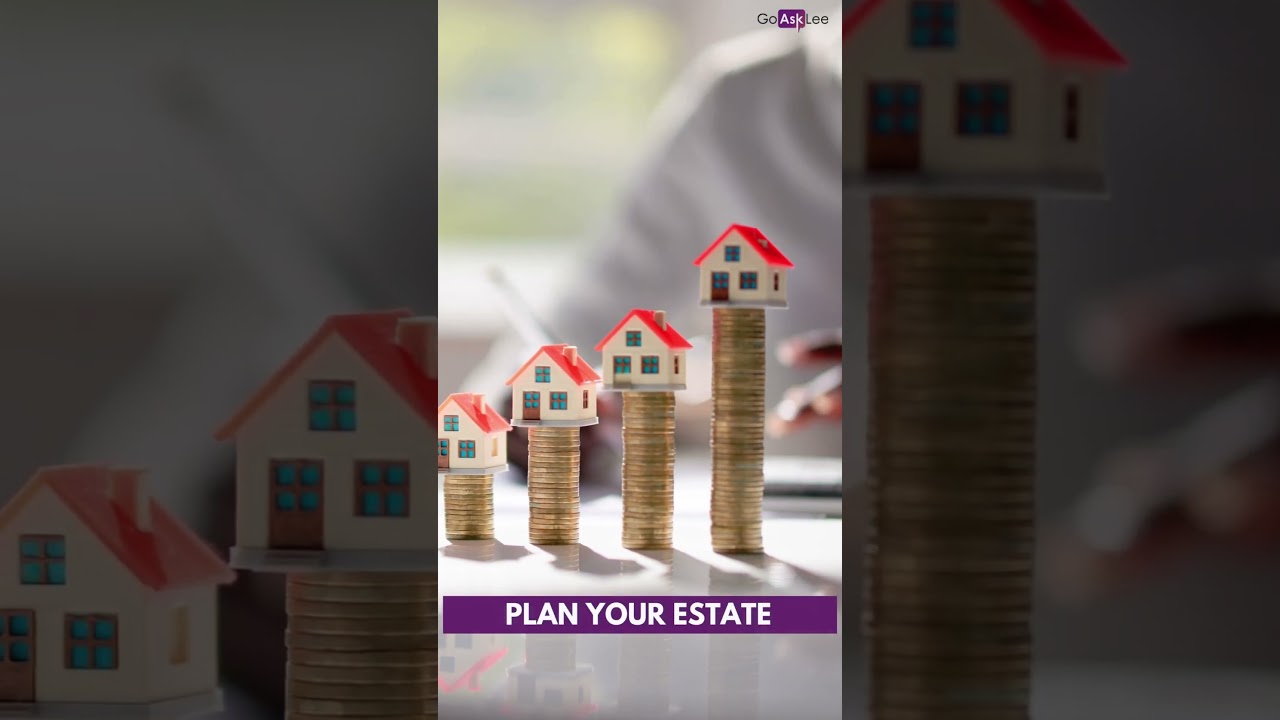
I will tell you, over the years, business leaders around the world have asked me, what am I paying attention to? What trends do I see? And the reason they're asking me is because I've been connected to so many, many global leaders who are trendsetters. Not only do they see the trend, but they are the ones leading the way. And sometimes that's me in my category as well. But today what I want to talk to you about is NFTs. And why do I want to talk to you about NFTs? Because as a business leader, as a business owner, as an entrepreneur, and as a visionary, NFTs are coming into my world in many, many ways. They're coming into my world for me personally, for my business, for my clients, but also for my other connections in the community. Other global leaders are coming to me and saying they need to launch NFTs in their brands. And the reason I'm talking about this with you right now is because I want to bring you on this journey with us. All of us business leaders that are basically over the age of 20, we need a little hand-holding on what is going on in this marketplace right now. So I have people holding my hand, and what I'm going to do along the way is guide you and hold your hand as well. Why? Because I want to make sure that you not only know that you should pay attention to it, but you take action as well. Because those who take action actually get ahead, I'm seeing over and over and over. So it all began for me in the year 2015, and I was in a meeting in Los Angeles with a gentleman named Peter Diamandis. Now, Peter Diamandis is well known for being a visionary and being a trendsetter. Why? He started the X Prize, after all, and paid $10 million for a market— or for a rocket to go to the moon. Why do we say that Peter Diamandis is a visionary? Because he's the one that created XPRIZE. He's the one that figured out how to pay $10 million to get a rocket to the moon in the private sector. Not governments paying for it, but actually businesses coming together and collaborating. Why? Because he wanted to see a bigger future, a better future, and entrepreneurs doing it together. Well, in 2015, I was in a room with him and about 300 other entrepreneurs. And one of the things that I discovered was I needed to pay attention to a thing called Bitcoin and the blockchain. And yeah, that day was a foreign language to me. I had no idea of this new language, but I knew that these smart people were paying attention to it. Well, in 2015, Bitcoin was less than $300 for one, less than $300. And you know, in that room, there were hundreds of people that took action and bought their first Bitcoin because Peter said that was something to pay attention to. Now, I was fortunate to be part of that group of learning and opening a wallet and participating. Fast forward 1 year, it already tripled. It was more than $900. I mean, how many things in our life tripled that quickly? So now we were paying attention even more. And I will tell you, I wish I paid attention and took more action because if I did, I'd be telling you a whole different story. But what I'm telling you today is take action and don't be left behind. Part of that reason is because I was left behind on some of those things. I should have taken bigger action. I should have bought hundreds of Bitcoin because I'd be telling a way different story as the owner of hundreds of Bitcoin today. However, it's not too late right now. Only 1% of the planet is even paying attention to all of this going on in the market. When we're looking at NFTs, which we're going to discuss right now, A lot of people don't even know what an NFT is. And like me, when they first started, they wonder, what is the concept? What does this mean? What does it mean to my life? What does it mean to my business? Well, I'm going to let you know, we don't really know all the answers to it yet, but we do know, pay attention. We do know, bring people with you who are excited about this because the people who are excited about this will help you build your prosperous future. That includes not only the blockchain and NFTs, but a strategy and tactics to make you successful with your goals. So you get to customize it. And right now what I'm doing is just showing you some of the ideas and planting some of the seeds to see what you can do with it later. Some of it'll be my journey and my stories, and some of it'll be other people's stories. I want to inspire you to not only learn about it and go and learn more and even share it with this community, I really want to inspire you to take action because a little bit of action today can make a big difference for your tomorrow. So let's start with the basics. First of all, what is an NFT? I heard a joke recently where one of the leaders said people don't even know how to spell an NFT. Well, in the beginning they don't. They have no idea that NFT starts with non-fungible token. First of all, what's the word fungible? Everyone's like, what is the word fungible? I don't even know what that means. Let's start with a fungible token. Dan Sullivan told me recently that the $100 bill, the US $100 bill, is the number one recognized fungible token on the planet. And what that means is there's many, they're duplicatable, and you could use them anywhere and they have the same exact amount of value. It doesn't matter anywhere around the world, they're recognized as the same value as a US $100 bill. So now think about the opposite of that. What is the opposite? that is a one-of-a-kind and not tangible. It's not in your hands, it's actually digital form, and it is one-of-a-kind for you. Only one person can own it. So when you think about it, a non-fungible token is a digital asset built on a smart contract. So in 1994, the idea came out for a smart contract for NFTs, and all of that was born. But it was really not until 2014 that we saw the first NFT launched. Now, 2017, one of the most famous NFTs was launched, and that was called CryptoKitties. And that was born out of Rohan, who's the CEO of Dapper Labs. He and a group of people had an idea of why don't we launch a digital game? They call it a blockchain-based consumer game. That's a blockchain-based consumer game. So in the beginning, it was just fun. Let's launch CryptoKitties and And create a game. And now it is still seen as one of the number one most successful endeavors on the blockchain. So we talked about NFT, and people always want to know what is a token. Now, a token is a digital asset that is built on a platform. Now, in the NFT world, a lot of times we're using Ethereum as that platform right now. We will put a list of the top 5 platforms for you to pay attention to right now that's in the show notes. So you can go ahead and look at those later. But for right now, we're using Ethereum mostly for our examples. That's what we're using when we actually bring NFTs out or when we purchase NFTs, we're using it based on Ethereum. That brings us to a smart contract. Now, a smart contract allows verification. So, when you're thinking about working with banks or transferring money, a part of what they're doing is verifying it's actually you. Well, that's what we get to do with a smart contract as well. And what's beautiful about a smart contract is it can be built into your NFT. And I'm going to tell you that changes the world. It changes the world in things like the art world. Right now when somebody makes a one-of-one piece of art, right, a one-of-one piece of art, there's only one of a kind. When they sell that piece of art, they get paid one time. And when somebody resells that art, whoever that person who owns the art is the one who makes the profit the second, the third, and anytime after. Whereas with a smart contract, You could actually build into the contract that anytime this art is sold over and over again, that a percentage can go back to the original artist or the original creator, whoever is in the smart contract. You could do 10% or 30%, whatever you desire. It could be built in that anytime that transfers ownership, the original owner can also get paid. So I think you could see why it's going to absolutely transform the art world because artists will now be part of the transaction over and over and over, and it will live on in history. And that means even later after they've died, they can leave that to their heirs. It can be something that is consistently bringing in income and attention for them and their entire estate. It lives on forever on the blockchain.
More from Lee

Do You Actually Own AI Content? The Copyright Truth Every Entrepreneur Needs to Know (2025)