Rewiring Your Money Mindset with guest Ilana Jankowitz | Alchemy Within Podcast
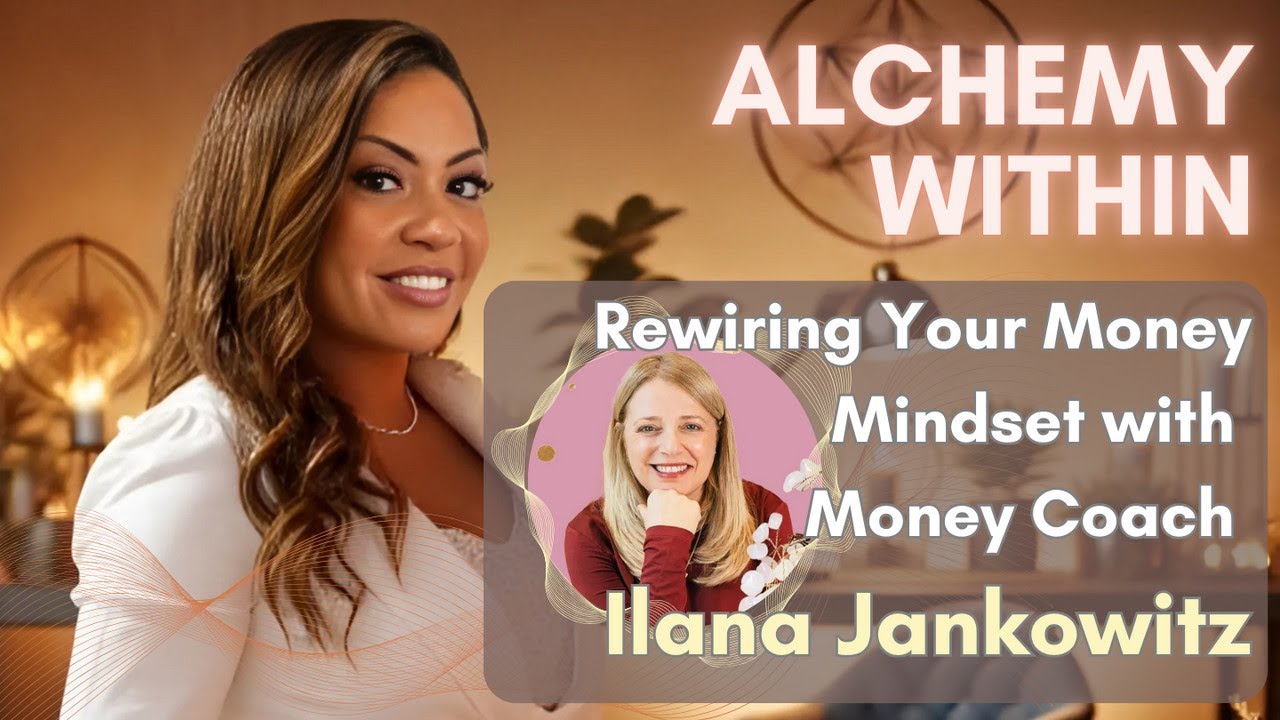
Ilana Jankowitz of Mindful Money Coaching breaks down eight money archetypes and how they shape your financial decisions. She shares practical tools like money trackers and mantras to rewire limiting beliefs about wealth, plus personal stories of how ancestral patterns affect the way you spend and save.
Chapters
Welcome to the Alchemy Within, the podcast where human wisdom meets the art of growth and personal evolution. Join me, Leilah Mirza, as we explore the profound journey of transformation, diving deep into the practices, stories, and insights that ignite change and awaken your true potential.
Welcome to Soul Alchemy, um, the podcast of changing and transforming people's lives through sharing Wisdom and Transformation. Today's current guest is Ilana from Money Mindset— Ilana, is that right?
Mindful Money Coaching.
Mindful Money Coaching, apologies. I'm gonna hand over to you the spotlight right now so you can tell our guests a little bit more about you and where you're from and what is it you do.
Okay, so I'm Ilana. First of all, thank you for having me. I'm based in Zurich. I've been living in Zurich for the last 16 years, but I'm originally from South Africa, from Cape Town, like yourself. And I help women to empower them financially in their businesses or in their private lives, in their relationships. This month, as it's February, we're doing a lot of work around love, love languages, relationship with money, getting aligned with your partner, because as we know it, money is the top reason for divorce. So my passion is helping as many women as possible. I do work with men, but my passion is helping women to become the best version of themselves, that they can rely on themselves and not on somebody else. I always tell them, a man is not your paycheck or your pension.
Great, thank you, Ilana. Thank you for sharing that with me. And can you tell the audience and tell me more about how you started this What took you into this journey?
Okay, so I needed money coaching. I kind of realized it but fought it because I thought I didn't want to spend money on it. I didn't want to have to go and get help. I was embarrassed. But it got to a point where it was actually affecting my relationship with my husband. So I spoke to a friend and I told the friend that I've got marriage problems. And she said to me, I know you. 'Well, you don't have marriage problems, you've got money problems. You're spending too much, you're impulsive, you are shopping out of shame and guilt or whatever. I don't know what you're doing, but go and get help.' And it took me a long time, it took me about 2 years to actually, after that conversation, to actually go for help. And once I went for help, things changed in my life. It started affecting my self-esteem. I felt more confident. I felt, this is amazing, this really had changed my life, started aligning closely with my husband, we're planning our pension, even this travel that we're on, we planned, we were going to like set money aside so we could go and travel. And it really, things just started getting better in my life. I then realized that when we were discussing the different types of emotions and the psychology around money, I was starting to see family members and friends that were going through certain things that I knew about, that they confided in me and realized if I was a certified coach, I could actually help them. And with my business experience, that I've literally been in business from a very young age, I would be able to help them grow their businesses, help them grow their coaching practices by understanding the relationship that they have with money and how to actually live and have the freedom that they want. They all say they want freedom, and money gives you freedom, but a lot of people don't has that.
Because freedom is actually the— what they actually really want. Money is just a tool to get there, but they, they kind of mix it up, don't they? They get lost between those two.
That's it, exactly.
Okay, so what was it about your, your journey that made you realize that actually this is where I really want— what was the epiphany, the epiphany that you had that thought, you know what, this is really how I want to have an impact on people's lives?
I realized that I actually wanted to have an impact on my own family's life first, that I wanted to give my children a different outcome to what I was given. I wanted them— I wanted to teach— I wanted to leave a legacy for them. I wanted to teach them how to be with money, how to save, how to invest. How to understand money, how to plan ahead, how to set goals, how to manifest, how to have the clarity of what they want in their lives and not just accept what is given to them. So I realized my kids were the first ones that I wanted to change, and then I wanted to obviously become more aligned with my husband. Then I realized that I could help because we always say charity begins at home. So it was first creating that legacy, and I've done that. My daughter works with me, she's a coach as well. My son is— I wish I was where he is at his age, um, investing and saving and putting money away for his pension, because he understands money. He doesn't have debt like I had at his age. So for me, that was very, very important.
Mm-hmm. It's interesting, um, that we're both from Cape Town, um, and this is really interesting because I obviously have family members, not direct family, but like cousins and aunts in South Africa. And growing up in Cape Town, can you see how the, the demographics and our ancestors has an impact on our beliefs that we inherit to become our own in our money story?
Absolutely. And you know what's interesting, Leilah, it doesn't even just come from Cape Town. I work with— I'm a global coach. I work with people all around the world. I'm based in Zurich at the moment. I'm in Asia. And I'm working with people here as well. It doesn't matter where you come from, we know that we take on our parents' behaviors, their patterns, their beliefs. We know that it's literally our parents holding up a mirror to us and saying, this is how you need to be, your mother. And often it gets passed down through the female line. Where you do exactly like your mom does, or your mom did. You talk like her, you believe the beliefs that she tells you until you're old enough to question it. But sometimes we don't even question it, we just actually accept and we display the same behavior. I'll give you an example: the feeling of scarcity. So many— and you mentioned growing up in South Africa and the demographics there, so it's, it's relevant, but it's also relevant where you are. It's relevant where I am now, where people have the scarcity mentality that there isn't enough, and they accept that to be true, as opposed to saying, I'm changing that reality. I'm not having that mindset that there isn't enough. I'm working on myself. Carl Jung says, he who daydreams looks— he who looks out daydreams, he looks within, awakens. So by looking within and what can I do, how can I make a difference in my life, or do I want to accept generation to generation? Yes, there's things that we're proud of that we say what was passed down through the generation. Oh, this is my mother's recipe, or my grandmother's, you know, cottage pie. But do we want their money beliefs? A lot of our parents and grandparents— most grandparents were in the war, some war of some sort, and learned what it was like to be on rations, to be on to have shortages, to have lack.
Mhm.
And that is really what we're stuck— there's not enough, we can't afford this, we don't have, we're not like them. All of that talk, that mindset talk, those money myths become your reality. And that is what I learned to change in my own life. And when I'm working with the people that I work with, to change how they think, how they're programmed, to reprogram their money story. Doesn't matter where you came from, we all have a money story.
So how can someone break these patterns of the ancestral trauma if they kind of feel that this is inherited beliefs, meaning these are beliefs— and I wanted to break these words down just in case someone doesn't understand— but these are beliefs that we've actually taken from our parents or our grandparents, and now they're finding they are in the same pattern What would you say is the work that they can do to break these, these beliefs or break the chain?
You know, Leilah, it's, it's very interesting. I thought I could do it by myself. I thought for those 2 years before I went for coaching, I don't need a coach. I can do this by myself. I will just budget. I will just this month, I will save 1,000 francs and couldn't. And the next month I would try again because the deep-rooted beliefs that I had, I wasn't even aware of them because most of them are subconscious. We know that we think between 60,000 to 80,000 thoughts per day. What are those thoughts wrapped up in? Fear. Where do those thoughts sit? In our subconscious. Those are thoughts from the past Those are your parents' thoughts, your mom's beliefs, behaviors, and patterns. And you are just living those same beliefs and same patterns over and over. You cannot just decide one day, boom, I'm going to stop it. That's why there are people like yourself and me that help you to go through the process. If I could have changed it by myself, I would have. Would have— it would have been so much less humiliating than having to actually say to my husband, I have a problem, let's find the money, I have to do this.
And what are the first steps that people can take perhaps into this program to— let's just say there are people in some areas who are just living with limitations, perhaps living from paycheck to paycheck, and they are trying to break through. Because when I think about it, I can think of people in proximity who's reached out to me and said, look, I just can't afford it, I just can't afford to work with you. What would be the first step for them, or how could they have access to this information? What would be your top 3?
First of all, I would say that they need to try and create a budget. They need to try and actually, every time they buy something, to say, is this a need or is this a want? Okay. Another way is to try and see what money is coming in and what money is going out. And if there's more money going out, how can I bring in more money? It's simple, it's maths. It's, you know, 1 1 2. However, at the same time, I believe that if people really want it, they will find the money. A drug addict doesn't think about, oh my gosh, I stopped drugs, now where am I going to get my next fix? He finds the money, he finds a way to do it. If it is important for someone to change it because it's going to affect the rest of their lives. It's going to touch every area of their lives. If they don't feel they have enough money to get fixed or to get help, it's going to affect all areas. For instance, they might think, I'm ill, but I don't have time to take off because I'm just too exhausted. I just don't have the money. I just need to push through. What happens? They get more sick. They burn out.
Okay.
And then they can't work.
Right, so you would suggest people to use— do something like a money tracker?
Use a money tracker. I've got many, many tools that I give away every month for free in my newsletter on how to actually— last month was a money tracker. Could be setting goals, it could be making a budget. Um, this month I'm talking about the Five Love Languages, you know, how they're connected with your love partner, and your money. Every month I've got tools that I give away. I also work with people that— if they're in South Africa, there's a South African rate. If they're in Europe, it's different because I'm in Europe. But I also do payment plans. I also do group programs, smaller programs where people can get into. And after a couple of sessions, they start seeing the benefits and they start actually making more money in their lives. I've got a client Yesterday she told me, I kept on saying to her, I want you to keep saying this mantra to yourself because she was saying she doesn't have enough money. She doesn't have enough money. I said to her, I want you to say this mantra. She's actually in South Africa. I want you to say, money flows to me in expected ways and unexpected ways. And she said to me, Ilana, I can say that till I'm blue in the face. Money is not going to flow to me. I said, I want you to say, money flows to me in expected and unexpected ways. So she's like, okay, I'll do it. I said, and I want you to start looking for opportunities to make money right now, today. What can I do today to make money? This lady moved from St. James to— I don't know what the— what area she's in at the moment. Her garage is full of stuff. She decided advertised it and sold the dining room table that she wasn't using, was in the garage, for R2,500. And then thought, this is fantastic. Then decided, you know, the sideboard I'm not going to use in the new place, and sold the sideboard. And she messaged me yesterday and she said to me, money flows to me in expected and unexpected ways. I've got all the stuff in my garage, I've just moved, I'm not using it, I don't want it for the new house. And she said it was a mindset.
So you also encourage people to take action along with doing the internal work, is that right?
100%, 100%. Daily action, weekly action, working through a workbook.
Yeah, action's so important, even in the work that I do, because I always found always say to my clients, I'm solution-based therapy, right? So I will keep the door open, but you're gonna have to walk through the door. Because if people are just seeing the stuff there and they're not embodying what that feels like, that's not really going to help shift them.
Totally, totally. And it's exactly the same when we get a thought in our mind That thought then creates an emotion. That emotion creates an action or behavior. So if we keep telling ourselves, I'm not good enough, I'm poor, I'm stupid, I'm poor, I'm stupid, that thought will then drive that emotion, which will make you feel really, really low. And what will you do? You won't get off the couch because you feel, I'm stupid, I'm lazy, I'm poor. But if you tell yourself, I'm a money magician, I can make money, you start looking for ideas. You start realizing, my gosh, this is something I can actually create and it can make money for me. This can be a side hustle. This can be a passive income. I always say to people, I'll teach you to make money in your sleep. You've just got to want to do it. The same what you're talking about, I leave the door open, they just need to walk through.
Mm-hmm. So how would you present this to someone who you're working with, someone who had so much trauma around their finances? They're doing the money tracker, but they have this victim archetype. So victim, it's like, this is happening to me, basically it's not happening for me. Or they use people on the outside or the external factors to, to blame or to shift where they can't take responsibility on. How would you turn that dynamic around or work with someone who just feels like, this is just the way my life is, I can't see beyond that?
Exactly. So one of the tools I use is I have a money quiz, and one of the other few types is the victim.
Mm.
And when I explain to them, when they have a victim score of 10 and over, and I explain to them what the victim is, I ask them, do you want to change this? And the answer is always yes, because the victim is stuck in the past. The victim is so drawn to the old drama that it's easier to accept the old drama than to actually realize that there's an alternative and that there can be something more amazing. The victim is so used to blaming everybody else for their problems. It's my ex-boss's fault, he fired me. It's my ex-husband's fault, it's my ex— it's my mother's fault, this one's fault. It's always somebody else's fault. But it's when you take responsibility and say, today I fix this, you start making the change. Great.
So what other archetypes are there, Ilana?
Yeah, so there's 8 different archetypes, and quite a few of them are self-sabotaging archetypes. For instance, the Innocent. The Innocent, I always think about— and I'll go through them very, very quickly— the Innocent, I always think about, um, and I've got a beautiful slide deck on it, so if ever you wanted me to do a presentation, I could do it. The Innocent is someone who always reminds me of South Africa, the head in the sand like the ostrich. Okay, don't want to know about their finances, relies on somebody else to sort them out, is very, very trusting. But I always say, when your head is in the sand, the rest of your body is exposed. Hmm. Because you're self-sabotaging. You've got the childlike— that inner child that hasn't been healed is basically like you're manifesting your life. You beat the immature child. The innocent needs to take responsibility and realize that they can be empowered as an adult, as a woman, and I show them how to do that. The next one's the victim. I should have, I could have, it's his fault. Living out self-fulfilling prophecies. I'm not good enough, this is all my fault, it's your fault. Blaming. The victim is so self-sabotaging that I always say to people that have got high victim, nobody wants a victim around. You're not going to find love, you're not going to find the things in your life that you want because the past is pulling you back. The past. The next one is the martyr. The martyr is What I find a lot of women are, they work for free, they don't charge, they don't invoice because they want to help everybody. The martyr is always giving and not receiving. Money flows away from me all the time. Money doesn't flow to me, it flows away from me. The martyr doesn't believe in herself, has got very low self-esteem, low confidence. And most girls have been brought up to be martyrs by mothers. You need to look after your little brother or your little sister, and sometimes you don't even need to say it. They do it because they— that's what is expected of them. I did it to my own kids. My children were at nursery school together, and every time my son would fall over or hurt himself, my daughter would come running and want to protect him. And one day I said to the teacher, when this happens, please make sure that she does— that the teacher helps him, because it's not her responsibility. She's a child. Girls are taught to be givers, not receivers. And I'll give you a nice example quickly on this. Women got money in the bank. What do they do with their money? They buy for others. They buy food, They buy gifts, they buy stuff for the children. Men— what do men do with their money? Men buy for themselves. They buy the car, they buy the boat, they buy the holidays, they buy the investments, the cryptos, whatever. So women buy for others, men buy for themselves. A lot of men, unless the man has got his own trauma, which often happens as well. I'm not just saying it's a purely woman thing, but most women have got high martyr, and it comes through in their business, comes through in their coaching practices, whatever they're doing. Okay, the next one is the hero. The hero is the one that's got the high business skills, and but often doesn't trust anybody. Is a perfectionist, needs to do things by herself. This is often where I see burnout. I see imposter complexes in a lot of them, but this is often where there's been— where she's kind of just driven and been pushed and trying to be perfect for somebody else. Another self-sabotage. Next one's the— the Hero. Sorry, not the Hero, I've just said the Hero. The Ruler. The ruler is somebody who is trying to control something that she couldn't control in the past. She couldn't control as a child. And I see this with food. I see this with addictions. The attachments that they, that they have in life because of their parents, because of their mom, causes them to hold on to certain addictions. So if there's an avoidance, a mother that was avoidant, it was a mother that was absent, abandonment, they attach themselves to addictions, alcohol. For guys that are gamblers, guys that have been bankrupt, guys that use women as pawns, financial abuse. So the Ruler will also do things that they couldn't do as a child, and that could be manipulation with food. The Maverick— somebody that doesn't plan for the future, that lives in the moment— another self-sabotager. The Creator Artist. And then we've got the Magician. The Magician is somebody that we all want to be, that turns her reality into opportunities. That finds ways to make money and make her life better. That's in a quick nutshell the different archetypes.
Wow, that's interesting. Well, I can definitely see the Magician in the way I work, but that's really interesting. Um, I'm just thinking of people that I know and how this might fit them. So I'm trying to envision what this may look like for other people. How would you get someone from the Ruler into that Magician? That must be quite hard.
No, not at all. I do it very, very quickly.
I could do it in 2 sessions because addictions is just another level, isn't it? It It's just working on it.
It is, but it's all got the same stuff underlying. There's normally abandonment. Yeah, yeah. And I need to find out where that abandonment came from, what happened, etc. And the releasing, the processing that they go through, and to start seeing, yeah, opportunities and that money flows and not leaving money on the table. And you know that it's all connected to building their self-worth and their self-confidence. And in front of those words is the word self. So they're the only ones that can fix it, and it's by going in, by becoming aware.
If there was one thing that you could do, if you had a magic wand to help people through this work, through what you do, in forms of a pearl of wisdom that you could give someone, what would you say?
Don't hold back and think it's somebody else's responsibility. Get it sorted. I wish I'd learned this in my 20s, honestly. I've got young girls that do it now, and girls that are— has told me they're living, they're traveling the world, they're living off their investments, and they're like 28. I met a girl yesterday Mm, you know, you start, you set your life. And a lot of the time, and it's very interesting because people come to me that have got money issues. Some don't even realize they've got money issues. Some are just trying to build a business. Some have got plenty money but don't feel they've got enough, or they feel they don't deserve it. Had a lady the other day that got her bonus in December, big bonus. And she said to me, I feel guilty, I feel bad, I feel dirty. I said, why? She said, because if I've got that bonus, the other people in the company don't have the same, but I got it because I'm high up, I'm an executive. So people can have a lot of money and still struggle with the emotions that come up for them, because money does trigger you emotionally.
Well, yes, money can make people feel all sorts of things. If you speak about— and I actually really enjoy speaking about money because when I do, I can see whether someone's actually comfortable or uncomfortable. And that uncomfort shows me quite a lot of what's going on, because I, I think I may have told you this previously, but to me, how I explain this to people is money is an innocent victim of your emotions, right? Because you're using money as an excuse, but at the same time, they have this beliefs that they want money, but they don't want money because there's beliefs attached to that.
That is, it's— I wouldn't— I'm not sure, and I'd like to think more about it, about being a victim. Money to me is a tool, and it's the reward for a job well done. I do a job, a well-done job, people pay me. Mhm. Money is the reward for a job well done.
Yeah, but what I was actually saying is that people make money look like the victim of their emotions, and they the victim. Yes, well, yes, exactly, because they are portraying their emotions on the currency exchange. Um, yeah, so I wanted to ask you, you said earlier that you're doing a love language, um, and, and this is around money. That, that's a very interesting concept. Can you tell me more about your love language around money?
So there's 5 different love languages, and I just literally finished putting it into my newsletter, which is going out in a couple of weeks' time, um, in time for Valentine's Day, I think next week. So if anybody wants it, they could sign up for it. But basically, it's just the same respect that you would treat your partner. You need to treat money with the same essence, where if it's affirmations, if it's acts of service, whatever the love language is, you can relate it exactly to money. It's really, in a nutshell, about becoming aligned with your partner. I always encourage— so I'm not going to go into it because they can get that in my newsletter. I've actually got a beautiful PDF printout that you can actually go through, which gives you all ideas about that and how it fits with your life personally. But I often think of when I, when I talk to couples, because I do work with couples that have got issues, because often the woman has got an assumption and the guy's got an assumption, and they never talk about it before they get married. They often talk about where they're going to live, what's the dog's name, the children's name, but they don't actually talk about money. And one of the things that I encourage them to do is to have money dates. Have even those conversations with your parents. Find out if something happens to your parents, what happens to them. Where the stuff is, where the important stuff is. It's one of the things we do in Module 1 where I get everybody to write down questions that they need to go and ask certain people in their family. It's super, super important, and it's something that we don't want to talk about. So many women— I've had women that have been on my program that one lady went and asked her husband about do we have life insurance? Do this. No, we don't, because I couldn't afford life insurance. And she realized that if something happened to him, her and her girls would actually be, as we used to say in South Africa, stoek street. And she started working harder in a business. She came to me for coaching and is making amazing amount of money in a business as a fashion stylist.
That's amazing, that's amazing. Wow, that's very interesting how you connected the love language. So I really like that. I just wanted to ask you, um, I know we are coming to a close in our sessions shortly, but I wanted to ask you, what advice would you give your younger self?
Don't wait, start early. I waited far too late for this because my daughter had already seen me and my bad patterns and beliefs and behaviors that she had to go for coaching herself. I should have done this years ago. And if I could encourage anyone, do the work on yourself, go for help. That's why there are coaches. Don't wait. Don't think you can fix it by yourself. We have— it's a solution to problems that you might not even realize that you have now or that you'll have in the future. We know that if we're sick, we go to the doctor, we go to the pharmacy. Coaches are there to help you. They're not just there because they can't get a job doing something else. They're passionate about what they do. I'm passionate about helping people understand their money so that they can make more money. A lot of women that, that I work with will think, I don't have enough money for pension, I don't have enough. And when we start actually doing the work, they find that they have enough.
And what would be your mission in this world?
What is your mission? My mission is to help as many women as I can to become financially empowered, to understand where they came from with their money story and how to fix their life and to change it. If there's things that you don't like, a certain thing, you change it. And you can change it by understanding it and rewriting your money story of how, how you want to believe, what you want to believe. You make the choice. Mindset is an amazing thing. Mindset is— people think it's a buzzword and it's a strange thing. Mindset is literally the computer Yeah, of your whole entire body.
Yeah.
And you set that computer into— when I open a computer and I take a computer out of a box and you download all the apps the same way that you take a phone, brand new phone, out of the package or the Apple package or whatever phone you buy, it's got nothing on its black screen. You download those apps, you download WhatsApp and Facebook and your banking apps and all the different apps that you have, Airbnb, whatever. You download into your brain, into your subconscious, your mindset, all apps that you want to use. There's an app that you don't like, like a lot of my clients that tell me, I love scrolling and I've got no money. And I say to them, what apps do you have on your phone? Oh, and they tell me Zalando and Prime, this and this, whatever. I said, take those apps off your phone right now and you'll have money. Take Amazon off your phone. Take all those things when you sit and before your feet are even out of the bed and you've bought your 3-year-old another pair of shoes, stop scrolling on your phone. Those apps, those things that are there, you put them there. Your phone didn't come with it. Your phone came with an operating system., and that operating system is the same like your mindset.
Yeah, there's actually a program about this on Netflix. You just reminded me about the scrolling and the shopping and the psychology behind this. I don't know, have you seen that program on Netflix?
That's the work that I do. One of my clients said to me after they saw it, it was a couple of years ago, she said there were 4 coaches and they dealt with 4 different people. She says, you do what all 4 of them does.
Mm, yeah, I don't know what's the name of the program now, but that's exactly what is— what you're speaking of. Yeah, well, thank you so much, Ilana. Um, our time is now coming to completion almost, so I want to thank you for sharing space with me. But before we close the show, can you please tell the audience where to find you and share your handles with them?
So first of all, mindformoneycoaching.online. There's a quiz on there. Take the quiz, sign up for the newsletter. If you want the love languages, next month there's something else. There's about how AI— there's blogs, there's all sorts of things that are in the newsletter. I only do it once a month. I don't spam you. I try and make sure that you get inspiration, money hacks, advice, and tips, as well as a story that can inspire you on somebody else's money. And actually this month there's somebody from Cape Town who's Moneystories in there, um, who's a real estate agent. And so every month there's something in there. And, um, mindformoneycoaching.online has got a quiz. Take the quiz, it's free. It will show you exactly what's going on in your money. Then you book a free interpretation call with me if it's something you're wanting to change or understand what's going on in the money situation. And there's ways of working with me. As I said, I do group programs which are cheaper than VIP programs. I do for South African clients. My daughter and I work together. She coaches. She's busy coaching two people that I referred her to, so we work together. She's based in South Africa. I'm in Asia at the moment, going back to Switzerland in May, um, but I'm still coaching. It's just different time zone. And, um, yeah, I'd love to help more and more women to become better with their finances, that finances don't scare you.
I love that. And I love how your daughter's working with you and collaborating with you. That's like a powerhouse.
My legacy that I've always wanted to— for years I've thought I'd love to do it with her, and she's She's amazing. She's intuitive. She's, yeah, she brings out amazing, different, completely different tone to me. And yeah, it's just very, very interesting to watch her.
That's amazing. Well, thank you so much, Ilana. Thank you so much for sharing your time, your gift, your wisdom, and may you continue to enlighten the world one step at a time. Thank you so much.
An absolute pleasure, and thank you for having me, and to the listeners for listening.
Thanks, Ilana. Bye-bye.
More from Leilah




Real transformation can happen when you willing to go and meet yourself #heal#coach#wisdom#


The Spiritual Wisdom of Babies: Healing & Connection with Lauren Dionysius | Alchemy Within Podcast