The Biggest Mistake People Make When Asking God for Help | Katt Williams
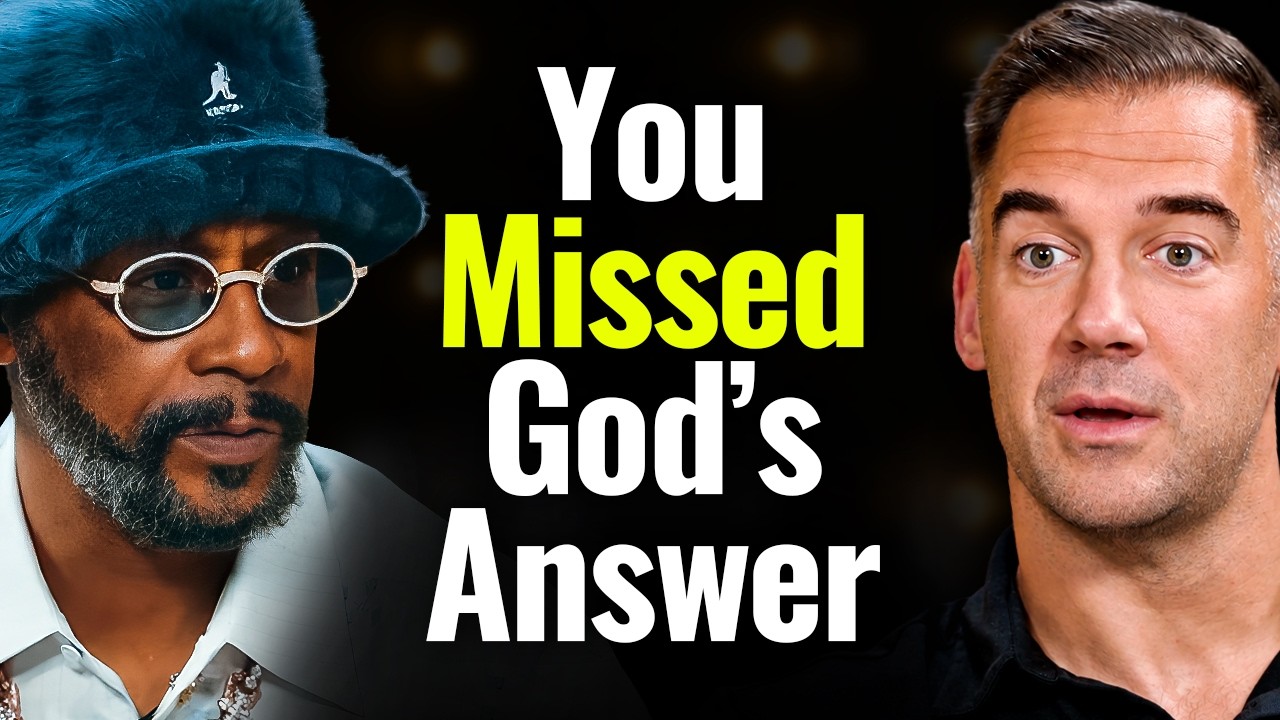
In this interview on Lewis Howes' "School of Greatness" podcast, comedian Katt Williams shares his personal journey and philosophy on faith, purpose, and success. He recounts leaving home at 13, his early religious influences, and how he frames obstacles as opportunities to "jump higher." Williams discusses his practice of specific, prayer‑like requests to God, his belief in being favored by a perfect God, and how he navigates moral dilemmas (e.g., brief involvement in drug dealing) by seeking divine direction. He reflects on his door‑to‑door sales experience, emphasizing that "no" is feedback about insufficient effort, and how that mindset informs his comedy testing process—testing jokes in 100 cities, refining material, and using audience reaction as the ultimate judge. Williams talks about his missionary work in Haiti, the resilience he observed, and how that shaped his view of gratitude and abundance. He also touches on the cost of speaking truth, spiritual warfare, and the importance of self‑knowledge, patience, and incremental self‑improvement. The conversation concludes with Williams' "3 Truths"—the value of continual learning, the belief that each person is perfectly made, and the importance of small, consistent personal habits—followed by his definition of greatness as consistently giving your best until the very end.
Chapters
If you're a hurdler, you don't look at obstacles the same way. It's just another opportunity to jump higher. Everything changed once I realized when they're saying no, they're just saying I didn't do a good enough job. So my thing to God is, here's my situation, show me my purpose.
One of the most iconic comedians, an Emmy winner, the one and only Katt Williams.
You were perfectly made. You are loved by a perfect God who also created a perfect universe for you to exist in. He gave me something that I already loved. Like, I already love to laugh. When he gave me the chance to be involved in comedy, okay, well, all I would like to do is have a real connection with the people. Yeah, it is always darkest before the dawn. But it's not infinite. It can only get so dark before the light has to show up. Now is the
time. And I don't know if people ask you these questions, Kat.
Never in life. Never.
I don't know if they do.
Never in life.
I don't know if you knew that.
Only at the School of Greatness.
We have a few things in common. I was telling you beforehand, both born and raised in Ohio.
Let's go.
You were an Ohio Dayton guy, right, for a while? Correct. Cincinnati, Dayton. I grew up in a—
To this day.
small town of Delaware, Ohio. I don't
know
if you ever went through that small town.
You're the most famous person
from Delaware,
Ohio.
20,000 people, right?
You did it.
And another thing is we both left home, if I'm correct, at 13.
Correct.
And for me, I left home because I didn't feel emotionally safe in the environment that I was in. I begged my parents to send me away.
Okay.
And it was a big turning point in my life by leaving. And I'm curious, why did you leave home at 13 and what was the big takeaway you gained from that experience?
If I was 6'4, I would've left at 9. I was trying to wait on my growth spurt. It just never came. Well, that's great. Both from Ohio, both left early.
What was the reason why you left and the biggest thing that you learned from leaving home at 13?
It wasn't something that I would suggest to others. And when you read it in the book, it's a— I don't glamorize it. It was a terrible situation. It was a horrible decision for anybody else to make. There aren't any 13-year-olds that are qualified to do it. On the other hand, I had a religious background, and Jesus left home when he was 13. And the Jewish culture teaches that you're a man at 13. Really? And so I had enough precedence in my own study to understand that if things were really as bad as I was making them out to be, I had every right to change it. And that if I continued to show up to a circumstance I didn't agree with—
Wow.
So I was young enough to make a dumb mistake, But I was also young enough to see if this works. And yeah, I believed in God, so I had this false sense of he won't let me fail.
Really? At 13?
Yeah. Yeah, my whole life.
Wow.
Yeah. But that's one of the best things about the book is that even if you're an atheist, reading the book may not make you believe in God, but you will believe in the belief in God. And it's been proven that that's a thing, you know? So yeah, even then I didn't really look at it as a negative. I looked on it as getting a head start.
I've heard you say before that you're favored by God and a lot of things don't really kind of stress you out or worry you out because you are favored by God. Have you always believed that or is that something Or was that something more later in your life that you started to believe?
Well, I believed that you could be, and I was just trying to put myself in a position where if it was possible, that I would be qualified for it. And I had just done so much reading, and that's how all books go. That's part of a good story. Is that we're able to see the trials and tribulations that this person has to go through and how, no matter how scared you are in the middle of the book, by the end of the book, it's going to be worth it.
Mm-hmm.
It gets better. Things work out that once looked dark and you start understanding that, yeah, it is always darkest before the dawn. Like, that's part of how it goes. It gets darker and darker and darker, but it's not infinite. It can only get so dark before the light has to show up. It's in all the books. And so—
But how do you have faith or trust that you're gonna be taken care of spiritually, Physically, emotionally, at some point in the future when you're going through a very dark time?
I never read a book where it didn't work. I didn't read the story of the person who didn't work the hardest being the most successful. I didn't. I might've believed that had I read those stories, but those aren't the stories. that I read. The stories that I read were very specific that you don't know who you are.
Mm.
That's all. Everybody else knows already who you are. You don't know. And as the story progresses, you find out who you've been the entire time. And it doesn't matter if the story is Spider-Man or Superman or— About to have a great life. That's the story. The story is that you're already enough. It's trying to do it as fast as you can figure out.
Did you ever believe you weren't enough or have doubts about your—
I never thought that I needed to be more to be enough. And people were put in my life that just Reinforce that. Like, I met Prince young enough that right in the time of my life when I was going to be worried about my size, I met somebody shorter than me that was already a millionaire.
Was he shorter than Prince?
Yeah.
'Cause you were what, 12 when you met him?
Mm-hmm. Yeah, I was already 5'5 and he was already 5'3.
You met him in Ohio too, right?
Mm-hmm. That's crazy. In Dayton.
So you met him in Dayton, Prince? Yes. When you were 12? Yeah. And what did meeting him when he was successful and a millionaire teach you about possibilities?
Up until that point, I was assuming that, you know, certain things were gonna happen. Of course I'm gonna— I'm not gonna stay this size forever. Like, this growth spurt is almost a guaranteed thing. It happens to everybody.
14, 16, it's coming to
me. So I'm gonna be 5'5 when I'm gonna wake up. Different, you know? But meeting Prince made me come to grips with, oh, it may never come. This may be what I am all the way through. Oh, that's all right, I guess. I mean, you got this example of this guy who's doing it just fine.
He figured it out, yeah.
Right. So things like that would happen to where I didn't— Like, I was never fully counting on me. I was counting on my portion. I knew I had to do my portion right, but I'm counting on a whole entity to pull me through. Really? Yeah, the whole time.
So did you have like a— was this a daily thought process where you were just like, okay, I'm gonna figure out what I want, you know, whether it be getting into the comedy scene, And I'm going to go pursue this path and I'm going to put in my effort and my part, but I know God's going to carry me through and create the opportunities that are meant for me. Was it something you were thinking or feeling, or was it a different approach?
Financially, I was in such a poor position that I was willing to do whatever it took, uh, to live a good lifestyle. And I knew that I would bend my morals more than I would like otherwise. And so, I was asking him to put me in a position where I didn't have to worry about any of that, and that it would meet my personal criteria for something that I could do well at. So, I'm very specific in what I'm asking for.
Hmm.
So that I don't have to question whether something is God or whether something is chance or happenstance, because I've asked specifically for something that I did not have and had no access to. Mm-hmm. And if I privately have that conversation and then 2 weeks later it materializes, I'm not gonna hesitate from letting people know that that's how it happened.
Wow.
Yeah.
Was there ever a time where you feel like you were working or going about life against your morals or against what God— you felt like God wanted for you to make money or to create opportunities or just a season that you were doing that?
I wasn't sure if I had ever been on the right path exactly. But I had already read the prodigal son story, so I understood that God doesn't have unrealistic expectations of me. And I just felt like there was something out there for me, and that if I came across it, I would know. Mm-hmm. And that if it was the right path, that he will make certain things happen to let me know this is the path to continue.
Is that signs or synchronicities or signals of like, this is the right path? Or would it just be a knowing that, hey, you're supposed to go through this door or this opportunity? Or how would you know?
Well, because I get introduced to drug dealing because it's a profitable thing. You can take this that costs $100 and you can make $700 off of that. What? Oh, well.
It's easy.
I don't need to do that very long. I just need to do that for a little bit. I'll be in an entirely different situation and I can get out of here. But I don't want to live a life of crime. Like, that's not my actual spirit. That's not what type of person I am. So my thing to God is, here's my situation. You're already looking at it. You see That I got a lot of opportunities to make money out here. What I need is something that I can do without any of that and be able to get what I need out of life through this. Show me my purpose.
Mm-hmm.
If it's not going to be any of this, because I'm not going to be in a bad situation. I'm not gonna be out here without as many opportunities as there are for me to get it. I'm gonna be trying to get it. But if you'll show me something that I can do and have the— a good guy, I'd love it.
Yeah.
And I'll show you my appreciation and how hard I go for it.
Really?
You know? So—
How old were you when—
That's what he gave me.
How old were you when that kind of came to you? You feel like—
No, I'm not asking for that until this situation. So I guess I was 20.
Wow. And when it came to you, the opportunities then, how did you show your appreciation for God? Was it through your work ethic? Was it through generosity? Was it through how you wanted to shine your light and your spirit? How were you thinking about that?
Well, First of all, he gave me something that I already loved. Like, I already loved to laugh. That was a great thing in my life, is just being able to laugh. And so I loved comedy already. So when he gave me the chance to be involved in comedy, okay, well, all I would like to do is— I would like to do stand-up, and I would like to do a brand of stand-up where I can have a real connection with the people and we can talk about all the topics that there are to discuss. And hopefully it'll give me an opportunity that if I know something new or if I learn something new, that I'll be able to get that to as many people as possible.
Yeah.
You know?
Yeah.
And so, if any of this is true, then I can't be a mediocre comedian.
You have to be exceptional.
I— or I have to stink.
Right.
Like, I have to be one of the worst comedians
or one of the greatest,
or I gotta— I gotta have something. Wow.
You know, I was telling you, I watched your recent special on Netflix, which is hilarious. We were— Laughing out loud on a lot of the different things. You talk about it, you know, in your special, but also in your book, about you going in to get information and then wanting to share it with others of what you're learning about every situation, about comedy, about life, about the industries, things like that. You know, you've been the voice of truth in a lot of ways, specifically in the last few years, even more so. What has being the voice of truth cost you in your life? And would you ever give that up?
As far as what it costs you, there's going to be bad— there's going to be unfavorable reaction to—
Telling the truth?
Anybody that is making a living off of the deception that you're exposing. It's a very rewarding release.
And I guess, how do you protect your spirit or your soul or your energy when you're sharing, you're being a truth teller, and you know there's gonna be some potential attacks or people upset or people questioning you? Or like, how do you protect your own energy from that space?
I don't mix my energy and my soul is never in question in This is what I do for a living. I'm a surgeon, so I dissect, I remove what needs to be removed, cleanse the area, sew it back up. That's the end of it. This is part of my job, and this is the best part of the job. It only works if you're telling the truth. It only works if you get a chance to expose something that a group of people are actively trying to— yeah, it only— you can immediately tell if you've hit that nerve. And if your job is to hit the nerve, then you're going to notice. But yeah, very rewarding. Because I was willing to do this if there was no appetite for it. So I'm saying, to find out that there's a whole segment of the population that absolutely wants to know the truth about everything, and they want to know who's telling what lie, and, you know, like, it's very rewarding. Wow. Very rewarding.
I mean, what was the biggest reward you gained from continuing to open up then for yourself? Is it the peace you have? Is it knowing you're helping others? Is it—
No, the people that don't like me avoid me. That's the greatest reward for you? And the level of people that want to engage with me are the best people in the world.
So when some of the world calls you crazy, then who's in your corner? Who are the people that are in your corner? Is it the people that love the truth or?
Knowing yourself is helpful no matter what job you're doing. If you're an athlete or an artist, it doesn't really matter. You should be very, very clear with yourself about what your strengths are and what your weaknesses are. And the closer you get to knowing that, the more times you'll be able to access what it is you're trying to access out of yourself. So I'm not in any way, like, I can't be peer pressured. Yeah. Somebody calling me crazy doesn't—
Doesn't affect you? It doesn't—
I'm smarter than the person saying it. If I don't know that, why do I expect them to know?
Sure.
Right?
Sure.
And innovation and creativity can often be misidentified as crazy. And I understand that. I think that's why we came up with the word eccentric, because crazy is when it doesn't work. Eccentric is when it's very successful.
Yeah, you took a risk, you had courage to put something out there, and it worked. Right. Or maybe a lot of people wouldn't try that or something.
All entrepreneurs come to grips with this. Yeah. It's, yeah, nobody needs your involvement. They've got enough people selling hamburgers already.
Yeah. Yeah. The School of Greatness is brought to you in partnership with Airbnb. And one of my favorite things about traveling is getting outside my normal routine and really experiencing a place. Some of my best memories come from trips to Mexico where I'm exploring different areas, finding great local spots, and slowing down enough To really take it all in. And when I'm traveling, there's a space that I list also on Airbnb. I like knowing that someone else gets a comfortable place to stay while they experience wherever their own trip takes them. And for me, the extra income can help go toward another adventure down the road for myself. Maybe that means another trip, more time exploring somewhere new, or an experience I've been wanting to have. It's a simple way to make a space you already have work for you while you're away. Your home might be worth more than you think. Find out how much at airbnb.com/host. You talked about greatest strengths and greatest weaknesses. What would you say at this season of your life is your greatest strength and one of your weaknesses maybe you're still working to improve or just aware of?
I will be working on myself till the end. And I'm imperfect, so I have a humongous list. And it's taken me almost all my life just to work through the Ten Commandments and try to nail down as much as I can and make adjustments. But what I found is you're never not rewarded for that work. It doesn't matter if the listener or viewer starts today, like, you're immediately going to see the results. Like, it's, it's better than the gym. Like, the gym keeps going because it keeps working. Like, if you keep going in there lifting, you're gonna get better looking.
Mm-hmm.
And it's gonna work even for you, no matter where you're starting at. And in life, it's the same thing with working on yourself. Like, at some point you appreciate how many flaws you have because you realize, if I fix 2 of these, I'm a whole different creature, you know? And it always works. You always come out on the other side better. Like, my thing now is, my last lesson was, Patience, and as painful as it is, you learn patience by being disgruntled for long periods of time.
Frustrated, angry, the upset.
Just going, where's the payoff? And yeah, you could be upset and let that go that way, but when you start looking at yourself like a farmer and understanding how crops You'll understand how much of your time is just trusting the process.
It's slow.
That some of this doesn't have anything to do with you. Your job was to plant the seeds. And it's going to be a long, long time before you see the benefits of this. And it's going to be— yeah.
What's a seed that you planted 10, 15, 20 years ago that you're just now seeing the fruits of?
I don't really know how to answer that because I planted all the seeds I came across. Now, part of that is probably because of how deficient I was, you know.
Doing a lot of everything. Yeah.
Well, I'm saying everything that I ever learned from a person or from a book or from any source, the first thing I did was put it into practice in my life so that I could verify that it was real, you know? So having done that so many times, like, I guess that's the part I enjoy the most is that very rarely do you plant a seed and nothing happens.
It might just take time.
There's more of a chance that you'll forget where you planted the seed.
Or when you planted it. Yeah, yeah, yeah.
That seed. It's not going to do what it's supposed to do. And then it just— That makes your appreciation for God go up so much more because you understand what's behind things. Yeah, everything that you learn just further reinforces what you were wondering, I found.
There's a great quote in your book on page 116 of your new book called Nine Lives, No Wives, and 69 Concubines. The quote is, learn to embrace what's meant for you because the universe gets real petty when you keep dodging your own blessings. How much do you think about gratitude and appreciation in your day-to-day life when the universe is bringing you a beautiful opportunity or also Maybe a beautiful obstacle in your way?
If you are a hurdler, you don't look at obstacles the same way than somebody else would, you know? So—
Interesting.
I have changed my frame of mind to the point where I don't see the negative first. It's just almost impossible for me to do. So, even with the hurdles and the things that pop up, it's just another opportunity to jump higher. And that's the goal.
Wow.
Is that you're supposed to jump higher. And it keeps you from being lackadaisical. It keeps you from being— happy with where you are when you know that you can do better, you know? And so I appreciate that.
Did you ever have a scarcity or poverty mindset, or did you always have a kind of an abundance growth mindset approach to life?
As a proud American, when you're young— well, let me just speak for me. I was interested in finding out why are we the greatest country in the world? What makes us so different from other cultures? Like, why are we so steadfast on that? What are the things? And one of the greatest things about being an American is you really believe in this country that You can make tomorrow better than today was. Mm-hmm. And that whoever outworks the other guy, that's who wins. And that was one of my first lessons in this country, is that it seemed to me that in every situation, the hardest worker wins. Mm-hmm. Both great guys, both great teams, both great situations. But if it's ever here and here, it's who worked, who's the hardest worker. Yeah. And so, in my whole life, it seemed I was selling something, whether it was religion or candy or books and magazines. I— because— It was something that always worked, never failed. You could get something at this price and you could get a better price for it if you were willing to get it out there. And—
Weren't you a door-to-door salesman for a while too and the top seller in the company or in the region or—
I had the ability to not look at the negative parts of things. And by removing the negative out of situations, it just makes them clearer, right? So I found out that sales is a numbers game. And so that would mean you have to get told no 300 times to get 30 yeses. Wow. Well.
Hey, just keep showing up then.
Are you sure? Because I really just want to know if that's the case, because I'm not bothered by nos. I'm especially not bothered by nos if that's what I collect for a living. All I know is, does 900 nos equal 90 yeses? Because I'm going for 90. You know?
Tell me what houses to go to. I'll show up.
No, no, no. I'm going to all of the houses.
Right, right. Yeah.
Because I don't make a distinction. I need to hit 900 houses. I'm trusting 90 and above.
Wow. What was the greatest lesson that door-to-door sales taught you about life for yourself?
That. Mm-hmm. That. And—
Because a lot of people get discouraged when they hear one no, or they fail once, or it doesn't work out, or whatever. They go on stage and no one clapped for them, or it didn't work. And then they kind of stop. So did this teach you to just keep going until you got the yeses?
No. It taught me how much I appreciate the yeses.
You know? Yeah. Yeah.
It made the yeses so much more meaningful is that. So then you don't look at rejection the same. You know, you kind of look at it with a little bit of pity. You know?
How did you not tie your self-worth to other people's nos or rejections or doors not opening for you when you wanted them to? How did you not tie your self-worth to that no at that moment?
Because I already had my self-worth attached to a yes.
Even at times where you didn't feel the yeses were coming or they're Didn't feel like—
I'm doing it wrong. Ah,
how so?
My— everything changed once I realized when they're saying no, they're just saying I didn't do a good enough job. Whatever I needed to say, I didn't say
it. So it's feedback.
However I should have been standing, I wasn't standing like that.
Interesting.
The look on my face when the lady opened the door, That should have been better because this is first impressions. And so that in turn helped me in comedy because they're never wrong.
The audience?
The audience. The audience is never wrong.
Interesting.
They don't know how to be wrong. They're brought in for their opinion. Their opinion is absolute. If it were funny, they would've laughed.
Right.
Right?
What if you thought it was funny and they didn't?
I don't have an opinion. I only have their opinion.
Interesting.
I'm not counting on anything that hasn't happened already. So, I've done these jokes in 100 cities before I shoot this special. So, what is it for me to be figuring out? I know it's funny because it's
in there. Yeah, you've already tested it.
If there was any— if it wasn't funny, I would have just took it out. Yeah, only funny stuff stays there.
Interesting. When you're trying something new on stage that you think, this is really funny, like, this is— I'm gonna get the laugh right away, and maybe it doesn't work in one area of the world, but then it works in another area, or maybe it just never works. Does it affect your self-belief in your creativity or your material because you thought it was funny and others didn't? Or how do you navigate that if you don't get the laugh?
I'm not good enough to be able to take it for granted like that. Like, um—
What do you mean?
Like, on any joke, I have to have laughed at it personally in order for it to make it to the paper, right? So the person I did consult already thought this was funny. If I can't figure out how to make it be funny to you, that's a me problem. And so that's what I'm doing when I'm not on stage, is I'm putting in the work—
Wow.
—to make sure those things don't happen. So I'm going to tell this joke to myself. 35 times in this mirror.
Really?
Until it gets funny to me.
Really? Until it's funny to you first?
I can't afford to deliver it if it's not funny.
Wow.
So the whole part where you, oh, you tell a joke and what if they don't laugh? I would be horrified.
Really?
Because what have I been doing? I'm in charge of when the jokes come out.
Wow.
You know,
so you don't just think, oh, I've got this idea. I'm going to go test it out on stage at this small little, you know, gig that I've got, or I'm going to show up and just test material. Let's see if this works. Or do you say you never even do that? You say, I'm going to know this works in the mirror first, test it with someone else one-on-one before I bring it out to test it, I guess, on a stage.
Yeah.
Interesting. Because I hear a lot of comedians say, I'm just going to go try material out. Maybe it's a smaller audience or maybe it's not my main gig and it's I do a 10-minute set or something to test it, instead of testing it on themselves first.
The longer you go in this business, you start realizing there's a formula for everything. And your job is to keep nailing the formula. Yeah. Right? There are certain words that are funnier than other words. There are different cadences that are funnier than others. Part of you being a writer is you're the one with the wand in your hand, Mr. Magician. You see what I'm saying? Mm-hmm. Our job is to make the magic. And so, yeah, there's no opinion other than theirs. But I'm clear as to the conversation that I've been having with the audience. And I've kept having that same conversation, just with different subject matter.
Interesting.
Yeah.
When you go to different parts of the country, do you take into account that region of the country or the region of the world when you're touring on how you approach certain jokes or you approach your energy or way of being on stage? Or do you just say, I'm going to be as consistent as who I am, how I want to sit and do the material day in and day out, no matter what city, what country, what state? Do you think about that, or is that not part of the process?
For the majority of my stand-up career, the first 15 minutes of my act was devoted to The place I was.
The city.
Right.
Calling out certain— the sports team or who's from there or—
So I have a 45-minute set that I'm going to do, but the first 15 minutes, it's just going to be about this wonderful little spot you got
here.
Yeah, yeah.
Columbus, Ohio, or Atlanta, Georgia, South Florida, wherever we are, let's talk about the people from here.
Right, because there's something on the news that everybody's already discussing.
Yeah, yeah.
And, um, I personally, if I've been there for 2 days, I've personally eaten here upwards of 6 times.
Right.
Right? And I went different places, I saw different things, and, and I'm able to have a a crowd work type of conversation without the crowd.
Yeah.
So, yeah, that's the greatest thing about travel, was just seeing what the differences are and, you know, noticing the commonalities. And, you know, that's what makes travel already great. So, yeah, it's one of the best parts of the job.
When you're doing a special, though, it's, I guess, for a much broader audience. It's not for a city. You know, where you can connect with the locals and give some inside jokes about, you know, the restaurants and the people from there, or if they have a certain, you know, accent or whatever it might be. How do you approach it knowing this is going to the world, but I'm also speaking to this city community so that it lands both locally and globally on the special?
Right. Well, I've never even looked at it that way because I'm looking at it from another direction. So I am trying to write something that 9 months from now, the stories that I have chosen to tell still have legs 9 months later.
Still relevant.
Evergreen. That this isn't a joke that they only get up north. This isn't just a Bible Belt joke. This isn't just an East Coast. Because I've taken this same material around, I know this works for everyone. Everyone gets this, you see?
Mm-hmm.
So that's the confidence when I'm doing the special. special is I already know it works.
Yeah.
I just have to deliver it correctly,
you
know?
Yeah.
Yeah. So the audience for me is never not global.
Yeah, that's cool. Do you believe there's ever a spiritual attack against you because you're speaking the truth in certain ways, or do you feel like also people who speak the truth Have more spiritual attacks against them?
It's well documented what happens to whistleblowers worldwide. We all know what they can and are capable of doing. We have far too many scientists dead or missing right now for us to not Understand there are people who don't appreciate it. And you would just be doing yourself a disservice if you didn't understand that going in.
How do you and how do we defend ourselves against spiritual warfare in our own lives when we are pursuing our passion and our dream, or we feel like we're pursuing a calling from God and we feel like we're under spiritual attack? How should we Arm ourselves spiritually. And how have you done this as well? And I don't know if people ask you these questions, Cap.
Never in life. Never.
I don't know if they do.
Never in life.
I don't know if you know.
Only at the School of Greatness.
This is the stuff I'm actually fascinated by with you. You know, it's like, obviously you're a comedic legend and you've done so many great things. And yes, but for me, I want to understand behind your heart and your mind about how you approach these greater things that I think are happening for you, maybe not to you, but happening for you. And I think there's a lot of wisdom that you've experienced that you could share with us. So that's why I'm really curious.
At any moment of your life, if you are in any spiritual warfare type of situation, you are immediately impressed with how weak and inefficient our opposition is. I'm only saying it's easy because you're able to track the progress. If there isn't somebody trying to stop you from what you're doing, then I don't know how you know it's the right thing.
Wow.
But from this side of it, Yeah, you're almost overjoyed to be attacked in spiritual warfare because first of all, it means you're worthy. Wait a minute, I'm on the radar? Ho ho! That's as much as I wanted.
Mm.
Yeah, because that was my whole thing in reading the Bible even young was like, God always at these points came down to people and was like, okay, let me find somebody who loves me.
You.
Right. And the guy was never qualified. He was never—
Too small.
That guy. David and Goliath. Any of the situations, God was just like, no, you.
Yeah, yeah.
And the worse you are, the more it proves, you know? And so that's why I decided to write a book. Because if I give you my entire life and you see how it went up to this point, even you will agree, I didn't do this. I didn't have, you know, it wasn't me. It wasn't me. I'll show you what I believed and I will show you that I kept believing that and it kept working.
Wow.
You know, so
when you feel the most under attack then in your life, what is your conversation with God like? And how frequently are you speaking with God?
I don't know how to say it without it sounding embarrassing, but, um, I only talk to God when I need him for a circumstance or a situation. And I need him every day in all circumstances and situations. And he's done so much at this point that really I'm just making a verbal record between he and I. Oftentimes I've asked for something that I didn't need and would've misused. And I didn't get it. I got something else. Right. You know? And your faith is something that you can work on yourself.
Yeah.
And if you're in a situation and you feel like it's not happening, That's your answer. And so don't stop there. Ask better questions. Because a lot of times you're waiting on an answer that already came and you've already acknowledged it. You're going, why won't you help me do this? And the answer is, you're not supposed to be doing that. Do something else.
Yeah.
At least try something else so that you can accidentally find what it is.
Yeah.
But if you're expecting help in this situation, you know what I mean? If what you're praying for is a bad marriage, divorce is the answer.
Right, right, right, right.
Wrap that up. You're thinking that this hasn't come or you're not being acknowledged.
Yeah.
And you have been. Sure. You know? Yeah.
You were a missionary for, I think, a year, year and a half in Haiti, I believe, right? Was this in your 20s, early 20s, or how old were you in this? Teens, 20s? Was this—
15 to 18.
15, 18.
Yeah.
So in your late teens, you're in Haiti, you're helping— from my research, you're helping mothers save their kids from You know, going through health challenges and you're in service for a year and a half, roughly. What did being in service to moms and their sick kids teach you about yourself or teach you about life?
Well, I was still a spoiled American child, so I had never seen abject poverty because I was from America. So I had never seen a whole village of people wake up hungry and there not be resources nearby to change that. So that part was eye-opening for me to see how little people could possess financially.
Hmm.
And to see that that had no bearing on their happiness.
Some of these people were happy too?
Most of them.
Really?
Were happy.
Wow.
And because they made it their business to be happy. And they were joyous. And they didn't have the same background as an African American person would have. In place of that, they had pride.
Mm.
Because they had been colonized and fought for their own independence. So, yes, starving, but a warrior starving. Someone free. Starving. So I would've done whatever I could to help. I was just thankful that I came from a place like America where we understood that there are things you can do. And yeah, it was an entirely— it was culture shock completely, but I just I learned so much from their resilience and seeing people that were born in just terrible, terrible situations, but they didn't care about that. They cared about, can it be better? And it might look bad to you, but this is the best it's ever been.
Yeah.
You know? And there's something really, really hopeful about that. And the situation with the helping was just that they were dealing with— the babies were dealing with diarrhea from dehydration, right? And this information about putting some salt in the good water, they didn't have that information. Mm-hmm. And I did. And so— Knowledge is power. It was a joy to be able to, you know—
You took information from here and you took it there.
Right. But being able to see in real time, because all this mother knows is that her baby is sick and she hasn't done anything wrong. She's feeding them as best as she can. She's making sure they're clean and doing everything. And this— child just won't get any better. So yeah, the benefits were so instantaneous that I understood why people do missionary work. Yeah. Just because if you look at it from afar, you're just like, oh, why would you want to be around this circumstance? But Once you experience the blessing of being able to help somebody in any type of way, it just does something for you. Right. Yeah, I was glad to have seen that lesson early on.
That's beautiful, yeah.
Yeah.
You got so many powerful stories in your book. I want people to get a copy right now. Get a copy for your friends as well. 9 Lives, No Wives, and 69 Concubines. Powerful lessons, powerful truth, powerful wisdom. By the man, Cat Williams. I want people to check it out. Couple final questions for you, Cat, and I want to be respectful of your time. What is the what's the one thing you wish people really knew about you that you don't think people understand about you?
Nothing.
Okay. No. Okay. Yeah.
At this point, the gig's up.
There you go.
This this was
it's all out there.
This was my only story. And my job was just to preserve it long enough in the hopes that maybe one day it'll be helpful to somebody else. And if you read this book, you'll know it can happen to anybody, like no matter what. Wow. And that there are some things that you can do To help yourself. And that should be your focus in life is trying to make yourself a better person.
100%. Yeah. This question is what I ask everyone towards the end of the episodes. It's called 3 Truths.
Okay. So
imagine a hypothetical scenario. You get to live as long as you want in this earth, but it's your last day and you get to create, you know, this book is just one chapter in the many books that you write and the stories you tell for the rest of your life. But for whatever reason, on this last hypothetical day, you have to take all of your work with you. The book is gone from this world, this conversation gone, every comedy special you ever do gone. Hypothetical. But on the last day, you get to leave behind 3 lessons to the world from everything you've been consuming and shared. I call it 3 truths. What would those truths be for you that you would leave behind?
You can never Read enough, learn enough, or ask enough questions. Number 2, you were perfectly made—
Hmm.
By a perfect God who also created a perfect universe for you to exist in. Do with that as you will. And lastly, start out small with yourself and only make improvements to your meals and beverages, to your recreation time, and to your sleep. Mm. And if you hone in on those things personally for yourself, you will always be in a better position.
Katt Williams everywhere on social media. They can get the book right now. You've got an amazing Netflix special out as well. And I think a new podcast coming out on Netflix.
Indeed. According to Katt.
According to Katt. The final question is, what's your definition of greatness?
Whatever your last minute of whatever your profession is, how was that? How was your last effort? For all of us athletes, performers, or what have you, the longer you play, the longer you realize nothing's guaranteed. Nothing's going to stay the same. Everything's going to change. And Even though every moment won't be your last moment, every moment is guaranteed to be closer to the last moment. And so, it cannot be understated how important it is for you to put your best foot forward on everything that you are trying to do. And anything that piques your interest and curiosity is something worth— Mm-hmm. Checking out and anything that's on your list of things to do, all of those deserve a higher priority. Now is the time.
Yeah.
That's what I would say. That's all. Thanks for being here, man. Thank you for having me. Appreciate it. Appreciate it.
Everything, I was just super, super insecure. And I think the only thing that gave me confidence was standing Wow. I knew I'd kill you on stage, you know?
So it's like you had to get on stage.
It was my superpower, yeah.
Without the stage, it was like you had a lot more—
I felt very— yeah, you know, I had just like this, you know, traumatic childhood with, you know,
More from Lewis





The Ancient 4-Step Method That Clears Your Mind and Unlocks Manifestation | Shi Heng Yi