Diastasis Recti Workout 2: 10-Minute Postpartum Pilates Abs (Beginner)
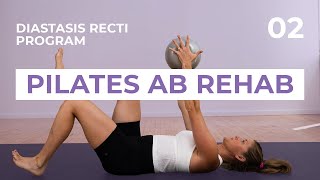
Lindsey Bomgren, 8 weeks postpartum, works through five core-recovery exercises with pelvic-floor physical therapist Sari. The workout uses a small ball and focuses on breathing cues, rib-cage expansion, and controlled movements like dead bugs and glute bridges to safely rebuild abdominal strength after diastasis recti.
Chapters
Hi, I'm Lindsay Baumgren of Nourish Me.
Of Love, and today we're coming at you with five beginner Pilates AB exercises for diastasis, recti, postpartum. So I'm about eight weeks postpartum, and I am joined today by my pelvic floor physical therapist, Sari, and she is going to help walk us through these exercises, just like you were in session with her, which is really cool and exciting because she's going to help provide those cues that she gave me to help start these exercises. So these are beginner exercises. I started doing them around two weeks postpartum.
And, Sari, we'll talk about how you.
Know when you're ready to start them personally for you. It varies for everybody. We'll jump into that as we get started. Let's go ahead, hit the mat and jump into these exercises. All right, so we're going to come down to position, and before we start, I should say I have a potty Spongebob. You can get this on Amazon for, like, under 10 bucks. We'll link it in the video description below. If you don't have one of these balls, you could use a kids toy fishy ball. I know my kids have one just like it. Or even a throw pillow. Okay, so I'm going to place this ball between my knees, and then I'm going to place my hands on my abs. And so I'm going to inhale. Belly's going to expand, and then exhale. I'm going to squeeze the ball between my knees as I think about contracting my abs. Okay, so we're going to do some good core breathing to start with, which I know is really exciting, but also really important for us. Okay, so that's where we're going to start. We're going to do it for 40 seconds, and you'll get two stabs at it. Okay, so let's go ahead and start here. Ball between your knees. Big inhale. Belly is going to expand. Exhale. I'm thinking about squeezing the ball as I squeeze my core together by thinking about shoelaces wrapping around a shoe. Inhale, it's going to expand. Exhale, and.
Sorry.
He's going to talk us through the lengthening and the contracting of this.
Yeah. So when Lindsay breathes in, you'll watch her abdomen expand. I'm looking for her rib cage expanding out to the side. And then I also want her to feel her pelvic floor muscles dropping down toward her feet away from her body. And then on the exhale, belly Draws.
In pelvic floor, lifts up, and you'll see my legs are shaking during this. And that's normal.
That's great.
Doesn't mean I have to regress. Like, that's okay.
No, your legs probably haven't done this in a while. It means everything is working. Yeah.
Okay, let's go ahead and take a quick breather. About 20 seconds rest, and we're do that again. So you get a chance to do that same exercise again and continue to think about those cues that Sari was giving about the lengthening and the contracting. Also, the closer my knees are to my chest, the easier it's going to be. The farther they are from my chest, the harder it's gonna be. So I'm start somewhere in between. And we'll go in three, two. Here we go. Big inhale, exhale, squeeze. I love the pilates ball because it helps me really make that mind muscle connection. About. Yeah, I have to think about lengthening. I have to, like, think about it.
Yeah. And when you're lengthening, you'll see how Lindsey will take a little tension off that ball too. It's gonna be hard to lengthen if you're really squeezing the ball at the same time.
That's a really good point. Yeah. I think about. We always think about contracting. Like, that's the number one thing we're taught. Yeah.
Postpartum. Yeah.
But it's also really important to learn how to leng back muscles and take them through their full range of motion.
Nice.
Got about 10 more seconds here on the second set. Maybe you can try and move those knees a little bit farther from your body.
We talk about our bicep muscle, and if we're always contracting with a short muscle from here to here, here to here, here to here, it's going to fatigue super fast. The same thing with our pelvis, where we want that full length in order to fully contract.
Love that. Love the bicep analogy. That really helps me think through it. Okay, we're going to progress on to exercise number two. I'm going to stay right here. Legs are about at 90 degrees, and just my arms are going to drop into what we'd call like the headbutt, but just my arms, so big. Inhale, belly expands, exhale, squeeze the ball tight, drop one arm towards the ground and bring it back up. Now I'm going to inhale, exhale, squeeze the ball, and drop my opposing arm. And I know these moves can seem really slow and controlled, but sometimes slower is harder. If you're a person who likes to go all out. You're thinking, let's go fast, let's go hard. I know these aren't the most exciting exercises, but they're so important, right?
Yeah. You're just reconnecting with your base and your foundation again after nine months.
That's so true. That's why we've created beginner to advanced. So this is our beginner version. We're going to show you how you can scale all these moves up. In the advanced version. We're going to do one more here.
Nice.
And you can rest. I like to put my legs back down because I'm really feeling that pressure as I hold my legs up. It's a lot harder. Right. And now we're going to jump right back into that exercise. Okay, so we got about 10 seconds. If someone's saying, I'm feeling this in my back or even my hip flexors, what would you cue differently? Gonna bring those legs up and we're gonna go in three, two, big inhale, exhale. Good. Yeah.
So I talk about tension to task. Sometimes people are just creating 100% maximal tension. Really strong brace. And so they're gonna feel their paraspinals or back muscles kicking in. So I'll tell them to back off a little bit. Maybe breathe quieter. Maybe think about blowing through like a juice straw versus maximally through a thicker straw. Sometimes that will just change the amount of tension they're feeling in the back.
And I love what you've taught me is that it's not always about regressing the exercise. You think, oh, that's too much, I can't do it. It's just about changing that queuing because queuing hits differently. I was thinking about blowing through a straw, like an average sized straw. And then you said juice box straw. And I'm like, oh, that instantly helps. Yeah, exactly.
Nice.
Okay, so that's that move. And now we're going to progress. I'm going to take the balls by hands this time. Same thing, except I'm going to do alternating heel drops this time. Or you could actually even go to a full kick out. Okay, so dead bug style. We'll start with the heel drops. We'll progress. So big inhale, belly stance, exhale. Now I'm going to squeeze the ball with my hands. I'm going to drop one heel to the ground. Return, inhale, exhale. And then I'm going to drop the other heel. If you're like, I've totally got this. Inhale, Progress a little bit more to that Dead bug With the straight leg kick out. Yeah.
Sometimes it's just about changing your strategy. Either your breathing strategy, your muscle recruitment strategy, your posture. And that can really change how the movement feels in your body.
Yes, I love that. Just little change. Because a lot of times people are like, how do I know I'm ready? When am I ready to do this? When am I ready to progress?
Yeah, that's so hard, right?
And three, two, recover. So I mean, it's different for everybody, right? And that's why I saw pelvic floor physical therapist, because it's so individualized based on how much activity I was doing before I was pregnant, during pregnancy and then my birth. Like, it was stational, it was normal how long I pushed for. Exactly. All those things come into play. So go ahead and set up here and get your second stab at it. You can take those knees farther if you want to make it harder. Big inhale, exhale, Squeeze up all your hands to help think about that contraction.
And then extend.
You can either heel tap it or kick it straight out.
And you're probably doing a lot more with your core than you already think. You know, you're lifting your baby, you're bringing a carrier, you're twisting, you're dropping the baby in the crib. So that's basically a standing, you know, standing sit up or standing trunk flexion. So people come in and they're super fearful about doing exercise. And then when you break it down, your core is working all day anyway.
Yes, I started these beginner exercises about two weeks, and I did have a fairly normal and everything, and I stayed strong throughout pregnancy, But, I mean, it definitely takes time and you have to progress slowly. Nice. And we're gonna do that again. Is that our first time doing that? Remind me by praying. I still got eight weeks postpartum. I'm still on that Sleep deprivation. That was our first time, right? Okay, we're gonna do it again. So you get a second stab at it with the hands this time and just the legs moving.
Right.
I mean, total transparency.
I mean, I was gonna talk about sleep too, because sleep deprivation, really, we have so much evidence and information to show that less than six or seven hours of sleep, you're at higher risk of injury. So just taking that slow, knowing your body, super important.
When you shared that with me, I was like, oh, man, that hits home. Because totally. We all just want to. I mean, if you're an athlete, you are working out prior to pregnancy, you just want to jump right back in, right? You're like, I want to Start running again. I want to start doing all these things again. But you have to remember, it just takes time. And what's the phrase you say? Just because it's not the season or what'd you say? Yes.
Not forever, just for now.
Not forever, just for now. So saying I can't do this, it's not forever. It's just for now. And it's not necessarily I can't do it. It's just I have to try and do it differently. Exactly. All right, nice. That was our second time through that exercise. So now we're moving on to our fourth exercise. I'm going to put that ball back between my knees, and I'm going to go squeezing the ball. 90, 90 leg lower. So we're going to hit more of these obliques right here. So my arms are going to be at my sides. They could even go a little bit more to the side. I'm just going to drop one knee to the mat, come back to center, and drop the other knee. So we'll do that for about 40 seconds. In three, two, big inhale, exhale. Create that tension, squeeze that ball, and.
Then I'm going to lower.
Side, center, side, center. And why is trading the obliques also so important?
Yeah, so the obliques are stabilizers of your core. We want to train all of the core muscles. We used to talk about just training our transverse abdominis, but really that muscle works with our whole core system, and we had changes to our whole core system during pregnancy. So working the core in a variety of ways is what I always tell people.
Love that we're trying to create a variety of ways here right now. And squeezing that ball helps me keep that tension. So when I come back up to top, it helps me really re engage my core, because as I work through a move, especially for 40 seconds, it's really easy to get lazy and just kind of, like, let my. My muscles slowly disengage. We'll take a break, and we're gonna do that same thing again. And so having that ball just helps me keep my muscles engaged when I need to. That's why I love that ball. All right, we're gonna bring those legs back up to 90 degrees. I'm gonna go through that same thing again side to side right here. I'm gonna squeeze the ball. If you wanted, you can even try and straighten those legs a little bit. The longer the lever, the harder it's gonna be. Right? So that means the longer. So our core is designed to stabilize our body right as our limbs move. Away from our body. And so the longer my arm, my leg extends away from my body, the harder my core, my trunk, has to work to stabilize.
And our obliques are our big twisting muscles. So as a mom, you're doing a ton of twisting with your carrier, right? You're twisting, you're putting the carrier in the car. You're doing all the things with your obliques.
So I know they tell you they're like, go home and rest and recover, and then, by the way, come back to the doctor and. And bring your carrier and your diaper bag and your three other children.
Don't lift too much.
Exactly. Which is why it's so important to tell people, like, it is okay to.
Start training your core again. Right.
Awesome job. Okay, so wait, did we do that one or two times? That was our second time. Sleep deprivation is real. Okay, you guys, we're gonna put the ball between the legs. Heels are close to exists, and I'm gonna do a glute bridge with a ball squeeze. That's where we go in three, two. So I'm gonna lift and squeeze. I'm squeeze and hold for 3, 2, 1. And then I'm just gonna let my glutes hover, not actually come to rest, and then go right back in and squeeze for three, two, one, come back down. The closer my heels are to my glutes, the more I'm gonna feel those glutes. So a lot of people say I don't feel my glutes activated in a glute bridge. And that's because your heels might be too far away. They may be activating more of the hamstring. Back here. You want the glutes and our inner thighs. Glutes and inner thighs. Why are they so important for our pelvic floor?
Yeah, they work together. Our pelvic floor works as a whole system, not in isolation. So getting those more global muscles firing up is important. So that pelvic floor doesn't take all the load.
Yes, and they're gonna stabilize their pelvic floor. So like you said, if I want to get back to doing those unilateral movements or things like running glutes, inner thighs so important for helping stabilize. Nice. We'll take a rest, and we're just gonna jump back in and do that same thing. And this time, I'm gonna hold for five seconds at the top. So we're just gonna increase that time under tension in that muscle. Muscular endurance. So let's go ahead and lift. Squeeze for 5, 4, 3, 2, 1. Hover and take it right back up again. You're going to see my legs shaking, my inner thighs shaking. These muscles are still building that muscular endurance, which is why we just play with that time under tension. Right. So you can start with three seconds. You can scale up to five seconds, then you can scale up to 10 seconds. It's just that scaling. I think you told me this about pelvic floor dysfunction, which could be where I have leakage or things happening like that, but it doesn't necessarily happen with. It happens with the volume, right? Yeah.
With running. There's a study that showed pelvic floor dysfunction is more correlated with running volume than with actual weakness or muscle dysfunction. So progressively challenging. That volume is important.
Yes. So I'm just gonna take a rest. Yes. So it doesn't necessarily mean that, like, my muscles are weak and they can't do it. They need to build up just like anything, right? Exactly. If I want to do a back squat with 300 pounds, I have to start somewhere, hold up to that load. Yeah. All right, we're going to go right back in. Last loop, bridge. Here we go. We're going to let you hold this time. And we're going to squeeze. We're going to go for five. Wait, is this our second time doing this? Did we do this twice?
I did.
Three seconds.
This is our second time.
This is our second time. So I have.
I'm. I don't even have an excuse. I'm like, my second.
I swear, I tell people there is a reason that sleep deprivation is used as a torture method. And we're doing. Because I wanted to. To be relatable to you guys. Like, I didn't want to show up here with, you know, abs that are conditioned and body that's conditioned. I wanted to be in this with you like I want. I'm eight weeks postpartum. You're probably somewhere around the same. Doing this together. Like, I want us to feel like we're in it together. Like, holding this ball. Squeeze. Right now is really challenging. My legs are shaking. And we're gonna hold it for 3, 2, and 1. And we're gonna rest and recover. And those are our five beginner ab exercises with a Pilates spongebob that are so great for diastasis recti. And thanks so much for joining us, Sari. I hope you guys found this helpful. If you did, we'd love if you dropped a subscribe to our channel. And of course, you can find this entire free diastasis recti Recovery program at nourishbootglove.com have a great day. Thanks so much for joining me for that core recovery workout. If you enjoyed it, I'd be so grateful if you dropped a subscribe to my YouTube channel right here. And if you want to access this entire free Diastasis recti recovery program, you can find the whole program right here.
Have a great day.
More from Lindsey

Here's my winter arc 👇 #shorts #winterarcchallenge #strengthtraining #workoutplan

The only lunchbox snack that always comes back empty 🥨 #shorts #kindlingpretzels #proteinpretzels
Strength training is the foundation. #shorts #winterarc #strengthtraining #workoutplan

I’m not waiting until January to reset ... Are you? #shorts #winterarc #12weekplan


LOCK IN your Winter Arc: our 12-week program starts MONDAY ❄️ #shorts #winterarc #workoutplan