Postpartum Fitness Test (Do This Before Running or HIIT)
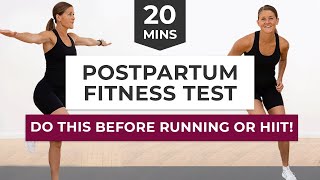
Lindsey Baumgren walks you through a three-part fitness test to check if you're ready for running or HIIT after having a baby. The test covers strength, balance, and impact with exercises like single-leg glute bridges and lateral bounds. Wait at least 12 weeks postpartum and stop if you feel pain, heaviness, or leakage in your pelvic floor.
Chapters
Hi, I'm Lindsey Baumgren of NourishMove Love and today I'm walking you through a postpartum fitness test to determine if you're ready to return to running or hiit training after having a baby. And we have a lot more postpartum content coming, so drop a subscribe to our YouTube channel to make sure you stay up to date. Alright, you guys, today we are jumping into one of the most common questions I get asked and that is when am I ready to start hiit training or running after having a baby? This is a postpartum fitness test comprised of three circuits, a strength circuit, a balance circuit and an impact circuit. There's about three to four exercises per circuit and these exercises are to help you determine if you're ready to return to running or hiit training after having a baby. Now, this is not the end all be all. Okay, there are a lot of variables. How active were you during your pregnancy? What kind of labor and delivery did you have? How long did you push for? Okay, there are a lot of variables to consider. I don't suggest you start trying this fitness test until you are around 12 weeks postpartum. I'm currently around 15 weeks postpartum. I do recommend strength training prior to trying this. Again, this is not the end all be all. But if you do experience any pelvic pain, heaviness or leakage during any of these exercises, it means that you're just not quite ready to return to running or hiit training. That doesn't mean not never, it just means not now. So I would suggest returning to strength training. We have a lot of postnatal strength training@nourishmovelove.com Otherwise, if you can complete this entire sequence of exercises without any pain, pressure or leakage, it means that you could be slowly ready to return to running and hiit training. Alright, so let's go ahead and jump right into these exercises. You're not gonna need anything except just your body weight. And I do have a yoga block. Now this is gonna be to add a little elevation. For one of the balance exercises. You could use the bottom stair of a staircase or whatever you have available to you, maybe even a thick book. Otherwise it's just you, your body weight. You will need a wall for a wall sit as well. Okay, we're gonna start on four strength based exercises. You're going to do each exercise for either 30 seconds per side or 1 minute for a hold. Okay. We're going to do no warm up, cool down. So make sure you're nice and warm and you're ready to move. I'm just going to start by walking you through these exercises. You're going to do every exercise right alongside me. Let's get started with our one minute plank. I know that's how we're going to start. You got to hold a plank for one minute. A great way to determine if you have that core strength that you're going to need for running or hiit training. Okay, so I'm going to do a low plank, a forearm plank set up. My shoulders are stacked over my elbows. I'm going to step back to plank and we're simply going to hold a plank for one minute. So go ahead, set yourself up. Minute starts now so you can walk through these exercises with me. It's going to be timed intervals for the strength portion, which is our first portion of the workout. And then we're going to go into balance where we'll count some reps and then we'll go back to impact where we'll go back to timed intervals. So you're just right here holding a plank for me. Let's walk through those cues. I want to think about when I'm holding a plank. I'm thinking straight line from head to heels. Okay? My shoulders stay stacked over my elbows. My core is braced nice and tight. I'm continuing to breathe through this. Cues that really help me hold a nice tight line is think about pushing my heels back towards that wall behind me. Nice long, neutral neck. Gaze in front of me. If you start to feel some diffage into your low back, think about spreading those shoulder blades apart. That's instantly going to pull that back up in alignment. And if you feel like your butt's a little bit too high, think about pulling up on your kneecaps. That's instantly going to drop that butt down. So pull up on the kneecaps, spread those shoulder blades apart, and you only have 5, 4, 3, 2 and 1. Woo. See, if you just talk through a plank the whole time, it goes really fast. Okay, you guys, that's move one. Now we're going to an advanced clamshell. Shoulders stay stacked over elbow lying on my side. Legs are bent at 90 degrees. I'm simply going to lift and lower. We're going to do each side for 30 seconds a piece. We'll start right here. 30 seconds in three, two, let's go. So lift and lower. Lift and lower. So why are we doing this? We're determining if those outer glutes, okay, those are our abductors. The outer glute muscle, or your gluteus medius, is strong. That really helps support the pelvic floor, your gluteus medius and your inner thighs, your adductors. We have abductors and adductors to help support that pelvic floor. Right here, we're hitting those outer glutes, those obliques. They're all turned on right here. Five seconds left on this side. Then we're going to switch over to the other side in 3, 2, and 1. Nice work. Switching over to the other side. You're going to do 30 seconds on that other side as well. So go ahead, set it up right. Here we go in three, two. Let's go. You're going to lift and lower. Nice work. Now, as you get more advanced and you really start to ramp up, maybe that running that you're doing, you could always add one of those mini loop resistance bands right here above the knee. That's going to help increase the intensity, activate those outer glutes. Nice. Watch. Strong outer glutes to stabilize us as we take those steps. 10 seconds here on this side, then we're gonna roll over to our back for glute bridges. In five, four, three, two, and one. Nice. You're gonna take it down to your back side. Okay. I'm lying on my back, one heel on the ground. It's a single leg glute bridge. 30 seconds per side. We go in three, two. Let's go. So I'm gonna lift and hover, lift and hover. My knees down in line with my hips. I'm hitting a unilateral movement here. So we're just hitting one glute at a time. With running, it's a unilateral movement. You step one foot in front of the other. We have to make sure that each side is equally as strong and able to support that load. Strengthening our glutes and hamstrings here, our primary power generating muscles as we run. You're here for 5, 4, 3, 2, and 1. You're simply going to switch it out. Other side. All right, glute bridge, single leg right here. I'm thinking about keeping my hips in line with each other. We going, three, two, let's go. If you don't feel that glute, think about bringing that heel closer to your butt. Think about keeping those hips in line. Right. Not letting one hip drop, keeping those hips in line. It's a hover and a lift. My butt never hits the ground. There's constant tension on that glute and that hamstring. Nice work, you guys. Right here, this. And then you got one more exercise in the strength circuit. Finish it. Last. 5, 4, 3, 2. And rest. Nice work. From here we're going to walk back to the wall. So we're going to take ourselves back to a wall, wherever that is for you. We're going to go into a wall sit, but it's a single leg wall sit. So it's a one minute wall sit hold. You're going to go 30 seconds directly into 30 seconds on the other leg. So find a nice 90, 90 bend in the legs. Flat, back against the wall and shoulders are stacked over. You're going to hold here and I'm going to lift my one leg off the ground. I'm holding. 30 seconds. We go now. Holding. 30 seconds. Right here, right here. All that load is right here. It's going to burn. I know. We're going to suck it up. It's 30 seconds per side. This is your last strength move. You got to close those eyes. You got to grit through it. Right here. Come on. You are close. Yes. You are ready. You are feeling strong. As a mom, you've been strength training. Now it's time to put it to the test. Put that strength to the test. Determine if you're ready. If you're not there yet, that's okay too. Okay, come on. Five seconds here. You're switching legs in three, two. Switch legs, switch legs. Single leg wall sit. Other side. Nice. Keeping that core nice and tight. Back pressed against the wall. You got it. Holding that 90 degree angle one side at a time. We do so many unilateral movements, holding or loading weight on one side of our body. As a mom, it's important that we train unilaterally as well. This is functional training to make sure you're ready to run. Yes. You got this. Come on. What would it look like If I said 5, 4, 3, 2 and 1? You did it. You're out. Now we are on to the second portion which is balance. I'm going to grab a quick sip of water. Balance training. Okay, we have three exercises. You're going to do amount of reps on one side and then the other side. Okay. More unilateral training where you're hitting one side of the body. We're going to start with a single leg deadlift. I'm going to go right foot on the ground, left leg is going to float behind me. I'm going to tap and lift. It's a single leg deadlift. Your goal is to get through 15 reps on the right leg, 15 reps on the left leg. I'll count the reps for you. Or you can always take this at your pace. You don't have to go at my pace. This is your pace. The goal is to not tap. So your goal is to get 15 consecutive reps without tapping. We'll see if we can do it. All right, we go in three, two. Here we go. So down and up. Now I'm thinking about shooting this left leg straight behind me. I'm initiating with a hip hinge. Pushing the hips back towards that wall behind me. Soft bend in that standing leg again. You don't have to go at my pace. You go at your pace. Now this is the balance portion, which gets a little tricky because I can say, oh, you could lose focus, right? Try find that focal point on the ground. This doesn't necessarily mean if you can't do 15 in a row without tapping that, you're not ready. It's just a good goal to have. Can I do 15? This is 10. We got five more, guys. We got five more. Come on. Five. You got it. Four. Stay with it. Three. Nice work. Two. Last one. One. Awesome job. Stand up nice and tall. We're going to switch it out. Same thing. Other side. 15 reps. All right, here we go. When you're ready. Let's go. Rep it out. 1. Nice. You might notice one side is easier than the other. Totally normal with unilateral or single sided training. I want a nice soft bend in my knee. If you've been doing staggered deadlifts or single leg deadlifts with weight, this should feel even a little bit easier. You're not loading weight. This is just body weight training. Nice core, nice and tight. You can even place your hand on it. Or I like to place my hand on my glute and my hamstring, which is working for me right here. Making that mind muscle connection. Hips stay square to the ground. Shooting that right leg right behind me. Five more. Let's go. Five. Find that focal point on the ground. Find that balance. We really have to retrain balance after pregnancy, right? Nice. Two more, two more. Let's go. Down, Up. Last one. Stay with it. Down and up. Awesome job. Now we're gonna do some step downs. This is for your knees. Knees are really important when we're running right or jumping with hiit. I'm gonna use a yoga block here. You could use a thick book. The bottom stair of a staircase. My what? Right foot is gonna go on it. Lateral step Down. So my left leg is gonna. My heels gonna tap and up. Tap and up. So I'm gonna do 10 of those. The goal is to not let this knee cave in. Okay. This knee needs to track out towards my outer three toes. Strong knees. Also very important for running and jumping. Here we go. 3, 2. Let's go down. That's 1. We're going to do 10 per side. 2. Nice. Awesome. 3. If I had a little bit higher staircase, that would challenge me a little bit more. I use the bottom stair of a staircase at home. Nice work. Tap down, stand up. Tap down, stand up. Big strong knees right here. Knees track out towards those outer three toes. Two more down. Last one. Tap it and stand it. Same thing. Other side. 10, right? Kind of a left foot goes on the bottom stair. The yoga block. Thick book, whatever you got. Right leg kicks out laterally. Heel hits the floor. We go in three, two. Let's go. Ten. Come on. Knees. Strong knees right here. Tracking out towards those outer three toes. You got it. Still finding that focal point on the ground. Nice. Inhale down. Exhale, stand. Inhale, down. Exhale, stand. Nice work, you guys. Two more right here. Tap down, stand up. Last one. Tap down, stand up. It's also to help that pelvic floor shifts around right during pregnancy. Not even ground creates that stability again. Okay, last one. This is, in my opinion, the hardest one. It is a single leg calf raise, and we're gonna do 25 per leg. So I'm gonna start with my right leg. Left leg is lifted off the ground and try and do 25 calf raises on my right leg without tapping down. Here we go. Lift and lower. That's 1. Nice. 2. Just lifting that heel off the ground. FBI. Honest, calf raises are not something I do a lot, so this is challenging for me. You got it. Nice work. I like to bring my arms with me. Think of it as an explosive movement. Just like when you're running. You're propelling yourself up. Nice. You're propelling yourself up. Nice. Those calves, ankles, they propel us. This is a big balance move right here. Nice work. Awesome job. Nice. This is 15. 10 more. Woo. You start to feel that fatigue. That's when you got to stay focused. You got it. 18. Let's go. 19. Come on. 25 more. Go for five. Nice. Four. Stay with it. Three. Awesome job. Two and one. Nice work. Whoo. Shake out that little calf. That little baby calf. Other side. Same thing. Here we go. 25. Start with that one. One rep at a time. 1. Nice work. 2. You might notice you have a stronger side. This one's going to challenge me. A lot of wobbles on this side. You do your best. Forget the rest. Like I said, this isn't meant to be an end all, be all. Okay? If you have to tap and you're like, oh, no, I officially can no longer run or hit train, that is not the case. Trying to talk and use my weak side. Ah, we all got it. Let's go. Lift that heel off the ground. Come on, baby. Calf one. Work for me. Balance, stability, strong core. Ground down through that heel, then ground down through the toe, heel, toe, heel. 25 more. We're almost there. Let's go. Four. Nice work. Three. Stay with it. Two. And one. That was the one I was most nervous about, you guys, I'm not gonna lie. We made it. All right, now, this is my personal favorite port. This is the impact portion. This is typically where you're going to tap out if you have that heaviness, leakage, pelvic pain. Okay, we're going to go through a series of four exercises. They are timed intervals. The first one is a run in place, but we're going to go forward and backwards for one minute. You're going to go run up, run back. Ok? Run up and run back a little bit like high knees. Okay. You're going to start to get that impact in place again. If you have any heaviness, pain, leakage, it doesn't mean not never. It just means not now. Okay? These impact exercises are really where the rubber meets the road for that readiness to return to running. Okay. Or to hit training. So one minute, I'm going to run up my mat and back my mat. Timer starts in three, two. Let's go. Run up my mat and back my mat. Okay. Just a little forward back movement. Just like you would do if you were actually running. Right. Starting to feel that impact again. If you have any pain, heaviness. You guys know that pelvic floor dysfunction, that leakage that can happen while running or jumping doesn't always happen because you're weak. Typically happens because of the volume. So if you're running back to back days, that's not a great way to start. When I'm returning to running, it's a slow integration. I recommend a run to walk program. Run for 30 seconds, walk for a minute. Okay. Take at least one to two full rest days in between those run days. I recommend strength training on those rest days. Right? Strength train. Nice. So important for that returning to running. It's that volume that overuse that can cause that leakage. Okay, come on. 10 seconds, guys. Stay with it. You're almost there. Last three, two, one. Also a good chance to realize I'm not nearly as conditioned as I used to be. Right. Okay, lateral bounds, one minute. Simply gonna go side to side, side to side for one minute. Okay? A lateral bound. You're gonna push to your right in three, two. Let's go side to side. So here I have impact, landing on a single leg, right? Remember those clamshells we did in the beginning, strengthening those outer glutes? Also the lateral bound. This is where you're using it. You're using that strength right here. Side to side, one minute. You got it. Nice work. Landing softly, soft bend in that land leg, then drive, drive, drive, drive. It's good to train in all planes, right? I know you run in that front to back motion. But we still have to hit the frontal plane, which is side to side. Right. Sagittal plane is that front to back. Transverse plane is our pivots and our twists. They're all important to train in not only for our body, but for our mind. Keep going. Right here, you guys. Come on. What would it look like If I said 10, 9, 8. You've got it. 7. Stay with it. 6, 5. 4. 3, 2, 1. Nice work. Now we're going to go into a hopscotch squat. You're going to land on one leg for 30 seconds, then the other leg for 30 seconds. So I'm simply going to squat and up. So like you did hopscotch. 2, 1, 2, 1. I'm teaching my son that. Okay? You can do it in a squat. Squat, land, squat, land. I'm landing just on my right leg as my left heel kicks my glute. Okay? Just on the right leg for 30 seconds, then just on the left leg. We'll do a smooth transition. So it's one minute straight through. 30 seconds per side. Start landing on your right leg in three, two. Let's go squat. Land, land, land. Again, we're focusing on that single leg land. A unilateral movement. Nice. You got it, you guys. Come on, come on. This is move three or four of the impact circuit. Okay? You're almost there. You are so close to finishing this fitness test. Hang in it. Nice work. You're doing four minutes of impact. That's a lot if you're 12 weeks and you're returning. Right? Come on. Five seconds here. Switching to the left leg in three, two. Let's go. Left leg. Here we go. Landing on that left leg. Nice Right here. Single leg. Land. You got it. Squat, land, Squat, land. Come on. Nice work, Nice work. Stay in it. You're so close. Yes, you can. Let's go. Land soft. 10 seconds here on the left. Finish it. Nice work. Yes. Last. 5, 4, 3, 2, 1. Awesome job. Nice work. Okay, you guys, we have one move left. I'm going to grab a quick sip. Here we go. Last move is a single leg hop. Okay, Again, this is like, like right up there with the calf raise for me. Challenging, right? I'm gonna hop on just my right leg for 30 seconds. Right here. Just hop in place. I'm gonna switch over to my left leg. 30 seconds per leg. 1 minute total of hopping. Typically where moms start to see that leakage, right? You're like when jumping jacks. You're doing those in a group fitness class, right? Yeah. It doesn't mean not now, doesn't mean not never. Just means not now. Strength training, right? All right, here we go. I'm going to hop on one leg for 30 seconds. In three, two, one. Okay. These exercises came from a variety of pelvic floor physical therapists that I've followed along with, studied, worked with. If you'll try our diastasis recti recovery program, you'll know I teamed up with my personal pelvic floor physical therapist, Sari for that. Okay. If you're having leakage, you have having pain and you're ready as an athlete to return to running and hiit training, I highly suggest checking out a pelvic floor physical therapist. Five seconds here and we switch in three, two. Switch legs. Switch legs. You're hopping. Nice. Okay. I started seeing my pelvic floor PT at two weeks postpartum. We did our first internal exam at six weeks. A lot of exercises really helped me get back on track right away. It's not always the funnest of exercises, but it's so important, right? So important to get those bodies strong and able. 10 seconds here, guys. You're almost there. You're finishing this fitness test in 5, 4, 3, 2, and 1. Awesome job. Nice work. I hope you rocked this. And if you didn't, I hope you don't feel discouraged because you guys, like I said, I'm 15 weeks postpartum. This is my third baby. I have learned so much along the way. I was not here after my first and I was not here after my second because I had a four finger separation. A lot more pelvic floor work to do. It all depends on the strength training you did during your pregnancy. It all depends on your labor. There's so many uncontrollables. You do your best, you forget the rest. And then if you complete this and you're ready to start trying hiit training or running, I recommend a slow integration back into that. If you want to follow our postpartum workout plan for strength workouts postpartum, postnatal, you can check that out. We'll share that with you. Thanks so much for following along with me. Have a great day and we'll see you guys soon. Thanks so much for joining me for that postnatal fitness test. If you found it valuable, do me a favor and drop a subscribe to our YouTube channel right here. If you're ready to continue with low impact strength training, you can find all low impact workouts right here. And if you're ready to progress that high impact, you can find some high impact workouts right here. Have a great day.
More from Lindsey

Here's my winter arc 👇 #shorts #winterarcchallenge #strengthtraining #workoutplan

The only lunchbox snack that always comes back empty 🥨 #shorts #kindlingpretzels #proteinpretzels
Strength training is the foundation. #shorts #winterarc #strengthtraining #workoutplan

I’m not waiting until January to reset ... Are you? #shorts #winterarc #12weekplan


LOCK IN your Winter Arc: our 12-week program starts MONDAY ❄️ #shorts #winterarc #workoutplan