Lindsay explains why rest and recovery are different: rest is the 95% of your week you're not training, recovery is the active stuff like sleep and nutrition that makes rest better. Athletes need 7-10 hours of sleep nightly, and she shares how to find your number by waking without an alarm for a week or two.
Chapters
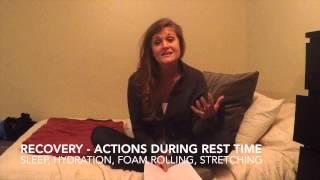
Hi, guys. Welcome back. I'm Lindsay with moxie, strength and nutrition. Welcome to my home. I'm actually sitting on my bed right now because we're going to talk about sleep. We're going to talk about rest and recovery this week, which I'm really excited to talk about. I've been digging into these topics for myself personally because the older I get and the more I really get into health and fitness, the more I'm learning that rest days are just as important as training days. This is a hard lesson I'm learning personally. You can't tell I sound a little congested. All that good stuff. I'm a little sick right now. So it's even more important now than ever to talk about rest and recovery for my body specifically. So I'm super excited to share these topics with you. Virtually, we're going to talk about rest and recovery. They sound very similar, but they are two different words and they mean two different things. So rest is what you're doing when you're not training. So if you're training practices or lifting weights, whatever you're doing for about, say, 10 hours a week, then the remaining time that you're off, which would be about 158 hours. I already did the math, I'm not going to lie, because I'm not good at math, which would be 158 hours that you're considered being in rest. So it's about 95% of your time you're technically resting. Right? I mean, we're going on walks, we're doing things, we're staying active, which is awesome. But that's what I consider. Rest recovery, on the other hand, I consider to be a very active verb. So things that you're physically doing to increase your rest time. So this is hydration, self myofascial release or foam rolling sleep, which is what we're going to talk about this week and how you're nourishing your body and stretching, all those great things that help increase your rest time. Right. So things that are going to maximize your rest time and optimize your body's performance. So we're going to cover a lot of the things I touched on. In the coming weeks, I'll talk about hydration and self math, fascial release and all that good stuff. But for this week, we're going to focus specifically on sleep. So sleep, super important. It should be just as important as your workouts, if not more important. This is when your body repairs itself. This is when your cells replenish themselves and turn over. So sleep is super important. Depending on how much sleep everyone needs, it really varies. So it's about seven to ten hours per athlete. So if you're an athlete living an active lifestyle, you need about 7 to 10 hours of sleep a night. Yeah, that's a lot. And a lot of us probably aren't getting that. If you truly want to tap into how much sleep you need, you need to sleep for about test this for about a week or two weeks and you basically need to wake up without an alarm. I know it's really hard, it's not feasible, but check yourself. On the weekends. Try going to bed at a reasonable hour and then seeing how much sleep you can get without having to set an alarm and what your body needs. So typically you'll kind of calibrate where you're at, you know what your body needs. So sleep is always a good thing. You can always use more sleep, especially if you're feeling a little bit under the weather, if your workouts are suffering more sleep. Sometimes you just need to listen to your body. So sleeping is really important. And yeah, basically I just really want to, you know, really want to help you guys focus on sleep, getting more sleep. So make it a priority. It is a priority. Schedule it on your calendars if you need to. That's currently something I'm doing. I actually schedule when I'm going to go to bed based on when I'm going to get up. Because I think, oh, I'm going to get 8 to 10 hours of sleep and then I realize I'm getting up at 5:00am and I'm going to bed at 11:00'. Clock. I'm not getting that. So I schedule what time I need to go to bed on my calendar. There's a lot of great ways you can do it. There's a lot of studies that have been out there. Check out the full article. I've written for more. But a lot of studies on how sleep has improved athletic performance. So stay tuned for future blogs that'll be talking more about rest and active recovery with hydration, nutrition, all that good stuff. But for now, get your sleep. It's really important. Even though the sun's shining longer, you still need your good sleep. So hope you guys get lots of Z's this week. It was National Sleep Week last week, so cat capitalize on that and have an awesome rest of your week. I'm going to hit the hay right now myself.