Burnout, Boundaries and Beliefs with Liz Bradford!
In this episode of the Ecom Girls Club podcast, hosts Lucy and Yasmin interview Liz Bradford, founder of Transform Perform and senior banking executive, to explore burnout, wellbeing, and purpose for women entrepreneurs. Liz explains why burnout is hard to spot—symptoms like chronic fatigue, irritability, loss of focus, and physical issues often mask it. She introduces her three‑pillar framework (physical, mental, and connected wellbeing) and offers concrete practices: regular movement, nutrition, sleep hygiene, gratitude journaling, and time‑blocking tools such as Motion. The conversation moves to the importance of clear boundaries, eliminating "energy vampires," and aligning work with core values (discipline, accountability, authenticity, courage). Both hosts share personal strategies for tracking life quadrants, rating pillars, and using community for support. Liz contrasts corporate leadership with building a startup, highlighting the need to wear many hats and the shift from abundant resources to lean 0‑to‑1 work. The episode closes with advice on career agency—decide your path or others will decide for you—and a quick brand recommendation (AG1). Throughout, the tone is conversational, supportive, and encouraging, aimed at helping female founders recognize burnout early, build resilience, and live in alignment with their values.
Chapters
Catching burnout is harder when you are burning out because many of the symptoms are things like chronic fatigue. So you're tired, but you just think, oh, I just need to push through. We often rely, particularly female entrepreneurs, we often rely on just grit, which is great at times, but sometimes you really need to recognize that actually grit won't necessarily get us the leap that we need to get to. We need to step back.
Hi, I'm Lucy.
And I'm Yasmin.
And we started an online community called Ecom Girls Club because we had no friends.
Well, no, we had friends, just not friends working in E commerce, D to C marketing and brand building like us.
And now we do. Ecom Girls Club is the first international community exclusively for girls in E commerce. And we have a lot to say about it.
So we started a podcast. We'll be here each week to talk about the highs and lows of entrepreneurship, building, online business, and the problems we face in the E Comm industry.
And we'll also be sharing the stories of the amazing women within our community who are all crushing it. So let's get into it. So we just generally start these off very informally and we basically try and hand it over to the guests straight away because we've deduced that everyone introduces themselves better than we can introduce them. So without, without any further disruptions, we're going to hand straight over to Liz to give a bit of a introduction on all things Liz.
Amazing. No disruptions, but also no forewarning of that. So thank you. My name is Liz Bradford. I'm the founder of Transform Perform, which is focused on organizational health and well being. I also have a day job working for a large bank in Asia as the money director for wholesale for North Asia as well. I've been in financial services for about 20 years, just over 20 years now. And then I've been in organizational coaching, executive coaching and wellbeing for the last 10 years of that as well. So those are my passions. And I guess that's part of what we're going to talk about today in terms of burnout and how to manage it.
Absolutely. And for anyone listening, we were absolutely treated a few months ago at ECOM Girls Club to a spotlight session with Liz on burnout and goal setting. And I think everyone left that session, especially Yasmin. Actually, if I remember right, being like, mind blown, because Liz is massively underselling herself. She knows that I want to be her like most of the time, but Liz is truly one of those people who just has the best kind of perspective on all things wellbeing, burnout, resilience, and being entrepreneurs, especially female entrepreneurs. I think it's probably lessons we could all learn. Yasmin and I are both very honest about the amount of meltdowns we have when we're tired and not looking after ourselves. So that's kind of why we wanted to talk to Liz today to hopefully share her wisdom with the wider audience.
Yeah, and also, I feel like the hardest. One of the hardest parts about burnout is being able to identify that you're burning out before you're fully burnt out. Like that. That for me, still, I mean, I'm 29 now, and I started my first business at 21, and I still cannot identify when I'm starting to, like, hit that kind of downward slope of burnout. So I guess that's going to be my first question, is how on earth can we identify when that's starting to happen? What are the signs?
It's a really good question. And it's kind of that catch 22 thing. And as you've just said, you're 29. People may not be aware of catch 22, but it's a book, and it a whole theory around, Effectively, the catch 22 is you start something but you're not sure you started it, and therefore you don't start. So catching burnout is harder when you are burning out because many of the symptoms are things like chronic fatigue. So you're tired, but you just think, I just need to push through. We often rely, particularly females, particularly female entrepreneurs. We often rely on just grit, which is great at times, but sometimes you really need to recognize that actually grit won't necessarily get us the leap that we need to get to. We need to step back. Cynicism, very often in the corporate world as well, you see cynicism as a very big feature of burnout, where people just kind of think, oh, well, that's just the system. You can't beat it. Irritability. So an irritability all the time. So, you know, it might be at home, might be with your co workers, might be with your podcast hosts, whatever that is. But that's if you're constantly irritable and, like, the tiniest things are triggering you, that's a really good sign that maybe you need to step back a little bit detached.
Because we can relate very strongly to that, actually.
The irritability bit. Yeah. And, like, we all have phases where we get a bit irritable. That's absolutely fine. But if it's constant, do you know, like, if just These tiny things are triggering us all the time and we know that we're not putting it in perspective. That's when it's probably an indicator that we need to step back a bit. Detachment. So whether that's from work, from home, where you just find it really hard to get engaged at all, can be really sign and an inability to concentrate. So I don't know about you, but, like, sometimes I'll find myself reading the same thing six times. And if it's just not going in, yes, it might be dull, but quite a lot of my job can be dull. Right. But that's my job to absorb that information. And even if it's something super exciting, that's more worrying. And then finally, there can't be physical symptoms as well. So things like gut issues, insomnia, headaches, that kind of stuff, if you're getting those consistently, that's typically a physical symptom in your body. Just trying to stop you, slow you down and actually get you to sort of address the chronic issue, which is the burnout. Sorry, Yasmine. You look like you wanted to say something then. And I kept going, no, no, I
was going to say the bit about motivation, I guess, and being able to get excited about things that should be excited, but you're just not excited about it. I think, like, for me, especially this week, I really experienced that and it's. It's almost just frustrating because it like throws into question everything you're doing. You're like, is this the right thing for me? Why am I not energized by this? Why am I not passionate about it? It's like, actually, it's nothing to do with the thing, it's everything to do with. Yeah, the burnout and the way that you're feeling. And I think it can. When you are starting to burn out, it can easily just tarnish everything that you're doing, whether that's work, personal, your fitness, etc. So, like, yeah, I can really relate to that.
Yeah, it kind of takes the joy out of stuff. And then it. It's a. It's a vicious cycle, or it can be a virtuous cycle the other way around. And I'm sure we'll talk about how can you address burnout. But to your point, like, if you're not. If you're not feeling the love, if you're not engaging, there's only so far that grit and discipline will get us. And you have to. You then get to a stage where you're just like, actually, I'm going to Throw in the towel. And that's exactly.
Yeah.
I would also say, and this is a slight segue, but Yasmin and I have spoken about this before, but this is. That's actually one of the points when having. If you're running a business, having a co founder can extremely helpful to have someone to like, talk you off the ledge, slash make you see like the bigger picture. Because I think when you get into that state, it's really hard to see anything differently from like how you're feeling. That's. I would say that's my experience. I don't know about Yasmin's anyway, but I think it. Yeah, it's really helpful in that sense. I'm also, I mean, Liz, you speak with such passion on the subject, but I'm wondering how you actually got into this whole area, because as you said, you're in financial services and it doesn't seem like the natural kind of link,
I guess, or maybe you'll find a lot of people in financial services. I got into this because I did burn out fairly spectacularly after the first 10 years of my career, to the point where I literally just chucked it all in. Swore I'd never work in banking again, packed up my husband, packed up my hang ons, my life, and moved to the other side of the world. And then I thought everything would be hunky dory. I did go back into banking because I kind of figured, you know, need to earn a wage, landed in Sydney, needed to pay the rent. And then after about half a year, I. I sort of found myself almost on the precipice of it again. And I realized this, this can't be the environment because it was a completely different environment, completely different culture, everything else. And realized that actually it was something that I was. I was doing. It was something that was within me to control. And it was my behavior sort of getting me to the edge of that burnout each time. And I was very lucky to be introduced to my very first coach at the time as part of a leadership development program. And she taught me about the sort of three pillars of resilience or well being. So physical well being, which is possibly the easiest one to start with, particularly when everything else feels like it's crumbling down around us. Like, I can go for a walk, I can pull on my trainers, I can make sure that I'm eating healthily. And then you've got mental well being. And with that, I mean, kind of your own mental awareness of your emotional state and everything else. But also, how can we be more mindful, how can we focus and stop being distracted so that we can concentrate and we can work out what, what is the burnout and what is actually a genuine problem. And then the final one is the connected well being. And that ties a little bit into what you were saying with the co founders. But like how are we interacting with others around us? Who do we have to pull us up? But also how are we giving back to the people around us and the society, the community we're in? Because actually that can be extremely motivating at times when we feel like we've got nothing to give. But actually it's because we're totally focused inward. And I see this a lot with entrepreneurs because it can be a very isolated lifestyle. Actually, once you start to engage with people outside, you realize you're not alone. It's a very human sort of process going through these emotions, everything else, and it kind of neuters a lot of the stigma around burnout as well. So she taught me about that and I just got very, very passionate about it because I figured this is something people don't talk about enough, we don't own up to this. And actually I think during COVID it was something like 86 people when surveyed by Deloitte, identified as burnt out in financial services. But people don't want to say I'm burning out because they're worried, oh, maybe I'm not good enough, maybe I'm going to lose my job. Actually, once we start to talk about it more, it takes all of that shame away and people can help each other and be more empathetic.
Yeah, I feel like that's, that's a big one as well. It's like, I think the concept of burnout can almost seem a bit above people. You know, they might think, oh well, I'm not, not, not worthy of being burnt out. But like if I'm starting a business or I'm just, I'm kind of maybe a bit younger and I'm like new in my career. Like burnout can seem like something that's only for real serial entrepreneurs and people who are like really hustling, hustling, hustling like that, those guys are burnt out, not me. And actually I think that's where we go wrong. It's. Everybody can feel burnout. And actually it doesn't matter what stage you are at within your career, whether you are just starting or whether you're 20 years deep, burnout can hit everybody. So I guess like, just to dig a bit deeper on the Ways to avoid burnout, I don't know, but since like moving to Dubai, for me, fitness and well being and kind of nutrition has been a massive thing for me and something that I can really control, you know, every single day, showing up to train, controlling my diet, all these kinds of things. So we all know it's important. But like really how, how important do you think fitness and nutrition is to being able to avoid, helping to avoid burnout?
I honestly think it's the foundational pillar of all of it because you can do everything else right, but if you're not looking after your body, it can't look after you. And when I say fitness, I mean you look like you're extremely active. That doesn't necessarily mean people have to be going out and doing CrossFit or you know, benching a massive amount of weight or anything that could be just going for a walk at lunchtime. It could be doing some gentle stretching or yoga, whatever that may be for them, wherever they're at on their kind of fitness journey. Hate the word journey, but I've just used it. But it like looking after yourself and you use the term take control, that's the key thing. Because even in the morning, if you get up and you do something for you, you're already taking control of the whole day. You feel like you've achieved before you even get to work or sit down or whatever it may be. And so that's fundamental. I think the nutrition thing is absolutely key as well, because what a lot of people don't realize is that your gut is effectively your second brain. And there is a ton of research to back this up. So what you fuel yourself with will impact your mood, it will impact your energy levels, and it will hugely impact whether you're setting yourself up for success, to be energized, or even just to make it through a really grueling day, or, or whether you're going to hit a wall and then, and hydration is a massive piece on that as well. So if you're dehydrated, you lose 33% of your, your concentration immediately. So that can be really, really frustrating, particularly if your job is to engage with people day in, day out. Because you need to be listening, right? You need to be paying attention to your customers, your clients, you need to be open for their feedback. Everything else, if you're not concentrating, you know, right when someone's not really there in a conversation, that could be a really big business opportunity you're missing or a really important team conversation or whatever it may be. And then the final one, I would say, on wellbeing is sleep. And this is one that I personally neglected for a very, very long time in my career, much to my regret, particularly because now there's a lot of scientific research about what that does to your brain for your later years as well. And I really don't want to have dementia when I'm older, so I'm doing everything I can to now counter that. But making sure that you are getting regular, consistent sleep at the same time that you've got sleep hygiene in terms of the environment in which you're sleeping, everything else is absolutely fundamental. It's how your brain regenerates, it's how you restore your energy levels, and it really, really helps in terms of managing the stress that we are all under constantly, every single day. So it means that if you are well rested, you are more mindful, your hormonal balance is in the right position and the right place for you to be able to handle kind of those peaks and troughs of stress. And then that's eustress, as opposed to distress, which is what we typically call stress when it's just chronic and it's. It's overwhelming.
But then. So the other thing I want to ask, and this is more of a personal question, but you are one of the busiest humans I know. And as well as founding Transform, you are like, it's unbelievable. And as well as founding Transform perform you, obviously the managing director, a huge bank in Asia. So how the hell do you manage to kind of keep your. Keep everything in check and avoid being burnt out yourself? Because the demands on your time are huge.
They are, but I realized a few years ago that there are always going to be massive demands. It doesn't matter what level you're at, everyone around you is always going to want more of you than you can possibly give. So you have to get ruthless about your boundaries. And I learned this the hard way, hence the 1.5 burnouts. But so you really need to be clear with yourself and like, where am I best putting my energy? Like, where am I going to add the most value and what matters most to me? So I'm really, really ruthless about prioritizing what energizes me, because it means I can keep going and going and going and going on the stuff that actually gives me energy. There is a ton of stuff, and we're all unique and we're all different, but there's a ton of stuff that I find incredibly draining. So I have to get rid of all of the energy Vampires and not be focused on that stuff. And there are people who are great at that stuff, who want that opportunity, who want to actually be focused on that stuff. And I can do some of that in my day, but I can't have a full day of that all the time. And that's a big part of why I founded Transform Perform, because that for me is a massive energizer and I can take that work and what we do and offer that for free within the bank as well. And so every time that's kind of that virtuous circle of fueling, then some of the stuff that's a bit more heavy lifting and a bit more draining, but it gives you the energy to do that. And then I think I'm also. And you can attest this ac, when I'm off, I'm off. Like it is almost impossible to get hold of me if I'm out hiking or if I'm like, I've got clear cut times where I'm just away. And actually conversely, that's some of my most creative time. So that's when. Because you do use different parts of your brain as well, if you're in front of screens the whole time and you're problem solving and everything else, you're using one part of your brain when you're away. It's like, this is why we always have our best ideas in the shower or like out hiking or when we're doing the washing up. You're using a different part of your brain. So all of your divergent thinking is converging at that time. But you can't use that part of your brain if you're sat in front of your screens and everything. Which is why, as contradictory as it might feel, it's super important when you feel like you're stuck on something to step away. And you'll quite often find that the solution will come to you at the weirdest time in the weirdest conversation.
Yeah. And I, I also think that it's a bit of a poor excuse when people say that they don't have time to train or they don't have time to go on a walk or they don't have time. Because it's quite an easy thing actually to make time. And even for the most disorganized of us, I am not an organized person. That's why I love working with Lucy because she is the most organized person I've ever met. So I need to use tools and systems to help me with my, my schedule. And at the moment I'm Using this thing called motion, which I literally won't shut up.
You're obsessed with it.
You're obsessed with it.
Yeah, it's. It's this basically AI pa. You just load it with your tasks and auto schedules for the week. But using tools like this, I found, really helped me carve out the time in the day for training or for making a healthy lunch instead of just ordering something on delivery. You know, being able to time block and really control that element of my day, I feel is like a practical way to implement these practices that we're talking about. So I just wanted to mention that because, yeah, it can be done.
No, I think that's super important because the other thing is, and I don't know if anyone else does this, but I always used to do this. I would wake up on a Saturday and I'd be like, today I'm going to start a small business and take over the world and probably cancel several people. Maybe I'll start my career in politics. Then you get to 4pm and you're like having a panic attack because you're like, but I was going to do all this stuff. But to your point, Yasmine, if you actually time block, realistically what something's going to take, and humans are terrible at this, so then add another 50% if you time block it, or if you use a tool like motion to do it for you and it's got a better idea of how long it'll take, you can actually be more realistic. You're ticking stuff off, you feel productive. Whereas, yeah, without that kind of tooling, I think the vast majority of us overestimate what we're going to do and then feel like we're constantly running to try and keep up completely.
Yeah.
I think something else you often talk about on your LinkedIn and your channels is building resilience, which I think resonates quite highly with a lot of us, especially those of us who are running businesses, because entrepreneurship is not. It's no joke, put it that way. So I was wondering if you could just share with us kind of what you mean when you're talking about building resilience and how you might do that.
Sure, of course. So resilience for me is really about how do you get back up? Because if you're not falling down or if you're not, you know, having challenges or issues, and as you say with entrepreneurship, and it really is like a roller coaster every single day, how are you bouncing back up and how are you dusting yourself off and getting back onto it kind of thing. So it's not about being super, super strong the whole time. It's about knowing when to stop, when you need to be self compassionate, when you need to go and you know, see someone, hang out, stop working, whatever it may be, whatever you need to do to replenish and come back. And that's where the three pillars come back in. Right, so the physical well being piece, if you are physically healthy and if you are taking control of that, that will give you a sense of self efficacy which will help you feel more resilient when you face other setbacks on the mental well being front, if you are emotionally aware. And I say this as someone who grew up in the uk, so it took me a long time, I literally used to have an A4 sheet of what an emotion like which different emotions were. And my coach would make me name the emotion. It was really hard because you're just not taught to do that the way I was brought up. So if you're emotionally aware and it's actually the reason I'm reacting to this way is because I'm feeling like this, then you can again, take a breath, you can choose your response rather than just react. So that can make you more resilient. And the alternative is you react and you cause a load of damage to a relationship or, you know, your reputation or anything else and you can't, that's harder to walk back from. But when you're emotionally aware of why you're reacting to something, whatever it may be or what has triggered you, you can be way more resilient when something inevitably flares up. And then the final one around the connected well being is once you are aware that you are a part of something much, much bigger, it helps you put whatever is happening into perspective. So yes, something might have gone wrong with a contract, or yes, something might have gone wrong with the recording equipment, or maybe we couldn't have got the echo to switch off today or whatever. But it's not the end of the world. And if you're involved in something much bigger, that's something to do with charity or just, you know, whatever it may be, I mean, you're running a huge community and going back to that, you can put it into perspective and go, actually this probably doesn't matter that much. So again, it's easy to kind of take stuff in your stride and bounce back a bit. So that's what I mean when I'm talking about resilience. It's all about perspective. But you have to start by looking after Yourself, first and foremost.
Yaz, I think you always talk about Yaz, has a really good way of like measuring your different, like quadrants of your life and how you're feeling, which is kind of related to this, I feel. And I've always really admired how you can explain it, how you do it, because it's kind of aligned to those pillars almost. Right.
So actually it was my, my partner's brother who had a life coach and he, he taught me this exercise. But she said to him, you need to compartmentalize your life and break it down to the core pillars that makes up your life. So, you know, it's kind of different for everyone, but pretty much the same. Family, friends, relationship, work, health and fitness and environment. They're kind of my six that I always look towards and I try and rate them out of 10 mentally, you know, just kind of weekly, bi weekly, whatever and. But you can also just write it down and take a total score and often just doing exercises like that, writing it down in black and white or just like visioning it in your mind, it allows you to really easily and quickly identify the areas of your life that are lacking or that need topping up. And so if it's family, you know, sometimes all that takes is a phone call to my mum or if it's relationship, I just need to go out for dinner with my boyfriend or, you know, fitness, I'll go for a run. Like these kinds of things, it gives you perspective because it allows you to see that actually my life isn't ending. It's not a disaster, it's not a car crash. I just need to pick up the phone and call my best mate and have a chat. And these are just daily rituals. I think that if we can implement allows us just to keep tabs on, on all these moving parts because it can be really overwhelming. You know, I think like WhatsApp, for God's sake.
I find WhatsApp so stressful and so
overwhelming because my life is on there. And so sometimes it's like, right, decompress, take a step back, just write things down and yeah, just look at your buckets and assess really what needs your time, really what needs your attention. And that is just something that, yeah, works quite well for me, which is what Lise was just talking about.
One other thing that's really, really good when it comes to resilience is gratitude. So actually using gratitude. So I gratitude journal every morning and every evening and I use an app, which means I definitely break my sleep hygiene rule about using screens just before I Go to bed. But naming, like the three things you're grateful for, and it might, you might be really clutching at stores like that I can afford to go and buy coffee this morning or whatever it may be if stuff does feel like it's all plowing in on you. But actually being grateful for stuff, it rewires your brain cognitively. And if you know you're doing that journaling, you will do something in your day called good findings. You're going to be looking for things all day of like, oh, I need to write something in my gratitude journal tonight, or whatever it may be. And that can also really help. But what you were saying about your pillars, it just made me think like, we're lucky to have family that want our time and attention. We're lucky to have partners that want our time and attention. We're lucky to be able to go out and move our bodies when we want to and everything else. Like, not everyone actually has that right. And so reframing some of that stuff when it can feel like it's a demand on our time, but actually flipping it into I'm super lucky to have this demand on my time because that's fulfilling and that's important to me is a really key thing around the resilience as well.
Yeah, yeah. And I think like, essentially those pillars or buckets are basically, they're my values that, like, at the end of the day, that's all it comes down to. And so, I don't know, I guess. Do you have any exercises or tools that people can use or think about when trying to identify their core values and I suppose their pillars.
There are a ton of exercises out there on the Internet. Transform Perform has one. People are welcome to go and download it for free. But I mean, I blatantly plagiarize and credit people like James Clear for this. I think he has a great exercise on this one where you can actually go in. And again, it can be quite hard to identify your values, particularly if you haven't done it before. But you can go in, you take a list of core values, you whittle them down and then take them down to like five if you can around that. And if you really struggle to think about what do I value? Because that list, they're all things that we aspire to. So it's hard to like, prioritize what, what's really fundamentally me, because you don't want to say, oh, that's not important to me. But the other thing that I find quite helpful is if you think of people that you admire. So they might be famous people you've never met, or it might be people that you know in your life. But if you think about people that you admire, people who are role models for you, and then you start to think, well, what is it about them that I admire? What do I aspire to be like in my role models? Typically, you will then work out what their core values are that you are trying to emulate. And then that means that that's probably very closely linked to your own values. And you'll very often find if you are in an environment, which I'm guessing is where the question came from, if you're in an environment that's not aligned with your values, that is guaranteed to take you to burnout, like, that's like the highway to burnout, because you're constantly then fighting the environment that you're in. And that can be a choice. Like it could be. If you acknowledge it and you're like, I'm here because I'm going to change it, that's fine. But sometimes you have to recognize actually that's not going to be the answer.
I literally, I'm like, hard relating to all of this because over the last six months, I moved to Dubai in October and I've just really struggled with the transition or, like, trying to acclimatize and have been trying so hard on all my other pillars and all my. Whether it's my fitness and I've, like, got this online pt, so I'm training every day, like, I'm literally doing everything I can within my power, but I'm still not quite there. And I think, honestly, it's because the massive factor being my environment is just something that I. I haven't been able to change or haven't been able to influence. I'm actually going back to London on Wednesday for the summer, which I can't wait to do, to be honest, because I. I think, yeah, you just hit the nail on the head with environment and being so massive. And I think it's something that a lot of people just kind of underestimate, like, the impacts of.
No, massively, I think. But we are the product of our environment and we're also continuously, by its very nature, surrounded by it. I know a great coach in Australia and she talks about it as if you're the boat, and she's like, you've got to be in the right waters for the boat, because whether that's going up or down, like, if you, if you're in the wrong water, you're not going to float and you're definitely not going to sail. So I think it's really important to just be conscious of what waters you're in and whether they're setting you up for success and if they're not, whether you can change that. And if you can't change it, you really need to change your water.
I mean, I can hardly relate to this as well. Like, as most people who have listened to this will know, I love living in Hong Kong and I know Liz does too. It's a brilliant place to live and it's so much fun, but it's intense and there's a lot of energy about and everything's very fast paced. And I'm very fortunate that I do have it in my control where I work from. So I frequently run away to Bali just because having like a week of calm does me so much good that I feel energized to go back and like, make the most of, I guess, the Hong Kong craziness that we all love. And I notice a massive difference. Liz, I'm sure you notice a difference when I come back as well.
Serene.
I should also credit, actually. It's a program that Liz and another colleague, Eugenia, created within the bank that I used to work for, that Liz does work for, that actually taught me about my values in the first place. I went through their program and I wish everyone could do it. It was the most epic experience and it honestly, it had a massive impact on my life. Just being able to identify, like, freedom is a massive value for me and it causes me a lot of trouble. But now I understand, I understand why. But I am interested to know kind of how much your values might shift throughout life, because I imagine with your, your kind of priorities shifting, they might change. I'd be interested to hear your perspective.
So cancer, your, your more superficial values can change. So what really matters and what you prioritize can change. But your core values we actually form at a very, very foundational age. So women much younger, and we don't have a great deal of say about what forms them. So we're hugely influenced by the environment in which we grow up in. And they will very often tie in. Now, that doesn't mean I've got three siblings. We all have slightly different values, but once they're set, they're kind of hardwired. You can't really change them that much, which is why I'm always very keen that people establish whether their values are aligned with the team they're in or the environment they're in. Or what they're choosing to do with their life because we can fight them for a while, but they are patterned in. So you will. You will burn a lot of energy if you're trying to do something that isn't aligned. So, for example, they see you've just given a really good example of you've gone into entrepreneurship. It does afford you that freedom that perhaps working for a large corporate organization does not. So it's better aligned with that core value. Now, you may choose to settle down in the future, and maybe that will be your prioritizing something else and freedom becomes less of an issue for you, but you will have other values that will then take precedent. Or maybe you don't. And maybe you decide to, you know, do your digital nomad thing forever. Who knows? But it's your. You're really. You're really quite hard patterned in on your core values. It's hard to change them. And if anyone tries to change them. For example, if you're in a relationship and someone has very different values and they want you to change, I can guarantee you that won't work. I've seen people try.
Values are an interesting one. I feel like. Lucy, what would you say your core values are?
I know them. Just get ready, everyone. Freedom, authenticity, empathy, and. Oh, gosh, what's the last one? That's not good. Freedom, authenticity, empathy. Nope, lost the last one. That's bad. But, yeah, those are the cool ones then, I guess. Yeah. Oh, adventure. Adventure. That was it.
Well, do you know what? I've actually. I've just started working with a therapist for the first time in 29 years. And I would recommend this to anybody at any stage in life, to be honest. It's like the cliche. We look after our bodies, but we don't look after our minds. And that's the wrong way around, in my opinion. Anyway, we've just started to talk about values, and to be honest, I didn't really know what my values were. I knew what was important to me, but I didn't really know how to define them as value. And we got talking. Turns out one of my core values is community, which is ironic considering we've just started a community.
Good. Glad to hear that.
Yeah, but it's just.
It's so my boyfriend always says to me. He's like, why do you just love Christmas so much? I'm, like, upset. Not to the point where I'm like, garish and weird with decorations, but just the idea of being around everyone and family and groups. First one.
Yeah.
The first One's like organize dinners or events or whatever, even though the actual organization of it I hate. But just getting people in a room, getting people together, I adore. And yeah, turns out that's why. It's because one of my core values is community. And it's actually why my environment here in Dubai has affected me so much, because I don't really know anyone, you know, so I don't have that community. So, yeah, it's just. It's well worth doing the work because all these dots start to link up and you're like, oh, my God, that makes sense. So, yeah, I found it fascinating.
And yet, presumably before you started the therapy, you already started to build a community.
Right?
So it's. You'd already found your way, I think. And I'm sure that there are times that this is exhausting and the vast majority of humans would give up, but because it's your core values, and this is kind of like how once you're aware of them, it can be a game changer, career wise, whatever you choose to do. Because when you are aligned with your values, you can do way more. You can push harder, further, faster than if you're not. And you're just finding it really, really hard. And back to kind of those symptoms of burnout. You're not going to get as cynical, you're not going to get as, like, tired if it's something that genuinely is aligned with who you are fundamentally in your core values.
Yeah, totally.
Liz, what are your core values?
Yeah, same question, same time.
I know mine pretty well. So discipline, accountability, authenticity, courage. Which means I am trouble when it comes to, like, the corporate environment, because I'm just like, oh, plow through what I think the right thing to do is, even when that's by far the hardest thing, what a lineup that is.
That's.
Yeah, strong. Strong from.
It makes me very hard to live with, I'm told, so. Which would explain why it's just me and the dog now.
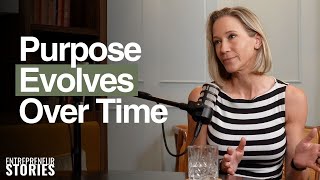
I think the other thing is kind of tied to this piece as well. But a lot of people talk about their purpose in life and, you know, having a personal purpose. But at the same time, if you don't know what that is, it can be really stressful, almost especially when you hear other people talking about that and I mean, listening to you talk, it's clear that one of your core purposes, Liz, is to help others and empower others. But I guess, do you have any guidance for people trying to figure that out or how did you even come to know what your kind of personal purpose would be.
So for me, a lot of trial and error. And I think, to your point, of people, you know, we've all read the Simon, we've all watched Simon Sinek TED Talk, and we've all watched all this. Why didn't I know my purpose? Why? Where is it? But a lot of trial and error, like I said, I've been working for 20 years. It's only the last 10 that I really sort of even stumbled initially across mine. So for me, it really is trying to help other people unleash their own potential. So it's not about me, but it's more about once you are aligned with your core values, once you know what your strengths are. Watching people, once they do, is just the most inspiring thing I could ever imagine doing. It's just awesome. Right? And sometimes they go completely rogue from what everyone else expects them to do, but they are so happy and so that. For me. But you have to have a degree of courage. And maybe that's where the core value comes in, of turning around against the system, because there's an entire system geared up to tell us what to do with our lives. Right. Especially women. Sorry. But it's. It's true. So I think a lot of trial and error, 1 1/2 burnouts. There wasn't an easy passage for me to the whole purpose thing. And I don't think. I think anyone who just wakes up and knows what it is good on them, but that's not most of us. So I think it's experimenting. I think it really is making sure that you're surrounding yourself with people who energize you. And if you struggle to do that, maybe speak to Yasmin, because she knows how to build community. But, yeah, finding people around you that inspire you. Because again, it goes back to the environment thing. If you're around people who are all doing the same thing and that doesn't ignite you, then you probably need to change up a little bit who you're investing your time and your energy in. So put yourself out there, experiment, particularly when you're young. There is nothing to lose. There really isn't. We've got so much time. Most of us now are going to live toward 125. So people always feel like, I've got to go ahead, I've got to go ahead, I've got to go ahead, I've got to go ahead. No, we really don't. And it's really worth touching on some of the stuff that actually gives us a much bigger Sense of self worth and value and purpose and most likely you'll stumble across it honestly. How about you two? Do you know what your purpose is?
I mean I know it's around helping like I, it's one of those things that I've obviously. And this actually is one of those things like I will thank being in a large organization for because we did have like worksheets on this stuff and you know, there were programs to help you think about this. So I've kind of, and I had kind of mentors and role models who knew theirs. So it kind of made me think about it. I know it's around helping others because in every job I've ever done, whether it was being a personal assistant, chief of staff, all those things and even now running a service based business, I just like helping people. Like I really enjoy it. So I know it's around that, but I don't know, I can't nail it yet. Okay.
No, I'm not gonna be able to trump. So I'm just gonna say I'm working on it. I don't know, like it depends. So I feel like my purpose is so dictated by my work then. And I don't know if that's. They're intrinsically linked or not probably. But yeah, I've always been very driven by what I'm working on. I don't know if that's. If it's right. Say like that is my purpose, my work. I'm not sure. But right now it definitely feels like yeah, I just want to achieve something and accomplish something that feels bigger than me. And I think that's quite common of human beings to be honest, to want to either be a part of something bigger than them or do something bigger than them. It's around that. But yeah, much like loose, everything I seem to do is ends up being for other people or helping other people. You know my first business with an agency helping other people launch their brands. Now we've got Ecom Girls Club helping girls in E commerce come together. So like there's a common thread there, but I haven't nailed it quite yet. So watch this space.
And I can't think of a better thing like at least as the, the baseline for both of you helping people, right make and as you said, giving something bigger than it is. I think the other issue that people have with purpose is they think it's got to be world changing, unicorn status, purpose and actually no, like a lot of people, depending on the stage of life you're in, a lot of people's sense of purpose is their kids. Right. Having a family. There's nothing bigger than that, than creating many humans and then keeping them alive and making them into the best, like giving them the best environment possible and everything else. So like it doesn't have to be, you know, Elon Musk aspirational. I mean, it's clearly unhinged anyway. But he's done a couple of all right things. But yes, and I think that's the other thing. People are like, well, if my purpose isn't massive, it's not worthy. That's not true at all. Like we all have our own individual path, purpose. It's really down to us. It's not something we have to share. We don't have to put it on social media. People just feel there's this huge amount of pressure around it. But the important thing about purpose is once you've tapped into it, you will have an un undefeatable reserve of energy. And from a burnout perspective, you will give yourself the chance when you need to step back and be more self compassionate because you know you're going to be able to give way more back and have a much bigger impact if you're aligned with it.
So wise, so wise. You're like the oracle. I love it. This is so great. This is like again, honestly, every podcast Yasmin and I do, we're like, this is great. We're learning so much. This is therapy for us.
Like literally.
It's so true.
Yeah, well, I actually, my next question, Liz is around, I guess, building a startup. How have you found that? Coming from many years in corporate working for big banks to then becoming entrepreneur doing both at the same time. Like how have you found that?
Tough.
I'll be honest, like there's a really big difference between running like a multi billion dollar business with all of the infrastructure and the resources and everything that comes with it to doing 0 to 1 1. It's completely different. And I think it goes back to that whole, I mean, rewind to the whole on a Saturday morning thing. I'm like, I'm gonna do this and this. I'm gonna find product market fit and then I'm gonna go do my own marketing campaign and all of this stuff. And then you get to the evening, you're like, okay, so I'm still on the same document and I still don't know where I'm gonna get the for this. Seem to have gotten distracted by a whole jar of nut butter which I've eaten with a spoon. So it's. Yeah, I would say that Raymore roller coaster. So. But the skills are definitely transferable. It's just a very, very different environment. And you have to be everything, right? You have to be the CEO, the CEO, the chief of staff. You have to be the operations. You have to be like, you're literally the one doing all of the mail outs. Well, obviously not physically, you're doing them on email, but it's very, very different to the support that you've got when you're running a big firm.
Yeah, I can imagine. It's quite the adjustment. And as I said earlier, it's like, holy. It's so impressive that you can do both at same time with the amount that you've got kind of on your plate workload wise. It is phenomenal to observe as a friend, but we do ask on this podcast. We ask the same two questions at the end of the podcast. So I will ask one and Yasmin will ask the other. But first up, what is the best piece of advice you've ever received?
If you don't decide what to do with your career, there are plenty of people who are going to decide for you. So that may not be that.
So good.
I remember that from our Spotlight session call and that stuck with me. I wrote that down.
So good.
I love that. So good.
It's so. Especially in the corporate world, like, if you don't decide, everyone else has got a bunch of agenda that they would like you to be a part of to help them. And I'm sure it's the same whether it's co founders or, you know, clients or partners, whatever it may be. If you don't decide what you want, other people are going to decide what. What you're going to do.
Totally. And then my question is, can you name any DC or E Com brand that you think is absolutely crushing at the moment? It can be in any industry. You're cool.
Am I allowed a couple?
Yep.
Does it have to be one?
No.
We're allowed to.
Okay.
All right.
I'm such a sucker. I'm sure a lot of people say this, particularly if they are healthy. AG1 I'm obsessed with at the moment because I am super busy and I do. As much as I want to say, I eat whole foods all the time. If I've had that in the morning, I know I can then, you know, run for a little while longer and then center the fitness app. I don't know if anyone's come across the Chris Hemsworth really big during COVID when we're all down I think I might be the only subscriber still going on it, but I find it because I travel a lot with work that if I'm in a hotel and stuff, I'm. I'm doing the same fitness program. So it's kind of my equivalent of your online pt.
Yeah, nice. Which I literally live by every single day. So, yeah, relate. Also AG1, if you're listening, we're looking for sponsors.
So, yeah, I also love their ads. As an ads girly, I really do enjoy their ads. They're very aesthetic and silly and they never do discounts. It's very interesting. Sorry, just talking about E Com now.
Well, anyway, thank you so, so much. No, I was just going to tie off and thank Liz for being here. That was honestly amazing. Knowledge bomb after knowledge bomb and I know our community are going to absolutely love this episode. Just so valuable, so much. No, it's been an absolute pleasure.
Thank you very, very much for having me. And enjoy London.
If you enjoyed this episode, be sure to hit the subscribe button on YouTube or wherever you get your podcasts. And to get involved with Ecomgirls Club, search for. Com girlsclub on Instagram.
And if you feel like taking your Instagram stalking one step further, we are both also on Instagram. Yasmin Chic and UCG.
More from Liz
Liz Bradford | The Sustainable High-Performance Blueprint you NEED for Business and Life