Episode #12: Liz Bradford - From Barnyards to Boardrooms
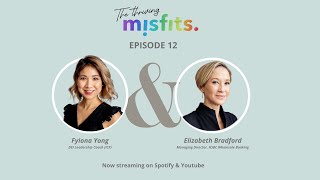
In this Thriving Misfits podcast episode, host Fiona Yong interviews senior banking executive and founder Liz Bradford. The conversation traces Liz’s journey from a traditional farm in the UK to senior leadership roles across Europe, Asia and Australia, highlighting how her farm upbringing instilled a relentless work ethic, cyclical rest habits, and resilience. Liz shares vivid anecdotes, including completing a 60‑km ultramarathon in Mongolia that served as a digital detox, and a cross‑cultural misunderstanding where her Australian colloquialism “no worries, no drama” caused anxiety for Indian team members, underscoring the need for psychological safety. She discusses personal strategies for preventing burnout—rigorous diary scheduling, protected morning routines with her dog, and intentional breaks. The dialogue moves to systemic gender equity, describing how she co‑created the Coaching Circles program and the Maya ed‑tech platform to democratize talent development, and offers practical tips for supporting Gen Z, such as reverse mentoring, viewing careers as marathons, and balancing ambition with well‑being. Liz also shares networking tactics—regular coffee chats, the “five‑minute rule,” and using humor to acknowledge token‑female status in meetings. Throughout, she emphasizes compassion (her proposed superhero’s superpower) as a core leadership quality. The episode concludes with reflections on embracing the misfit identity, leveraging authenticity, and encouraging listeners to thrive by embracing uniqueness.
Chapters
Welcome to the Thriving Misfits podcast where we celebrate the resilience of global citizens and misfits. I'm your host, Fiona Yong and today we're joined by Liz Bradford, a dynamic leader with over 20 years of experience across three continents at firms like HSBC, bank of America, Merrill lynch and Swift. Liz is the founder of Transform Perform and the co founder of Maya, an ad tech platform focused on the future of work. Her career spans from product management to C suite roles, driving operational excellence and tech transformations across teams in over 50 countries. A passionate advocate for organizational health and gender equity, Liz is dedicated to building resilient leaders ready for unprecedented change. As an ICF accredited executive coach and well being coach and also a three time Hyrox competitor, Liz focuses on combating burnout and promoting well being. She regularly speaks on cultural evolution, inclusion, female leadership and developing healthy workplace cultures. So join us as we explore Liz's journey and insights on leadership, resilience and thriving in a rapidly changing world. Welcome to the show, Liz.
Hi Fiona. It's great to be here, it's great
to speak with you again. And we've got to know each other, I think about three years ago where we collaborated during the pandemic supporting the leaders at HSBC to really utilize LinkedIn and social media as their superpower.
Indeed. You came in to help a whole group of females actually start to. What is it you said? It's not bragging if it's real or it's not bragging if you did it.
Yeah. So it's really not bragging if it's based on facts. Right?
Exactly, exactly.
Great. And now you just returned from Mongolia, you had your first ever race over there. Share with us a little bit more about that experience.
Sure. So as you said, I was in the Gobi. I've always wanted to go to Mongolia, so it was a bit of a random way to do it, but. But there was a three day ultramarathon. I had no intention of running or really racing, so I just shuffled and made my way along just to get the scenery and meet a bunch of new, very, very inspiring people. So it was incredible.
Wow, that's amazing. How long was the race? Is that because you said it's a super marathon, does that differ from a regular one?
The intro level, which is 60 kilometers. So you're running basically a half marathon a day because it's slightly over. And then there were some incredible people doing a true ultra, which is the 100K.
Wow, that's. That's insane. And how are you feeling Today.
Yeah. Fantastic. Fantastic. Very energized recovery. Very good. I mean, you do the run in the morning and then you've got all day with no signals. So it was a total digital detox as well. Well. Which is very, very refreshing. So you have the whole day to recover and then you're obviously in bed when it gets dark kind of thing. So very refreshing. Very energized. Yeah.
I remember traveling to Mongolia. That was in 2019, right before the pandemic. Really loved the nature. It's so amazing and quiet. Right. That peaceful atmosphere.
Couldn't be more different to Hong Kong, where I can.
Absolutely. Now you've been traveling the world, you have been living in various continents. I'm sure there must be some funny misunderstanding that you've encountered while working or living across the different continents and culture. Can you share with us maybe one funny misunderstanding that you've experienced?
So I think. I don't know if it's funny or not. I was kind of mortified when I first found out. But it was relatively harmless and a big part of it is just the way in which we use language. So I lived in Australia for several years and I adopted what is quite a colloquialism. So I would say no worries and no dramas a lot, which I thought was just a standard way of saying, don't worry about it. Nothing to be concerned about. But I had a number of people in my team who originally came from India, and they would get very worried because they thought that meant I was saying, I don't want any drama. Make this go away. And it took me several weeks for one of them to actually speak up and tell me that. So I've been, like, thinking I'd been very blase and just saying, oh, don't stress about it, don't stress about it. But of course, they were then super stressed because they felt they couldn't bring me something. So I don't know if it's funny or if it just highlights how something so small that we think is absolutely fine and we're kind of trying to fit in actually subconsciously can make such a massive impact on other people's experience.
Oh, yeah. I do often say no worries, but that no drama is new to me too. Yeah. I think it's great that your team members spoke up.
Yeah. I'm so. I'm just sad it took them a while to do so. So that's one of the very first things I work on now when I join a new team is making sure that we have the right level of psychological security that anyone can say anything in terms of escalating any concerns.
Fantastic. Now you are such an advocate when it comes to resilience and to overcome burnout as well. I myself have gone through actually a burnout, a nervous breakdown in.
In.
In the office. Yeah. During times of change. We had a lot of reorganizations at that time. Now, to make it a little bit more on a lighter note, so if you could create a resilient superhero based on your work, you know, in Di. In well being, what would be their superpowers and what would you name that person?
So their superpower would be compassion. And I choose that word very carefully because empathy is kind of the go to. But compassion means we also give ourselves compassion. So it is empathy, but it also means we can empathize with ourselves and understand sometimes when we're going through a hard time. Oh, and what would I call them? I guess Compass. I don't know. I hadn't thought through the name enough.
But I think it's a really amazing word that you've chosen. Compassion. We always hear about empathy, but like you said, we also need to empathize with ourselves and give ourselves some grace. Right.
And compassion for others as well. Right. Empathy is grounded in compassion. So it's much less stressful when we can understand when someone else. Where someone else is coming from, because then it means that we don't feel someone's doing something to us. We understand that they are, you know, very often just protecting themselves, rightly or wrongly. So I think it's a very important skill to have.
Now, you have grown up on a farm, which is really maybe a coincidence because I've just recently interviewed my previous mentor, and she also revealed to me that she grew up on a farm, but in Singapore. Yeah, urban farming. I didn't know that.
Farms in Singapore. That's fascinating.
Me neither. Now, you are the second person on this podcast who has also grown up on a farm. Now, how has your upbringing on a farm influenced your approach to leadership and your passion for organizational health and resilience?
So I think it's. And I grew up on a much more traditional farm in a place where there are normally farms, so very big and. And kind of isolated as well. And I grew up as the third child, hence always wanting the attention. And I'm the third of four and I've got two older brothers, so I think it influenced the way in which I am now quite a lot. Because a, you never stop working on a farm. So you learn fairly young that you are. You have to have breaks, you have to have rest periods because it's a seven day working week. The animals still need feeding stuff still needs doing on a weekend. So understanding that everything is cyclical and periodic and that you need to, when you can, you take the rest and you actually enjoy it. And then when you're working hard, you're really working hard, sometimes for very long stints at a time. And I think the other thing is also just being in an environment where traditionally, because as you know, I'm a little bit older than you, women didn't, didn't really get their hands as dirty as the men. So having to stand shoulder to shoulder and really fight for your place and to be and to earn the respect of the people you were working alongside makes a big difference because every single person employed on the farm was male. So myself and my younger sister had to really kind of cut our teeth and prove that we were, you know, worthy of being involved in the bigger jobs and working the hours and that kind of thing as well. Well, so I think it meant that we were much more resilient and much more open to learning from others and putting ourselves outside of our comfort zones.
That's great. And you mentioned it's really important to have that discipline of taking a break. And these days we're working remotely. I always struggle to actually find a break, maybe grab even something to drink or having a comfort break. How do you make sure that you schedule a break in or any tips that you can share?
So I'm quite ruthless with my diary, actually. So all of my meetings will either be 25 minutes or 55 minutes. There is always five minutes in between. Because to your point, during COVID I learned that if I didn't schedule a bathroom break, it wasn't going to happen. And then I'm also, I'm very protective of my mornings. So my mornings, I have a Covid midlife crisis dog that I got that I adopted during the COVID pandemic. So every morning. And I did that kind of as a forcing mechanism actually, because it meant I had to leave the apartment. So every morning she needs exercising. So we start the day with a hike out in the green of Hong Kong, which most people don't know is there. And so you kind of have that time to baseline, enjoy nature, spend some time with an animal that adores you as well. But yeah, for those who don't have a dog, I would just always recommend carving out time in the morning in particular to do some form of movement, whatever that may be. Oh yeah, That's a rest of the day.
That's a really practical tip. Now, you grew up on a farm, as we know already. Have you ever imagined yourself being in a leadership position that you are holding today? And also, what were your childhood dreams and how did they evolve over time?
So I would never have been able to imagine, I don't think being the managing director of a bank like that's, you know, coming from a farm, that's kind of crazy when you're doing lambing and harvest and that kind of stuff. I don't think I even knew that kind of job existed when I was younger. When I grew up, I really wanted to. Originally I wanted to be a florist, actually. And then my aunt told me that she thought I should be a little bit more ambitious than that. I went into, when I went to study university, I studied ict, so information Communication technologies and Industrial revolution, which now seems very fortuitous, but it really was luck. So I was, I went to the big city to study it and that was just before the dot com bubble burst. So it seemed like a good idea to just go into kind of city life. But then that evolved and I ended up working in banking for the last 20 years now still leveraging all of that capability. So I tend to be in sort of CEO type roles. And then looking at how we define the future of work and how we do that in a way that is equitable. And to your point, has organizational health factored in and built around the future of work as well? Because as you said, it's very easy for people to be always on now. And part of what I implement in my day job makes that easier. And then now as we look at replacing some of the jobs that we do and some of the work that we do with those machines as well, we also have to be very conscious of the social impact of that. So a very long answer, but no. Growing up on the farm, I probably didn't think that. I think the plan originally was for me to get a nice job, but then also be married to the boy next door and have all of the land brought together. So it definitely wasn't for her to run off to first London and then to the rest of the world to do a role in banking right now.
Was there any surprising aspects of transitioning from farm life to now being in a leadership position in different environments like London, Asia and Australia?
Yeah, I mean, it's a totally different life. I think there are lots of similarities in that. For example, as I said on the farm, my sister And I were in a very small cohort of two when it came to who was working. And then when I first started 20 years ago in banking in London, I was the only one most of the time in the room as a young female. So there were similarities. But the difference then is also that ability to be always on. And so you referenced your burnout. After 10 years, I did burn out myself. That's how I started how I ended up leaving the uk, because I kind of packed up my career, packed up my husband to move to the other side of the world, thinking things would be different there. The ability to constantly work and there always be more work was a bit of a shock to the system. And it took a long time for that to build up, but then become overwhelming. Whereas, don't get me wrong, on the farm, there's always more work, but there are also so many hours in the day and you have daylight and that kind of thing that will change and factor in how you work. Whereas obviously in the city, you can just keep going.
Right. And you mentioned after your burnout, you packed your bags, you moved somewhere else. Sounds very similar to my experience after the nervous breakdown. It kind of opened my eyes also to reflect on what I truly wanted in life. And at that time, it was about rediscovering my Asian heritage and my then boyfriend and now husband. Both of us are of Chinese ethnicity, so luckily we are on the same page. And we both really packed our backs as well and moved to Hong Kong. I mean, it sounded so easy, but luckily my company was able to expatriate me over to Hong Kong, so that made things easier. But I feel sometimes all these adversities that were getting thrown at it helps us to have almost like that little kick in the butt, that nudge that we need to, in a way, reflect on what we truly want in life instead of just following the rat race.
Yeah, absolutely. I mean, I wouldn't change it at all. It was unpleasant at the time. But like all unpleasant experiences, you learn so much from it. And I think what you're referring to, or maybe I will clarify it, sounds to me like you're saying that you discovered more about yourself as a result of it. And I think the. The older we get, the more important it is that we really reflect on those experiences and think, well, yes, that was a tough experience, but what did I learn and what have I changed since then? And that's how we grow and that's how we become more resilient, because it's really about, how do you Bounce back, not never getting knocked out.
That's right. Now, you and I, we've come from very male dominated environments. I was in oil and gas. And you also mentioned that you're usually the only female in the room, especially in the early start of your career. So what kind of strategies have you found most effective when it comes to advocating for and also achieving gender equity in a very traditional male dominated industry?
And I should clarify that that was much more when I started, which would be 22 to 20, 21 years ago now. Years ago now. Whereas now a lot of work has been done, including by people like ourselves, to make sure that it is a more balanced slate of, you know, pipeline people in senior leadership, everything else. But there's still a lot of work to do. And I think the first thing, and it will go back to the superhero kind of skill when you are the only or when it's just remembering that everybody is a human regardless of their gender or any other diversification strands. Normally we always have something we can find in common with people in the room and so it's to try and not be intimidated by feeling like you stand out and getting to know people on that personal level and speaking to people as equals regardless of their title or anything else. And I think that goes both ways. There's a saying in the bank now I always say I'm banned agnostic because people are banded by their seniority. But I would speak in exactly the same way to someone in one of our global service centers in India as I would to, you know, the group CEO. They are at the end of the day humans. And I think that's super important to remember that we can connect on that level and treat everyone equally. However, that's a personal thing. We also have to recognize that the system is not equal and it's not equitable. So there's been a lot of work and that's how you and I first met to try and create safe spaces and try and provide skills and particularly confidence to those who do feel that they are in a smaller group or that they don't necessarily have a position in the system that is favorable to them and they feel like they have to monitor themselves or be someone else. So creating those programs is super important. My co founder and I, you mentioned the Maya Edtech platform, but she and I first started within the bank and created something called Coaching Circles program, which was during COVID not long after I met you actually. And we effectively democratized the benefits of talent programs because the talent cohort is so small and has to be so small in any organization to anyone who would commit the time. And it built very organic network, provided exposure to senior leadership, but really focuses on building the confidence and the personal skills of people to manage their own career. So that's one of the ways in which we've. And we're very rigorous about the gender balance and other diversity in terms of where people are from, from how they identify, any other kind of diversity strands to make sure that that really is fair and equitable in terms of access to those programs. And it's had great results. So I'm very grateful to the bank for letting us do that on the side of our desks.
Oh, that's great. Now, there are lots of Gen Z now entering also the banking and tech industries today. Any top advice or recommendations that you can provide to support their journey and their progress?
I think, again, it really comes down to empathy and understanding to get to know people on a personal level. I think Gen Z have a really hard time at the moment because everyone's like, oh, well, in my day, and this is what it took to get me here. So we do a lot around trying to bring people together. So whether that's reverse mentoring, something like the coaching circles program as well, to make sure that people understand where other people are coming from, but also taking the time and realizing that your career is a marathon, not a sprint. Because the other thing about Gen Z is it can be very, very ambitious, but equally can also be very, very firm on work life balance, which I fully support. But we need to balance those things rather than expect all of the rewards, while also, you know, getting to tick off every single thing we want to do. It's about learning to balance our aspirations and take our time and look after ourselves on that journey.
Yeah, I mean, I can totally resonate with that. And also, just a couple of years ago, they were complaining and labeling millennials the same way. Right. So it's a cycle of life. It's a cycle of life where we're complaining about the next generation because perhaps we don't really understand them that much. And as you mentioned, with reverse mentoring programs, that's a great opportunity to get to know one another. And I think it's almost like a mutual mentoring that's going on.
I think we also don't realize how much we are shaped by our environment. So when we all came in, and I am, believe it or not, borderline millennial, we at the time were like, very much, we are authentic, we are this, we are that, but we get shaped by our environment over time. So we do fit into the system without even realizing it. So when you look back, you're probably not dissimilar from the people when you first joined and you looked and you were like, wow, I'll never be like them. They're like robots or whatever it may be. They're machines and part of the corporate machine. But we do evolve and become more like that. So it's a bit of a culture shock when someone comes in and is super authentic and very clear about what they want because they've yet to kind of adapt. And I'm really not sure what the right answer is with that one, because I'm a really firm believer in authenticity in the workplace. But also I realize when you're part of something much bigger, you also have to conform slightly for the greater good. So I'm very. You know, I find that one's a difficult one to balance all the time. When you're speaking with mentees and when you're being mentored by younger people, people as well. It just makes you stop, reflect. It's really important.
Oh, yeah. Self reflection and just getting to know one another better. Right. Understanding each other instead of making assumptions. And I hate all these labeling. I'm not sure whether you have seen Simon Sinek's viral video where he was complaining about millennials in 20, I think 17. That's one of the reasons why I felt very strongly about debunking that myth, especially in this part of the world. Here in Asia, the millennials or even the Gen Z's, they don't resonate with what they. They are seeing in the Western Hemisphere. They don't resonate with all these labels.
Yeah, no. And I think that's perfectly valid. And I think if I put it into a personal context, when I first came into banking, there was maybe one or two very, very senior women in the organization that I joined. And I would look up and I remember going back and saying to my husband, if that's what it takes, I'm not interested in being super senior. But then I look at how I'm now perceived by other people and I feel like I'm the same person, But I think they are saying exactly the same thing. Like they will. They will think I come across as quite hardened and, you know, as male as the males and all of that stuff. It's not true once you get to know me, but it's very easy to judge from a distance. It's only once you get to know people and really understand their experience that you Realize there's a whole bunch layers and context in there.
What would be a practical tip that you can share, especially for those who are now working in an unfamiliar environment or even moving to a different country? What would be a top tip for them?
So it is so easy now to connect with people and I think reaching out to people and just asking for the time it takes for a cup of coffee to understand their experience. Not necessarily ask them for anything like not be asking for job, not ask them to be your mentor forever or anything else, but just to ask about their experience. We mostly, like most of us, have at least a cup of coffee or a cup of tea a day. Realistically, that means you could do that five times a week. If you're very disciplined about your schedule, the amount of stuff you're going to learn about the environment you're going into, and even just the experiences of other people will drastically change your perspective. And it makes us much less focused on ourselves. We have this thing called spotlight syndrome where we think everyone is watching everything we do. But then when you speak to other people, you realize actually no one's paying attention to what I'm doing at all. So maybe I'm pushing myself out of my comfort zone. If I make a fool of myself, no one cares at all. So I think it's really important to understand from other people how they see things, what they're looking at, what their experience is, if they'd have done anything differently. And then you've got this huge cohort of advisors, effectively for the price of a coffee, or 15 minutes, 20 minutes of someone's time.
Oh, yeah, and I love what you mentioned about that spotlight syndrome. We all get caught up in that once in a while if we have messed up and then we think, oh my gosh, you know, what are the other people going to think of us? But at the end of the day, we're so preoccupied with our own lives, with our own messing up of things. So, yeah, you're right. It's just having that mindset that no one really cares so much about us.
Yeah. And I always use the five minute rule. I think you use this as well. You did a session recently and someone said, oh, she said the same thing. It's like, will it matter in five minutes? Will it matter in five days? Will it matter in five weeks? Will it matter in five months? And then, honestly, I think I've had one thing in the last couple of months that mattered in five hours. And other than that, nothing.
That's right. Yeah.
Yeah.
And I like that you mentioned about, you know, grabbing a coffee with someone, just asking them out for to ask advice from. And something that I've done as a management trainee in Shell is that we actually challenge each other. So me and my peers, we challenge each other to grab lunch with a different person. No matter what level of the organization, just grab lunch with a new person every single day. And that's how you naturally expand your network. And also in a very fun way.
Yeah. And you build relationship that way. Right. You learn a lot about yourself even doing that.
Yeah, absolutely. Now we have a lot of misfits, obviously who are tuning in. Can you share a moment where you felt like a misfit, but you were also able to turn that experience into a positive outcome?
So I think probably I do even sometimes get situations now where I walk into a meeting and I will be the only female and I will be the only female and I would be expected to be the expert on something. And that can still feel quite intimidating even after 20 years. So I think you can sometimes feel like the misfit in that situation. My tactic on that is always to call it out up front. So to be the one to acknowledge it because everyone's thinking it whether they realize it or not. And I think I always use humor then to kind of break the silence on that one a little bit. So sometimes it'll be like, oh, I see I'm the token that stand up today, or I see why I was invited. And then everyone chuckles. But then you can level set and say, but actually this is my experience and I'm really interested in hearing yours. But these are the things I've been asked to talk about. And I find that calling it out up front means it's out of your mind, it's out of everyone else's mind, and you can get on with the core topic and the job that you've been brought in to do. Whereas earlier in my career I wouldn't say anything and I would just try and compete or measure up to the same standards rather than acknowledging I'm different. And I'm here because I'm different. I've been invited because I have a different perspective and it's something that you probably need to hear about. And I'm very interested then in hearing your perspective as well, rather than me telling you how things are. So I think that's been a forte. But it probably took me a few years to learn to do it that way rather than just feel very self conscious and try and, you know, measure up.
As I said, Right, right. And we are not necessarily always the experts in that field, but especially with the ICF coaching learnings that you have had. Right. We as coaches, we do need to ask more questions. We are facilitating conversations, trying to spark new ideas. And I always tell my clients, you know, you are the expert of your life and I'm just there to facilitate that.
No, I mean, it's entirely about unlocking other people's potential. Right. And I think once people take the pressure off themselves to be the expert on everything and to have all of the answers, the minute you start asking questions, you realize that actually other people have so much potential and so many different perspectives. And to your point, they are the experts in their own lives and they're the ones who have the solutions to any of the challenges that they have. I also find it's particularly helpful for I mentor a lot of introverts because I'm very introverted. So they kind of gravitate towards me once that goes out on any form of channel. And again, it's about asking questions and just really listening to the answers that people have rather than thinking, what am I going to say next? What am I going to say next? Like, listen to the answer of the question. Question there will be follow on. Like, you will get to know someone better and they will feel really heard and that's how you build genuine relationships. So it takes a lot of the pressure off someone who isn't necessarily particularly comfortable in interactions.
Oh yeah, for sure. So thank you so much, Liz, for being on the show today. We had such a great privilege of hearing from you. You're such a trail, trailblazer in the world of global leadership and diversity, equity and inclusion.
So.
So from her humble beginnings on a farm in the UK to commanding boardrooms across Asia and Australia, Liz's journey exemplifies resilience and the power of embracing one's uniqueness. Her insights on navigating cultural complexities, promoting gender equity in a male dominated industry, and fostering organizational health have been both enlightening and inspiring. Liz's commitment to empowering others through education, well being and inclusive leadership is a beacon for anyone who has ever felt like a man. Misfit. If you enjoyed today's episode with Liz and found her insights inspiring, don't forget to subscribe to the Thriving Misfits podcast on Spotify, Apple Podcast and YouTube. Your support helps us bring you more stories from individuals who defy norms and thrive authentically and uniquely in their fields. We'd love to hear your thoughts. So please leave us a review on your favorite podcast platform. Thank you so much for tuning in. And remember, embrace your uniqueness and keep on thriving.
More from Liz
Liz Bradford | The Sustainable High-Performance Blueprint you NEED for Business and Life